
Common retractable roof installation errors to avoid

TL;DR:
Most retractable roof failures happen due to avoidable errors like poor substrate assessment, incorrect fixings, and inadequate waterproofing. Proper evaluation, purpose-built hardware, and adherence to weather and safety standards are essential for a long-lasting installation. Working with experienced specialists ensures these mistakes are prevented and systems remain durable over time.
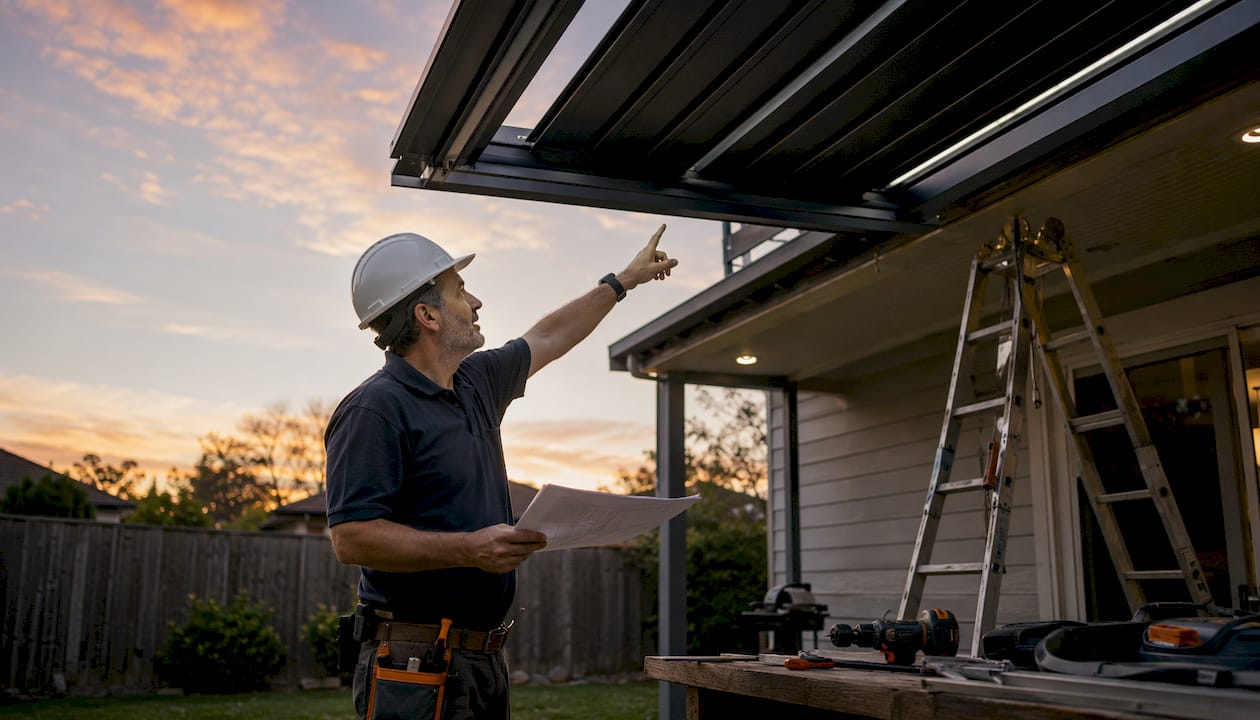
Most retractable roof installations that fail do so for the same handful of reasons, and nearly all of them are avoidable. Whether you are fitting a motorised Weinor pergola or a manual Llaza awning system, the errors that cause early failure cluster around substrate quality, fixings, measurements, waterproofing, and electrical work. Getting these right from the start is the difference between a system that lasts many years and one that comes off the wall in a storm.
The most common retractable roof installation errors at a glance
These are the mistakes that crop up most often across residential and commercial installations in the UK:
Poor substrate assessment: blockwork and timber frames often cannot bear the wind loading on fixings that a retractable roof generates
Wrong fixings: using garage door fixings instead of purpose-made awning fixings is a documented cause of installed systems falling
Incorrect measurements and positioning: poor orientation relative to the sun’s path reduces shading effectiveness and puts stress on the structure
Inadequate slope for drainage: a minimum of 300mm per metre projection is needed to stop water pooling and breaking support arms
Cheap imported hardware: systems without UK or European spare parts availability often become irreparable within four years
Faulty electrical installation: motorised systems from brands like Selt and Tarasola require correct wiring and motor commissioning to operate safely
Poor waterproofing and sealing: gaps around fixings and fabric edges allow water ingress that degrades both the mounting and the material
Ignoring local weather conditions: installations that do not account for regional wind speeds fail prematurely or become hazardous
Skipping safety protocols: working at height without proper equipment or a second operative creates serious risk during fitting
Hiring non-specialist installers: firms without dedicated awning knowledge, such as general builders or garage door companies, routinely make avoidable errors
Why substrate and mounting surface errors cause the most damage
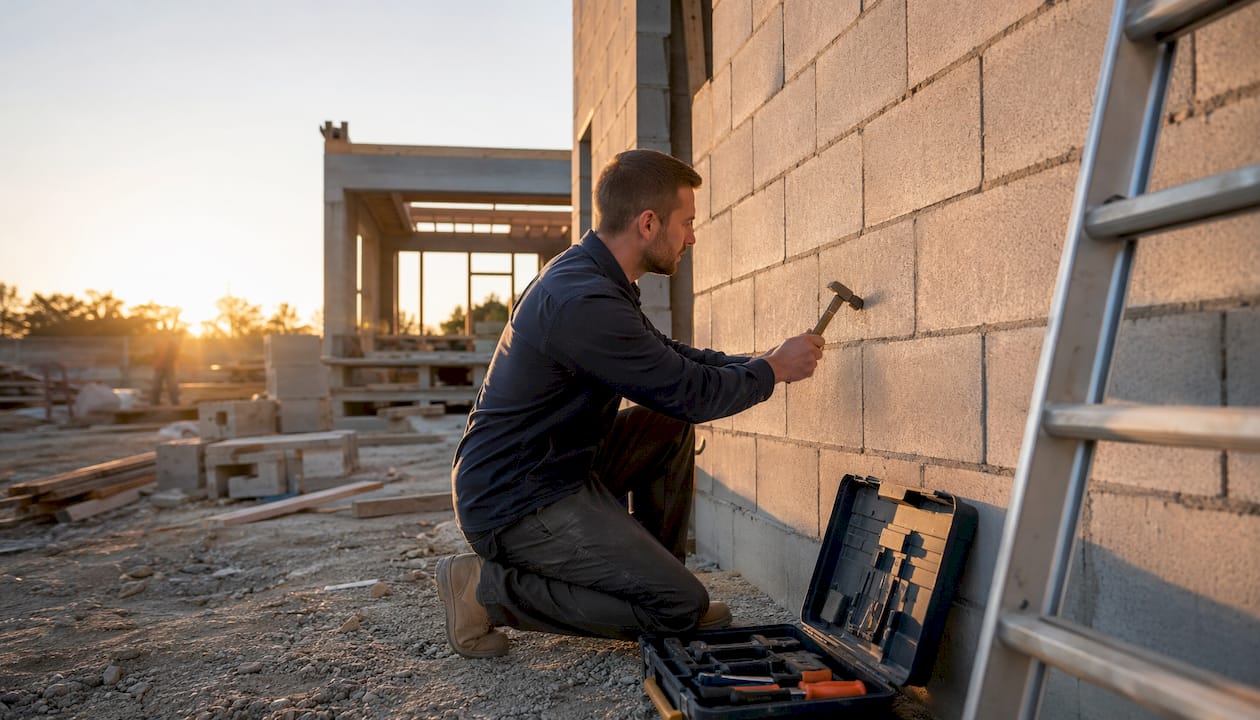
The British Blind & Shutter Association advises prioritising substrate quality over hardware selection, and the reasoning is straightforward. Even a premium Morvelle or Weinor system will fail if the wall behind it cannot handle the load. Traditional brick is ideal. Blockwork, increasingly common in new builds and extensions, is frequently too weak. Timber frames vary, and their suitability depends entirely on how the frame is constructed and fixed.
Fixings are where many installations go wrong in practice; choosing langlebig hardware designed for outdoor durability can extend your system’s lifespan. A garage door company once fitted an awning using the same fixings it used for doors. The fixings held the awning’s weight against the wall but could not cope with wind stress, and the system fell. Purpose-made awning fixings are engineered for dynamic wind loads, not just static weight.
Pro Tip: Before any installation, tap the wall and check the build specification. If the substrate is blockwork or you are unsure, ask your installer to use a structural engineer’s assessment or specify resin anchors rated for the expected wind load in your area.
Maintenance oversights that shorten a system’s life
Retractable roofs from Selt, Tarasola, and similar European manufacturers are built to last well over a decade with proper care. The most common maintenance error is leaving the system extended during high winds or heavy rain, which the fabric and arms are not designed to withstand. Annual checks on fabric tension, arm springs, and fixing torque catch problems before they become expensive. Lubricating moving parts on Llaza and Weinor cassette systems every season prevents the kind of mechanical wear that voids warranties.
Waterproofing and sealing mistakes that let water in
Awnings are designed for sun protection first. Rain management depends entirely on correct installation angle and thorough sealing. Insufficient slope causes water to pool in the fabric, adding weight that breaks support arms or pulls the whole system from the wall. Sealant around wall fixings and fabric edges must be rated for outdoor UV exposure. Standard silicone degrades within two seasons in direct sunlight; a UV-stable, paintable sealant lasts far longer and keeps water out of the fixing holes.
Failing to account for UK weather conditions
The UK’s variable climate catches many installations out. Wind loading standards under the UK National Annex to Eurocode 1 set out how structures should be assessed for regional wind speeds, and a retractable roof installation should be planned against those figures for your specific location. Coastal and upland sites in Yorkshire, Derbyshire, and Lincolnshire face meaningfully higher wind exposure than sheltered urban gardens. Installations that ignore this end up with fixings that are technically adequate for calm conditions but fail in the first serious gale.
Safety protocols that get skipped during installation
Working at height is the primary hazard in retractable roof fitting. The Work at Height Regulations 2005 require that any work above ground level is properly planned, supervised, and carried out using appropriate equipment. In practice, this means scaffold or a tower platform for high-level fixings, not a stepladder propped against the wall. Electrical work on motorised systems from brands like Selt or Weinor must be carried out or signed off by a qualified electrician. Skipping either of these steps creates liability as well as physical risk.
Infinityawnings: expert installation across Yorkshire and the Midlands
Avoiding the errors above is straightforward when you work with installers who have seen every one of them. Infinityawnings brings over 15 years of specialist experience fitting retractable awnings, pergolas, and verandas across Yorkshire, Derbyshire, Nottinghamshire, and Lincolnshire, supplying premium systems from Weinor, Llaza, Selt, Tarasola, and Morvelle. Every survey includes a full substrate assessment, fixing specification, and drainage angle calculation before a single bracket goes on the wall.
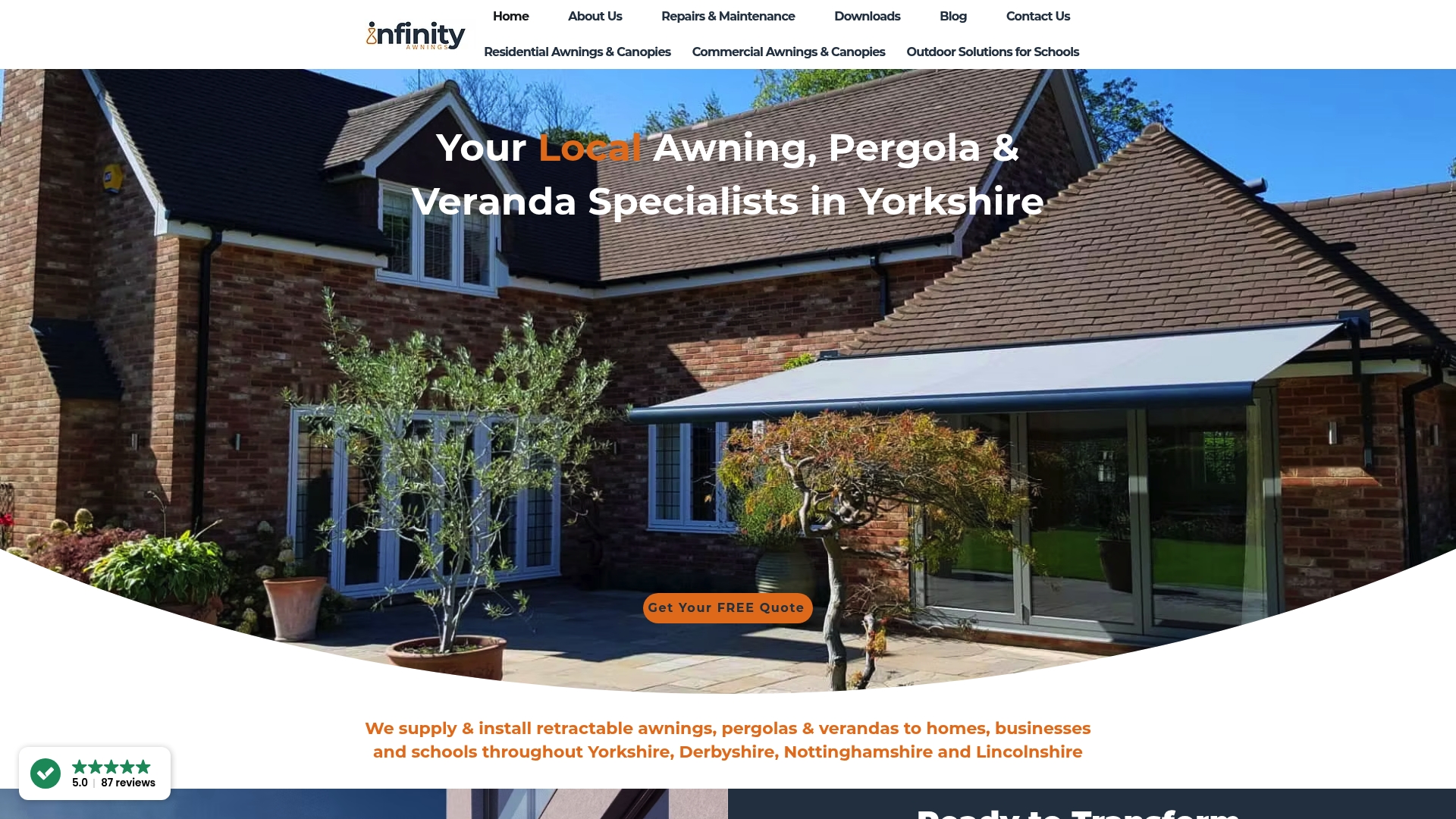
Unlike general builders or garden room companies, Infinityawnings focuses exclusively on outdoor shading. That specialism means the right fixings, the right sealants, and correct electrical commissioning for motorised systems every time. For a free, no-obligation quote and a retractable awning guide tailored to your property, get in touch with the team today.
Key takeaways
Avoiding common retractable roof installation errors requires correct substrate assessment, purpose-made fixings, proper drainage slope, and specialist installation expertise from the outset.
Point | Details |
Substrate quality first | Blockwork and timber frames often cannot bear wind loading; traditional brick is the safest base. |
Fixings must match the load | Purpose-made awning fixings handle dynamic wind stress; garage door fixings do not. |
Drainage slope is non-negotiable | A minimum of 300mm per metre projection prevents water pooling and arm damage. |
Hardware quality determines lifespan | UK and European-made systems carry spares for many years; cheap imports often fail sooner. |
Infinityawnings | Extensive experience fitting Weinor, Llaza, Selt, Tarasola, and Morvelle systems across Yorkshire and the Midlands. |
Recommended
Comments