
Electric Awnings Boost Outdoor Space Use by 40%
- Andrew Crookes

- Mar 1
- 8 min read
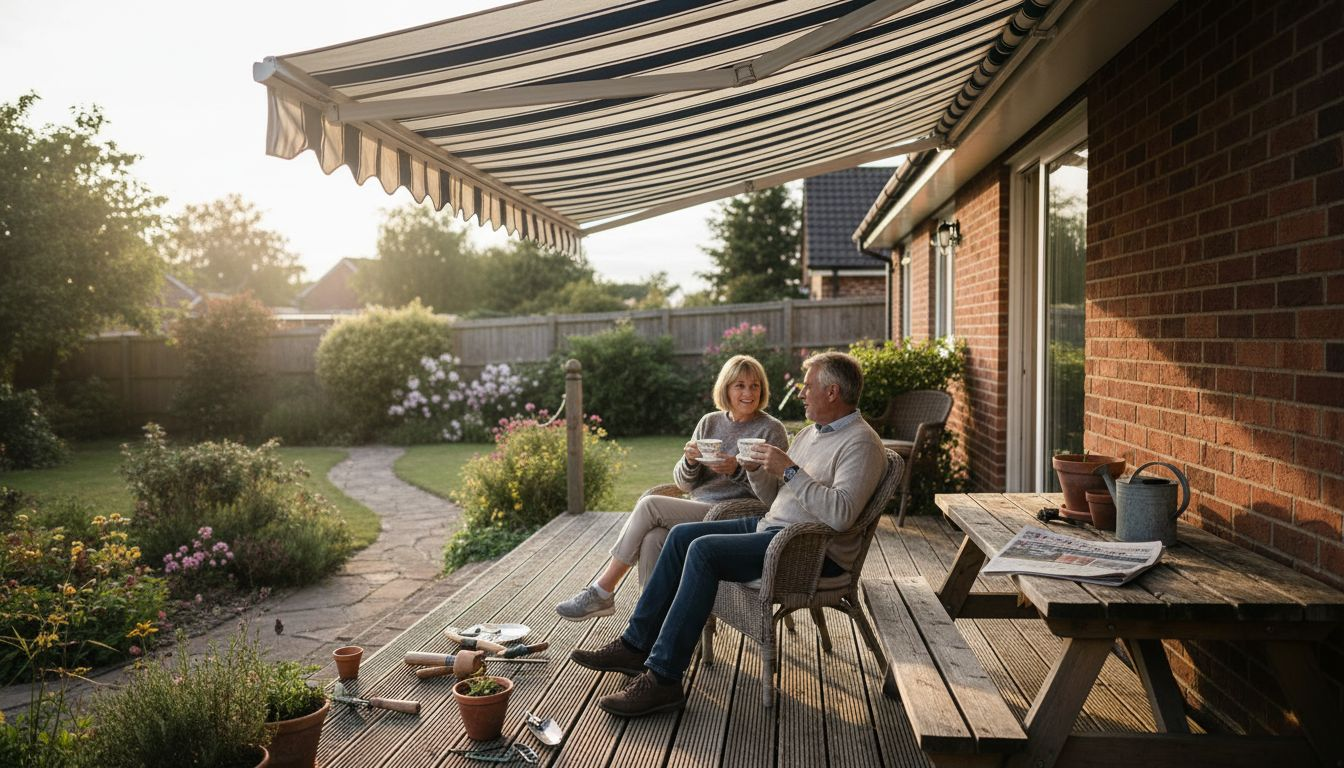
Electric awnings are transforming UK patios and gardens, increasing outdoor space usability by up to 40%. Homeowners in Yorkshire, Derbyshire, Nottinghamshire, and Lincolnshire often struggle to balance style with practical function in outdoor shading. This guide explains how electric awnings deliver convenience, durability, smart features, and long-term value to enhance your outdoor living experience effortlessly.
Table of Contents
Key Takeaways
Point | Details |
Enhanced Convenience | Electric awnings deploy instantly via remote or smartphone, eliminating manual cranking effort. |
Smart Protection | Built-in weather sensors automatically retract awnings during high winds or rain, preventing damage. |
UK Weather Durability | Premium materials and automation reduce maintenance frequency and extend lifespan compared to manual options. |
Cost Effective Long Term | Higher upfront cost offset by reduced repairs, longer life, and automated protection features. |
Introduction to Electric Awnings
Electric awnings are motorized retractable shading systems that extend and retract at the press of a button or smartphone tap. Unlike manual awnings requiring physical cranking, electric awnings features use quiet motors for effortless operation. Electric awnings provide automated sun protection with enhanced features compared to manual alternatives, making them increasingly popular across UK homes.
Several trends drive their growing adoption. UK homeowners want more usable outdoor space year-round. Automation technology has become affordable and reliable. Smart home integration appeals to modern lifestyles. The pandemic accelerated demand for comfortable home outdoor areas.
Key advantages over manual systems include:
Instant deployment without physical effort
Remote operation from anywhere in your garden
Automated sensors protecting against sudden weather changes
Accessibility for elderly or mobility-limited users
Integration with smart home routines
Electric awnings particularly benefit busy professionals, elderly homeowners, families with young children, and anyone prioritizing convenience. You simply press a button rather than turning a crank handle repeatedly. For households where multiple people use outdoor space, electric operation eliminates coordination challenges.
Functionality and Convenience of Electric Awnings
Electric awnings operate through integrated motors powered by mains electricity or rechargeable batteries. You control deployment via wall-mounted switches, handheld remotes, or smartphone apps. Most systems extend fully in 30 to 60 seconds, significantly faster than manual cranking.
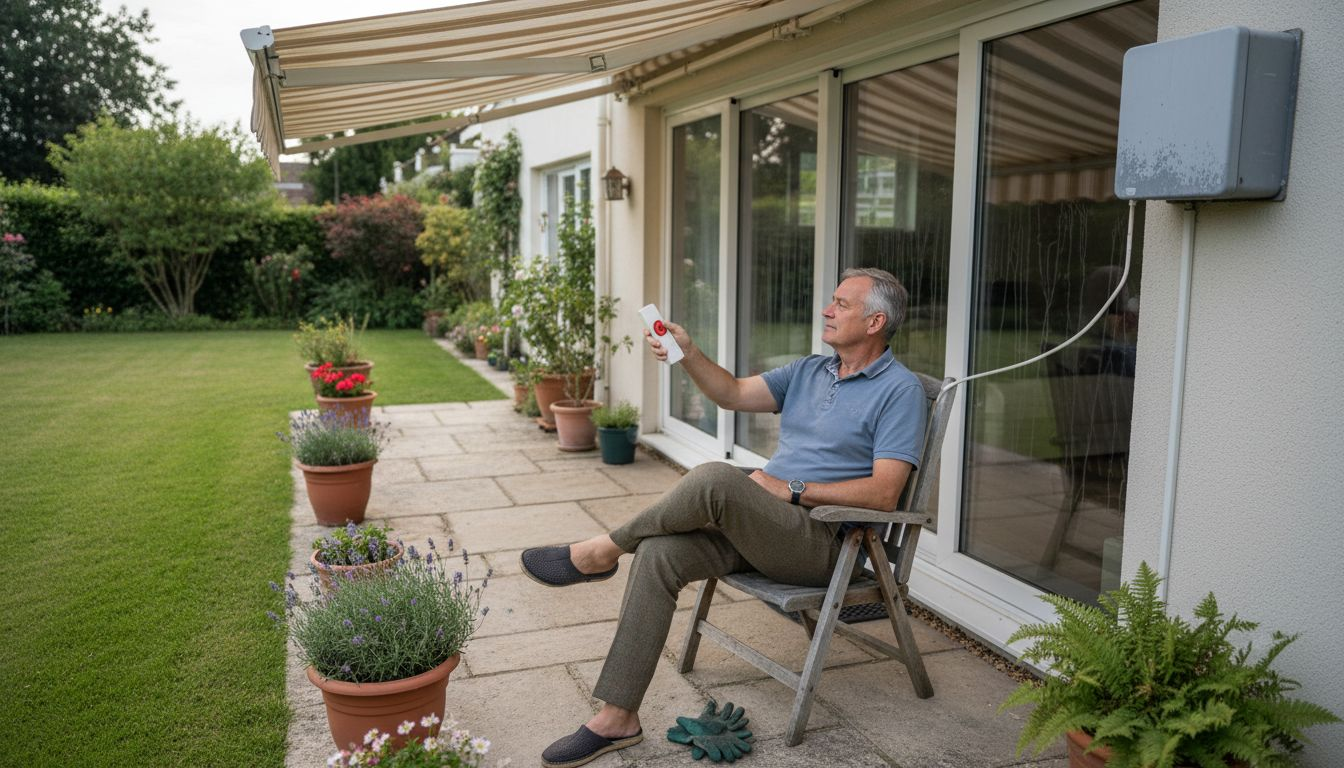
The automation delivers practical daily benefits. You can adjust shade instantly as sun angles change throughout the day. No need to interrupt activities or get up from seating. Remote controls let you operate awnings from inside your home before stepping outside.
Automated deployment and retraction make electric awnings especially beneficial for elderly or mobility-limited users. Physical limitations that make crank handles difficult become irrelevant. Safety improves because you avoid repetitive strain injuries from manual operation.
Compared to manual vs electric awnings, electric systems require minimal physical interaction. Manual awnings demand consistent strength and coordination. Electric versions eliminate this barrier entirely.
Pro Tip: Set automated schedules through smart home systems to extend your awning each morning and retract it at sunset. This ensures shade availability without daily manual intervention, maximizing outdoor comfort effortlessly.
Customization and Smart Features
Modern electric awnings offer extensive customization enhancing both function and ambience. Integrated LED lighting transforms your patio into an inviting evening space. Heating elements extend comfortable outdoor use into cooler months. Remote and smartphone controls provide flexible management from anywhere.
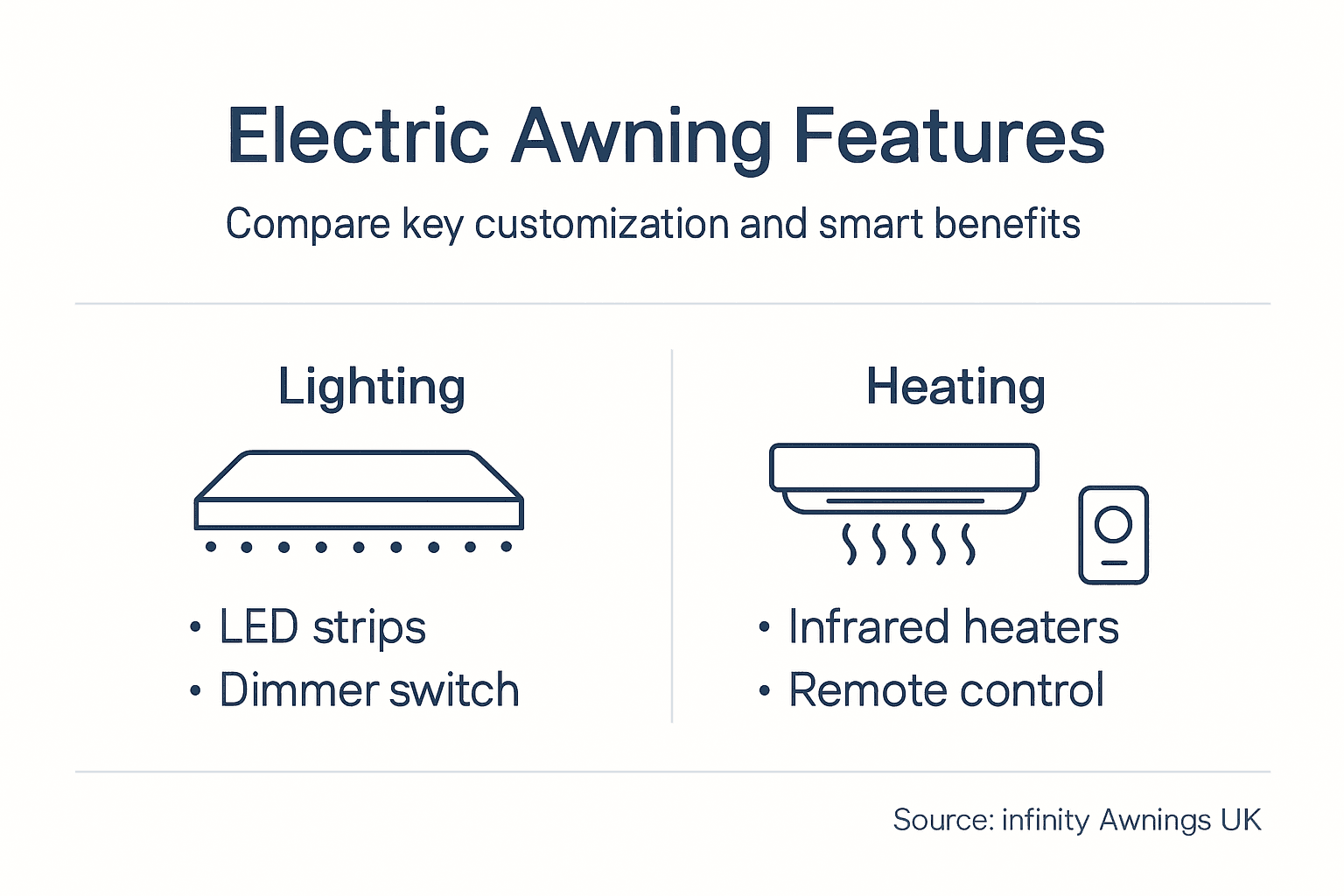
Smart features like LED lighting, heating options, and weather sensors improve usability and safety of electric awnings. Weather sensors automatically retract awnings when wind speeds exceed safe thresholds, typically 20 to 25 mph. Rain sensors protect fabric and furniture from unexpected downpours.
Popular customization options include:
Dimmable LED strip lighting in various colour temperatures
Infrared heating panels for chilly evenings
Wind and rain sensor packages
Smartphone app control with scheduling
Voice assistant integration (Alexa, Google Home)
Multiple fabric colours and patterns
These features dramatically improve year-round patio usability. Lighting extends evening entertainment hours. Heating adds comfort during spring and autumn. Sensors provide peace of mind when you’re away from home. You can explore additional awning customization options to match your specific lifestyle and aesthetic preferences.
Durability and Weather Resistance in UK Climates
UK weather demands robust awning materials. Quality electric awnings use powder-coated aluminium frames resisting corrosion from damp conditions. Acrylic or polyester fabrics treated for water resistance and UV protection maintain appearance for years. These materials handle frequent rain, wind, and temperature fluctuations typical across Yorkshire, Derbyshire, Nottinghamshire, and Lincolnshire.
Wind sensors play a critical role in protection. Wind sensor automatic retraction reduces damage risk and lowers maintenance needs in UK homes. When gusts reach preset limits, motors automatically retract the awning before structural damage occurs. This automation prevents the torn fabric and bent frames common with manual awnings left extended during sudden storms.
Feature | Electric Awnings | Manual Awnings |
Average Lifespan | 12-15 years | 8-10 years |
Maintenance Frequency | Annual inspection | Bi-annual checks plus repairs |
Weather Damage Risk | Low (automated protection) | Moderate to High |
Fabric Replacement Cycle | 10-12 years | 6-8 years |
Proper care extends lifespan further. Regular sensor calibration ensures accurate weather response. Gentle fabric cleaning with mild soap removes dirt without damaging protective coatings. Professional annual inspections identify wear before it becomes serious.
Pro Tip: Test your wind sensors monthly by gently triggering them to verify automatic retraction works properly. This simple check prevents costly storm damage and maintains reliable protection year-round. Consider scheduling awning durability and maintenance reviews each spring.
Cost-Effectiveness and Long-Term Value
Electric awnings carry higher upfront costs than manual versions, typically £800 to £2,500 depending on size and features. Manual awnings range from £400 to £1,200. This premium reflects motorization, controls, and sensor technology. However, long-term ownership costs tell a different story.
Modern electric awnings come pre-assembled with plug-and-play installation, reducing installation time by up to 40%. Faster installation lowers labour costs. Automated protection reduces damage and repair expenses. Extended lifespan from sensor-based retraction spreads initial investment across more years.
Cost Factor | 5 Year Total Electric | 5 Year Total Manual |
Purchase Price | £1,800 | £800 |
Installation | £300 | £400 |
Maintenance/Repairs | £200 | £500 |
Fabric Replacement | £0 | £350 |
Total Cost | £2,300 | £2,050 |
Over ten years, electric awnings often cost less due to fewer repairs and delayed fabric replacement. The convenience and enhanced features justify the modest difference. Homeowners gain stress-free operation and better weather protection.
Common misconceptions inflate perceived costs. Many believe electric systems require expensive electrician installation. Most units simply plug into standard outdoor outlets. Maintenance costs remain minimal with annual inspections. You’ll find practical guidance in this awning installation guide addressing electric awnings installation myths.
Common Misconceptions about Electric Awnings
Several persistent myths discourage homeowners from considering electric awnings despite their practical advantages. Understanding the facts helps you make informed decisions.
Myth: Electric awnings are complicated or expensive to install. Modern electric awnings typically have plug-and-play installation and require less maintenance than manual options. Most systems connect to standard outdoor electrical outlets without specialized wiring. Professional installation takes 2 to 4 hours. Pre-assembled components simplify the process significantly.
Myth: Maintenance is costly and frequent. Electric awnings actually need less maintenance than manual versions. Automated retraction prevents weather damage requiring repairs. Annual inspections cost £50 to £100. Motor systems rarely need service within warranty periods of 5 to 10 years. You avoid the regular lubrication and adjustment manual cranks demand.
Myth: Electric awnings are only for luxury homes, not practical. Modern electric awnings span all price ranges and property types. Mid-range models offer excellent value. The convenience benefits everyday family life, not just luxury entertaining. Elderly homeowners and busy professionals gain the most practical advantages.
Key facts countering misconceptions:
Standard electrical outlets power most systems
Warranty coverage typically includes motors and electronics
Battery backup options available for areas without convenient outlets
Repair costs lower than manual awnings due to automated protection
You can explore manual awning myths and additional electric awning misconceptions for comprehensive comparisons.
Practical Guide to Selecting and Installing Electric Awnings
Choosing the right electric awning requires careful assessment of your outdoor space and usage patterns. Follow these steps for optimal results:
Measure your patio dimensions accurately. Measure width and projection distance from wall to desired shade edge. Add 30cm to width for optimal coverage. Account for door clearances and window positions.
Assess local weather patterns. Yorkshire and surrounding regions experience variable winds and frequent rain. Prioritize wind sensors rated for your area’s typical gusts. Consider waterproof fabric grades for maximum rain protection.
Select fabric type and colour. Acrylic fabrics offer superior UV resistance and colour retention. Polyester provides budget-friendly durability. Choose lighter colours for heat reflection or darker shades for privacy. Match your home’s exterior palette.
Determine control preferences. Wall switches suit traditional preferences. Remote controls add convenience. Smartphone apps enable automation and away-from-home control. Consider future smart home integration.
Choose optional features based on usage. Add LED lighting for evening use. Include heating for spring and autumn comfort. Integrate rain sensors if you travel frequently. Customize based on your specific outdoor lifestyle.
Hire professional installers with warranty coverage. Professional installation ensures proper mounting, electrical connection, and sensor calibration. Warranties protect your investment. Verify installer credentials and customer reviews.
Plan ongoing maintenance schedule. Schedule annual professional inspections. Clean fabric quarterly with mild soap solution. Test sensors monthly. Keep motors clear of debris.
Regional considerations matter for awnings installation tips Yorkshire homes. Coastal areas need enhanced corrosion protection. Urban settings may require planning permission. Rural properties might need battery backup for unreliable electricity. Nottingham residential awnings installations face similar considerations.
Consult this awning selection guide for detailed product comparisons. Research professional awning installers UK credentials before committing to installation services.
Transform Your Outdoor Living with Infinity Electric Awnings
Ready to enhance your outdoor space with premium electric awnings? Infinity Awnings specializes in high-quality retractable and electric awning solutions across Yorkshire, Derbyshire, Nottinghamshire, and Lincolnshire. We bring over 15 years of expertise installing customized shading systems that combine style, durability, and smart technology.
Our electric awnings feature premium Weinor, Llaza, and Morvelle components with comprehensive customization options. Enjoy integrated LED lighting, heating elements, and advanced weather sensors. Professional installation ensures reliable performance and full warranty protection. Discover the benefits of retractable awnings and explore our complete awning installation guide for detailed insights. Browse inspiring patio awning ideas to visualize your transformed outdoor living space. Contact us today for a free personalized quote and consultation.
Frequently Asked Questions
What maintenance do electric awnings require?
Electric awnings need minimal maintenance compared to manual versions. Clean fabric quarterly with mild soap and water, removing dirt and debris gently. Schedule annual professional inspections to check motor function, sensor calibration, and frame condition. Test wind sensors monthly to ensure automatic retraction works properly.
Can electric awnings withstand strong UK winds?
Yes, quality electric awnings handle typical UK wind conditions effectively. Integrated wind sensors automatically retract the awning when gusts exceed safe thresholds, usually 20 to 25 mph. This automated protection prevents structural damage and torn fabric. Powder-coated aluminium frames resist corrosion from damp conditions common across Yorkshire and surrounding regions.
Are electric awnings compatible with smart home systems?
Most modern electric awnings integrate seamlessly with popular smart home platforms including Alexa, Google Home, and Apple HomeKit. You can create automated schedules, voice commands, and routines coordinating with other smart devices. Smartphone apps provide remote control from anywhere, letting you adjust shade even when away from home.
How long does professional installation typically take?
Professional electric awning installation takes 2 to 4 hours for standard residential projects. Pre-assembled components and plug-and-play electrical connections streamline the process. Installation time varies based on mounting surface, size, and customization features. Complex installations with integrated lighting or heating may require additional time.
Can I customize the fabric and lighting features on my electric awning?
Yes, electric awnings offer extensive customization options. Choose from numerous fabric colours, patterns, and materials including acrylic and polyester grades. Add dimmable LED lighting in various colour temperatures. Include infrared heating panels for cooler evenings. Select control methods ranging from wall switches to smartphone apps based on your preferences and lifestyle.
Recommended
Comments