
Installer Checklist: External Conservatory Shading for UK Homes

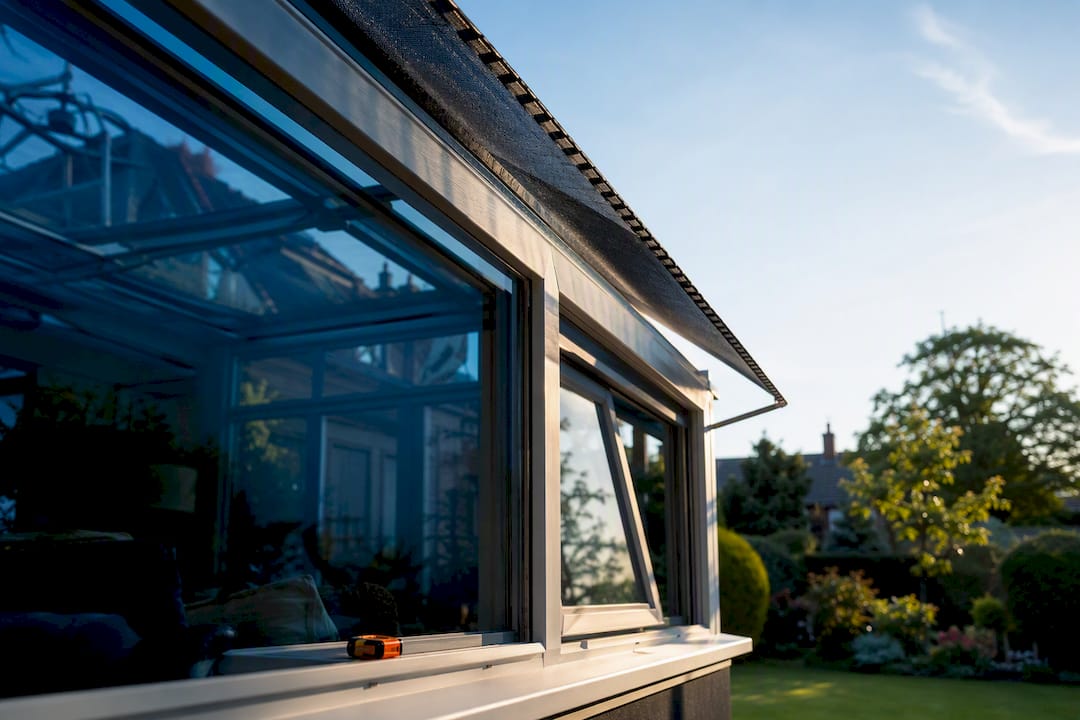
External shading is the most effective fix for a conservatory that overheats on sunny days, particularly on south or west-facing glazing. Tensioned roof blinds, zip screens, or external venetians, ideally with motorised control, intercept the sun before it hits the glass rather than fighting it once it’s already inside. Experienced professionals have specified these systems on many conservatories, and the starting point is almost always the same: work out your orientation, then match the system to it.
TL;DR:
External shading systems like zip screens and venetian blinds can reduce energy use by around 15 percent in UK conditions, mainly by lowering temperature peaks.
The effectiveness of shading depends heavily on orientation, with south and west-facing roofs needing high-performance solutions such as external venetians or zip screens.
Retrofit systems are typically more affordable and quicker to install but may offer less seamless integration compared to integrated structures, which require prior planning.
Proper system selection should consider wind exposure, roof shape, and room use, with motorised options offering better automation and safety, especially for larger spans.
External shading materials like woven mesh fabrics, acrylic, and powder-coated aluminium slats behave differently based on location, with wind-rated options necessary for exposed sites.
Table of Contents
Does external shading actually cut energy use and overheating?
How do I choose the right system and brief an installer properly?
What happens during installation and what maintenance does external shading need?
How do I match the system to my conservatory’s orientation and use?
How do you make external shading look like it belongs on the house?
What should you realistically expect after fitting external shading?
What types of external conservatory shading are available?
Not every roof or elevation calls for the same system. The shape of your conservatory, and what you want from it (a darker room, or just a cooler one that still lets light through), narrows the choice quickly.
External venetians: adjustable aluminium slats that give you precise control over daylight and heat, particularly good on large vertical or angled glazing where you want to tilt the slats rather than close everything off completely.
External roller blinds and zip screens: a tensioned mesh fabric that runs in side channels, rejecting heat and glare while keeping some view through. These work well on framed conservatory roofs and on vertical glazing where a clean, taut finish matters.
Retractable fabric roof blinds and awnings, or shade sails: bespoke fabric coverage for wide roof spans, chosen as much for how they look as how they perform. A cassette awning over a lantern roof can transform a conservatory’s appearance from the garden as well as its temperature indoors.
External shutters and fixed louvers: the right call where security matters, where you want the option to black a room out entirely, or where the client wants a stronger architectural statement than a blind gives.
Retrofit vs integrated systems: a retrofit system bolts onto existing brackets and fixings, while an integrated (compact) system is built into the structure at the design stage. Retrofits are usually quicker and cheaper; integrated systems need structural detailing agreed before the conservatory roof goes up, which matters if you’re planning shading alongside a new build or extension.
The types of outdoor shading solutions available for UK homes cover a similar breakdown if you want to see how these systems apply beyond conservatories specifically.
Does external shading actually cut energy use and overheating?
Yes, and by a meaningful margin; for practical advice on how to achieve this, see cut electricity costs for your UK small business. Research from the University of Brighton’s KTP study into external roller blinds found retrofit external shading can reduce combined annual heating and cooling energy by around 15% in UK conditions, alongside measurable drops in internal temperature peaks.
The trial data showed measurable reductions in mean and peak temperatures in the rooms studied, which is the difference between a conservatory that’s usable at 4pm in July and one nobody wants to sit in.
The physics is straightforward once you see it: external shading stops solar radiation before it reaches the glass, while internal blinds only start working after the heat has already passed through and warmed the room. The KTP conference paper puts this down to external devices blocking a large share of solar heat input at source, something internal fabric simply cannot replicate.
The trade-off worth knowing: shading that’s too effective in summer can rob you of useful solar warmth in winter. That’s the case for moveable, motorised systems over fixed ones. You want shade on demand, not shade permanently.
How do I choose the right system and brief an installer properly?
Work through this before you call anyone out for a quote. It saves time on both sides and stops you getting three incomparable quotes back.
Orientation and exposure – south and west-facing roofs need the most protection; north-facing glazing may need very little.
Roof shape and fixing points – lantern roofs, hipped roofs, and flat-glazed roofs each take different bracket details.
Wind zone and site exposure – an exposed rural garden needs a higher wind-rated system than a sheltered urban courtyard.
Daylight versus darkening priorities – decide honestly whether you want a cooler room or a darker one; they’re not the same brief.
Motorisation and sensor preferences – manual is cheaper upfront, but motorised with wind and sun sensors protects the fabric and saves you remembering to retract it.
Maintenance access – can the fabric be reached for cleaning without scaffolding?
Budget bracket – set a rough figure before the survey so the installer can propose within it rather than around it.
When you’re on the phone or in the survey, ask direct questions: what power supply does the motor need, can cabling be concealed, what’s the fabric’s colourfastness rating, what wind-resistance standard has the system been tested to, and what does the warranty actually cover.
Pro Tip: Ask specifically whether the wind rating quoted is for the fabric or the full assembly including the frame. A fabric-only rating can make a system look far more resilient than it will be once fitted.
A south-facing lantern roof usually points towards a zip screen or external venetian. A shaded plant room or orangery extension often does better with a lighter, filtering mesh rather than a full blackout fabric. If your roof geometry is unusual, or your property is listed, get a professional survey before you commit to anything, since retrofitting the wrong bracket detail afterwards is expensive.
What happens during installation and what maintenance does external shading need?
A typical project runs through four stages: survey, manufacture, fitting, and commissioning.
The survey confirms measurements, fixing points, wind exposure, and power routing.
Manufacture lead times vary by system and fabric, since most external shading is made to measure rather than off the shelf.
Fitting includes any electrical work needed for motorisation, run by a qualified electrician where mains power is involved.
Commissioning sets up sensor thresholds (wind cut-out speed, sun activation level) so the system runs itself sensibly from day one.
On power: mains-wired motors are the most reliable for larger spans, though battery and solar options exist for smaller systems or awkward retrofits where running a cable isn’t practical.
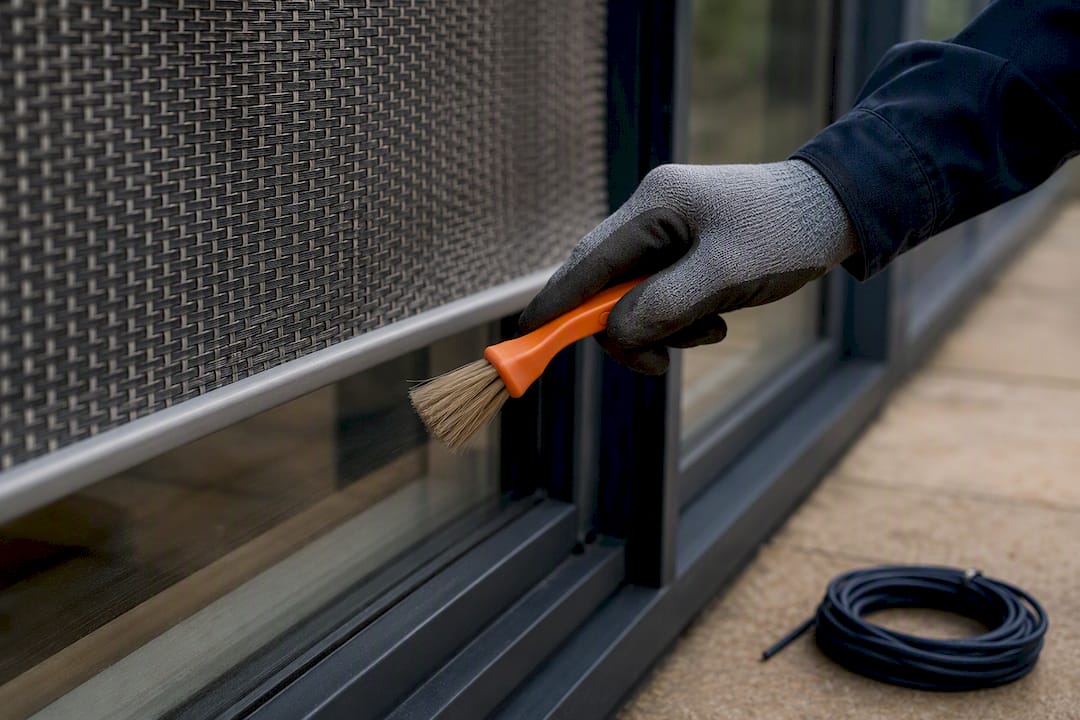
Maintenance is light but not optional. Clean fabric periodically to stop dirt breaking down the weave, check tensioning systems annually, and have the motor serviced on the same rough interval as any other outdoor mechanism. If your property sits in a conservation area or is listed, check with your local planning authority before fitting anything visible from the street. Guidance from the British Blind and Shutter Association covers testing standards worth asking your installer about.
Which materials and fabrics hold up best on a conservatory?
Three material choices dominate the external shading market, and each behaves differently once it’s outdoors in British weather.
Woven mesh fabrics are the standard choice for zip screens and roller systems. They’re engineered to block solar radiation while letting some airflow and light through, and the tighter the weave, the higher the heat rejection, though a very tight weave sacrifices some outward visibility.
Acrylic fabrics turn up on retractable awnings and fabric roof blinds. Solution-dyed acrylic resists fading far better than printed alternatives, since the colour runs through the fibre rather than sitting on the surface, which matters given how much UV a south-facing roof takes over a summer.
Aluminium slats are what give external venetians their durability. Powder-coated aluminium doesn’t rot, doesn’t warp in heat, and takes a wide range of finishes, so it fits period and contemporary properties equally well. Slat width and pitch angle both affect how much light passes through when the blind is closed for maximum shade versus tilted for filtered daylight.
None of these materials perform identically in exposed sites. A high-wind coastal garden calls for a tighter mesh weave and a heavier-gauge aluminium slat than a sheltered suburban plot, which is exactly why the wind-rating question in your installer brief matters more than fabric colour.
What does external conservatory shading typically cost?
Price depends on scale, mechanism, and fabric rather than following one flat rate. Four factors drive most of the variation between quotes.
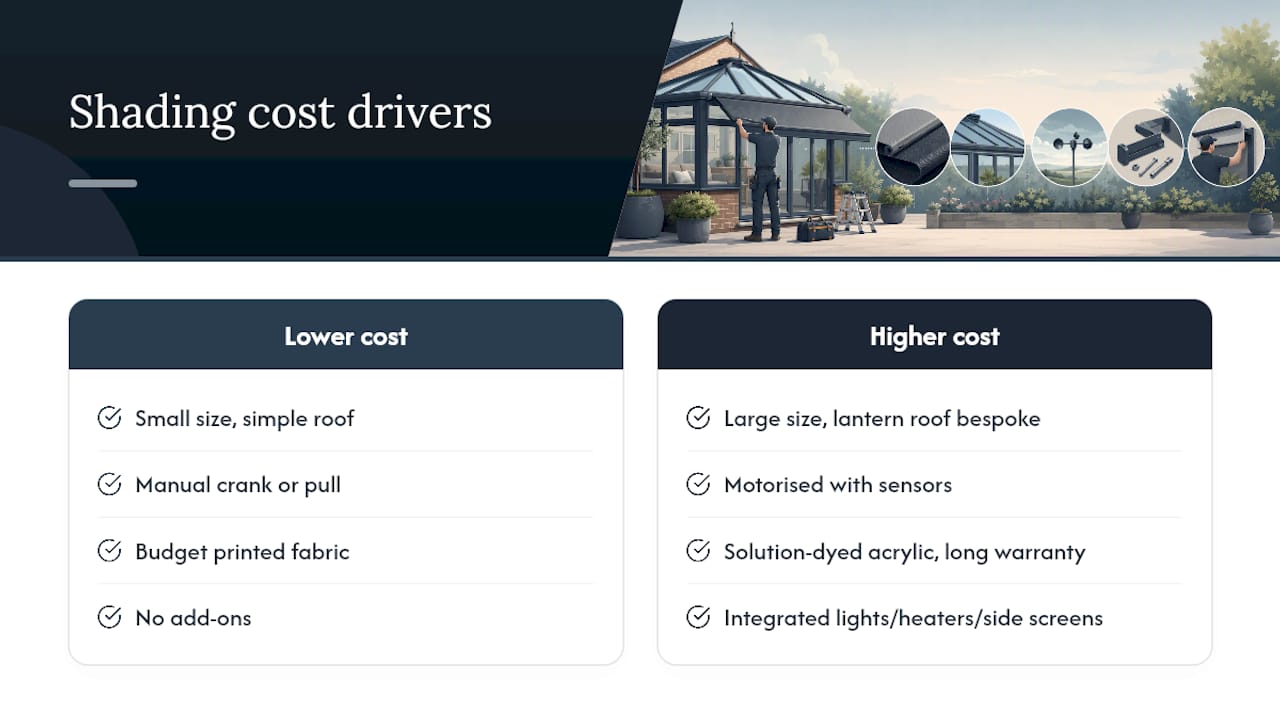
Size and roof shape set the baseline. A single vertical zip screen on a small conservatory costs far less than a wide lantern roof needing a bespoke tensioned fabric system spanning several metres.
Manual versus motorised operation is the next big split. Manual crank or pull systems are the cheapest entry point; adding a motor, and then wind and sun sensors on top of that, adds cost at each stage but removes the daily hassle of operating a large blind by hand.
Fabric specification matters more than most homeowners expect. A solution-dyed acrylic with a long colourfastness guarantee costs more than a budget printed alternative, but it also won’t look tired after two summers of direct sun.
Add-ons like integrated LED lighting, heaters, or side screens turn a simple shading system into something closer to an outdoor room, and each one adds to the final figure.
The honest answer for most homeowners is that a straightforward manual zip screen sits at the lower end of the market, while a large motorised, sensor-driven system with bespoke fabric and side screens sits considerably higher. Get a site survey before assuming a price bracket, since roof shape and wind exposure move the number more than most people expect.
Which shading type suits which situation: pros and cons
Every system trades something off against something else. External venetians give you the finest daylight control, tilting from fully open to fully closed, but they cost more than a simple screen and need slightly more maintenance attention on the tilt mechanism. Roller blinds and zip screens are simpler, cheaper to run, and excellent at heat rejection, though they’re generally an on/off proposition rather than a dimmer.
Fabric roof blinds and shade sails win on appearance and bespoke fit for unusual roof spans, but fabric has a shorter lifespan than aluminium slats and will eventually need replacing. External shutters and fixed louvers offer the strongest security and full blackout capability, but they sacrifice the flexibility to let light in on a dull day, since most fixed louvers can’t be adjusted once installed.
Retrofit systems install faster and cost less than integrated ones, but they sit on the outside of the existing structure rather than blending into it. Integrated systems look cleaner and often perform slightly better against wind, but only make sense if you’re planning the shading before or during construction.
How do I match the system to my conservatory’s orientation and use?
Orientation is the single biggest factor, ahead of budget or aesthetic preference. A south-facing conservatory takes direct sun for most of the day, so it needs a system with strong heat rejection, typically a zip screen or external venetian with a tight slat pitch. West-facing rooms get hit hardest in late afternoon, when the sun sits low and glare becomes as much of a problem as heat, which favours a system that can angle rather than just retract.
North-facing conservatories rarely need aggressive shading at all; a lighter mesh or even no permanent shading beyond glare control at low sun angles often suffices. East-facing rooms face a similar but reversed pattern to west-facing ones, with the problem concentrated in the morning.
Size and roof shape narrow things further. Large lantern roofs need a fabric or mesh system engineered to span the distance without sagging, while smaller vertical glazing panels suit simpler, cheaper roller systems. How you actually use the room matters too: a conservatory used as a home office needs glare control at a desk height that a general lounging space doesn’t, while a dining conservatory used mainly in the evening might prioritise appearance over daytime heat rejection.
What happens step by step once you book an installation?
The process runs in a predictable sequence, which is worth knowing before you sign anything.
Step 1: Initial enquiry and rough scoping. You describe the conservatory, its orientation, and what’s bothering you (heat, glare, or both).
Step 2: Site survey. A surveyor measures the roof or glazing, checks fixing points, assesses wind exposure, and discusses power routing for motorised options.
Step 3: Quotation and specification. You receive a proposal covering fabric choice, mechanism, motorisation, and any add-ons, matched against your budget bracket.
Step 4: Manufacture. Since almost all external shading is made to measure, expect a lead time here rather than an off-the-shelf turnaround.
Step 5: Fitting. Installers fix brackets, hang or fit the system, and complete any electrical work for motorised units.
Step 6: Commissioning. Motorised systems get their sensor thresholds set, manual systems get a working demonstration, and you’re shown how to operate and maintain the finished installation.
How do you make external shading look like it belongs on the house?
Function and appearance don’t have to compete. A cassette-style roller or zip screen sits in a slim housing that can be colour-matched to your existing window frames or fascias, so it reads as part of the building rather than an add-on bolted over the top. External venetian slats come in a wide range of powder-coated finishes, which means you can match anthracite grey frames or keep a traditional white finish on a period property.
Fabric choice does more visual work than people expect. A muted stripe or solid tone on a roof blind tends to age better visually than a bold pattern, which can start to look dated well before the fabric itself wears out. Side screens, when fitted, work best in the same fabric family as the main shading rather than as a mismatched afterthought.
Placement matters as much as the product itself. Shading fitted flush to the roofline or window head looks intentional; shading that overhangs awkwardly or sits proud of the frame looks retrofitted even when it performs perfectly. If you’re weighing this alongside a wider extension or landscaping project, it’s worth reading about how exterior shading fits comfort and style together before finalising a fabric or colour.
What should you realistically expect after fitting external shading?
External shading is genuinely an investment, not a quick fix, but it’s one that tends to pay back in comfort you notice every hot week and in energy you’re not spending fighting the heat. Prioritise the site survey over the fabric swatch. Confirm the wind rating and warranty terms in writing before you sign anything, because those two details cause more disputes later than any other part of the job.
— Andrew
How Infinity Awnings can help with your conservatory
A company with extensive industry experience offers designing, supplying, and fitting external shading, working directly with homeowners and property managers who want a conservatory that stays usable through the summer rather than one that gets closed off by June. The service covers the full run: survey, bespoke manufacture, motorisation, and installation, with common add-ons like LED lighting, heaters, and side screens fitted where clients want to extend how the space gets used into the evening and cooler months.
A free site survey gets you a proper assessment of orientation, wind exposure, and fixing detail before anyone talks price, so the quote you receive actually reflects your roof rather than a generic estimate. If your conservatory sits alongside a garden project or you’re considering a wider outdoor structure, take a look at the pergola options and get in touch to arrange a survey.
Recommended
Comments