
How LED lighting transforms your awning experience

Updated: Sep 18
TL;DR:
Integrated LED lighting transforms awnings from simple shelters into versatile outdoor living features that extend usability into the evening and enhance ambiance. Properly engineered, weatherproof systems with smart controls offer durability, safety, and energy savings, making them a worthwhile investment over DIY options. Choosing certified, professionally installed systems tailored to Yorkshire’s climate ensures long-term reliability and added property value.
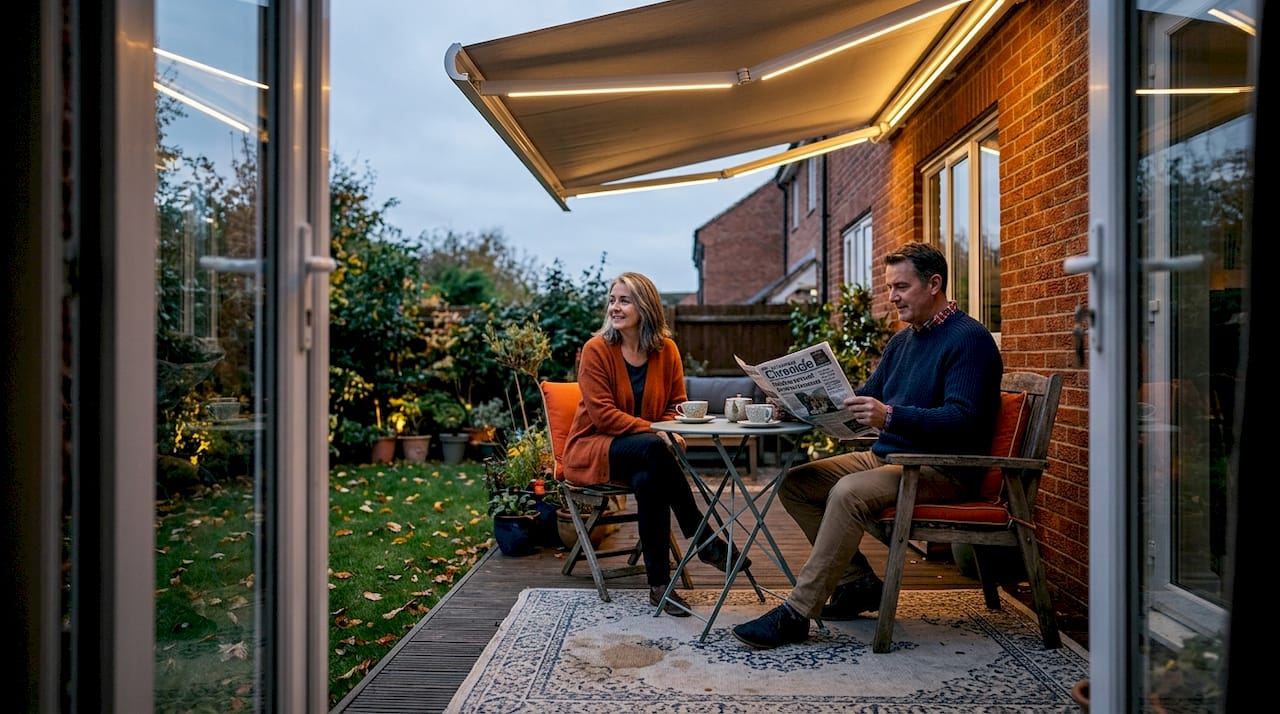
Most homeowners think of an awning as something that keeps the rain off. A practical addition, certainly, but hardly something to get excited about. That perception changes completely once you factor in integrated LED lighting. The moment the sun dips below the horizon and your garden or patio continues to glow with warm, controllable light, you realise the awning has become something far more significant. Across Yorkshire and the surrounding region, more homeowners and businesses are discovering that LED-equipped awnings don’t just extend outdoor time, they genuinely change how spaces feel and function throughout the year.
Table of Contents
Key Takeaways
Point | Details |
Integrated lighting elevates awnings | Built-in LED systems make outdoor spaces useable and inviting into the evening year-round. |
Choose integrated over add-ons | Factory-installed LEDs provide better weatherproofing, reliability, and often maintain your warranty. |
Energy saving and smart tech | LED awning systems use less power and often come with smart controls, enhancing convenience and efficiency. |
Premium models suit Yorkshire conditions | Select awnings designed for the local climate from reputable Yorkshire providers for best longevity and performance. |
Why lighting matters in modern awnings
Traditional awnings were designed with a single purpose: shelter from sun and rain. They did that job adequately, but once the daylight faded, the party moved indoors. Integrated LED lighting changes that equation entirely. With the right system, your outdoor space stays usable well into the evening, whether you’re hosting a summer barbecue, enjoying a quiet glass of wine after work, or running a hospitality venue that needs its terrace to look inviting at 9pm in October.
There are several compelling reasons why lighting has become a sought-after feature rather than a luxury add-on:
Extended usability: An illuminated awning means outdoor spaces work morning, evening, and into the night, regardless of whether it’s midsummer or early spring.
Mood and atmosphere: Dimmable LEDs with RGB colour options allow you to shift from bright functional light to a soft warm glow depending on the occasion.
Safety and visibility: Well-placed downlights reduce trip hazards on patios, steps, and uneven ground, something particularly useful for Yorkshire properties with multi-level gardens.
Kerb appeal: For commercial clients such as restaurants, hotels, and bars, an attractively lit awning draws attention from the street and signals that the outdoor space is open and welcoming.
Property enhancement: Residential properties with illuminated outdoor areas consistently photograph better, and estate agents in Yorkshire frequently note that usable outdoor space adds perceived value.
“LEDs provide energy-efficient outdoor lighting, consuming a fraction of traditional bulbs’ power, directed downward for better coverage and offering dimmable RGB options for ambiance.”
It’s also worth exploring the reasons to upgrade awning lighting if you’re still on the fence. The shift from basic shade structure to an illuminated outdoor room is more significant than most people anticipate before they experience it firsthand.
How integrated LED systems work for awnings
Understanding the technology helps you make a smarter purchasing decision. Integrated LED systems are not simply strips of light glued to the underside of a fabric awning. They are purpose-engineered components designed to move with the awning as it retracts and extends, withstand moisture, temperature variation, and UV exposure, and remain perfectly aligned through thousands of operating cycles.
Mounting methods matter enormously here. Weatherproof awning lighting uses screws, adhesive tape, or channels and rails with splines to create a secure, weather-resistant installation, and the power supplies are IP67 waterproof rated for outdoor use. IP67 is the rating that confirms a component can withstand temporary immersion in water, which in Yorkshire’s climate is a practical necessity rather than a luxury specification.
Compare this with DIY or aftermarket LED strips purchased from a general retailer. Those products are typically rated for indoor use or at best covered environments. Once exposed to Yorkshire rain, frost, or even condensation from warm air hitting a cold awning surface, they fail prematurely. Worse, they can create electrical hazards.
Feature | Integrated LED system | DIY/add-on lighting |
Weather resistance | IP67 rated power supply | Usually indoor-rated |
Movement tolerance | Designed to retract and extend | Risk of misalignment or damage |
Warranty impact | Preserves awning warranty | May void manufacturer warranty |
Installation quality | Professional, secure mounting | Often temporary or ad hoc |
Smart control compatibility | Somfy, Alexa, app integration | Rarely compatible |
Long-term reliability | High | Variable to poor |
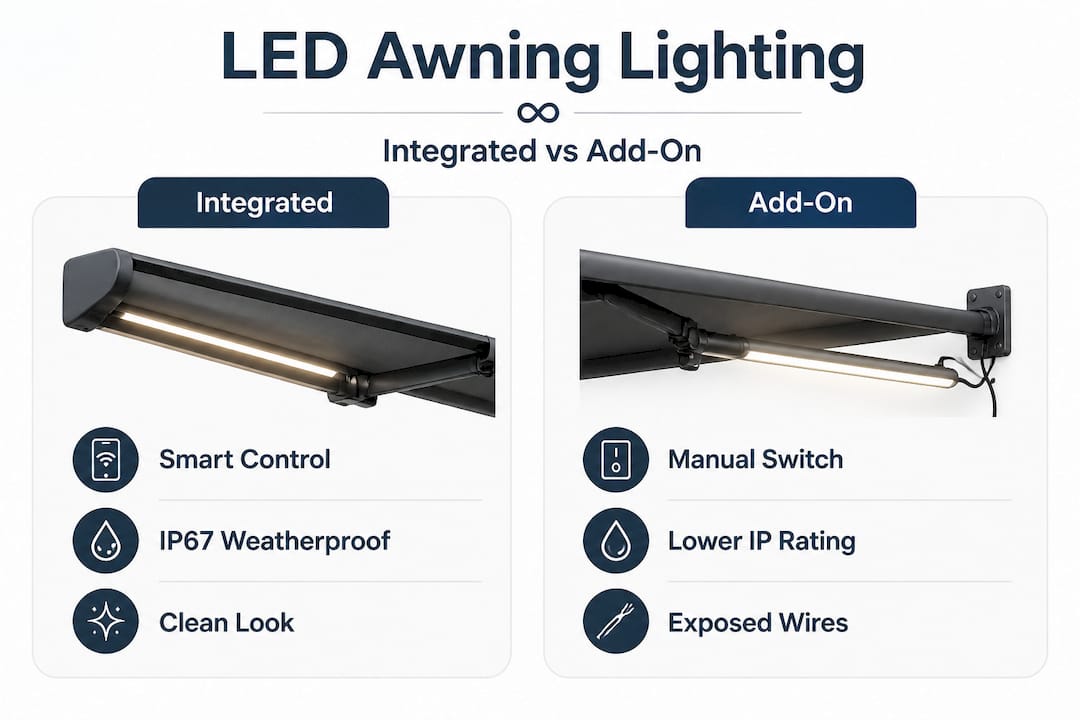
Smart control is another area where integrated systems pull well ahead. Voice and app control via platforms like Somfy and Alexa allows you to adjust lighting without leaving your seat, and avoiding DIY or add-on systems means you won’t risk voiding your warranty or dealing with motion wear and misalignment issues that plague retrofitted setups. When you explore how integrated LED awnings work in practice, the contrast with bolt-on alternatives becomes very clear.
Pro Tip: When specifying an LED awning, ask your supplier what IP rating the power supply carries. Anything below IP65 is not suitable for exposed outdoor positions in the UK. For Yorkshire conditions specifically, IP67 is the minimum you should accept.
If you’re weighing up stylish patio awning options, integrated LED lighting is consistently one of the features that buyers later say they’re most glad they included. It’s also one of the upgrades that’s far more difficult and costly to add retrospectively.
Comparing integrated and add-on LED lighting for awnings
It’s understandable that some buyers look at the price difference between a fully integrated LED awning system and a roll of LED strip from an online retailer and assume the cheaper option makes sense. In practice, the real cost comparison looks very different once you account for longevity, performance, and the likelihood of having to redo the job entirely.
Integrated systems outperform DIY lighting specifically because they are designed for awning motion and weather exposure, and leading professionals consistently recommend full-cassette models from manufacturers like Weinor for durability in the UK market. Full-cassette designs protect the fabric, arms, and all electrical components when the awning is retracted, keeping everything sheltered from the elements rather than leaving it exposed overnight or through winter months.
Here’s a practical breakdown of the key differences:
Warranty protection: Integrated LEDs are supplied and fitted as part of the awning system, so your warranty remains fully intact. Adding aftermarket lighting yourself frequently voids this, leaving you unprotected if a motor or mechanical component fails.
Weatherproofing: Proper integrated systems use sealed connectors, purpose-routed cabling, and weatherproof housings. DIY strips rely on basic adhesive backing and exposed connections that deteriorate rapidly in wet or freezing conditions.
Alignment through use: Every time a retractable awning opens and closes, components flex and move. Integrated LEDs are manufactured to accommodate this movement without stretching, pulling free, or creating dangerous loose wiring.
Aesthetics: Factory-integrated lighting sits flush and tidy within the awning structure. Retrofit additions are often visible, untidy, and detract from what should be an elegant outdoor feature.
Resale and professional credibility: For businesses, a professionally installed and certified system is important for insurance and health and safety considerations. For homeowners, it matters when selling a property.
For guidance on choosing an outdoor structure that will genuinely stand up to British weather year-round, the all-weather awning guidance we provide sets out what to prioritise in Yorkshire’s particularly changeable climate.
Smart controls, safety, and energy efficiency
The appeal of LED awning lighting goes further than aesthetics. When you pair an integrated system with smart technology, you gain meaningful practical benefits that affect daily life in a genuine way.
Here’s how a well-specified system works in practice:
Voice control via Alexa or Google Home: Adjust lighting brightness or colour temperature without moving from your chair. For anyone managing a busy restaurant terrace, this is a genuine operational convenience.
App control through Somfy: Motorised awnings equipped with Somfy controls can manage both the extension mechanism and the lighting from a single interface on your smartphone.
Automated weather sensors: Smart wind sensors mitigate edge cases like sudden wind gusts, retracting the awning automatically to prevent structural damage, and the low-voltage LED systems reduce electrical risks while annual professional servicing keeps everything operating safely.
Dimmable and colour-variable lighting: Set warm white light for relaxed family evenings, switch to cooler white for outdoor dining events, or use RGB colour options for seasonal displays.
Timer and schedule functions: Programme the lighting to activate at dusk and switch off at a set time, reducing energy consumption without requiring manual intervention.
“Smart sensors and low-voltage LED systems work together to keep outdoor awnings safe and efficient, with annual professional servicing strongly advised for all electrical components.”
Energy consumption is another area where LEDs genuinely deliver. A typical LED strip uses between 4 and 10 watts per metre compared to 25 to 40 watts per metre for equivalent incandescent or halogen solutions. Over a full outdoor season, this difference adds up meaningfully. If you’re interested in quantifying savings, the energy-saving awning solutions resource walks through the numbers in straightforward terms.
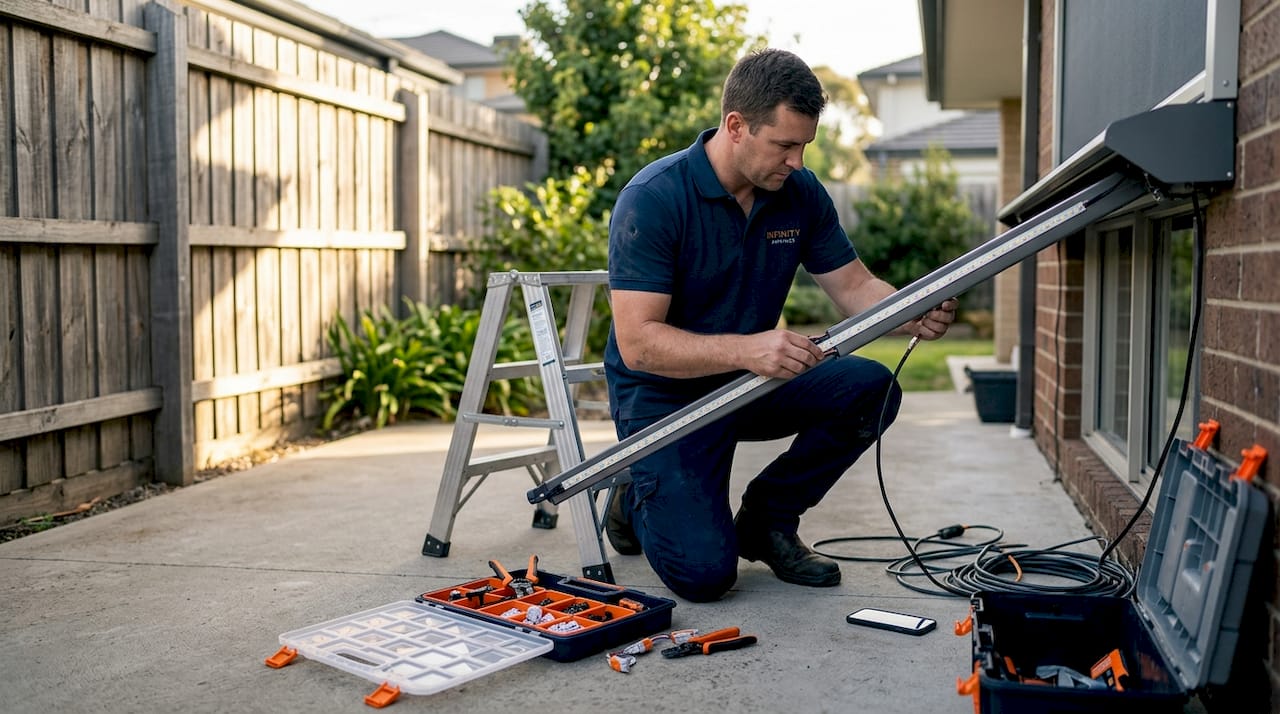
Pro Tip: Schedule an annual service for your motorised LED awning before the outdoor season begins in spring. A qualified engineer will check all connections, test the weather sensor calibration, and ensure the retraction mechanism is operating correctly, which significantly extends the lifespan of the whole system.
What to look for in premium LED awning systems in Yorkshire
Yorkshire buyers have specific needs. The weather here is more demanding than the south of England. Winters are colder, wind exposure is greater on moorland-adjacent properties, and the rainfall is year-round rather than seasonal. Choosing a system suited to local conditions means going beyond attractive brochure images and asking the right technical questions.
Here’s what to prioritise when specifying an LED awning in the region:
Supplier reputation and local knowledge: Yorkshire awning specialists including providers stocking Weinor and other reputable brands with integrated LED options have direct experience specifying systems for local weather conditions.
IP67-rated electrics as standard: This should be non-negotiable. Any supplier who can’t confirm the IP rating of their power supplies should be treated with caution.
Full-cassette housing: Protects fabric, arms, and electrical components during retraction, which is particularly important if your awning remains in position through the colder months.
Certified professional installation: This protects your warranty, ensures compliance with electrical safety standards, and gives you a properly documented installation for insurance purposes.
Lighting temperature matched to use: Warm white (2700K to 3000K) suits residential gardens and restaurant terraces. Cooler white (4000K) works better for functional commercial spaces or retail environments.
Trusted brand components: Weinor, Llaza, Selt, and similar manufacturers engineer their LED systems to work specifically with their awning mechanisms. This matters for long-term reliability in ways that generic components simply can’t match.
For further guidance on making the right choice for British conditions specifically, the resource on choosing awnings for UK weather provides detailed buying criteria that apply directly to Yorkshire properties.
Our perspective: Why going integrated with LED awnings makes all the difference
After more than 15 years of specifying, installing, and servicing awning systems across Yorkshire and the wider region, we’ve seen how this decision plays out in real life. The homeowners and business owners who choose properly integrated LED systems from the outset are consistently satisfied. Those who attempt to retrofit lighting, or who choose cheaper unbranded add-ons to save money upfront, are disproportionately represented in our service calls.
The reason is straightforward. An awning is a mechanical and electrical system that moves. It flexes, extends, retracts, and does so repeatedly across its working life. Anything attached to or threaded through it needs to be designed with that motion in mind. Integrated LEDs are tested for exactly this. Aftermarket additions are not.
There’s also a safety dimension that doesn’t get enough attention. Low-voltage LED systems reduce the risk of electrical incidents outdoors, but they still require proper weatherproofing, correct installation, and annual inspection. We’ve seen DIY electrical additions create genuine hazards, particularly on commercial premises where public safety is a legal obligation. The one-off saving from buying your own LED strips online is rarely worth the liability, the voided warranty, or the cost of having the job done properly after it’s gone wrong.
Smart integration is the other argument we make consistently to clients who are undecided. Controlling your awning’s lighting, position, and heating via a single app or voice command isn’t a gimmick. It’s the kind of seamless convenience that genuinely changes how often you use the space. Families use illuminated outdoor areas more. Restaurants turn tables more efficiently. Hotels generate better reviews for their terraces. That’s real, measurable value that justifies the investment in a properly integrated system from the start.
Understanding the essential awning types available helps you see where LED integration adds the most value for your specific situation, whether that’s a residential patio, a commercial hospitality space, or a retail frontage.
Transform your outdoor living with LED awning solutions
If reading this has confirmed that integrated LED lighting is the direction you want to go, the next step is talking to someone who genuinely understands the local conditions, the right products, and the installation standards that matter.
At Infinity Awnings, we supply and install premium awning systems with integrated LED lighting across Yorkshire and the surrounding region, working with trusted brands including Weinor to deliver solutions built for British weather. Whether you’re looking at garden pergolas with integrated LEDs for a residential project or a full commercial terrace installation, our team provides tailored advice, a free no-obligation quote, and professional installation backed by manufacturer warranties. Get in touch to start planning your outdoor space today.
Frequently asked questions
Are LED awnings safe for year-round Yorkshire weather?
Yes, integrated LED awnings from trusted suppliers use weatherproofed IP67 electrics specifically rated for outdoor use, making them reliable through Yorkshire’s wet and variable conditions.
Can I retrofit LED strips to my existing awning?
While technically possible, retrofitting risks misalignment, weather exposure, and warranty voiding, making factory-integrated systems a significantly more reliable long-term choice.
How much energy do LED awning lights use compared to traditional bulbs?
LEDs consume a fraction of the energy that traditional bulbs require, making them a highly cost-effective and environmentally sensible choice for outdoor awning lighting.
What smart features are available for LED awning lights?
Many systems offer voice and app control via Somfy and Alexa, and can be paired with weather-responsive smart sensors that automatically retract the awning during sudden wind or adverse weather.
Recommended
Residential Awning Installation in Todwick. Infinity Awnings
Transform Your Backyard with Stunning Landscape Lighting - Unique Companies
Comments