
Innovative outdoor shading trends for UK spaces in 2026

TL;DR:
Outdoor shading in 2026 focuses on integrating technology, sustainability, and regulatory compliance.
Bioclimatic pergolas and automated retractable awnings are trending solutions for versatile outdoor spaces.
Proper planning, measurement, and understanding space orientation are crucial for optimal outdoor shading investment.
Outdoor living has shifted from a seasonal luxury to a year-round expectation for UK homeowners and businesses alike. Balancing style, genuine comfort, and an increasingly regulation-conscious environment means that simply throwing up a parasol no longer cuts it. Whether you are redesigning a family patio in Yorkshire or fitting out a commercial terrace in Nottinghamshire, the shading solutions you choose in 2026 will shape how that space looks, feels, and performs for years ahead. This article walks you through the smartest criteria, the standout product trends, and the practical knowledge you need to make the right call.
Table of Contents
Key Takeaways
Point | Details |
Regulation-ready shade | Choosing external shading ensures both comfort and compliance for UK properties in 2026. |
Top style options | Bioclimatic pergolas and smart awnings offer tech-inspired, on-trend solutions for modern outdoor living. |
Plan for installation | Proper planning and material selection are critical to maximising shading performance and value. |
Function over form | Prioritise efficient, automated features that adapt to your space’s orientation and lifestyle needs. |
How to choose the right outdoor shading in 2026
Before exploring the trendsetting options, start with a quick guide on pinpointing the right solution for your outdoor space. The single biggest mistake people make is selecting a shading product based purely on aesthetics, then realising it underperforms or conflicts with building regulations. Getting the fundamentals right first saves you time, money, and a great deal of frustration.
Start with your property’s orientation. South and west-facing gardens and terraces receive the most intense sun exposure during the hottest parts of the day. For these orientations, external shading is most effective per Part O of the Building Regulations, and dynamic modelling even allows for larger glazing when appropriate shading is installed. North or east-facing spaces have different needs, often prioritising wind protection and retaining warmth rather than blocking direct sun.
Consider your primary use case. A residential patio used for weekend relaxation has very different demands from a commercial hospitality terrace serving customers throughout the day. Businesses need robust, low-maintenance, and highly durable solutions. Homeowners often prioritise aesthetics and ease of use. Both benefit from automation, but for entirely different reasons.
For practical choosing outdoor awnings guidance, here is a quick selection checklist for 2026:
Orientation: Identify whether your space is south, west, north, or east-facing
Primary function: Relaxation, dining, commercial hospitality, or play area
Budget range: Entry-level manual, mid-range electric, or premium smart-integrated
Regulatory check: Consult local planning and Part O requirements before purchasing
Integration needs: Lighting, heating, rain sensors, or smart home connectivity
Maintenance commitment: Low-maintenance frames and UV-stable fabrics versus decorative but higher-upkeep options
Pro Tip: For south and west-facing spaces, always prioritise external shading over internal blinds. External solutions block heat before it enters the space, reducing the need for additional cooling and cutting energy costs meaningfully.
“The most future-proof outdoor spaces in 2026 combine the right orientation-matched shading with compliant, energy-smart design. It is no longer just a nice-to-have. It is an investment in the building itself.”
For further awnings selection tips covering everything from arm types to fabric grades, you will find detailed guidance tailored specifically to UK outdoor conditions. Also worth exploring are modern home design trends if you want to align your shading choices with the broader aesthetic direction of contemporary UK properties.
Trending outdoor shading solutions for 2026
With clear criteria in mind, here is what is trending in 2026’s outdoor shading landscape. The market has moved far beyond basic fixed canopies and fabric awnings. Today’s solutions blend architectural design, smart technology, and sustainability into products that genuinely transform outdoor spaces.
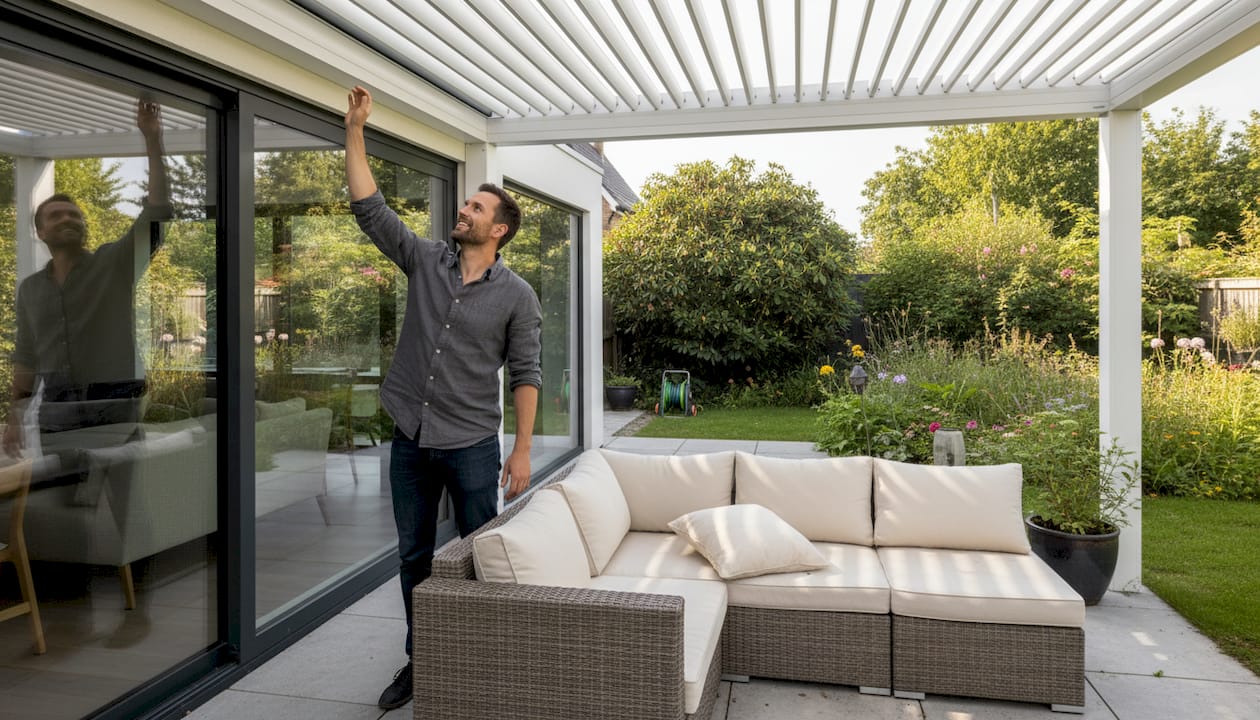
Bioclimatic pergolas are arguably the most talked-about structure this year. These feature louvred roof systems with adjustable aluminium blades that you can rotate to control sun, rain, and airflow precisely. Close the blades entirely and the structure becomes a weatherproof room. Open them fully and you have dappled shade with full ventilation. Brands like Weinor and Tarasola have developed systems with integrated LED lighting, heating elements, and rain sensors, making these pergolas genuinely usable through every UK season.
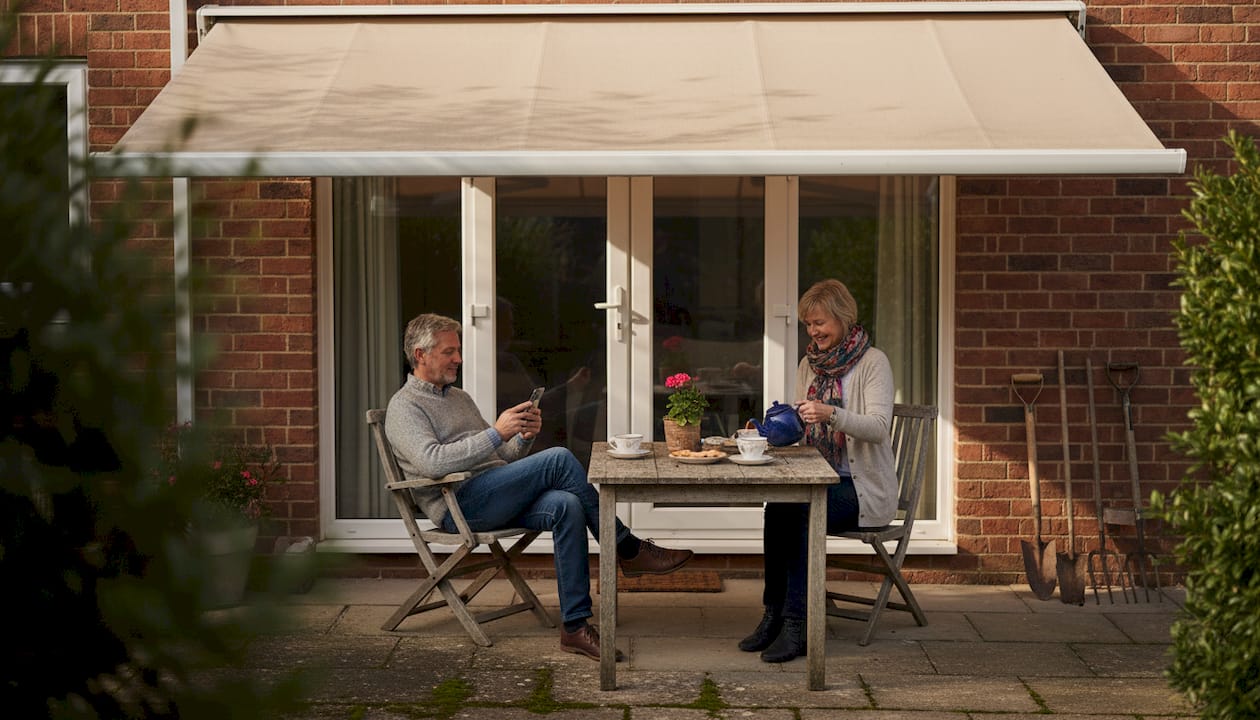
Automated retractable awnings continue to lead for residential patios and commercial terraces alike. Innovative shading systems for residential properties increasingly include wind and sun sensors that deploy or retract the awning automatically, meaning you never have to think about it. Modern cassette awnings house the fabric in a protected box when retracted, dramatically extending fabric life and keeping the installation looking sharp year-round.
External blinds and shutters are growing rapidly in popularity, particularly for glazed extensions and bi-fold door systems. They offer exceptional privacy alongside shading, and the range of shutter shading options available has expanded enormously. Perforated and vision-screen fabrics let in daylight while blocking glare and heat.
Sail shades provide sculptural, flexible coverage for smaller or irregularly shaped spaces. They are particularly popular for commercial courtyards and residential side returns where a rigid structure would feel too heavy or would require planning permission.
Here is a summary of what is driving 2026 trends:
Bioclimatic pergolas with adjustable louvres and weather-responsive automation
Cassette retractable awnings with sun and wind sensors
External blinds for glazed extensions and bi-fold doors
Sail shades for bespoke or compact areas
Solar-ready frames and recycled-content fabrics for sustainability credentials
Smart home integration via apps and voice control platforms
Pro Tip: When assessing pergola systems, check whether the frame is thermally broken aluminium. This prevents condensation on internal surfaces during cooler months, an often overlooked feature that makes year-round use far more comfortable. Explore top awning designs to see how leading systems are evolving in 2026.
Comparison: Which outdoor shading style suits your space?
Now, let’s break down each leading solution to see how they measure up for different needs. Understanding the practical trade-offs helps you invest confidently rather than second-guess your decision after installation.
Solution | Durability | Automation | Sustainability | Cost range | Best for |
Bioclimatic pergola | Excellent | Full | High (aluminium) | £££££ | Large entertaining areas |
Retractable awning | Very good | Full | Medium | ££££ | Patios and terraces |
External blind/shutter | Good | Partial | Medium | £££ | Glazed extensions |
Sail shade | Moderate | None | Medium | ££ | Compact or shaped spaces |
Fixed canopy | Excellent | None | High (depends on material) | ££££ | Permanent covered seating |
Each solution suits a different context. Here is a practical breakdown:
Bioclimatic pergolas: Best for large south or west-facing entertaining spaces. Pairs well with outdoor kitchens and commercial seating areas. Offers the highest resale value uplift.
Automated awnings: Ideal for residential patios and commercial terraces needing flexible, daily-use shading without permanent structure. Very popular with restaurants and hotels.
External blinds and shutters: Perfect when privacy and glare control are priorities. Particularly suited to bi-fold or sliding door openings where patio cover advantages are most evident.
Sail shades: Suited to creative, low-budget installations in courtyards, gardens, and educational premises where flexibility matters more than permanence.
Fixed canopies: Strong choice for entranceways, commercial premises, and spaces needing permanent, low-maintenance overhead cover.
For homeowners expanding with glazed additions, awning material options can significantly affect thermal performance, appearance, and longevity. When it comes to energy performance, smart external shading that responds dynamically allows for design flexibility not possible with fixed solutions, an important consideration for new-build and retrofit projects alike.
“Compliance and customisation are not in conflict. The best installations in 2026 achieve both by combining orientation-appropriate solutions with modern automation and quality materials.”
Do not overlook resale value. A professionally installed bioclimatic pergola or quality retractable awning adds tangible appeal to any property listing. Reviewing window treatment trends 2026 also reveals how integrated shading is becoming a standard buyer expectation, not just a premium extra.
Mixing and matching solutions is increasingly common. A home might combine an automated awning over the main terrace with sail shades over a side seating area, giving different functional zones a coherent but layered aesthetic.
Practical installation advice and common mistakes
Having chosen a style, let’s make sure your project goes smoothly from concept to completion. Even the best product will underperform if the installation is poorly planned or executed. These are the key steps and the mistakes to avoid.
Step-by-step installation process:
Measure accurately. Record the full width and projection of your intended coverage area, noting any obstructions such as downpipes, lights, or steps. Measure twice. The cost of remeasuring after ordering is avoidable.
Assess the sun path. Use a free solar path tool or ask your installer to map the sun angles for your space throughout the day. This determines the ideal projection depth and installation height.
Check planning permission. Most retractable awnings and sail shades fall within permitted development, but pergolas and fixed structures sometimes require consent. Always verify with your local planning authority before committing.
Select weather-appropriate materials. UK weather demands UV-stable, mould-resistant, and water-repellent fabrics. Acrylic-based solutions such as those from Sunbrella or Dickson outperform cheaper polyester options significantly.
Book a professional installation. Fixing points must handle wind loading. Poor wall fixings are the most common cause of shading failures. This is not a job to cut corners on.
Commission a commissioning check. Once installed, test all automation, sensors, and lighting functions thoroughly before signing off.
The step-by-step shading guide for Yorkshire homes covers practical regional considerations, including prevailing wind directions and typical sun angles across the county. For a pre-installation checklist, the outdoor shading checklist is a useful reference before you begin.
Common mistakes to avoid:
Underestimating the sun angle and choosing insufficient projection depth
Selecting economy fabrics that fade or mould within two seasons
Ignoring planning permission for pergolas over a certain size
Failing to integrate rain or wind sensors with electric systems
Neglecting annual maintenance, including fabric cleaning and motor servicing
Pro Tip: If you are investing in an electric awning or automated pergola, ask your installer about smart home integration at the point of installation. Retrofitting Z-Wave or Zigbee modules later is possible but always costs more than specifying them from the start. Many systems from Weinor and Tarasola offer native compatibility with popular smart home platforms.
Regular maintenance extends the life of any shading solution meaningfully. Clean fabrics with a mild soap solution and soft brush at least twice a year. Lubricate moving parts according to the manufacturer’s schedule. These small habits protect a significant investment.
Why 2026’s top outdoor shading trends go beyond looks
Step back from the product choices and the installation process for a moment, and consider what is really driving the transformation in outdoor shading this year. Most articles focus on aesthetics or technology features. But the real shift in 2026 is mindset.
Shading is no longer a decorative afterthought. It has become central to Building Regulations Part O, energy performance conversations, and the long-term value of UK properties. Smart buyers are not asking “which colour looks nicest” first. They are asking how this solution will perform in a warmer climate, how it will interact with glazing and thermal mass, and whether it will still be compliant in five years’ time.
The most telling case we see repeatedly is homeowners who invest in premium materials but ignore orientation-matching and automation. They spend more and get less because a stunning fixed canopy on a north-facing terrace contributes little to comfort or energy management. Contrast this with a mid-range automated awning correctly specified for a south-facing space, integrated with sun sensors and paired with a ventilated pergola. That combination delivers genuine comfort, reduces cooling demand, and adds demonstrable value to the property.
Sustainability is also shifting from buzzword to buying criterion. Clients are increasingly asking about recycled aluminium frames, low-VOC fabrics, and solar-compatible structures. The full-spectrum view of ideas and benefits of awnings confirms that the best outdoor shading choices in 2026 combine compliance, comfort, aesthetics, and resale value into a single coherent investment rather than treating each consideration in isolation.
If you take one thing from this perspective, let it be this: the most valuable shading decision you will make in 2026 is not which product to buy, but how clearly you understand your space before buying anything.
Find the perfect shading solution for your outdoor space
Ready to bring 2026’s outdoor shading trends to your space? At Infinity Awnings, we have spent over 15 years helping homeowners and businesses across Yorkshire, Derbyshire, Nottinghamshire, and Lincolnshire create outdoor spaces that work beautifully in every season.
Our team provides expert, no-pressure guidance from initial consultation through to professional installation. Whether you are exploring UK garden pergolas for a large entertaining area or considering veranda installations to complement a glazed extension, we offer bespoke solutions from premium brands including Weinor, Tarasola, and Llaza. Request your free quote today and let us help you design an outdoor space that truly delivers.
Frequently asked questions
What are the most popular outdoor shading solutions for UK homes in 2026?
Bioclimatic pergolas, automated awnings, and sail shades lead among homeowners this year, as confirmed by current shading trends for residential properties seeking style and regulatory compliance together.
Which outdoor shading is best for south- or west-facing spaces?
External shading such as awnings or shutters is the strongest choice, as south and west exposures benefit most from external solutions per Part O of the Building Regulations.
What installation mistakes should I avoid with outdoor shading?
Negligence around sun path analysis, poor fabric selection, and overlooking planning permission are the most common pitfalls, as detailed in the Yorkshire patio shading guide for 2026.
How do outdoor shading trends affect property value?
Compliant, well-specified shading solutions, particularly automated pergolas and quality retractable awnings, enhance comfort, kerb appeal, and are increasingly viewed by buyers as a standard feature rather than a premium extra.
Recommended
Comments