
Laminated Glass vs Polycarbonate for Verandas and Outdoor Shelters


For a veranda or outdoor shelter you will sit under every day, laminated glass is the stronger choice: it gives the clearest view of the sky, a high-quality finish and a roof that holds together if it is ever damaged. Polycarbonate is a capable, lighter alternative, and the right sheet colour matters a great deal if you go that way. Which suits you depends on how you use the space, which way it faces and how much upkeep you want. At Infinity Awnings we design, supply and install verandas, pergolas and canopies for homes, hospitality venues and schools, so this guide works through the choice the way we would on a site visit.
TL;DR
Laminated glass is two or more glass layers bonded with an interlayer. It suits owners who want a clear, premium roof that stays together if it cracks.
Polycarbonate is a plastic sheet, usually multiwall. Its air chambers limit heat transfer, and clear, opal and bronze tints change the light you get.
Clear polycarbonate lets in the most light. Opal softens glare and gives privacy, and it is a popular pick for sunny south- and west-facing patios.
Both materials are easy to look after if you use soft brushes and mild detergent. Never pressure wash polycarbonate.
Building rules differ by use. Roof glazing on a single house is treated very differently from glass on a multi-storey residential balcony.
Table of Contents
What you are actually comparing
Laminated glass is made from two or more panes bonded with a tough interlayer. If a pane cracks, the fragments stay attached to the interlayer instead of dropping. That is why it is the usual answer wherever glass sits above people.
Polycarbonate is a rigid plastic. Over a veranda it is normally fitted as multiwall sheet, a panel with hollow channels (flutes) running through it, in 10mm, 16mm or 25mm thicknesses. Multiwall is not the same product as solid polycarbonate sheet, which is a single flat skin. Most of the arguments for and against polycarbonate are really about multiwall.
The two are not interchangeable in feel. Glass is a premium finish you look through. Polycarbonate is a practical covering you mostly look at from underneath, as a bright ceiling.
Light, clarity and the view
This is where the two differ most. Glass lets you see the sky, the garden and the weather. Multiwall polycarbonate is translucent rather than transparent: you get daylight, but the flutes and the internal walls mean you see a bright surface, not a view.
The figures for polycarbonate are specific. A UK sheet supplier’s technical guide gives light transmission for 16mm triplewall sheet of 74% for clear and 42% for opal, with 10mm sheet at 81% clear and 48% opal, and 25mm at 62% clear and 34% opal. Thicker sheet insulates better but passes less light.

If your priority is a bright, open outdoor room that feels part of the house, glass gives the best result. If your priority is a covered area that is simply light and dry, polycarbonate does that well.
Clear, opal or bronze polycarbonate
If polycarbonate is on your shortlist, the tint decides how the space feels more than the thickness does.
Clear gives the most light and the brightest interior. The same technical guide notes it offers the greatest light transmission and brightness. Under direct sun it can feel hot and glaring, so it suits north- and east-facing spaces, or covers where winter light matters most.
Opal has a milky white finish. According to the same guide, it provides a degree of privacy whilst keeping good light transmission and reduces the solar energy entering the sheet, which keeps the covered area cooler in direct sun. A UK veranda specialist describes opal as diffusing the sun, cutting glare and hiding leaves and dirt on top, which is why it is the most popular choice on south- and west-facing patios, as set out in this research summary on clear versus opal.
Bronze cuts light sharply, at 22% for 16mm sheet in the same table. It also attracts more heat rather than reducing it, so do not pick it expecting a cooler space.
A simple rule: clear for light-starved shady sides, opal for sunny aspects and for restaurant or pub terraces where glare on tables and guests matters.
Heat, insulation and comfort
Multiwall polycarbonate’s internal air chambers limit heat transfer, and thicker 16mm or 25mm sheets give improved insulation. That is a real comfort benefit on a lean-to veranda against a house wall.
Glass roofs can be specified with solar control coatings, and shade can be added in a way that suits the glass. For a glass veranda or conservatory-style roof, external shading designed for the roof takes the edge off summer heat without losing the light you chose glass for. Whichever roof you choose, plan shading and heating at design stage, not as an afterthought.
Strength, safety and what happens when something goes wrong
Both materials are used overhead because both are designed for it, but they behave differently under stress.
Laminated glass is built so that a cracked pane stays held by its interlayer. For a roof above a seating area, a dining terrace or a school play space, that retained-pane behaviour is the reassurance owners and property managers look for.
Polycarbonate is a flexible plastic that absorbs knocks well, which is why it is common on garden buildings. Its performance depends on the sheet being UV-protected and properly fixed.
What matters most in practice is specification: glass thickness, interlayer, support spacing and the snow and wind loads for your site. These are worked out per project, not guessed from a material name. In Yorkshire, Derbyshire, Nottinghamshire and Lincolnshire, exposed sites and winter snow are good reasons to have the structure and glazing designed together.
Cleaning and maintenance
Upkeep is the point most people underestimate, so it deserves a plain answer.
A UK supplier notes that UV-protected polycarbonate needs only occasional cleaning with mild detergent and no sealing or painting, whereas glass shows streaks and marks more readily and is cleaned more often. That is a fair trade for the clarity you gain. Glass is a smooth, hard surface that responds well to a regular wash, and a laminated roof rewards you with a view.
Cleaning a polycarbonate veranda
The method is the same whatever the tint:
Sweep leaves and debris off with a soft-bristle broom and clear the gutters.
Wash with warm water and mild detergent, or a specialist polycarbonate cleaner, using a soft sponge from the top down. Eurocell’s UK cleaning guide follows this routine.
Rub in the same direction as the flutes, as this conservatory roof cleaning guide advises, and avoid scouring pads.
Rinse with a garden hose. Do not use a pressure washer: the high-pressure stream can damage the surface and cause cracks.
The same guide suggests cleaning a roof at least once a year, and twice a year if the pitch is low, because less water runs off a shallow roof.
Cleaning a glass roof
Use a soft brush or sponge with warm water and a little mild detergent, work from the top down and squeegee or dry the glass to avoid streaks. For general glass care, guidelines for cleaning home windows and glass partitions cover the basics. If the roof is high or has no safe access, build cleaning access into the design from the start.
UK rules worth knowing
For most homeowners, a veranda or canopy roof is a design and specification question rather than a regulatory hurdle. Architects, property managers and contractors should know that fire-safety rules have moved recently.
Changes to Regulation 7 of the Building Regulations mean that laminated glass is not permitted as balcony balustrade material on relevant multi-storey residential buildings, because all laminated glass products are classed Euroclass B. The same government report found that laminated glass does not significantly influence early upward fire spread. This concerns balustrades on tall residential blocks, not a veranda roof on a house.
The fire-safety amendments to Approved Document B, the guidance on fire safety in England, took effect on 2 March 2025, and the Building Regulations etc. (Amendment) (England) Regulations 2025 came into force on 7 October 2025.
For thermoplastic glazing such as rooflights, the guidance says solid polycarbonate sheet must be at least 3mm thick for the relevant test. Double- and multi-skinned sheets are treated differently.
These points apply in England. Scotland, Wales and Northern Ireland have their own regulations. If your project involves a commercial building, a school or a block of flats, confirm the requirements with your building control body or approved inspector before you fix the specification.
Which is right for your space
Your situation | Better fit |
Home veranda you will use as a room, with a view of the sky | Laminated glass |
Sunny south- or west-facing patio where glare is the problem | Glass with shading, or opal polycarbonate |
Shady north-facing spot that needs every bit of light | Glass, or clear polycarbonate |
Restaurant or bar terrace that needs a premium look and year-round use | Glass roof with integrated shading and heating |
School or nursery shelter where durability and low upkeep lead | Specified per site, with the structure designed for the loads |
Lean-to cover where insulation and light weight matter most | Thicker multiwall polycarbonate |
If the roof is part of a wider plan, our guides to types of glass canopy systems and to made-to-measure glass verandas versus standard sizes show how size and fit affect the finished result. If you are weighing a louvred or pergola-style roof instead, pergola roofing options are worth a look.
Our view
We have spent more than 15 years designing and fitting outdoor shading, and the question we hear most is not which material is cheapest, but which one people will still be glad they chose in ten years. For a space that people use as a room, we steer them toward glass. It looks right against brick and render, it gives the view that makes an outdoor room feel worth sitting in, and shading and heating can be designed in with it. Our brands, including Weinor, are chosen for quality, and we are an official supplier and installer for them. The roof is only one part. Get the frame, the fall, the gutters and the shading right and the glazing choice becomes a pleasure rather than a worry. We take a consultative, no-pressure approach: we look at the site, how you use it and your budget, then recommend what suits it. Andrew
Talk to us about your veranda or shelter
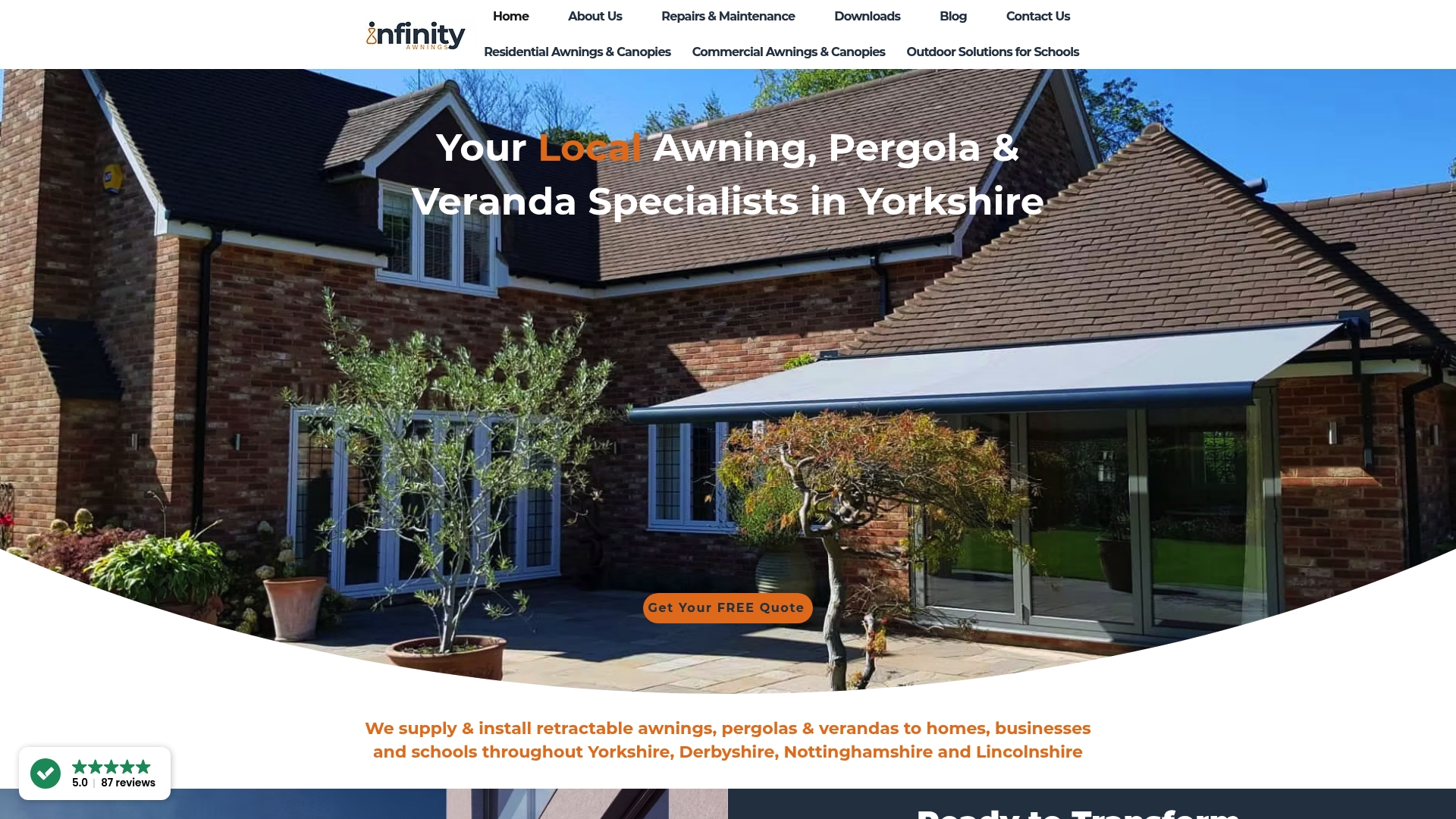
We design, supply and install retractable awnings, pergolas and verandas for homes, businesses and schools across Yorkshire, Derbyshire, Nottinghamshire and Lincolnshire. If you are choosing a roof for a patio, a terrace or a play area, our verandas range is the place to start, and you can ask for a free quote.
For homes, see our residential awnings and canopies. For hospitality venues, our commercial awnings and canopies cover bars, restaurants and hotels. For nurseries, schools and colleges, we offer outdoor solutions for schools.
FAQ
Is laminated glass or polycarbonate better for a veranda roof?
For a veranda you use as an extra room, laminated glass gives the clearest view and a premium finish, and its layers stay bonded to the interlayer if a pane cracks. Polycarbonate is lighter and insulates well in thicker sheets, so it suits lean-to covers where those matter most. We help you match the roof to how you use the space.
Should I choose clear or opal polycarbonate?
Clear gives the most light, with 74% transmission for 16mm triplewall sheet. Opal gives 42% at the same thickness, along with privacy, less glare and a cooler space in direct sun. Opal is the usual choice on south- and west-facing patios, and clear suits shadier aspects.
How do I clean a polycarbonate veranda roof?
Sweep off debris, then wash with warm water and mild detergent using a soft sponge from the top down, rubbing along the flutes. Rinse with a hose. Avoid scouring pads and never use a pressure washer, which can crack the sheet.
Do UK building regulations restrict glass or polycarbonate on outdoor shelters?
The recent Regulation 7 change restricts laminated glass as balcony balustrade material on relevant multi-storey residential buildings. It does not concern a typical veranda roof on a house. Rules differ across the UK and by building type, so check with building control for commercial, school and multi-occupancy projects.
Sources
Recommended
Comments