
Louvre Roof Stuck? Don’t Force the Slats; Know When to Call a Pro


If your louvre roof will not open or close, the most likely causes are a power fault, debris jammed in the guide channels, seized pivots or a tripped safety sensor. Isolate the power at the switch first, then try the manual override if your system has one. Never force the slats or link arms: if the fault involves motor replacement or spring-tensioned components, that work calls for a professional.
TL;DR:
Check batteries, switches, breakers, channels, gutters, and pivots; humming without movement suggests binding, while silence points to a supply fault or failed motor.
Isolate power before using a manual override; clear and dry channels, then apply manufacturer approved lubricant, but never force slats or link arms.
Leave motor replacement, complex wiring, alignment problems, and spring tensioned link arms to a qualified installer; separating loaded arms can be unsafe.
Inspect debris, gutters, and movement quarterly, clean and lubricate pivots yearly with the recommended product, and check the roof after storms before operating it.
Table of Contents
Systematic diagnostic checklist: isolate, observe, record
Before you touch any tools, work through the fault logically so you know whether you are dealing with an electrical problem, an obstruction or a mechanical bind. A methodical check also gives a repair engineer useful information if you end up booking a visit.
Check the simplest things first: remote batteries, the wall switch, and any indicator lights on the control unit.
Confirm mains power is reaching the drive unit. Check your RCDs, fuses and consumer unit for a tripped breaker, and reset only if you are confident doing so safely.
Scan the roof surface and the guide channels for leaves, moss, ice or debris that could be binding the slats.
Look at the gutters and drainage points too: a blocked channel can hold water that adds weight and resistance to the moving parts, much like the vidaXL door canopy illustrates concerns about canopy materials and drainage.
Inspect the visible link arms, pivots and seals for rust, dirt build-up or any obvious bending.
Try the manual operation, or disengage the motor coupling if your system allows it, and note whether the roof moves freely or feels stiff across its full travel.
A few extra checks help narrow things down further:
Note whether the fault appeared suddenly or has been getting worse over several weeks.
Listen for any motor sound when you operate the control, even if the roof does not move.
Check whether the issue affects the whole roof or only one section of slats.
Take photos of any visible damage, debris or corrosion before you start cleaning anything.
Write down what you find at each step. A clear note of symptoms, sounds and timing saves time if you need to call in a repair engineer later, since they can rule out several causes before arriving.
Safe manual fixes and how to test manual operation
Once you have identified the likely area of the fault, a few hands-on checks can resolve common issues without specialist tools. Always isolate the power supply before doing any of this, and wear gloves and eye protection, since pivot mechanisms can carry old grease, rust flakes or sharp edges.
Locate the manual override, usually a small lever, crank point or decoupling pin near the motor housing, and use it to move the slats a short distance by hand.
Remove loose debris from the channels and pivot points, then wash the channels out and dry them thoroughly.
Apply a suitable lubricant, such as a silicone spray on pivot points, or a light grease where the manufacturer’s guidance recommends it.
If a pivot feels seized, work it gently with small back-and-forth movements rather than forcing it in one direction, repeating the cleaning and lubrication as needed.
Never hammer a link arm or force it past a resistance point: this can bend the arm or damage the seal.
How the roof feels during this test tells you a lot. Stiffness along the whole travel usually points to a mechanical bind, such as a dirty channel or a seized pivot, while a motor that runs but produces no movement at all suggests the fault sits with the motor or its connection to the frame rather than the mechanism itself.
Pro Tip: Lubricate pivot points little and often rather than in one heavy application: a thin film worked in over a few operations lasts longer than a single thick coat.

How to check motors, actuators and electrical systems safely
If the manual test suggests the roof itself moves freely but the motor is not driving it, the fault is likely electrical or sits within the actuator. Some systems let you isolate the motor from the louvre frame to test whether it runs freely on its own, but many use spring-tensioned link arms to hold the slats in position, and separating these under tension is not a safe DIY job.
Check for a tripped limit switch or safety sensor, since these commonly stop movement as a protective measure and reset procedures vary between models.
Look at accessible wiring connections for obvious signs of burning, corrosion or a loose terminal, but do not go further than a visual check on anything that could be live.
Note whether the motor hums when you operate the control. A hum with no roof movement usually points to mechanical binding rather than a motor failure.
No sound at all from the motor suggests a supply fault or a failed motor rather than a jam in the mechanism.
Manufacturer guidance for comparable mechanisms backs up this approach: VELUX support advises checking for obstructions and lubricating moving parts before assuming a motor fault, and contacting support if the problem persists after those checks.
Take photos of any damage and note any sounds the system makes. This detail helps a technician diagnose the fault before they even arrive, which can shorten the length of a call-out visit.
When to stop DIY and call a qualified installer
Some faults are safe to investigate yourself; others are not. Spring-tensioned link arms, motor replacement, complex wiring and structural alignment issues all fall into the second category, as does anything your manual or warranty terms flag as requiring a professional.
A diagnostic visit typically starts with isolating the power and testing the motor separately from the louvre frame.
The technician will measure the roof’s operating limits and check the link arm alignment.
Worn or damaged parts are replaced once the fault is confirmed, rather than guessed at in advance.
Cost depends on the parts needed, whether the motor itself needs replacing, labour and travel, and how easily parts are available for your model and age of system.
Before you call, gather a few basics: photos of the fault, the model number if you can find it, a timeline of when the problem started, and details of any maintenance you have already carried out. If you would rather hand the whole process to someone with the right tools and parts, our awning repair and maintenance service covers exactly this kind of fault.
A simple maintenance routine to keep your roof moving freely
Most stuck-roof call-outs trace back to neglected pivot points or blocked channels rather than motor failure, so a short routine goes a long way.
Carry out a quarterly visual check for debris, blocked gutters and smoothness of movement.
Clean and lubricate the pivot points and linkages once a year, using the lubricant type your manufacturer recommends.
Check remote batteries and the wall switch at the same time, since flat batteries are a common and easily missed cause of a “stuck” roof.
After any heavy wind, snow or storm, inspect the roof before operating it again, since debris or minor misalignment often follows bad weather.
Pro Tip: Book a professional service once a year alongside your own quarterly checks: a technician will spot early wear on pivots and link arms before it turns into a full seizure.
Why professional diagnosis matters: our view
Experience shows that many so-called “motor faults” actually result from neglected pivots or blocked channels. Correct diagnosis avoids replacing parts that were never broken and keeps spring-tensioned components handled safely. A diagnostic visit costs nothing to arrange and nothing is ever pushed on you.
— Andrew
Book a diagnostic visit or repair with us
When cleaning and lubrication have not freed your roof, we cover the full range of fixes: motor and actuator diagnosis, pivot and link arm repair, re-alignment of seized mechanisms, and scheduled servicing to stop the problem returning.
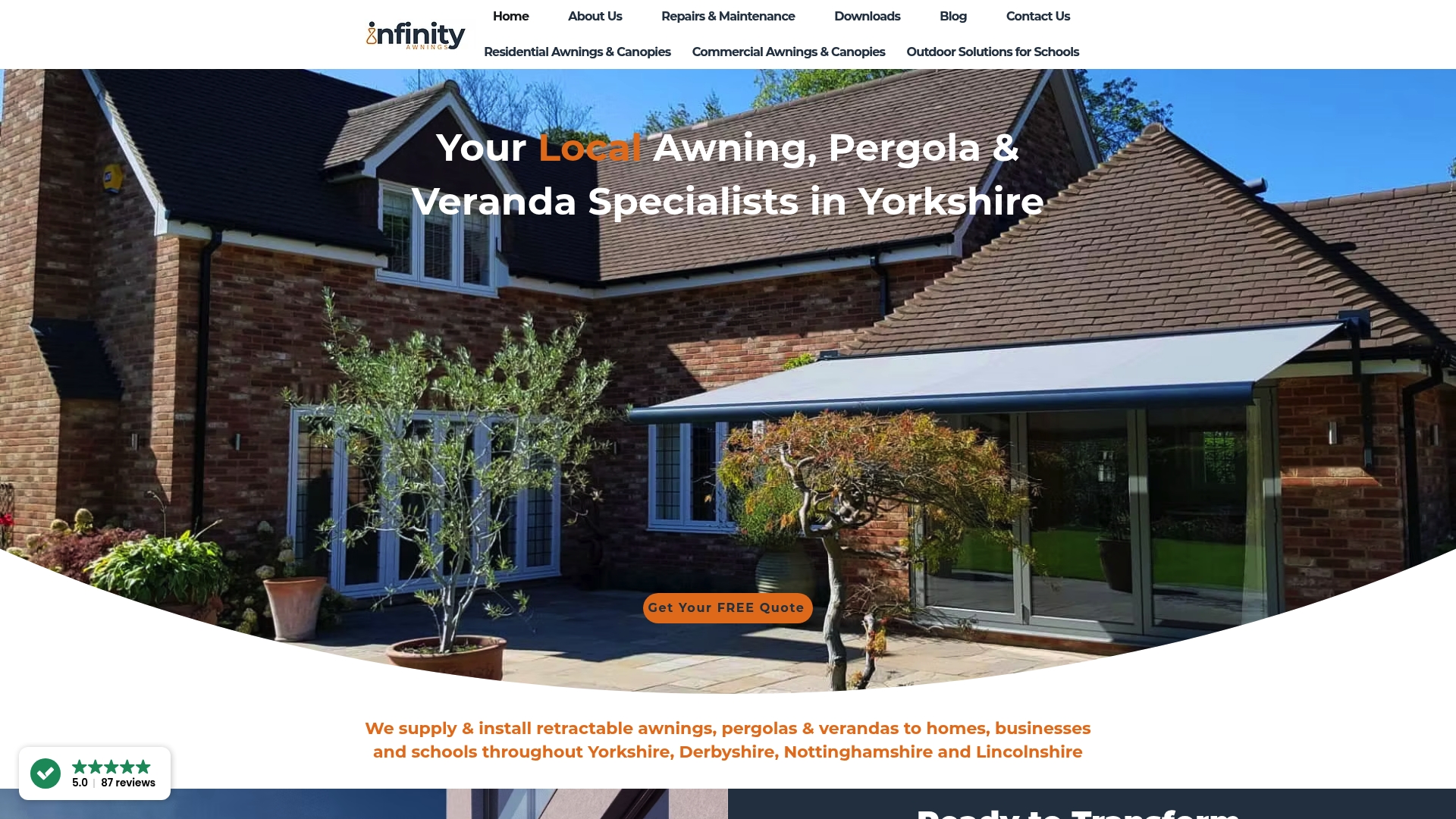
A diagnostic visit starts with the same checks outlined above, carried out with the right tools to isolate spring-tensioned arms safely, followed by a clear explanation of what needs fixing and why. Request a free quote or get in touch through our main services page to arrange a visit across Yorkshire, Derbyshire, Nottinghamshire and Lincolnshire.
FAQ
Why is my roof sagging in the middle?
A sagging roof section usually points to a structural or drainage problem rather than the louvre mechanism itself, often linked to trapped water or inadequate support. Building regulations require roofs to provide adequate drainage, so a blocked gutter or channel that holds standing water can add weight and cause both sagging and binding in the moving parts.
How do I fix a leaning pergola?
A leaning pergola is typically caused by loose or shifted footings rather than a fault in the roof mechanism, and the fix depends on how far it has moved. Minor leaning can sometimes be corrected by adjusting and re-securing the base fixings, but a structural lean affecting the frame alignment is a job for a professional installer.
How much does a louvre roof cost?
Costs vary widely depending on size, brand, electric or manual operation and any add-ons such as lighting or sensors, so we do not publish a fixed figure. We provide a tailored quote once we know the details of your space and requirements, available on request through our free quote form.
How do I build a louvered pergola roof?
Building a louvered pergola roof involves fitting a supporting frame, then mounting rotating slats linked to a drive mechanism that opens and closes them together. This is a structural and mechanical job best handled by an installer, since incorrect alignment of the link arms is a common cause of a roof jamming shortly after a DIY build.
Sources
Recommended
Comments