
Manual Awning Operation – Practical Benefits Explained

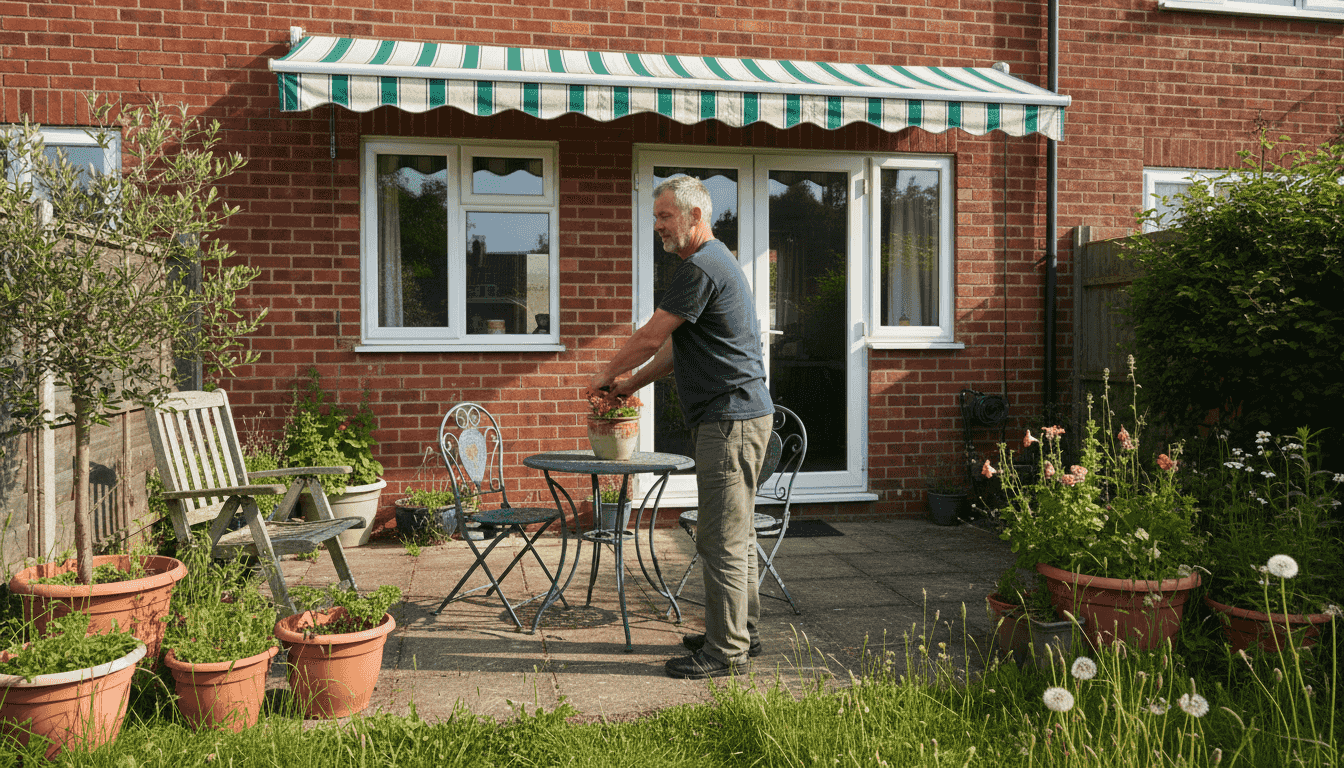
Sun-trapped afternoons on a Yorkshire patio can leave you searching for shade that looks good and works without fuss. Manual awnings stand out for their straightforward design and practical control, giving you shade in seconds with the turn of a crank. For homeowners and independent business owners who value simplicity and style, understanding the mechanics and benefits of manual awning operation helps you create comfortable, usable outdoor spaces with minimal maintenance.
Table of Contents
Key Takeaways
Point | Details |
Manual Awnings Offer Flexibility | They can be extended or retracted manually, providing control over shading without reliance on electrical power. |
Cost-Effective Solution | Manual awnings typically require lower initial investment and maintenance costs compared to motorised alternatives. |
Simplified Maintenance | Basic upkeep can extend the lifespan significantly, requiring minimal effort compared to motorised systems. |
Responsive Shade Control | They enable immediate adjustments, ensuring effective shelter from varying weather conditions, beneficial for both residential and commercial use. |
Manual awning operation defined and clarified
A manual awning is a retractable shade structure that you extend and retract using a hand crank or lever mechanism rather than electrical power. Think of it as a giant blind for your patio, garden, or business entrance that gives you complete control over when shade appears.
Unlike fixed structures, manual awnings offer flexibility. You deploy them when the sun intensifies, then roll them back when clouds arrive or evening falls. This hands-on approach means no wiring, no batteries, and no motors to maintain.
What makes manual awnings different?
Manual awnings operate through straightforward mechanical systems:
Hand crank mechanism - Turn the handle to extend or retract the fabric smoothly
Lever-based systems - Push or pull a lever for quick deployment
No electrical components - Zero reliance on power supplies or circuit breakers
Lightweight construction - Easier to install on older buildings or structures
When you turn the crank, it winds or unwinds the fabric roll using simple gearing. Most Yorkshire homeowners can operate them with minimal effort, regardless of age or physical strength.
Manual awnings give you instant control—extend them in seconds, retract them just as fast, all without touching a switch.
Key differences from electric awnings
Electric awnings offer convenience through motorised operation. Manual versions prioritise simplicity and reliability. You’ll find manual awnings cost considerably less upfront, operate silently, and require retractable awning maintenance that focuses purely on mechanical components rather than electrical systems.
The trade-off is straightforward: you exchange convenience for affordability and mechanical dependability. For patios you use seasonally or commercial spaces with regular staff, this balance works perfectly.
The practical reality of ownership
Owning a manual awning means appreciating simplicity. You’ll spend seconds extending shade during lunch breaks, never worry about motor failures during summer gatherings, and enjoy lower maintenance costs throughout ownership.
Many small business owners across Derbyshire and Nottinghamshire prefer manual systems for outdoor dining areas. Staff can adjust shade for customers quickly, customers appreciate the control, and the operation becomes second nature within weeks.
The hand crank becomes as natural as opening a window or adjusting venetian blinds.
Pro tip: Position your awning crank or lever handle within arm’s reach of seating areas so adjusting shade takes seconds rather than requiring trips across the patio.
Types of manually operated awnings in the UK
The UK market offers several distinct varieties of manually operated awnings, each designed for different spaces and purposes. Understanding which type suits your property helps you make an informed choice that balances aesthetics, functionality, and budget.
Manual awnings come in styles ranging from traditional to contemporary, with varying fabric options and installation requirements. Whether you own a terraced cottage in Yorkshire or run a café in Nottinghamshire, you’ll find a manual awning type that matches your needs.
Main categories of manual awnings
British homeowners and business owners typically choose from these primary types:
Retractable awnings - Fabric rolls into a cassette when not in use, offering clean lines and protection from weather
Drop-arm awnings - Side arms extend outwards, ideal for narrow spaces like shop fronts or balconies
Folding-arm awnings - Mechanical arms fold for compact storage, popular for residential patios
Slope awnings - Permanent fixtures with a slight angle to shed rainwater naturally
Each type operates via hand crank or lever, giving you complete control over deployment. The choice depends largely on available space, intended use, and aesthetic preferences.
Here’s how the main types of manual awnings in the UK differ:
Awning Type | Typical Use Location | Space Required | Key Distinguishing Feature |
Retractable cassette | Modern patios, shopfronts | Moderate wall space | Discreet protective box conceals fabric |
Drop-arm | Balconies, shop windows | Narrow spaces | Side arms allow angled extension |
Folding-arm | Residential patios | Ample wall width | Arms fold compactly upon retraction |
Slope | Permanent installations | Full wall height | Always fixed, ideal for rain runoff |
The right manual awning type turns an ordinary patio or business entrance into a functional, weather-protected outdoor area.
Retractable cassette awnings
Retractable cassette awnings represent the most popular choice across UK homes and businesses. The fabric retracts fully into a protective box, safeguarding it from rain, dust, and UV damage when not in use.
You’ll appreciate how they blend seamlessly with modern architecture. When extended, they provide substantial shade coverage. When retracted, they disappear entirely against your building’s facade, maintaining clean sightlines.
These work particularly well for Victorian properties across Yorkshire that benefit from 7 essential types of awnings, allowing homeowners to preserve period aesthetics whilst adding practical shade.
Drop-arm and folding-arm styles
Drop-arm awnings extend sideways from brackets, making them ideal for shop windows and narrow residential spaces. They take up minimal footprint when retracted and deploy quickly when needed.
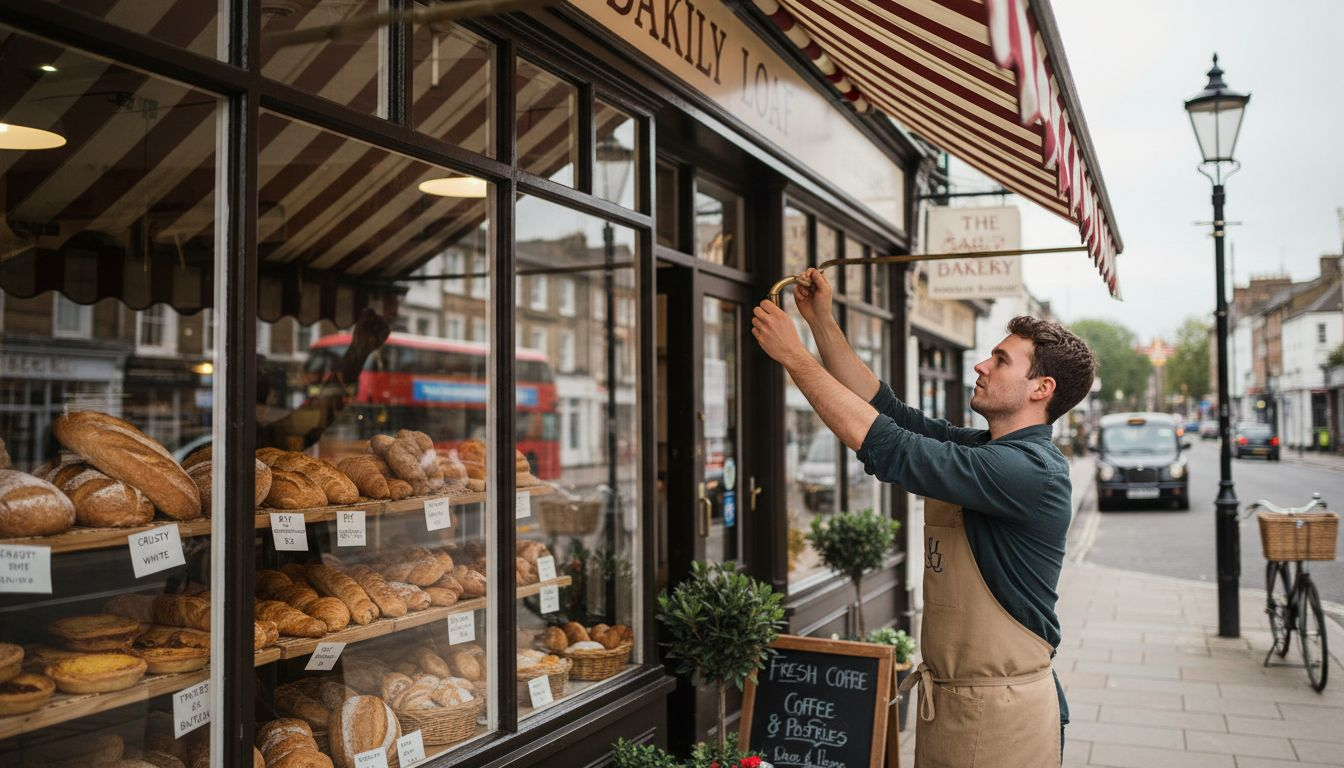
Folding-arm versions use mechanical arms that fold inwards like an accordion when retracted. Both styles suit properties where wall space is limited or where you need flexibility to adjust coverage angles throughout the day.
Pro tip: Measure your space carefully before ordering—manual awnings require clear ceiling height above the crank handle to operate smoothly, typically at least 2 metres of unobstructed vertical space.
How crank and pulley systems function
Manual awning mechanisms are elegantly simple. A hand crank connected to a gear system inside the roller tube housing does the heavy lifting. Turn the crank one direction and fabric unwinds from the roller; turn it the opposite way and the fabric retracts smoothly back into the housing.
This mechanical approach means no electricity, no batteries, and no complex wiring. Just you, the crank, and straightforward physics working together to extend or retract your shade.
The mechanics behind the crank
When you grip the crank handle, you’re engaging with a carefully engineered system of gears and pulleys. Here’s how it works:
Hand crank rotation - Turning the handle applies torque to the gear mechanism inside the roller tube
Gear reduction - The gears multiply your hand force, making it easy to extend heavy fabric without excessive effort
Roller tube winding - As gears turn, the fabric either winds onto or unwinds from the roller inside the tube housing
Smooth operation - Carefully calibrated tension ensures consistent, reliable movement in both directions
The beauty lies in simplicity. A schoolchild can extend your awning, yet the mechanism withstands years of regular use across Yorkshire’s variable weather.
Hand crank mechanics create a direct connection between your effort and the awning’s movement—what you put in is exactly what you get out.
Pulley systems and tension control
Pulley systems often complement the crank mechanism, assisting smooth fabric movement and maintaining consistent tension. These work behind the scenes, keeping fabric aligned as it extends or retracts across the roller tube.
Think of pulleys like guides on a curtain rail. They prevent the fabric from bunching or sagging, ensuring even deployment across the entire width of your awning. Proper pulley alignment means your shade extends perfectly parallel every single time.
Well-designed pulley systems distribute stress evenly across the fabric, extending its lifespan significantly. They’re particularly important for larger awnings covering patios or commercial spaces.
Why this system works brilliantly
Compare this to fixed structures or electric systems. Manual crank-and-pulley mechanisms give you instant control without waiting for motors or relying on electrical supplies. You deploy shade in seconds, adjust angles to track the sun, or retract entirely when evening arrives.
Small Derbyshire business owners appreciate this responsiveness. Staff adjust shade for customer comfort on demand. No scheduling, no programming, no unexpected mechanical failures during summer seatings.
The system also costs considerably less to purchase and maintain compared to motorised alternatives.
Pro tip: Turn the crank smoothly and consistently rather than jerking it—smooth, steady rotations reduce strain on internal gears and fabric, extending component lifespan significantly.
Benefits for homes and business premises
Manual awnings deliver tangible advantages for both residential properties and commercial operations. The benefits extend beyond simple shade provision, touching on cost savings, operational flexibility, and enhanced property appeal.
Whether you’re protecting a garden patio in Nottinghamshire or shading a café terrace in Derbyshire, manual awnings solve real problems that homeowners and business owners face daily.
Residential advantages
Homeowners benefit significantly from manual awning installation:
Extended outdoor living - Create comfortable patio spaces usable throughout spring and summer
Lower energy costs - Shade windows and walls to reduce indoor cooling requirements
Property value increase - Well-maintained outdoor areas attract buyers and increase perceived home value
Flexible control - Adjust shade instantly based on weather, time of day, or personal preference
Minimal maintenance - No electrical components means fewer things to repair or replace
Your Yorkshire cottage becomes genuinely usable for outdoor entertaining. Afternoon tea parties no longer require fleeing indoors when the sun peaks. Children can play comfortably in dappled shade rather than intense UV exposure.
Manual awnings transform underutilised patios into functional outdoor rooms that families actually use and enjoy.
Commercial benefits
Business premises experience different but equally compelling advantages. Restaurants and cafés gain crucial competitive advantages by offering comfortable outdoor seating. Customers linger longer, spend more, and return more frequently when outdoor areas provide adequate shade.
Shop fronts benefit from benefits of retractable awnings that protect window displays from UV fading whilst maintaining clear sightlines to merchandise. Staff control deployment instantly, adjusting throughout the day as conditions change.
Hotels and hospitality businesses enhance guest experiences significantly. Reception areas with shaded entrances feel more welcoming. Outdoor bar seating becomes viable even during intense midday sun.
Cost-effectiveness advantage
Manual awnings cost substantially less than motorised alternatives. Initial purchase price runs 40-60% lower for equivalent coverage. Operating costs remain virtually zero—no electricity consumption, no motor maintenance, no sensor replacements.
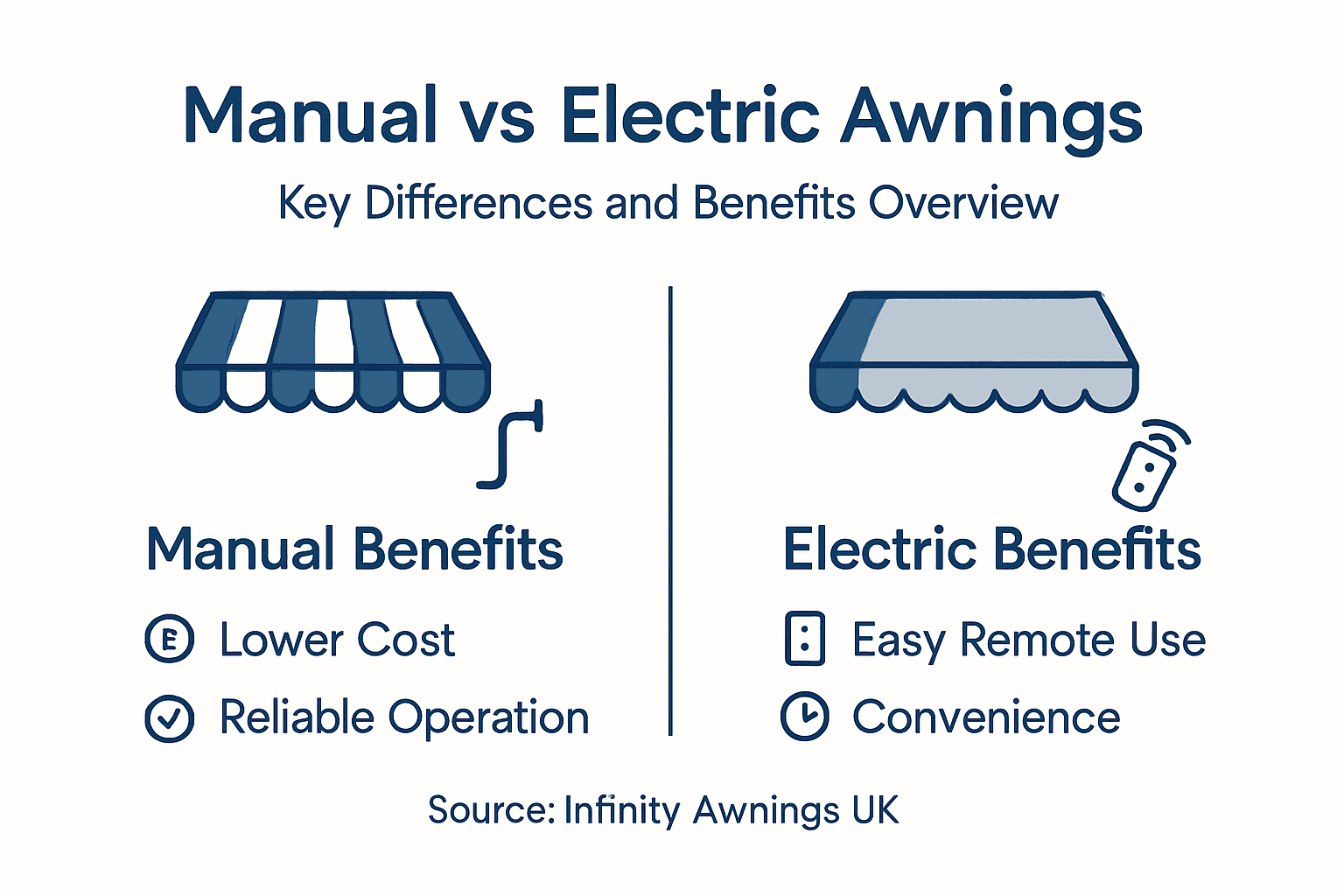
Over 10 years of ownership, you’ll save thousands of pounds compared to electric systems. This makes manual awnings particularly attractive for commercial properties managing tight margins.
Compare manual awning ownership to electric options at a glance:
Aspect | Manual Awning | Electric Awning |
Initial Cost | Lower investment | Higher purchase price |
Operating Method | Hand crank or lever | Motorised, button/switch |
Maintenance Needs | Basic, non-electrical | Requires electrical servicing |
Reliability | No power dependence | Reliant on electric supply |
Suitability | Ideal for seasonal or flexible use | Best for frequent, hands-off adjustment |
Reliability and independence
No electrical dependency means your shade functions perfectly during power outages. Summer storms knock out electricity whilst your manual awning continues protecting your space reliably. This independence appeals particularly to businesses requiring uninterrupted operation.
Staff can adjust shade instantly without waiting for motorised systems. No programming, no troubleshooting failed automation. Just manual control that works exactly when needed.
Pro tip: Position your awning handle within easy reach of customer seating or primary activity areas—this encourages regular adjustments that maximise comfort throughout the day, improving customer satisfaction and staff responsiveness.
Maintenance, longevity, and common pitfalls
Manual awnings thrive on simplicity, but they still demand basic care. Neglecting maintenance shortens lifespan dramatically, whilst proper upkeep keeps your awning functioning smoothly for 15+ years. The good news? Maintenance requires minimal effort compared to motorised systems.
Understanding what to do—and what to avoid—makes the difference between a decade of reliable service and unexpected mechanical failures during summer entertaining.
Essential maintenance tasks
Keep your manual awning in peak condition with these straightforward routines:
Lubricate the crank mechanism - Apply light machine oil to gears and moving parts annually
Clean the fabric regularly - Brush away debris and rinse with water to prevent mildew growth
Inspect for damage - Check seams, stitching, and fabric for tears or UV deterioration
Tighten brackets and hardware - Weather loosens fasteners; check them each spring
Retract before storms - Always bring the awning in when wind strengthens or rain threatens
These tasks take perhaps 20 minutes annually. Compare that to motorised systems requiring professional servicing costing £150-300 yearly.
Proper maintenance routines extend awning lifespan significantly whilst maintaining smooth, reliable operation through years of regular use.
Expected longevity with care
Manual awnings typically last 12-20 years when maintained properly. Quality fabric resists fading, whilst mechanical components withstand repeated use across Yorkshire’s variable climate. Some installations exceed 25 years of service.
The simplicity of manual systems works in your favour. Fewer moving parts means less fails. No electrical components to corrode or malfunction. Just robust mechanical engineering doing what it was designed for—extending and retracting reliably.
Investment in quality installation and basic annual maintenance pays dividends through extended service life.
Common pitfalls that shorten lifespan
Most problems stem from operator behaviour rather than mechanical failure:
Ignoring wind warnings - Extended awnings catch wind like sails, damaging fabric and straining mechanisms
Leaving extended during rain - Water pools on fabric, stressing joints and promoting mildew
Skipping lubrication - Dry gears grind together, accelerating wear dramatically
Neglecting fabric cleaning - Dirt and debris trap moisture, leading to deterioration
Forcing stuck cranks - Damaged gears cause jamming; forcing them causes additional damage
These mistakes typically occur through ignorance rather than negligence. Once you understand the risks, avoiding them becomes automatic.
Weather protection essentials
Always retract your awning when weather deteriorates. Strong winds can exceed the fabric’s operational limits, whilst heavy rain places structural stress on mounting hardware. Summer storms across Derbyshire arrive suddenly—make retracting your instinctive response to darkening skies.
Yorkshire’s changeable weather actually suits manual awnings perfectly. You adjust instantly rather than waiting for motorised systems. This responsiveness protects your investment.
Pro tip: Create a simple maintenance calendar marking spring inspection, summer cleaning, and autumn preparation—treating it like servicing your car ensures nothing gets overlooked and catches small issues before they become costly repairs.
Discover Reliable Manual Awning Solutions Tailored for Your Home or Business
If you value simple, reliable control over your outdoor shading, manual awnings offer unmatched benefits like instant adjustment without electrical worries or high maintenance costs. The article clearly highlights how manual awnings provide a cost-effective, durable, and flexible solution for patios, cafés, or shopfronts across Yorkshire and surrounding regions. Whether you want to enhance your garden living space or offer customers shaded comfort quickly, the hand crank mechanism lets you respond effortlessly to changing weather.
At Infinity Awnings, we specialise in supplying and installing a wide range of high-quality retractable awnings, including expertly designed manual options from top brands. Our bespoke approach ensures your awning perfectly fits your property and lifestyle needs alongside add-ons like LED lighting and heaters that extend usability. Experience first-hand how well-crafted manual awnings can transform any outdoor area into a functional and inviting environment.
Ready to enjoy the practical benefits of manual awning operation? Visit our website to explore the full selection and arrange a free consultation today. Let us help you take control of your outdoor comfort with stylish, low-maintenance shading solutions. Start your outdoor transformation now at Infinity Awnings.
Frequently Asked Questions
What is a manual awning?
A manual awning is a retractable shade structure that you extend and retract using a hand crank or lever, allowing for easy control over when to deploy shade.
How do I maintain a manual awning for longevity?
Proper maintenance involves lubricating the crank mechanism annually, regularly cleaning the fabric, inspecting for damage, tightening brackets, and retracting the awning before storms.
What are the key advantages of choosing a manual awning over an electric one?
Manual awnings are typically more affordable, require less maintenance, and operate independently of electrical power, ensuring reliability even during outages.
Can manual awnings be used in various weather conditions?
Yes, manual awnings can be adjusted quickly to provide shade or shelter; however, they should be retracted during heavy rain or strong winds to prevent damage.
Recommended
Comments