
Outdoor comfort essentials explained for families

TL;DR:
Effective outdoor comfort depends on timed shading, durable furniture materials, and proactive hydration strategies. Incorporating matching structures, furniture, and accessories creates a cohesive, functional outdoor space suitable for UK weather. Proper planning and maintenance prolong usability, maximize comfort, and enhance your garden’s value throughout the season.
Outdoor comfort essentials are the combination of shading, furniture, and accessories that make an outdoor space genuinely usable rather than merely decorative. The industry term for this discipline is outdoor thermal comfort management, and it draws on measurable science rather than guesswork. Reducing mean radiant temperature (MRT) through effective shading is the single most impactful step a family can take to improve how an outdoor space feels. Materials like UV-stabilised synthetic rattan and powder-coated aluminium, brands such as Weinor and Tarasola, and habits like proactive hydration all contribute to a space that works in British weather across the full season.
Outdoor comfort essentials explained: how shading reduces heat stress
Shading is the foundation of outdoor thermal comfort, and the science behind it is straightforward. MRT reductions from shading improve thermal comfort indices such as PET (Physiological Equivalent Temperature) and UTCI (Universal Thermal Climate Index) more than lowering air temperature alone. This means a well-placed pergola or retractable awning can make a 28°C afternoon feel genuinely pleasant, whereas a fan blowing warm air achieves very little.
The timing of shade coverage matters as much as its presence. Time-based shade coverage aligned with peak solar radiation, typically midday to early afternoon, produces the greatest improvement in comfort. A fixed umbrella that shades the patio at 9am but leaves it exposed at 1pm is not solving the problem. Retractable awnings from Weinor or Llaza address this directly because you can extend them precisely when the sun is at its most intense and retract them in the evening.
Different shading types suit different spaces and budgets:
Retractable awnings cover large areas quickly and fold away in high winds, making them ideal for patios and bi-fold door extensions.
Pergolas with adjustable louvres, such as those from Tarasola, allow you to control light and ventilation simultaneously.
Verandas offer permanent, weather-proof coverage that extends the usable season into autumn.
Freestanding umbrellas work for smaller seating areas but require repositioning as the sun moves.
Placement is equally critical. Shade structures positioned on the south or west-facing side of a garden intercept the most intense afternoon sun. You can read more about shading and well-being to understand how orientation affects both comfort and energy use indoors.
Pro Tip: Treat your shade coverage as a time-based system rather than a fixed installation. Map where the sun falls on your patio between 11am and 3pm on a clear day, then position or programme your shading to cover that zone during those hours specifically.
Which outdoor furniture materials best balance comfort and durability?
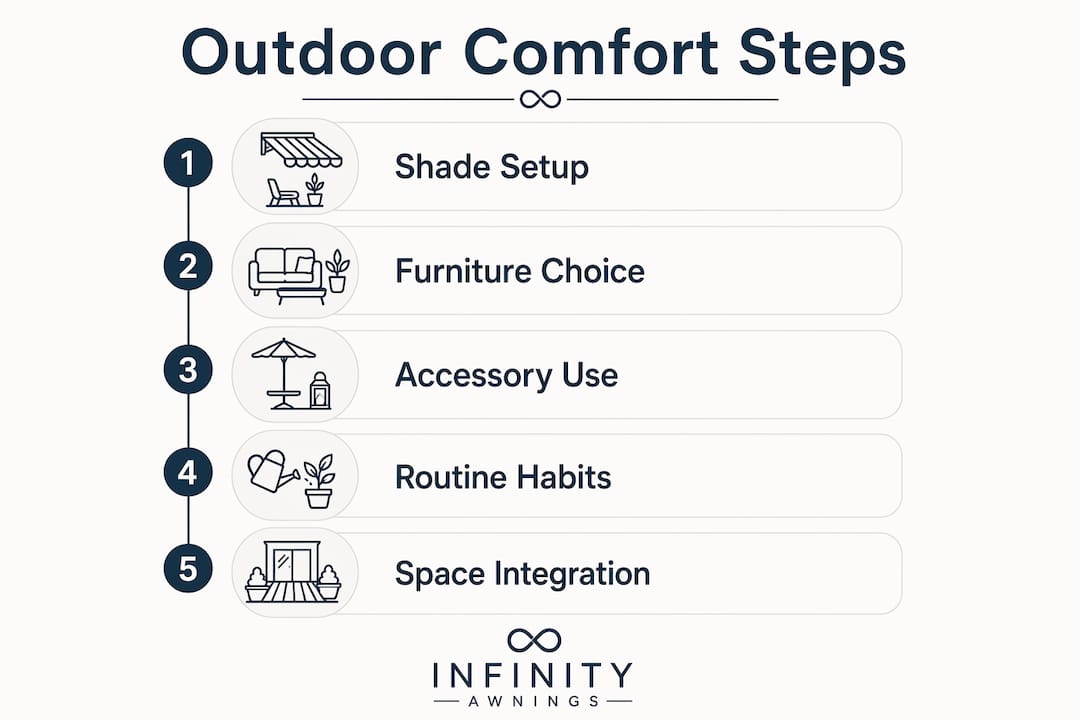
Furniture choice defines how long your outdoor space stays comfortable and how much maintenance it demands. Four materials dominate the UK market: powder-coated aluminium, UV-stabilised synthetic rattan, teak, and rope weave. Each has a distinct profile.
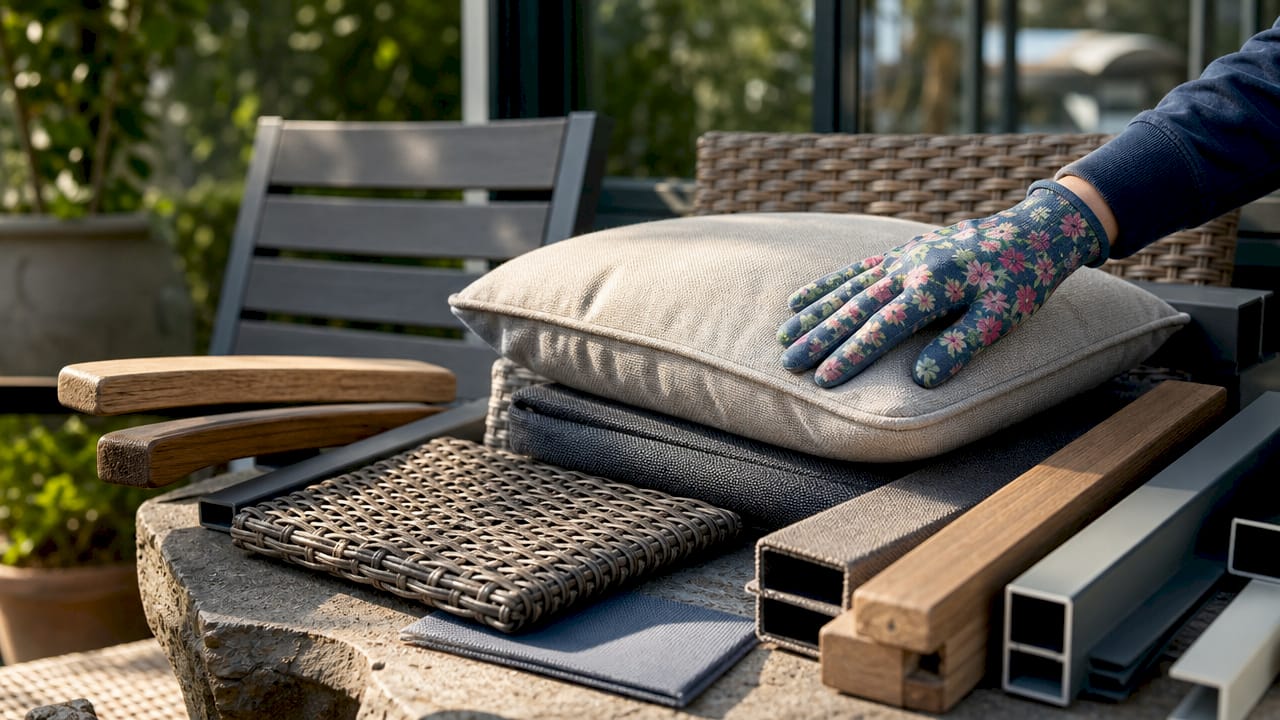
UV-stabilised synthetic rattan retains its flexibility and colour for seven to ten years in British conditions, far outperforming natural rattan, which degrades within two to three seasons when left outdoors. Powder-coated aluminium frames are rust-proof, lightweight, and require nothing more than an occasional wipe-down. Together, synthetic rattan with aluminium frames represents the most practical combination for most UK families.
Material | Weather resistance | Maintenance | Comfort | Typical lifespan |
Powder-coated aluminium | Excellent, rust-proof | Very low, wipe clean | Moderate (needs cushions) | 15+ years |
UV-stabilised synthetic rattan | Very good, UV-stable | Low, hose down | High, ergonomic weave | 7 to 10 years |
Teak | Excellent, naturally oily | Medium, annual oiling | High, warm to touch | 20+ years |
Rope weave | Good, dries quickly | Low to medium | High, flexible seating | 5 to 8 years |
Coastal gardens in areas like Lincolnshire’s North Sea coast face salt-laden air that accelerates corrosion in untreated metals. Powder-coated aluminium and synthetic rattan both resist this well. Teak is also salt-tolerant but requires annual oiling to maintain its honey colour; left untreated, it weathers to a silver-grey that many owners find equally attractive.
Cushions and outdoor fabrics are where comfort is actually delivered. Look for fabrics rated to Martindale 10,000 rub cycles or above, and choose fillings with a quick-dry foam core. Olefin and solution-dyed acrylic fabrics resist fading and mildew far better than standard polyester. Storing cushions in a weatherproof box during prolonged rain extends their life considerably and keeps them feeling fresh throughout the season.
For further guidance on durable awning materials that complement your furniture choices, Infinityawnings provides a detailed breakdown of fabric and frame options suited to UK conditions.
What accessories and habits keep families comfortable and safe outside?
Accessories and routines are the layer of outdoor comfort that most families overlook until something goes wrong. The science is clear: proactive hydration and cooling strategies, such as drinking water before thirst develops and applying damp towels to pulse points, reduce body temperature faster than reactive measures. Waiting until you feel thirsty means dehydration has already begun.
Heat warnings are triggered when daytime highs reach 31°C with overnight lows above 20°C over two or more consecutive days. These thresholds are the point at which outdoor comfort strategies become health-critical, particularly for young children and older adults. Planning your outdoor schedule around these conditions is not overcautious. It is sound risk management.
Here is a practical checklist for families setting up an outdoor space for the season:
Schedule outdoor activities before 11am or after 4pm during hot spells to avoid peak solar radiation hours.
Drink water consistently, aiming for at least 250ml every hour when active outdoors, regardless of thirst.
Keep damp towels or a portable misting fan in a shaded area for rapid cooling during breaks.
Wear a wide-brimmed hat and loose, light-coloured clothing when shade structures are not immediately available. Sun-protection routines combined with shade produce measurably better outcomes than either alone.
Take 2 to 3 hour breaks in shaded or air-conditioned spaces before heat stress symptoms appear. Official heat guidance recommends this as a preventive measure, not a response to feeling unwell.
Keep a first-aid kit and oral rehydration sachets in your outdoor storage unit for emergencies.
Pro Tip: Set a phone reminder every 45 minutes during outdoor gatherings to prompt the group to drink water and check on any elderly guests or young children. Heat stress in children develops faster than in adults and is often mistaken for tiredness.
How to integrate shade, furniture, and accessories into one cohesive space
Combining all three elements effectively requires spatial planning based on how your family actually uses the garden, not how it looks in a catalogue photograph. Start by observing where people naturally congregate at different times of day, then design shade coverage around those zones. Shade planning based on sun path data produces far better results than positioning structures for visual appeal alone.
Matching furniture materials to your shading style creates a coherent aesthetic and simplifies maintenance. A Tarasola louvred pergola in anthracite grey pairs naturally with powder-coated aluminium furniture in the same tone. A Weinor retractable awning in a warm canvas fabric complements teak or rope-weave seating beneath it. Consistency in colour palette and material finish makes the space feel considered rather than assembled from separate purchases.
Maintenance routines protect your investment across seasons:
Clean awning fabrics with a soft brush and mild soapy water at the start and end of each season.
Inspect pergola fixings and joints annually for any movement or corrosion, particularly after winter.
Cover or store cushions when rain is forecast for more than 24 hours.
Apply teak oil in spring if your furniture has weathered over winter.
Check that retractable mechanisms operate smoothly before the first hot weekend of the year.
Microclimate factors also influence comfort in ways that are easy to underestimate. Dense planting along garden boundaries reduces wind speed and creates pockets of cooler air through transpiration. Urban gardens surrounded by brick walls absorb and re-radiate heat, making shading even more critical in city settings. Infinityawnings covers these nuances in detail in their guide on exterior shading and comfort.
Key takeaways
Effective outdoor comfort management combines shading timed to peak sun hours, durable furniture materials suited to UK weather, and proactive hydration and rest routines that prevent heat stress before it develops.
Point | Details |
Shading reduces MRT, not just air temperature | Position awnings or pergolas to cover peak sun hours from midday to early afternoon for maximum effect. |
Material choice determines longevity | UV-stabilised synthetic rattan and powder-coated aluminium offer the best durability-to-maintenance ratio for UK gardens. |
Hydration must be proactive | Drink water before thirst develops and use damp towels for rapid cooling during hot spells. |
Schedule outdoor time around heat thresholds | Avoid peak sun hours when temperatures exceed 31°C and take regular breaks in shaded spaces. |
Integration beats individual upgrades | Matching shade structures, furniture, and accessories by material and colour creates a functional and cohesive outdoor space. |
What I have learned from 15 years of outdoor shading installations
The mistake I see most often is families investing in beautiful furniture and then treating shade as an afterthought. They buy a parasol that covers the table but leaves the seating area exposed, or they install a fixed canopy that shades the wrong part of the garden entirely. The furniture looks wonderful in photographs but the space is unusable on the hottest days of the year.
The second most common oversight is timing. People think about shade in terms of coverage area, not coverage hours. A pergola that shades your patio beautifully at 10am but lets the afternoon sun pour in at 2pm has not solved the problem. I always recommend clients track where the sun falls on their space between 11am and 3pm before we specify anything. That single observation changes the brief almost every time.
On materials, I would push back gently against the idea that teak is always the premium choice. For families with young children and limited time for maintenance, UV-stabilised synthetic rattan on aluminium frames is genuinely superior in practical terms. It requires almost no upkeep, it is comfortable without additional cushions, and it looks excellent for a decade. Teak is outstanding if you will actually oil it every spring. Most people will not.
The trend I find most genuinely useful is the move towards multi-functional shade structures. Louvred pergolas with integrated LED lighting and infrared heaters from brands like Tarasola extend the usable season into October in Yorkshire and Derbyshire. That is not a luxury feature. It is a meaningful increase in the return on your outdoor investment.
— Andrew
Transform your garden with bespoke shading from Infinityawnings
A well-designed shade structure is the single upgrade that makes every other outdoor investment worthwhile. Infinityawnings designs, supplies, and installs bespoke pergolas and shading solutions across Yorkshire, Derbyshire, Nottinghamshire, and Lincolnshire, drawing on over 15 years of experience and premium brands including Weinor, Tarasola, and Llaza. Whether you need a retractable awning for a compact patio or a full louvred pergola for a large garden, the team will assess your sun path, usage patterns, and aesthetic preferences to specify the right solution. Request a free quote today and start using your outdoor space the way it was always meant to be used. You can also explore home improvement planning tips to budget your outdoor project effectively alongside other seasonal upgrades.
FAQ
What are outdoor comfort essentials?
Outdoor comfort essentials are the shading structures, furniture, and accessories that together make an outdoor space thermally comfortable, safe, and enjoyable. The three elements work in combination rather than independently.
How does shading improve outdoor thermal comfort?
Shading reduces mean radiant temperature (MRT), which is the primary driver of how hot a space feels. Thermal comfort indices such as PET and UTCI improve significantly when MRT is lowered, even if air temperature stays the same.
Which outdoor furniture material is best for UK weather?
UV-stabilised synthetic rattan on powder-coated aluminium frames is the most practical choice for most UK gardens, offering seven to ten years of weather resistance with minimal maintenance. Teak is more durable but requires annual oiling to perform at its best.
When should families take breaks from outdoor heat?
Official guidance recommends taking 2 to 3 hour breaks in shaded or air-conditioned spaces before heat stress symptoms appear, particularly during days when temperatures exceed 31°C.
How do I choose the right shading for my garden?
Observe where the sun falls on your seating area between 11am and 3pm, then select a shade structure that covers that zone during those hours. Retractable awnings offer the most flexibility, while louvred pergolas provide year-round coverage with adjustable light control.
Recommended
Comments