
Outdoor comfort upgrades 2026: extend your season

TL;DR:
Outdoor comfort upgrades focus on integrating shading, screening, and heating systems to extend outdoor usability throughout the year. External shading significantly reduces indoor temperatures, while infrared heaters and wind protection enable outdoor living in colder months, creating weather-resistant outdoor spaces. Layering these solutions strategically can add up to three extra months of outdoor enjoyment in changing climates.
Outdoor comfort upgrades are structural and system enhancements designed to maximise the usability and pleasure of your garden, patio, or outdoor living space throughout the year. The 2026 Houzz Outdoor Trends Study found that outdoor systems including heating, plumbing, and electrical rose to 36% of projects, surpassing purely decorative work at 34%. That shift tells you something important: homeowners are no longer treating their gardens as display spaces. They want rooms that work in April and October, not just July. The right combination of shade structures, infrared heaters, motorised screens, and passive cooling can add months of genuine outdoor living to your year.
1. which shade solutions give the best outdoor comfort upgrades in 2026?
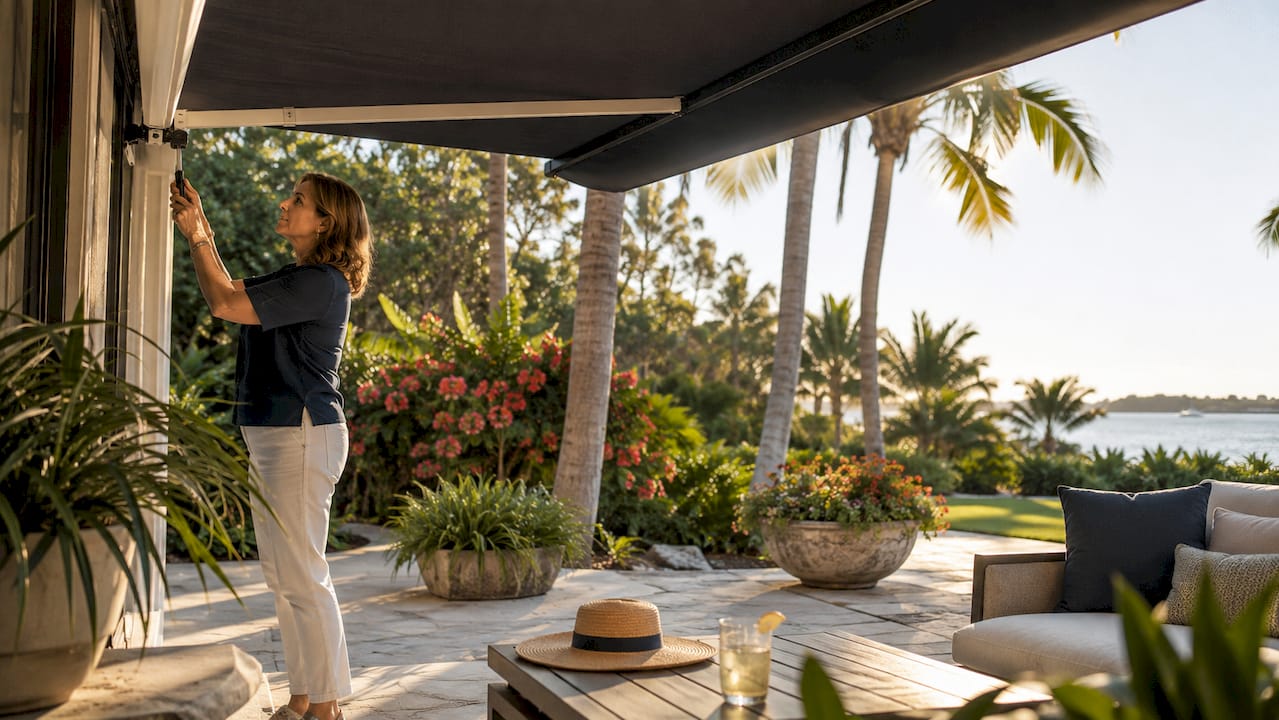
External shading is the single most impactful upgrade you can make to an outdoor space. External shading reduces indoor operative temperatures by up to 18°C, making it the most effective passive cooling strategy available. That figure comes from BBSA research cited by the Climate Change Committee, and it means you can cut indoor overheating at source before it ever becomes a problem.
The three main shade options for 2026 are adjustable louvered pergolas, retractable awnings, and shade sails. Each sits at a different price point and delivers a different level of control.
Adjustable louvered pergolas rotate their roof slats to dial in the exact amount of sun or shade you want. They also shed rain, making them a genuine all-weather structure.
Retractable awnings from brands like Weinor and Llaza offer a lower-cost entry point and retract fully when not needed, protecting the fabric in winter.
Shade sails are the most affordable option but offer no rain protection and limited adjustability.
Pro Tip: Start with external shading before any other upgrade. The Climate Change Committee now recognises external shading retrofit as urgent climate adaptation infrastructure for UK homes. Getting this right first makes every other comfort layer more effective.
For a deeper look at what shading does for your space, the Infinityawnings guide on outdoor shading benefits covers energy savings and comfort gains in detail.
2. how can heating upgrades extend the outdoor living season?
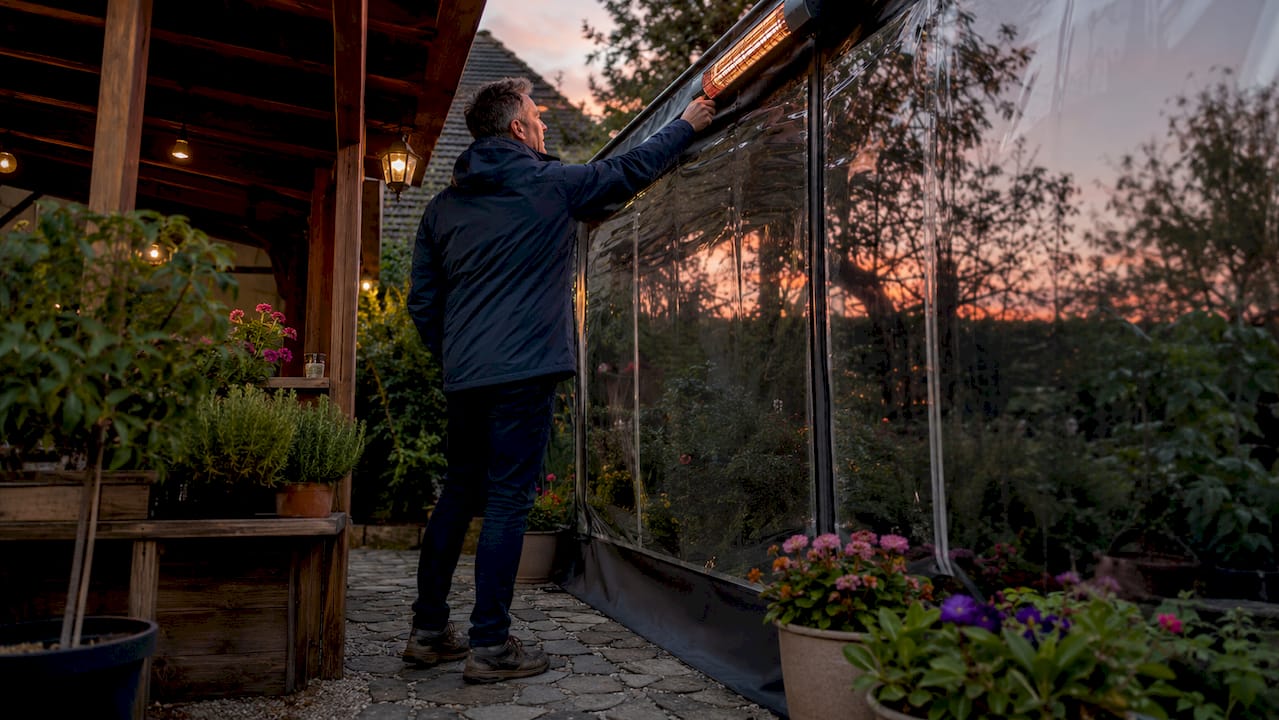
Heating is the upgrade that turns a three-season patio into a four-season one. Wall-mounted infrared heaters outperform convection heaters in covered outdoor spaces because they warm people and surfaces directly rather than heating the air. In a breezy garden, convection heat disperses within seconds. Infrared stays where you point it.
The practical difference matters enormously in the UK. Even under a pergola or veranda, there is usually some air movement. A convection heater loses most of its output to that movement. A wall-mounted infrared unit from a brand like Selt or Tarasola delivers consistent warmth to the seating area regardless of a light breeze.
Wall-mounted infrared heaters are best for fixed covered structures such as pergolas and verandas.
Freestanding patio heaters suit renters or those who need a portable option, though efficiency is lower.
Retractable glass walls and privacy screens reduce wind chill significantly, making any heater more effective by containing warmth within the space.
Pro Tip: Pair your infrared heater with a wind-blocking screen on the prevailing wind side of your patio. You will feel the difference immediately, and your energy use will drop because the heater does not need to work as hard.
Combining shelter with heat is the key principle. A covered structure with wind protection and infrared heating can realistically extend your outdoor season into November and restart it in February.
3. what are the latest cooling technologies for 2026 outdoor comfort?
Cooling technology for outdoor spaces has moved well beyond the basic misting fan. Two systems worth understanding in 2026 are indirect evaporative coolers and desiccant evaporative cooling systems. Both work by using water evaporation to reduce air temperature without the energy cost of mechanical refrigeration.
Research from Northumbria University showed an indirect evaporative cooler reduced air temperature by 20.4°C in 48°C ambient heat. That is an extreme test condition, but it demonstrates the ceiling of what evaporative technology can achieve. For UK summers, the temperature drops are smaller but still meaningful on hot days.
Cooling System | Temperature Reduction | Best Condition | Limitation |
Indirect evaporative cooler | Up to 20.4°C | Dry, hot ambient air | Less effective in high humidity |
Desiccant evaporative system | Maintains supply air below 15 g/kg humidity | Integrated with geothermal energy | Higher installation complexity |
Passive shade (louvered pergola) | Up to 18°C operative temperature reduction | All UK conditions | No active cooling |
Misting fan | 3–8°C perceived cooling | Outdoor open spaces | Wets surfaces and clothing |
Desiccant evaporative systems integrated with geothermal energy achieve a thermal COP of up to 0.82 and consume substantially less water than standard benchmarks. That efficiency rating means they deliver meaningful cooling for relatively low energy input. For most UK homeowners, passive shading remains the first and most practical cooling step. Active evaporative systems suit those who want to go further, particularly in conservatories or enclosed garden rooms.
4. which screening solutions protect comfort without blocking airflow?
Motorised patio screens are one of the most versatile upgrades available for 2026. A single screen can serve as an insect barrier, a UV filter, a wind break, and a privacy panel, all controlled by a single button. Motorised retractable screens reduce glare, UV exposure, insect intrusion, and wind disruption while maintaining airflow through the mesh fabric.
The key advantage over fixed screens or solid walls is reversibility. You lower the screen when you need it and retract it when you do not. The space stays open and airy by default, which matters in a UK garden where you want to catch every bit of sun on a good day.
Insect protection is the most immediate benefit, particularly in gardens near water or woodland.
UV filtering protects both occupants and outdoor furniture from sun damage over time.
Wind reduction makes a significant difference to perceived temperature, especially in the evening.
Privacy screening is valuable for urban gardens and terraces where neighbouring properties overlook the space.
Installation works on most existing structures including pergolas, verandas, and open-sided canopies. The screens retract into a compact housing when not in use, so they do not affect the appearance of the structure. For families with young children or pets, the insect barrier function alone makes motorised screens worth considering.
5. how to layer multiple upgrades for maximum seasonal extension
The most effective approach to upgrading backyard comfort treats your outdoor space like an indoor room with three controllable layers. Layer one is solar control, handled by external shade structures. Layer two is airflow control, handled by screens and partitions. Layer three is personal heat comfort, handled by infrared heaters. Get all three right and you can realistically add 2–3 months of outdoor season use without changing the weather.
The recommended retrofit sequence is straightforward. Start with external shading because it delivers the largest single comfort gain and reduces the load on every other system. Add motorised screens next to control wind and insects. Finish with infrared heating for the cooler months.
Install external shading first. An adjustable louvered pergola or quality retractable awning addresses sun, heat, and rain in one structure.
Add motorised screens. These handle wind, insects, UV, and privacy without blocking airflow or light when retracted.
Mount infrared heaters. Wall-mounted units on a covered structure deliver targeted warmth with no wasted output.
Incorporate smart lighting. LED strip lighting integrated into pergola frames extends evening use and creates atmosphere without additional structures.
Consider a wind-blocking partition. A retractable glass wall or privacy screen on the windward side compounds the warmth from your heater significantly.
The Houzz 2026 data confirms that combining shade structures with outdoor systems profoundly increases usable outdoor time and encourages more outdoor lifestyle at home. Each upgrade compounds the benefit of the others. Shade makes heating more efficient. Screens make shade more comfortable. Heating makes screened spaces usable in autumn and spring.
Pro Tip: When planning your layered upgrades, think about the time of day you use your garden most. Morning sun from the east and evening sun from the west require different shading angles. An adjustable louvered pergola handles both, which is why it sits at the top of the recommended sequence.
For practical guidance on getting the most from your patio space, the Infinityawnings article on improving patio comfort covers the foundational steps clearly.
Key takeaways
The most effective outdoor comfort upgrades in 2026 layer external shading, motorised screening, and infrared heating in sequence to extend outdoor usability by up to three months.
Point | Details |
Start with external shading | Shade structures reduce operative temperatures by up to 18°C and form the foundation of every other upgrade. |
Add motorised screens second | Retractable screens handle insects, UV, wind, and privacy without sacrificing airflow or open-sky days. |
Use infrared heating for season extension | Wall-mounted infrared heaters outperform convection units in breezy covered spaces and extend autumn and spring usability. |
Layer upgrades in sequence | Shade, then screening, then heating compounds comfort gains and maximises return on each investment. |
Evaluate cooling by performance metrics | Judge evaporative coolers by supply air humidity and measured temperature drops, not marketing claims alone. |
What i have learned after 15 years of outdoor shading projects
Most homeowners I speak with start by asking about furniture. They want a new sofa set or a fire pit table. Those are fine purchases, but they do not change how many days a year you actually use your garden. What changes that number is shade, shelter, and heat.
The single biggest mistake I see is installing heating before shading. People buy a patio heater, use it twice in autumn, and then wonder why their garden still feels unusable. The reason is simple: without shade, the space is too hot in summer and too exposed in every other season. Shade first, always.
My second observation is about budget. You do not need to do everything at once. A quality retractable awning from Weinor or a louvered pergola from Tarasola is a meaningful investment, but it pays back in daily use within the first season. Screens and heaters can follow in year two. The layered approach suits most household budgets and lets you learn how you actually use the space before committing to the full system.
The climate angle is also worth taking seriously. The UK is experiencing hotter summers, and the Climate Change Committee now treats external shading as climate adaptation infrastructure, not a luxury. That framing matters. A louvered pergola is not just a garden feature. It is a practical response to a changing climate that also happens to make your home more enjoyable.
View your outdoor space as an extendable room. It already has walls and a view. All it needs is a ceiling, some shelter, and a heat source.
— Andrew
Discover pergolas that transform your garden comfort
If you are ready to take the first step towards a genuinely usable outdoor space, Infinityawnings designs and installs premium pergola systems across Yorkshire, Derbyshire, Nottinghamshire, and Lincolnshire. From adjustable louvered pergolas that handle sun, rain, and wind to fully customisable structures with integrated LED lighting and infrared heaters, every solution is built around how you actually use your garden.
Brands like Weinor, Tarasola, and Morvelle offer the quality and longevity that UK weather demands. Explore the full range of garden pergola solutions and request a free quote to see what is possible for your space.
FAQ
What are the best outdoor comfort upgrades for 2026?
The best upgrades combine external shade structures, motorised screens, and wall-mounted infrared heaters in sequence. This layered approach addresses sun, wind, insects, and temperature, extending outdoor usability by up to 2–3 months.
Does external shading really reduce indoor temperatures?
Yes. BBSA research cited by the Climate Change Committee shows external shading can reduce indoor operative temperatures by up to 18°C. It is the most effective passive cooling strategy available for UK homes.
Are louvered pergolas worth the investment?
Adjustable louvered pergolas offer the most versatile shade and rain control of any outdoor structure. They extend seasonal usability, complement heating and screening systems, and are built to handle UK weather conditions year-round.
How do motorised patio screens improve outdoor comfort?
Motorised screens reduce glare, UV exposure, wind disruption, and insect intrusion while maintaining airflow through the mesh. They retract fully when not needed, preserving the open feel of your outdoor space on good days.
Is evaporative cooling effective in the UK?
Evaporative cooling works best in dry, hot conditions. In the UK, passive shading delivers more consistent results. Advanced desiccant evaporative systems can complement shading in enclosed garden rooms, but performance depends heavily on ambient humidity and airflow design.
Recommended
Comments