
Keep Your UK Pergola Dry in Rain: Drainage, Retrofits and Installer Tips

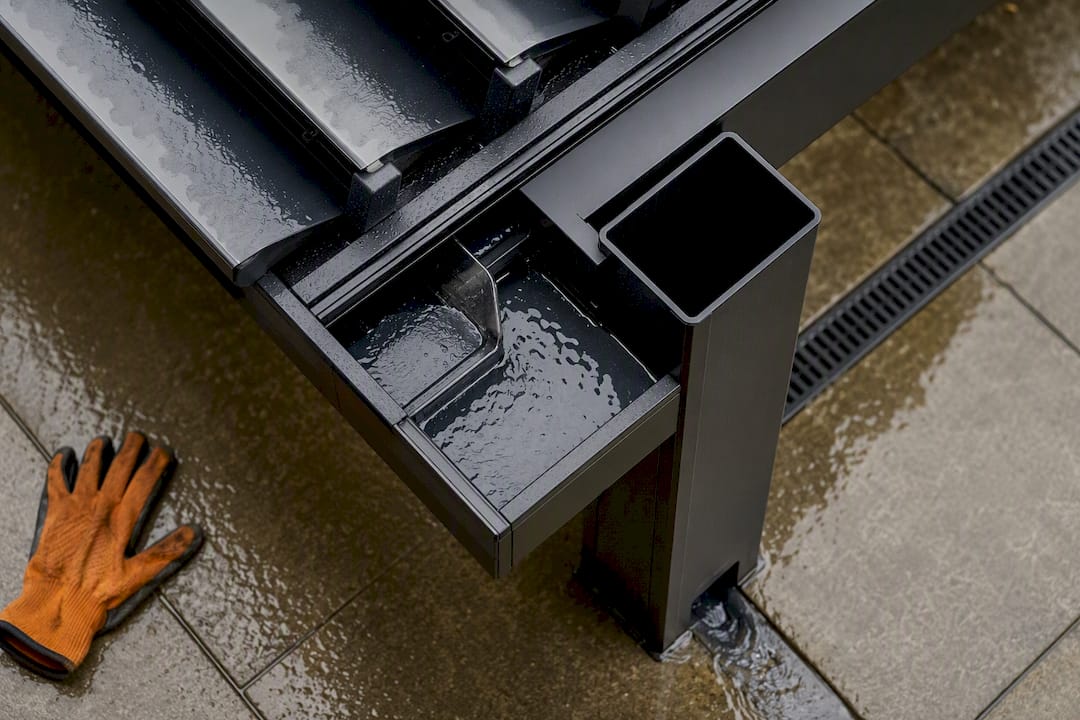
A pergola copes with rain only if it has a closing louvred roof, a fixed solid roof, or properly detailed glazing, and even then wind-driven rain will find its way in without side screens. Open slats and stretched fabric canopies aren’t reliable once rain turns from a drizzle into a downpour. Waterproofing always means trading some of that open, airy feel (and budget) for consistent dry cover.
TL;DR:
Open slats and fabric canopies are unreliable in heavy rain, requiring waterproofing options like louvred, solid, or glass roofs for consistent dryness.
Proper drainage, slope, and water routing are essential, with gutters sized for the roof area and downpipes positioned to protect foundations.
Aluminum frames require minimal maintenance, while timber needs regular sealing and careful material treatment to prevent water damage.
Retrofitting existing pergolas with rigid panels or louvred roofs offers better waterproofing, especially on exposed sites, but installation must prioritize drainage.
Side screens and weatherproof operations are crucial for exposed locations, with a site survey helping identify vulnerabilities before costs escalate.
Table of Contents
Which pergola roof types handle rain — mechanics and real-world performance
How to waterproof an existing pergola: upgrades from temporary to permanent
Drainage, siting and construction details that prevent leaks
Wind and weather limits — safe operation and realistic expectations
Installer perspective and practical tips from Infinity Awnings
Publisher view: louvred or fixed roof, which suits most homes?
How Infinity Awnings can help you stay dry, whatever the forecast
Which pergola roof types handle rain — mechanics and real-world performance
Roof choice decides everything here. A pergola with the wrong roof is just an expensive garden ornament once the forecast turns.
Louvred (bioclimatic) roofs close their slats to form an overlapping, sealed surface. Rain lands on the slats and runs into integrated gutters, which route it down through the support posts rather than off the edge onto your patio furniture.
Fixed solid roofs give permanent cover with no moving parts to maintain, but heat can build up underneath in summer. Glass versions let in light without the greenhouse effect timber or metal can create, though ventilation gaps still need thought or condensation becomes a problem.
Polycarbonate panels are light, tough, and let daylight through, but they only work with a slight slope and proper edge flashing. Flat-laid polycarbonate pools water and eventually leaks at the joins.
Fabric and retractable canopies cope fine with a light shower but sag, pool, and can rip in a downpour. Most need retracting before strong wind and rain arrive together.
Roof type at a glance:
Louvred: closes fully, drains through posts, adjusts for sun and rain
Fixed solid: permanent, low maintenance, can trap heat
Polycarbonate/glass: waterproof with correct slope and sealing
Fabric: fine for light rain, vulnerable in storms
How to waterproof an existing pergola: upgrades from temporary to permanent
If you already have a pergola and the roof isn’t cutting it, you don’t need to start from scratch. Work through these upgrades roughly in order of cost and permanence:
Fit a temporary cover such as a heavy-duty tarp or clip-on canopy for one-off protection. Useful for a single event, but they flap in wind and rarely last a season.
Add rigid panels in polycarbonate or glass, set with at least a slight fall and proper flashing at every join.
Upgrade to a louvred roof system with built-in drainage and side blinds, particularly worthwhile on an exposed patio.
Treat the timber first, if your frame is wood. It must be completely dry before sealant goes on, and end grain needs extra coats since it soaks up water far faster than the face grain.
Call in a professional for anything involving motorised louvres, new wiring, or structural fixings into a wall.
Pro Tip: Check the weather before sealing timber. Most sealants need a rain-free curing window of sufficient duration to cure properly, and applying them in damp conditions is one of the most common reasons a reseal fails within months.
Drainage, siting and construction details that prevent leaks
Drainage is where waterproofing quietly succeeds or fails. A closing roof only stays dry underneath if the water it sheds actually goes somewhere useful.
Louvred systems route rainwater through hidden channels inside the beams and down through hollow posts, so nothing drips onto the seating area below. Rigid panels need a minimum slope, usually a few degrees, with flashing at every edge and join to stop runoff pooling and finding its way back under the roofline.
Getting the numbers right matters more than most people expect:
Gutters need sizing for your roof area, not just bolted on as an afterthought
Downpipes should route water away from post bases and the house foundations, never straight onto paving that slopes back towards the wall
Siting near a house wall gives natural shelter from one direction but concentrates runoff, so check where that water actually ends up
Trim back overhanging trees and keep sprinkler heads well clear of the structure, since constant low-level dampness ages timber and fixings faster than rain ever does
Materials and maintenance for wet weather
Material choice sets how much maintenance you’re signing up for. Aluminium frames barely need attention in damp conditions since they don’t rot, warp, or need resealing, which is why they dominate the premium end of the market.
Timber looks better to plenty of people but demands real upkeep. End grain is the weak point, absorbing water fastest, so treat cut ends and post tops with extra preservative or metal caps. Metal roofing sheds water well but can be noisy in heavy rain and offers little insulation, both fixable with an acoustic underlay.
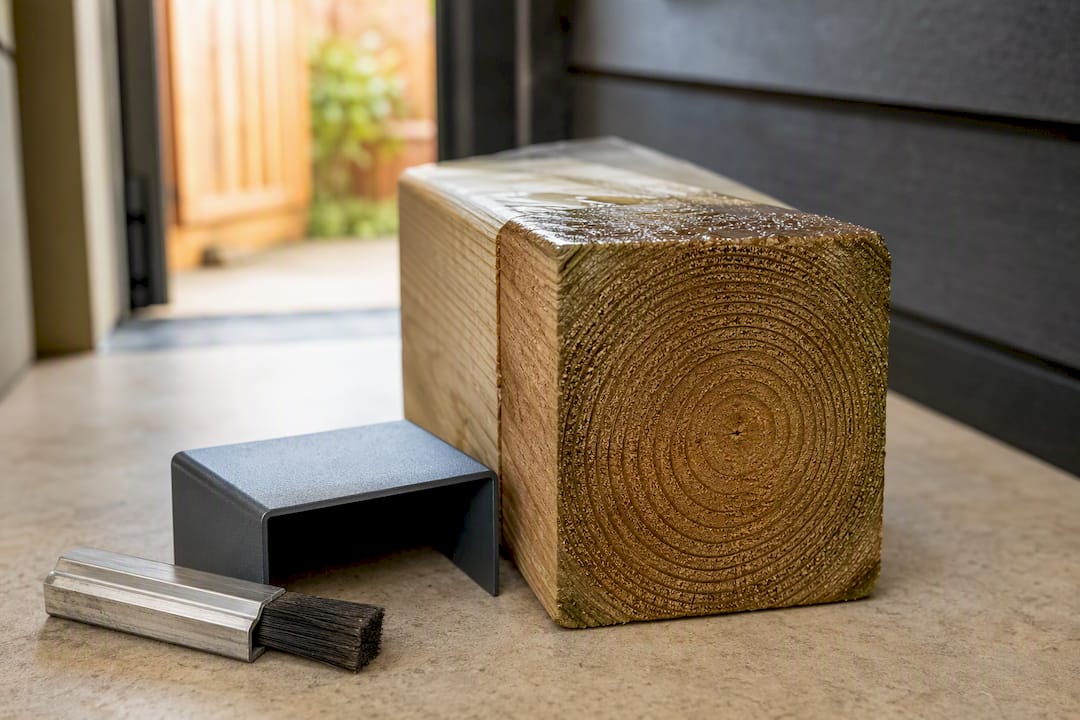
Fabric canopies need airing after rain to stop mildew taking hold, and most manufacturers set a wind speed above which they should be retracted rather than left extended.
A short seasonal checklist:
Clear gutters and downpipes before autumn leaf fall
Check seals and flashing on rigid panels each spring
Reseal exposed timber every one to three years depending on exposure
Inspect end grain and post bases for soft or discoloured wood
Pro Tip: If a section of timber fails a simple water-drop test, absorbing the bead instead of letting it sit on the surface, it needs resealing before winter, not after.
Wind and weather limits — safe operation and realistic expectations
No roof, however good, beats sideways rain on its own. Fabric canopies typically need retracting well before a louvred or fixed roof would need any attention at all, since fabric flexes and can tear where rigid structures simply sit still. Even a fully closed louvred roof lets near-horizontal rain sweep in underneath if there’s nothing at the sides to stop it, which is exactly why side screens matter so much on exposed plots.
Before a storm hits, run through this quickly:
Secure or bring in loose cushions, lighting, and furniture
Test that motors and rain sensors respond before you actually need them
Check post and beam fixings haven’t worked loose over the season
Retract fabric roofs and consider removing side screens in genuinely severe forecasts
Checklist for installers, costs and realistic timescales
Before signing anything, ask your installer these questions:
How is drainage routed, and where does the water actually exit?
What wind rating is the roof and any side screens tested to?
What warranty covers the roof, motor, and fixings separately?
Are the foundations adequate for the roof weight and local ground conditions?
What electrical work is needed for motorised louvres, and is it certified?
What maintenance schedule do you recommend, and how often?
Costs climb with size, glazing choice, motorisation, integrated drainage, and bespoke finishes. Most projects run from an initial survey through to completion within a few weeks, weather and lead times permitting. Treat vague answers on drainage or warranty as a red flag.
Installer perspective and practical tips from Infinity Awnings
On site, drainage comes before anything else. Get the fall and gutter routing wrong and every other detail becomes irrelevant once the rain starts.
Recommended priorities from installation experience:
Confirm slope and drainage routes before fitting any panel or louvre system
Protect end grain on every timber cut, not just the visible faces
Use corrosion-resistant fixings throughout, especially near post bases
Set a maintenance reminder for gutter clearing and seal checks each year
A free site survey usually catches drainage or siting issues before they become a costly retrofit.
Publisher view: louvred or fixed roof, which suits most homes?
A louvred roof suits anyone who wants flexibility: sun on a good day, sealed cover the moment rain starts, with no need to plan around the forecast. A fixed solid roof suits people who want constant shade and shelter without thinking about it, and fewer moving parts to maintain over the years.
Whichever you pick, integrated drainage and a properly qualified installer decide whether it performs for one wet winter or fifteen. Budget fabric or bolt-on covers have their place for occasional use, but they were never built to survive a British winter unattended.
— Andrew
How Infinity Awnings can help you stay dry, whatever the forecast
If you’re weighing up a louvred roof against a fixed structure, or wondering whether your current pergola can be retrofitted rather than replaced, that’s exactly the conversation to have with an installer before spending anything. They design, supply, and install both louvred and fixed-roof pergolas, including drainage detailing, side screens, and motorised operation where it suits the site.
A site survey is the fastest way to find out what your garden actually needs, whether that’s a full pergola install or an upgrade to an existing structure. Request a free quote and a downloadable guide to compare roof options before you decide.
Sources
Recommended
Comments