
What Are Bespoke Awnings and Their Impact Outdoors

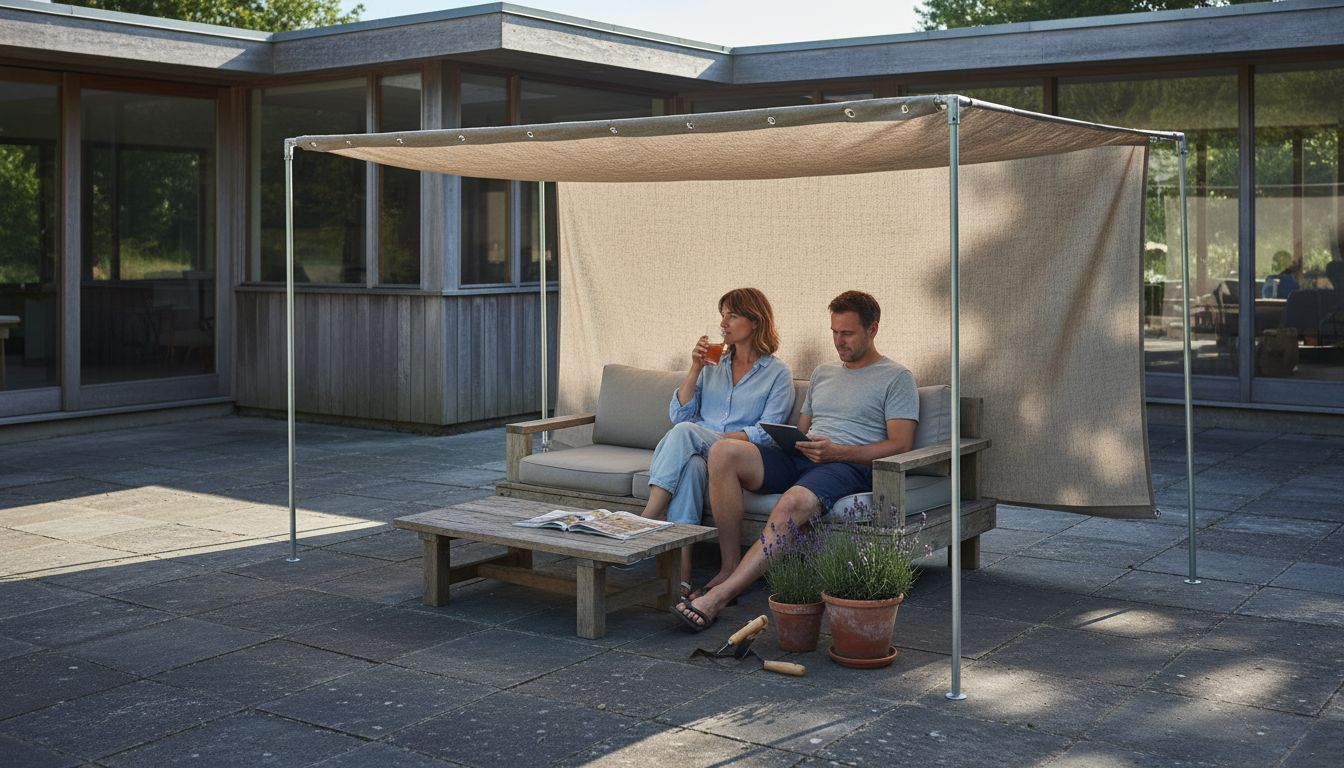
Finding the right shade for your patio or garden in Yorkshire or Derbyshire can feel challenging when every outdoor space is unique. Homeowners know that off-the-shelf awnings rarely meet the blend of style, resilience, and functionality needed for true comfort. Choosing a bespoke awning offers a tailored solution, crafted to integrate seamlessly with your property’s architecture while delivering effective sun protection and lasting visual appeal.
Table of Contents
Key Takeaways
Point | Details |
Bespoke Awnings Offer Custom Solutions | Tailored awnings provide personalised shading that enhances aesthetic and functional aspects of properties. |
Variety of Awning Types Available | Different awning types are designed for specific outdoor requirements, ensuring adaptable solutions for various settings. |
Advanced Customisation Options | Homeowners can choose materials, colours, and operational mechanisms, allowing full creative control over design and function. |
Installation Requires Professional Expertise | Compliance with building regulations and safety protocols is essential for successful and secure awning installation. |
Defining Bespoke Awnings and Key Concepts
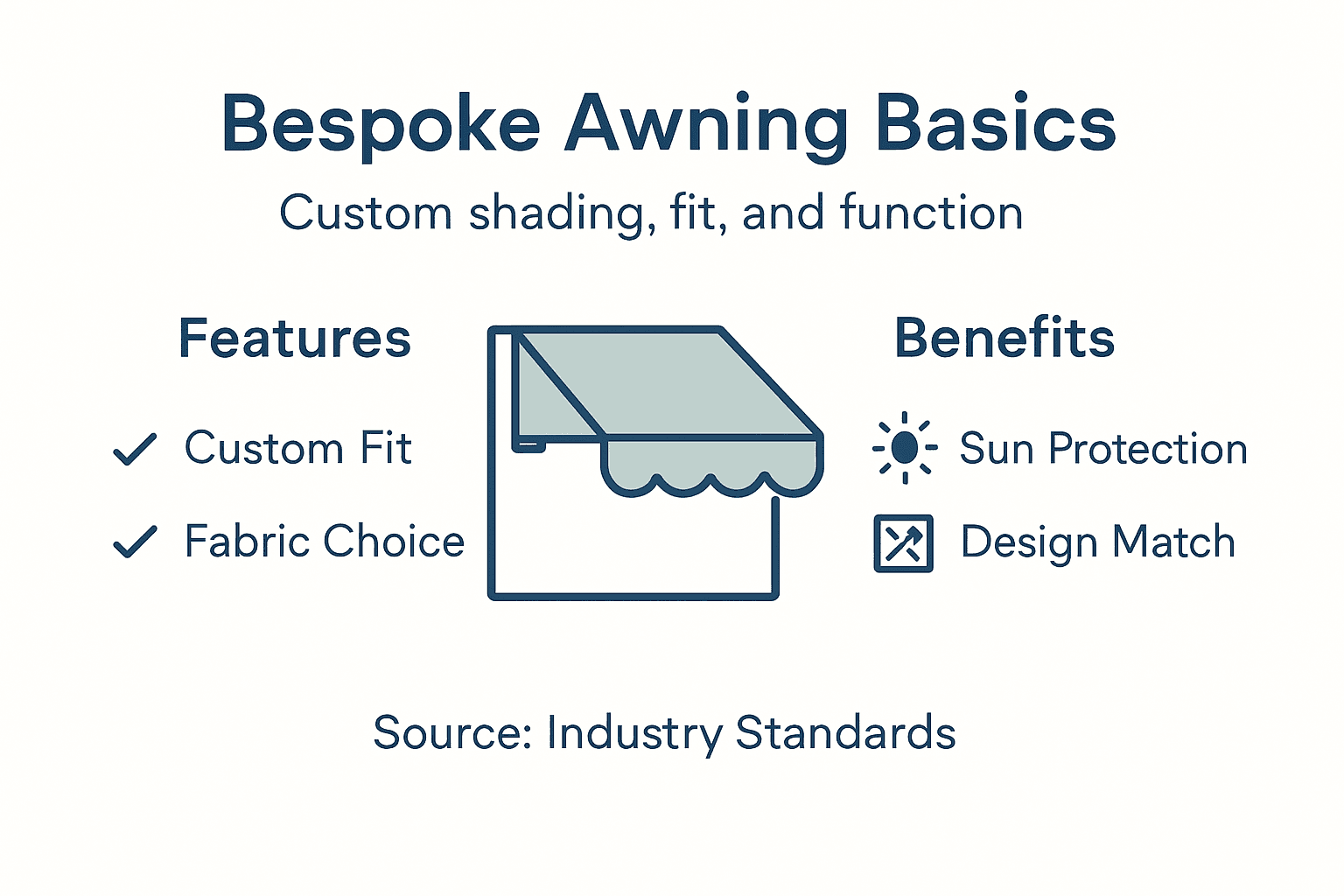
Bespoke awnings represent a sophisticated approach to outdoor architectural solutions, offering homeowners personalised shading and aesthetic enhancement. Unlike standard off-the-shelf products, these custom installations are meticulously crafted to complement specific architectural designs and individual preferences. Custom awning solutions provide unparalleled flexibility in addressing unique outdoor spatial requirements.
At its core, a bespoke awning is a tailored external covering designed exclusively for a particular property, taking into account factors such as architectural style, orientation, sunlight exposure, and functional needs. These specialised installations go far beyond basic sun protection, offering nuanced benefits like precise UV control, temperature regulation, and seamless architectural integration. Historically, British properties have long appreciated the value of custom external shading solutions that adapt intelligently to local environmental conditions.
Key characteristics of bespoke awnings include:
Precise measurements matching exact architectural specifications
Customisable fabric selections
Multiple operational mechanisms (manual and electric)
Tailored colour and design options
Enhanced durability through personalised material selection
The bespoke approach ensures that each awning is not merely a functional addition but a carefully considered design element that enhances both the aesthetic and practical qualities of outdoor spaces. Awning fabric choices play a critical role in determining performance, with materials selected to match specific environmental challenges and aesthetic preferences.
Pro tip: Always consult professional designers who can assess your specific architectural context and recommend awning solutions that integrate seamlessly with your property’s unique characteristics.
Varieties of Bespoke Awnings Explained
Bespoke awnings offer an extraordinary range of varieties tailored to meet diverse outdoor spatial requirements across British homes and commercial properties. Specialised awning solutions encompass multiple design configurations that can transform exterior environments with precision and style.
The primary categories of bespoke awnings include:
Patio Awnings: Designed to extend living spaces and provide comfortable outdoor protection
Conservatory Awnings: Specifically engineered to manage temperature and sunlight for glass structures
Pergola Awnings: Flexible covering systems that integrate seamlessly with garden architectural elements
Vertical Awnings: Innovative solutions for wind and sun protection on building facades
Freestanding Awnings: Independent structures offering versatile shading options for open spaces
Each awning variety presents unique operational characteristics, with options ranging from manual hand-crank mechanisms to sophisticated remote-controlled systems. Operational flexibility is a hallmark of bespoke designs, allowing homeowners to select mechanisms that perfectly match their lifestyle and technological preferences.
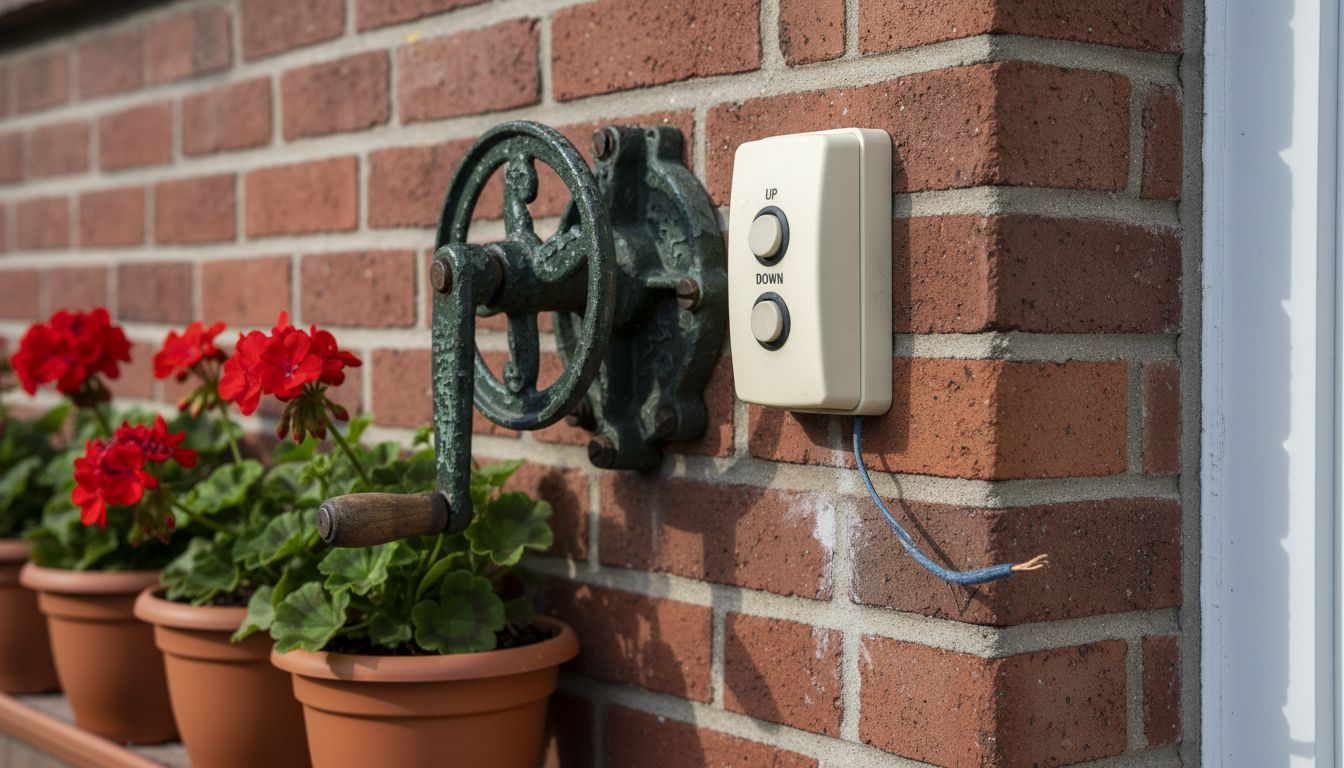
The customisation potential extends beyond operational methods, encompassing fabric selection, colour matching, and precise dimensional tailoring. Professional designers can craft awnings that not only provide functional protection but also serve as aesthetic extensions of a property’s architectural character, ensuring seamless integration with existing design elements.
To provide a clear overview, the following table summarises the main categories of bespoke awnings and their intended uses:
Awning Type | Main Purpose | Typical Location |
Patio Awning | Expand living areas outdoors | Garden or terrace |
Conservatory Awning | Control light and heat | Glass extensions |
Pergola Awning | Blend shade with garden design | Outdoor garden features |
Vertical Awning | Protect facades from sun/wind | Building exteriors |
Freestanding Awning | Provide versatile open-air shelter | Detached spaces, patios |
Pro tip: Consider consulting with professional awning designers who can conduct comprehensive site assessments to recommend the most suitable awning variety for your specific outdoor environment and architectural style.
Customisation Options and How They Work
Bespoke awning customisation represents a sophisticated interplay between technical precision and aesthetic creativity, allowing homeowners to transform outdoor spaces with extraordinary flexibility. Customisation techniques have evolved to provide unprecedented control over every aspect of awning design and functionality.
The primary customisation dimensions for bespoke awnings include:
Fabric Selection: Choice of weather-resistant, UV-protective materials
Colour Matching: Options to complement existing architectural palettes
Size and Shape: Precise dimensional tailoring for unique architectural spaces
Mounting Methods: Flexible attachment solutions for different building structures
Operational Mechanisms: Range from manual to fully automated systems
Advanced customisation goes beyond mere visual preferences, offering technical adaptations that enhance performance. Homeowners can select specialised fabric treatments such as water-repellent coatings, self-cleaning technologies, and thermal regulation properties. These technical modifications ensure that bespoke awnings are not just decorative elements but intelligent architectural solutions that respond dynamically to environmental conditions.
The customisation process typically involves collaborative design consultations, where professional designers work closely with clients to understand their specific requirements. Digital design tools now allow real-time previews, enabling customers to visualise potential configurations before final implementation. This interactive approach ensures that each awning is a unique reflection of individual style and functional needs.
Pro tip: Request fabric samples and digital mockups during the design consultation to ensure your bespoke awning perfectly matches your aesthetic and functional expectations.
Installation Process and Safety Requirements
Bespoke awning installation is a complex process that demands meticulous attention to detail and strict adherence to safety protocols. Building regulations approval represents a critical first step in ensuring a compliant and secure installation for homeowners across the United Kingdom.
The comprehensive installation process typically involves several key stages:
Site Assessment: Detailed examination of structural mounting points
Structural Compatibility: Evaluation of wall or surface load-bearing capacity
Precise Measurements: Accurate dimensional planning for perfect fit
Electrical Considerations: Safe wiring for motorised awning systems
Weather Resistance Testing: Ensuring durability under local environmental conditions
Safety requirements are paramount during awning installation, encompassing multiple critical aspects. Professional installers must verify structural integrity, ensure secure mounting mechanisms, and confirm that electrical components meet current British safety standards. This includes checking wall attachments, verifying load-bearing capabilities, and implementing safety features that prevent accidental deployment or structural failure.
Electrical and mechanical safety represent particularly important considerations for motorised awning systems. Installers must follow strict guidelines regarding electrical connections, implement robust fail-safe mechanisms, and ensure that all operational components meet rigorous British safety standards. This includes installing appropriate circuit protection, using weatherproof electrical connections, and providing clear user guidelines for safe operation.
Pro tip: Always request comprehensive documentation of safety checks and installation certification from your professional awning installer to ensure complete compliance with UK building regulations.
Comparing Bespoke and Standard Awnings
The distinction between bespoke and standard awnings represents a profound difference in architectural approach, design philosophy, and functional performance. Custom awning solutions fundamentally transform how homeowners perceive outdoor shading technologies.
Key comparative dimensions between bespoke and standard awnings include:
Size Flexibility: Bespoke awnings offer precise dimensional customisation
Material Quality: Superior fabric selections for bespoke options
Aesthetic Integration: Seamless design matching architectural styles
Operational Mechanisms: Advanced control options for bespoke systems
Performance Capabilities: Enhanced weather resistance and durability
Standard awnings represent mass-produced solutions with limited adaptability, typically featuring predetermined sizes, minimal colour selections, and generic mounting configurations. These off-the-shelf products provide basic functional coverage but lack the nuanced performance and aesthetic sophistication of bespoke alternatives. Bespoke awnings, by contrast, are meticulously engineered to address specific architectural requirements, environmental conditions, and individual aesthetic preferences.
To help clarify the unique advantages of bespoke awnings, here’s a concise comparison of bespoke and standard awning solutions:
Dimension | Bespoke Awning | Standard Awning |
Custom Fit | Made to precise property specifications | Limited to fixed sizes |
Long-Term Value | Enhances property and aesthetic appeal | Modest improvement, less value added |
Technology Integration | Options for automation and smart controls | Typically manual, basic controls |
Maintenance | Designed for easier upkeep and repairs | General maintenance, less tailored |
Resilience | Adapted to local weather and structural needs | May not fully suit local conditions |
The technical superiority of bespoke awnings becomes evident in their advanced features. While standard awnings offer rudimentary sun protection, bespoke versions incorporate sophisticated technologies like integrated UV protection, thermally responsive fabrics, and precision-engineered mounting systems. These advanced capabilities ensure not just shade, but intelligent environmental management tailored to each unique property.
Pro tip: Always prioritise comprehensive consultation with professional designers who can comprehensively assess your specific architectural context and recommend awning solutions that integrate seamlessly with your property’s unique characteristics.
Discover Bespoke Outdoor Shading Tailored to Your Home or Business
Creating the perfect outdoor space means solving challenges like precise sun control, weather resistance, and seamless architectural integration. The article highlights how bespoke awnings offer custom fabric choices, exact sizing, and advanced operational mechanisms to transform your exterior environment into a comfortable and stylish extension of your property. If you want your outdoor area to stand out while providing practical shade solutions that respond to your unique needs, this is the next step.
At Infinity Awnings, we specialise in delivering high-quality, tailored awnings and shading systems designed for both residential and commercial properties throughout Yorkshire, Derbyshire, Nottinghamshire, and Lincolnshire. With over 15 years’ experience, our expert team ensures every installation complements your architectural style and outdoor living goals. Don’t wait to enhance your garden, patio, or business frontage with bespoke solutions featuring manual or electric operation and premium fabrics from trusted brands. Explore our range of options and request a free consultation today by visiting Infinity Awnings. Additionally, discover how our custom awning solutions and advanced awning fabric selections can elevate your outdoor spaces to the next level.
Frequently Asked Questions
What is a bespoke awning?
A bespoke awning is a custom-made external covering designed specifically for a property, tailored to match its architectural style, orientation, and functional needs.
What are the advantages of bespoke awnings over standard awnings?
Bespoke awnings offer superior custom fit, better material quality, aesthetic integration with the property’s design, advanced operational mechanisms, and enhanced performance capabilities compared to standard mass-produced awnings.
How can I customise my bespoke awning?
You can customise your bespoke awning through options such as fabric selection, colour matching, size and shape adjustments, mounting methods, and operational mechanisms, ranging from manual to automated systems.
What is the installation process for a bespoke awning?
The installation process for a bespoke awning includes site assessment, structural compatibility evaluation, precise measurements for a perfect fit, electrical considerations for motorised systems, and weather resistance testing to ensure durability.
Recommended
Comments