
What does awning installation cost in the UK in 2026?

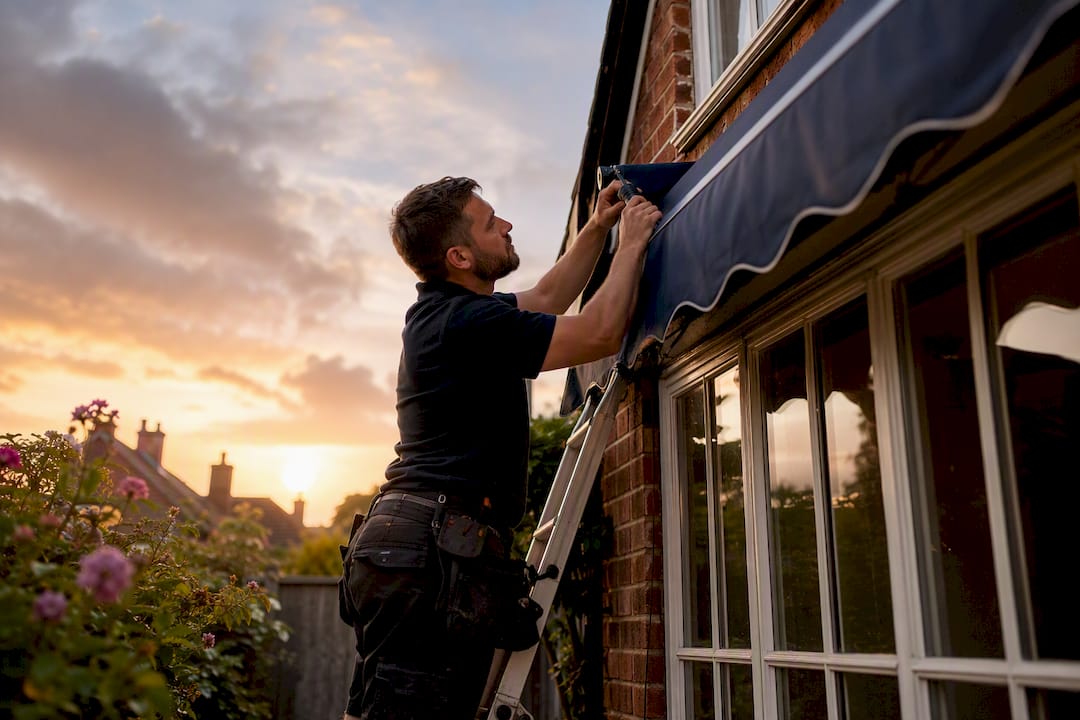
Professionally supplied and fitted awnings in the UK typically run from £900 to £5,000 all in, with most homeowners landing somewhere around £2,000 to £3,000 once fitting is included. Budget DIY kits undercut that range but skip the bespoke bracketry and manufacturer guarantees. Motorisation, wide spans, and custom fixings are what push a job from the low end into bespoke territory.
TL;DR:
Most UK awnings cost between £900 and £3,500 for professionally fitted models, with bespoke options reaching over £9,000.
Larger, motorised, and multi-fix span awnings, as well as freestanding structures, significantly increase the final price.
Structural work, wall type, and access difficulty are key factors that can raise installation costs or extend completion time.
Always request a detailed, itemised quote and a site survey to ensure accurate pricing and avoid unexpected expenses.
Table of Contents
How much do awnings cost in the UK: price bands and examples
Four rough bands cover most UK projects, and knowing which one you’re in saves a lot of back-and-forth with installers.
Budget/DIY: £150 to £600 for a basic manual awning, often self-fitted onto a standard wall with no electrics or bespoke bracketry.
Entry-level professional fit: £900 to £1,800 for a manual retractable awning supplied and fitted by a tradesperson, including standard fixings.
Mid-range fitted: £2,000 to £3,500 for a motorised retractable system with remote control, fitted to a standard wall with minimal reinforcement.
Premium bespoke: £4,000 to £9,000+ for cassette systems, wide multi-fix spans, or integrated LED and sensor packages, with some bespoke commercial jobs going higher still.
A small patio retractable awning (roughly 3m wide, manually operated, simple wall fixing) typically lands at £1,200 to £1,800 fitted. Step up to a motorised version with a Somfy motor and remote, and the cost increases notably. A large bespoke cassette system, four or five metres wide with multi-fix brackets and LED lighting, can be substantially more expensive. One aggregator puts the typical UK installed average near £2,225, with extreme cases ranging from around £150 for the cheapest DIY kit to £9,000 for a fully bespoke freestanding structure.
Most published price bands, including these, quote the total supply-and-fit figure inclusive of VAT and basic installation. Delivery is sometimes bundled in, sometimes charged separately, so always ask an installer to confirm what’s included before comparing two quotes side by side.
Retractable, fixed, motorised or freestanding: which costs more?
The type of system you choose does more to shape the final bill than almost any other single decision.
Retractable fabric awnings: £900 to £3,500 fitted. The cheaper end covers manual, open-arm designs; the higher end includes cassette housings that protect the fabric when retracted.
Fixed canopies: £600 to £2,000. Cheaper than retractables because there’s no folding mechanism, but you lose the flexibility to retract in high winds.
Motorised systems: add roughly £300 to £600 on top of a manual equivalent for the motor and control gear, per supplier data on motorised electric awnings. A small motorised cassette awning often starts around £3,000 installed.
Freestanding pergolas and verandas: £3,000 to £10,000+, since these are standalone structures rather than wall-mounted attachments, involving groundworks, posts, and often a full roof system.
Cassette housings, multi-fix wide spans, and premium motors don’t add cost gradually. They tend to create step changes, one insight into UK pricing notes that a structurally reinforced multi-fix system can double the price of an otherwise comparable single-fix unit. A remote control typically adds £100 to £200, and a wind sensor another £100 to £300. If your project needs structural work, such as reinforcing a cavity wall or adding crossbars for a wide span, treat that as a separate cost line rather than folding it into the “awning” price. For a broader look at how bracket count and fabric width scale commercial jobs, see our guide to commercial awning costs. Homeowners weighing up styles often find it useful to read about the practical benefits of retractable awnings before settling on a spec.
What factors push an awning quote higher?
Installers price a job on a handful of variables, and understanding them helps you read a quote instead of just reacting to the total.
Width and projection: every extra metre of fabric and arm length adds material cost, and wider spans need heavier-duty arms to resist wind load without sagging.
Mounting surface: brick and solid block walls are straightforward; cavity walls, render, or a single-storey extension roof often need spreader plates or through-fixings, adding labour and materials.
Multi-fix bracketry: spans over roughly 4 to 5 metres frequently need crossbars or chain-supported bracketry, and doubling the span can more than double the engineering and bracketry cost rather than simply scaling in a straight line.
Access and scaffolding: upper-storey installs or awkward access can add scaffold hire, typically several hundred pounds depending on height and duration.
Warranty level and lead time: premium brands with 5 to 10 year mechanism warranties cost more upfront but reduce the risk of paying for repairs later.
Pro Tip: Ask any installer whether their quote includes a structural check for bracket load distribution before they fix anything to the wall. A proper site survey that assesses this is the single most effective way to avoid a surprise invoice for reinforcement once the job is underway, according to MyBuilder’s pricing analysis.
How long does installation take and what do fitters charge?
Most residential retractable awning installs take one to two days from arrival on site to handover, according to MyBuilder’s UK pricing data. Commercial jobs, multi-unit fits for restaurants or hotels, or large bespoke verandas can run to three or four days, particularly where groundworks or electrical first-fix are involved.
Standalone installation labour typically costs £350 to £1,200, depending on complexity and access.
Many installers quote a fixed price for the full supply-and-fit job rather than an hourly rate, which makes comparing quotes easier.
Labour costs tend to run higher in London and the South East than in Yorkshire, the East Midlands, or the North, reflecting broader wage and overhead differences across the construction trade.
A proper site survey before the quote is confirmed, not just a phone consultation, catches wall-type issues and access problems before they become on-the-day surprises.
What extras and add-ons should you budget for?
The base awning price rarely covers everything you’ll actually want fitted, so it pays to budget for these separately.
Electrics: a plug-in motor needs no electrician, but permanent mains wiring for a motorised or heated awning typically adds £300 to £600 for the upgrade and electrician’s labour.
Wind and sun sensors: £100 to £300, and genuinely worth it if your awning is exposed and unattended much of the day.
LED lighting: usually a few hundred pounds depending on strip length and integration into the arm or valance.
Transport and delivery: £30 to £100 for standard kerbside delivery, more for bespoke oversized units.
Scaffolding or specialist fixings: variable, but budget several hundred pounds if access is difficult.
Ongoing maintenance: routine service visits run £50 to £200, and skipping them is a false economy since worn mechanisms are far cheaper to service than replace. For more detail on how electrical requirements affect the total, our piece on motorised patio cover pricing is worth a read.
Are awnings worth it, and do you need planning permission?
A well-fitted awning extends usable outdoor space for entertaining, dining, or shade-sensitive plants, and for cafés, pubs, and restaurants it often pays for itself by turning otherwise unusable patio space into covered seating across more months of the year.
Most garden and patio awnings count as permitted development and don’t need planning permission, but always check with your local planning authority if your property is listed, sits in a conservation area, or the awning involves significant structural alteration to the building.
Attached awnings on flats, maisonettes, or shared freeholds sometimes need freeholder consent even without formal planning permission.
Most UK installations complete in one to two days, and the typical installed cost for a mid-range fitted awning sits close to £2,225, per industry cost aggregators. Knowing both figures gives you a sanity check against any quote you receive.
How to get comparable quotes and choose a fitter
A quote you can actually compare against another needs to specify the same details every time. Ask each installer to confirm:
The exact manufacturer and model, not just “retractable awning”
The wind resistance rating and fabric warranty length
What fixings are specified for your specific wall type
Who supplies and certifies the electrician for any wiring work
Whether the price is itemised (frame, fabric, motor, fixings, labour) or a single lump sum
Itemised quotes are easier to compare and easier to negotiate. A lump sum isn’t automatically a red flag, but if an installer won’t break down the cost when asked, treat that as a warning sign. Other red flags include a price well below every other quote you’ve received, no offer of a site survey before confirming the price, and no proof of public liability insurance.
Pro Tip: Always insist on a measured site survey before signing anything. A phone-based estimate can’t account for wall condition, projection clearance, or nearby drainpipes and windows, all of which change the final fixing cost. For a fuller breakdown of what to look for before you commit, see our guide on choosing outdoor awnings for UK patios.
Real UK project costs: 15 years of installer experience
Infinity Awnings has spent over 15 years supplying and fitting retractable awnings, pergolas, and verandas across Yorkshire, Derbyshire, Nottinghamshire, and Lincolnshire, working with brands including Weinor, Llaza, Selt, Tarasola, and Morvelle.
On a recent carport-to-veranda conversion near Barnsley, the client wanted a covered space that could double as outdoor dining and secure parking. The finished project sat within the mid-to-premium bracket once bespoke roof panels and guttering were factored in, well above a simple retractable quote but in line with what a freestanding structure of that scale typically costs. The lesson for homeowners: a structure that combines two functions, shelter and parking, almost always costs more than either function alone would suggest.
Every quote Infinity Awnings issues follows a measured site survey, precisely the step that avoids the bracketry surprises covered earlier in this guide.
When professional fitting isn’t optional
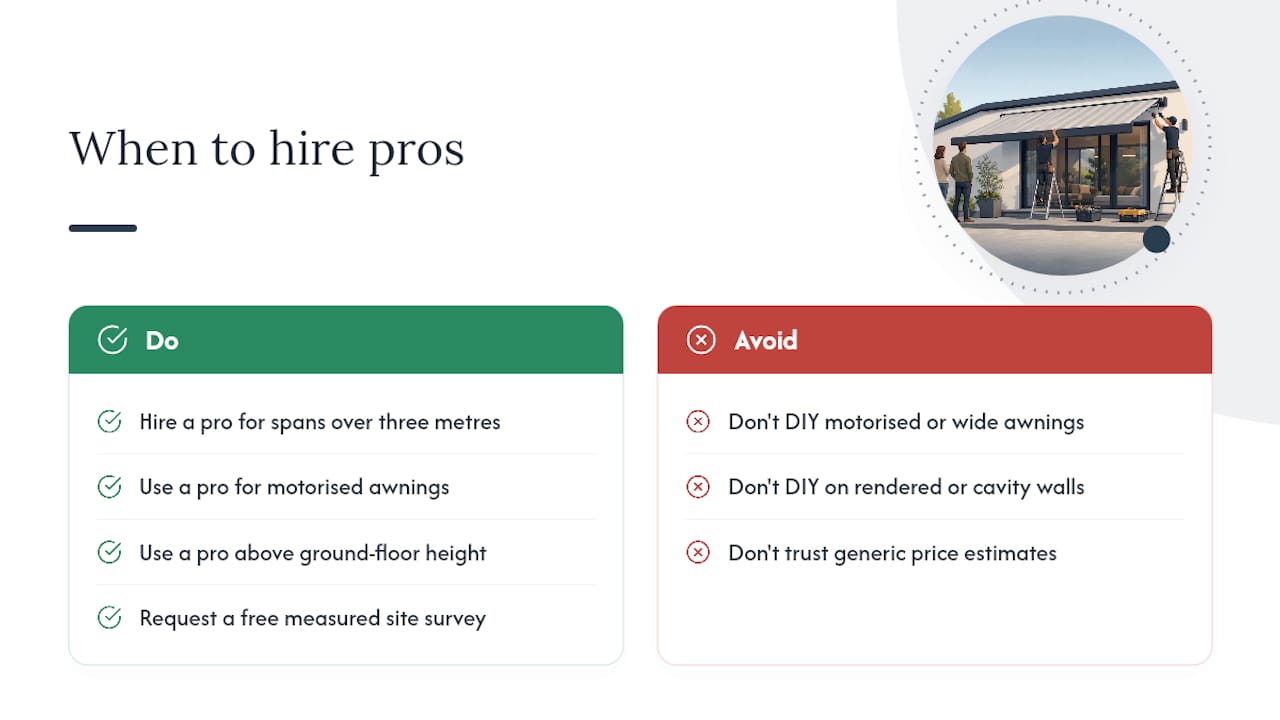
DIY awning kits have their place for a small, lightweight canopy on a solid wall with no electrics involved. Anything wider than about three metres, anything motorised, or anything fixed above ground-floor height should go to a professional. The structural loads on a poorly fixed bracket aren’t a cosmetic risk, they’re a safety one, and a botched DIY job on rendered or cavity walls is exactly the scenario that leads to costly remedial work later, as explored in our piece on why DIY installation often costs more than expected.
If you’re budgeting for a project, spend the survey stage properly before comparing headline prices. The single best move you can make right now is requesting a free, measured site survey so any quote you receive reflects your actual wall, your actual span, and your actual electrical setup, not a generic estimate.
— Andrew
Get a free quote for your awning, pergola, or veranda
Infinity Awnings designs, supplies, fits, and maintains retractable awnings, pergolas, and verandas for homes and businesses across Yorkshire, Derbyshire, Nottinghamshire, and Lincolnshire, backed by more than 15 years of on-site experience and manufacturer warranties from Weinor, Llaza, Selt, Tarasola, and Morvelle. Where the price bands above give you a realistic starting figure, a measured site survey gives you an exact one, with no guesswork over bracketry, motorisation, or wall type once the fitter has actually seen your property.
If a freestanding structure suits your space better than a wall-mounted awning, our pergola range covers bespoke designs built to the same standard. Request a free quote or book a site survey to get a figure specific to your home or business, not a national average.
Sources
Recommended
Comments