
Awning Privacy Ideas: 9 Ways to Screen Your Outdoor Space


An awning gives you privacy in two ways: it blocks views from above and, with the right add-ons, it screens the sides. A retractable awning cuts overlooking from upstairs windows. Drop-down screens, side panels, planting and careful positioning deal with the neighbours at eye level. Most gardens need a mix of these, not one fix.
This guide covers nine practical ideas for homes and businesses, how to choose between them, what to check on planning, and how to keep the result working for years.
TL;DR
A retractable awning adds privacy from overhead views and, according to Ideal Home, can do so without compromising natural light.
For eye-level screening, add drop-down screens or side panels, or combine the awning with trellis, climbers and layered planting.
Sit in the space and check views in every direction, including how they change when trees lose their leaves, before you fix a position.
Freestanding structures and awnings are often permitted development, but conservation areas and Article 4 directions can change that.
On commercial terraces, choose screens that open, so you do not create hidden corners.
Table of Contents
How an awning creates privacy
Privacy outdoors is really about sightlines. Someone can look down from a first-floor window, across from a neighbouring garden, or in from the street. Each needs a different answer.
An awning handles the first one well. It sits above your seating and puts a physical roof between you and anyone looking down. It also softens the feeling of being on display, because a covered area reads as a room rather than an open lawn.
Ideal Home reports that a retractable awning can add patio privacy without cutting out natural light, while also extending how long you can use the garden and reducing glare and heat entering the adjoining room. That last point matters for a south or west facing house, where an awning does shade and privacy at once. If that is your situation, our guide to blocking evening sun on west facing patios shows how an awning and drop screen work together.
For the sides, you need something vertical. The ideas below build from the simplest to the most complete.
Nine awning privacy ideas
1. Extend the awning further out
The cheapest improvement is often projection. A deeper awning shades more of the patio and hides more of your seating area from windows above. When we plan a retractable awning, we look at where people will actually sit, not just where the wall allows the frame to go. Projection and width are chosen to cover the table and chairs, not only the doorway.
If you are starting from scratch, take a look at our retractable awnings and patio awnings to see the formats available.
2. Add a drop-down front screen
A vertical drop screen fixed to the front bar of the awning lowers like a roller blind. It blocks low sun and cuts the view from the front, which is where overlooking from neighbouring gardens often comes from. Raise it when you want the open view, lower it when you want to be left alone.
This is the most flexible idea on the list because you control it in seconds. Screens can be manual or motorised depending on the system.
3. Fit side screens or side panels
Where a neighbour’s window looks across your patio, a side screen on the end of the awning closes that angle. You can have them as retractable roller-style screens or as fixed panels, depending on how permanent you want the enclosure to feel.
The point of a retractable version is choice. You keep the sides open when you are entertaining and want airflow, and close them when you want to sit quietly. We supply side screens as part of our awning and pergola projects, matched to the frame.
4. Choose fabric for the effect you want
Fabric changes how private the space feels. A denser, darker or more solidly woven cloth blocks more of the view in and gives a stronger sense of shelter. A lighter cloth lets in more brightness but offers less visual screening. Think about whether you want a bright, airy terrace or a cosy one before you pick.
Pattern also affects how the awning looks from the neighbour’s side, which matters if the awning is highly visible from the street. Our guide to awning material options for UK homes walks through the choices.
5. Add a pergola with a retractable roof or awning
If the garden is exposed, a pergola creates a defined outdoor room with posts that can carry curtains, screens or climbing plants. The British Association of Landscape Industries describes pergolas with retractable awnings as outdoor rooms that give shade and shelter and can be enhanced with climbing plants, and its example includes optional screens.
A freestanding pergola also lets you place the seating where privacy is best, rather than against the house wall. See our pergolas and our piece on why retractable pergolas suit UK homes for how they perform through the seasons.
6. Layer in climbers, trellis and planting
Hard screens work best when softened by planting. Livingetc quotes garden designers who recommend layered planting, pleached trees, multi-stem trees or carefully placed plants alongside a pergola or retractable awning to make a more intimate outdoor room.
A few practical combinations:
Trellis with climbers along the boundary, with the awning above for overhead cover.
Pleached or multi-stem trees to block a specific window line at height.
Tall planters with grasses or evergreens beside the side screen, for a softer edge.
Mesh and roses: Livingetc describes a London garden that used recycled reinforcing mesh with climbing roses to partly screen the dining area and zone the garden, so the space was not fully on display.
Planting takes time to fill out, so the awning does the immediate work while the greenery matures.
7. Hang outdoor curtains on the frame
Curtains on a pergola or awning frame are a soft, adaptable barrier. Lovelle suggests combining pergolas and awnings with trailing plants or curtains for shaded dining or lounging areas that are more shielded from outside views.

Choose outdoor-rated fabric that tolerates sun and damp, and tie it back when it is windy. Curtains suit a pergola better than a wall-mounted awning, because a pergola gives you posts to hang them from.
8. Combine an awning with a freestanding screen or slatted panel
A slatted panel or freestanding screen can sit at the exact point where the neighbour’s view lands, while the awning handles the overhead view. Because the screen is separate, you can move it, which helps if you are still learning where the sightlines really are.
Our wider guide to patio privacy ideas covers more screening options that pair well with an awning.
9. Add lighting and heating for the evening
Privacy is not only a daytime matter. A covered, screened space with soft LED lighting feels enclosed after dark, and a heater means you actually use it in cooler months. Both are options we fit with our awnings and pergolas, which can turn a patio into a space you use well into the evening.
Choose the position before the product
The best awning privacy plan starts with where you sit. Livingetc recommends sitting in the proposed spot and assessing views in every direction, including seasonal changes such as trees losing their leaves, before deciding where to put an awning or pergola.
That last point catches people out. A hedge or tree that screens the neighbour in July may be bare in January. If you want year-round privacy, an evergreen or a hard screen should cover the gaps.
A simple way to survey your space:
Sit where you would normally sit, at the height of your seat, and note every window or gap that looks onto you.
Stand and repeat, because standing views are different.
Mark which sightlines are overhead, which are side-on and which are from the street.
Match each with a fix: awning for overhead, side screens or planting for side-on, a front drop screen for the street or low sun.
Repeat the check in winter if you can, or imagine bare branches.
Matching the idea to the problem
Problem | Best first fix | Add if needed |
Overlooked from upstairs windows | Retractable awning with enough projection | Denser fabric |
Neighbour looking in from the side | Side screen or panel | Trellis and climbers |
Open view from the garden end | Front drop screen | Pergola with curtains |
Street or pavement views | Drop screen and planting | Slatted screen |
Want enclosure for evenings | Screens plus LED lighting | Heater |
Commercial terraces: privacy without hidden corners
For a bar, restaurant or hotel terrace, privacy has to be balanced with visibility and safety. Customers like a sheltered spot, but staff and passers-by need to see in. Camden Council’s design guidance warns that side panels on awnings can create hidden corners and raise fear of crime, and that a retractable awning should be integrated with the shopfront.
The sensible approach is screens that you can open when visibility, access or surveillance matters, rather than enclosing every side permanently. Closing them for an intimate evening service and opening them at other times gives you both. If you run a venue, look at our commercial awnings and canopies. For nurseries, schools and colleges, we also supply shelter and shade, where visibility is part of safe supervision: see outdoor solutions for schools.
Light, rain and upkeep
A privacy screen that makes the space dark or airless defeats the purpose. Keep one side open for airflow, and choose fabric that lets in the level of light you like.
Rain is the other consideration. An SBI Products brochure states that water-repellent solar-protection fabrics stay impervious during short, light rainfall if properly cared for and installed at a pitch of at least 14 degrees, but should be retracted during prolonged or heavy rain. Wind and rain sensors on a motorised awning can retract it for you, and these are among the options we offer.
The same brochure advises extending a wet awning again after rain so the cloth dries and avoids mildew marking. It recommends dry brushing for dust and mild detergent with water for small stains. Our guide on how to maintain retractable awnings has a fuller routine, and we offer repair and maintenance too.

Do you need planning permission?
Usually less than people fear, but check. The Planning Portal says a garden gazebo or freestanding awning will often fall under permitted development if it meets the restrictions, including not being in front of the house and not exceeding 2.5 metres in height. Rights can be removed or varied in conservation areas and by Article 4 directions.
That height limit is why a tall privacy screen on a pergola deserves a second look. Our guides cover the detail:
Permitted development vs planning permission for the general rules.
Pergola planning rules for the 2.5 metre limit and decking.
Awnings in conservation areas if you live in one.
For a fixed canopy on a commercial property, Camden’s guidance says it should respect the building and locality, especially in conservation areas and on listed buildings. Always confirm with your local planning authority before you order.
Perspective
Most people ask us about privacy after they have bought something that did not quite work: an awning that shades the table but leaves a clear view from next door, or a tall fence that makes the garden feel like a box. Our view is that privacy is designed, not bolted on. We start from the sightlines, then choose the awning, the screens and the planting together. A retractable system suits this well, because you decide each day how enclosed you want to feel. With over 15 years in the trade, we have found that the best-loved spaces use an awning or pergola for overhead cover, a drop or side screen for the angles that matter, and a little greenery to soften the edges. We supply premium brands including Weinor, Llaza, Selt, Tarasola and Morvelle, and every project is tailored to the property, whether that is a terrace in Yorkshire or a restaurant courtyard in Nottinghamshire. Our approach is consultative and without pressure: we would rather you understand your options than rush a decision. Andrew
Plan your private outdoor space with us
We design, supply and install retractable awnings, pergolas and verandas for homes and businesses across Yorkshire, Derbyshire, Nottinghamshire and Lincolnshire. Options include manual or electric operation, fabric choices, side screens, LED lighting, heaters and weather sensors, so the privacy solution fits how you use the space.
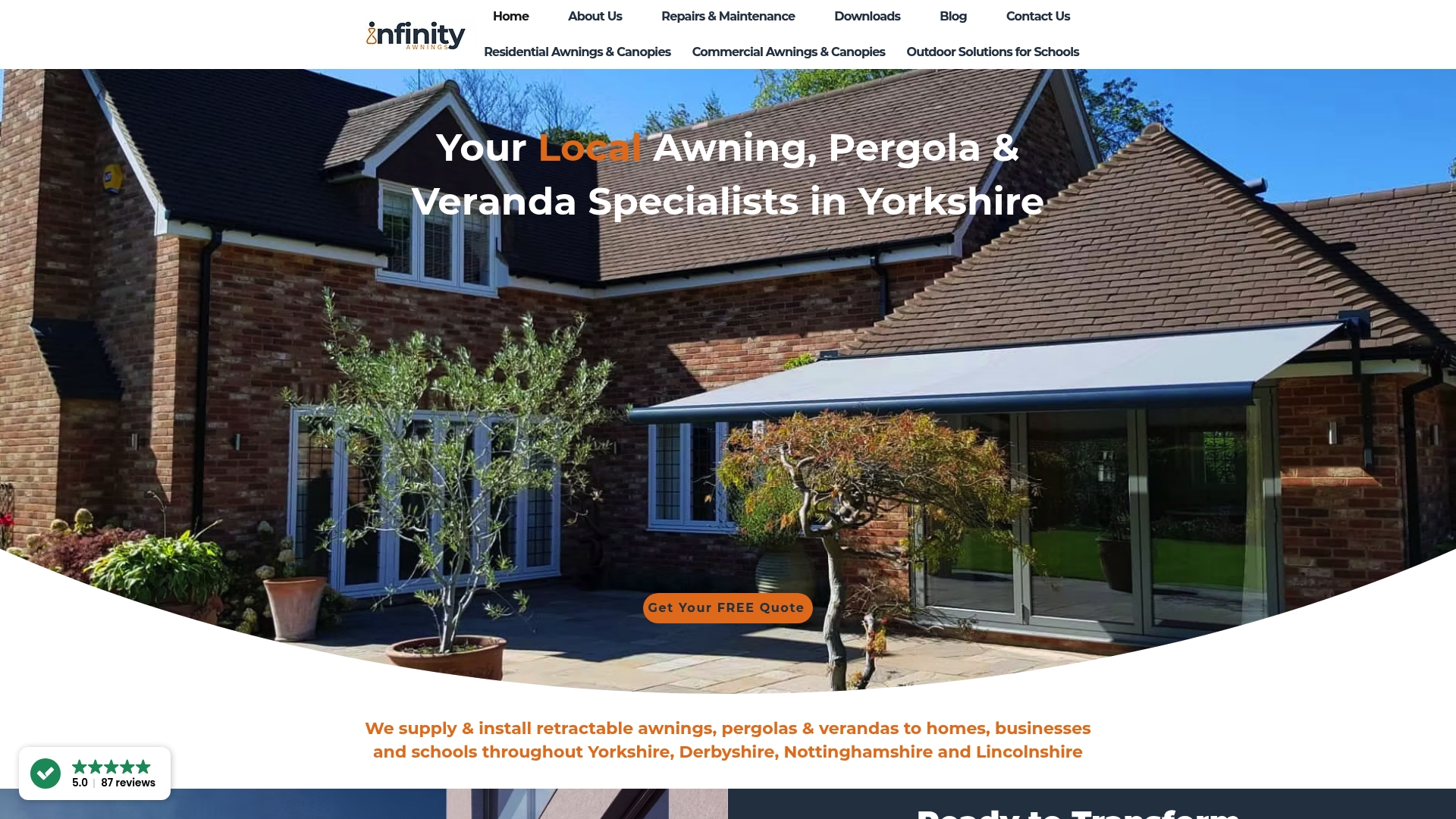
To discuss your garden or terrace, request a free quote through our retractable awnings, pergolas and verandas page, or see our residential awnings and canopies.
FAQ
Can an awning give me complete privacy?
An awning on its own protects mainly against views from above. For full screening, you add drop-down or side screens and often planting or trellis. Together, these cover overhead, front and side sightlines.
What can I use at the sides of an awning?
Common options are retractable side screens, fixed panels and, on a pergola, outdoor curtains. Retractable versions let you open the sides for airflow and light. A supplier can match the screen to your frame and fabric.
Will privacy screens make the space too dark?
Not if you plan for it. Choose a fabric with the level of brightness you want and keep at least one side open or retractable. A retractable awning can also add privacy without compromising natural light, according to Ideal Home.
Do I need planning permission for an awning with side screens?
Often not, but it depends on the structure, its height and where you live. A freestanding awning or gazebo usually needs to stay under 2.5 metres and sit behind the front of the house, and conservation areas can change the rules. Confirm with your local planning authority.
Should a restaurant enclose its terrace completely?
Usually it is better to use screens that open. Council guidance warns that side panels can create hidden corners, so retractable or guided screens let you balance comfort with visibility.
Sources
Recommended
Comments