
Awnings in UK hospitality: Boost revenue by 30%

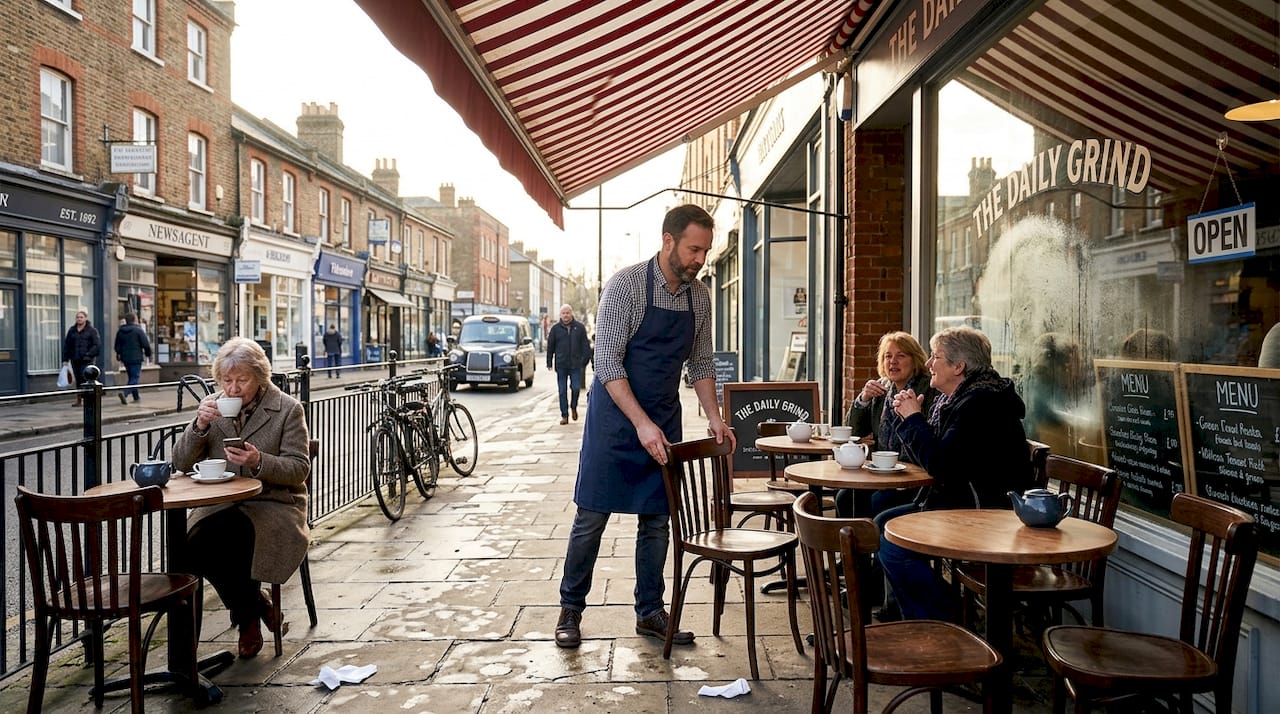
Many hospitality operators overlook a simple truth: the right outdoor shading can transform guest experience and revenue simultaneously. Awnings increase guest dwell time by up to 20 minutes, boosting revenue by 30%. Yet countless venues still treat outdoor spaces as afterthoughts, missing substantial profit opportunities. This article clarifies awning types, benefits, and practical considerations for UK hospitality businesses seeking to maximise outdoor seating potential whilst avoiding common pitfalls.
Table of Contents
Key Takeaways
Point | Details |
Boosted revenue | Awnings can increase hospitality venue revenue by up to 30 percent through expanded, comfortable outdoor seating. |
Guest comfort year-round | Awnings enable enjoyable outdoor dining in varying UK weather, keeping guests shaded and dry. |
Smart investment | Most hospitality venues see a return on awning investment within twelve months due to increased footfall and spend. |
Flexible solutions | Retractable, sensor-equipped awnings offer flexibility and weather protection tailored for UK hospitality needs. |
Professional installation essential | Professional assessment and installation greatly reduce the risks of wind damage and compliance issues. |
Why outdoor shading matters for hospitality venues
Outdoor spaces represent untapped revenue for most UK hospitality venues. The challenge isn’t just weather; it’s creating comfortable, inviting environments that encourage guests to stay longer and spend more.
Awnings extend usable outdoor space by providing shade and weather protection from sun and light rain, enabling year-round seating in UK climates. This transforms previously underutilised areas into profitable zones. When guests feel comfortable, they linger. When they linger, they order more.
The financial impact is measurable. Research demonstrates that extending dwell time by 20 minutes can boost revenue by up to 30%. For a venue serving 100 guests daily, this translates to thousands in additional monthly revenue.
“Outdoor comfort directly correlates with guest satisfaction scores and repeat visits. Venues with quality shading solutions report 25% higher customer retention rates.”
Key benefits for hospitality operators include:
Expanded capacity: Add 20-40% more seating without building extensions
Weather resilience: Operate profitably during light rain and intense sun
Guest comfort: Reduce complaints about heat, glare, and unpredictable weather
Extended season: Capture revenue during shoulder months when competitors close outdoor areas
Understanding retractable awning benefits helps operators appreciate why investment in quality shading delivers returns far exceeding initial costs. The UK climate demands flexible solutions that adapt to rapid weather changes, making all-weather awning essentials critical for year-round operation.
Types of awnings for hospitality: Retractable vs fixed options
Choosing between awning types determines operational flexibility, maintenance requirements, and long-term value. Each option serves specific hospitality needs.
Retractable awnings extend and retract as needed, offering maximum adaptability. Motorised retractable awnings with wind sensors provide 10-20 year lifespans and represent the preferred choice for UK hospitality venues. They protect themselves during high winds and allow sunlight when desired.
Fixed awnings remain permanently extended, providing constant coverage. They suit venues needing continuous shade but lack the flexibility to adapt to changing conditions. Fixed options typically cost 30-40% less initially but offer no weather responsiveness.
Pergolas create semi-permanent structures with optional retractable canopies. They combine architectural presence with functional shading, ideal for venues seeking statement pieces that define outdoor dining areas.
Feature | Retractable | Fixed | Pergola |
Initial cost | £2,500-£8,000 | £1,500-£5,000 | £4,000-£12,000 |
Flexibility | High | None | Medium |
Lifespan | 10-20 years | 8-15 years | 15-25 years |
Maintenance | Moderate | Low | Moderate |
Weather adaptation | Excellent | Poor | Good |
ROI timeline | 12-18 months | 18-24 months | 18-30 months |
Pro Tip: Motorised retractable awnings with integrated wind and sun sensors deliver the best return on investment for UK hospitality venues. They automatically retract during dangerous winds and extend during optimal conditions, protecting your investment whilst maximising usable hours.
The types of awnings guide provides detailed comparisons, whilst understanding retractable awning materials helps operators specify durable, commercial-grade fabrics that withstand heavy use.
Key benefits of awnings for UK hospitality businesses
Awning investment delivers measurable returns across multiple business metrics. Understanding these advantages helps justify capital expenditure and prioritise features.
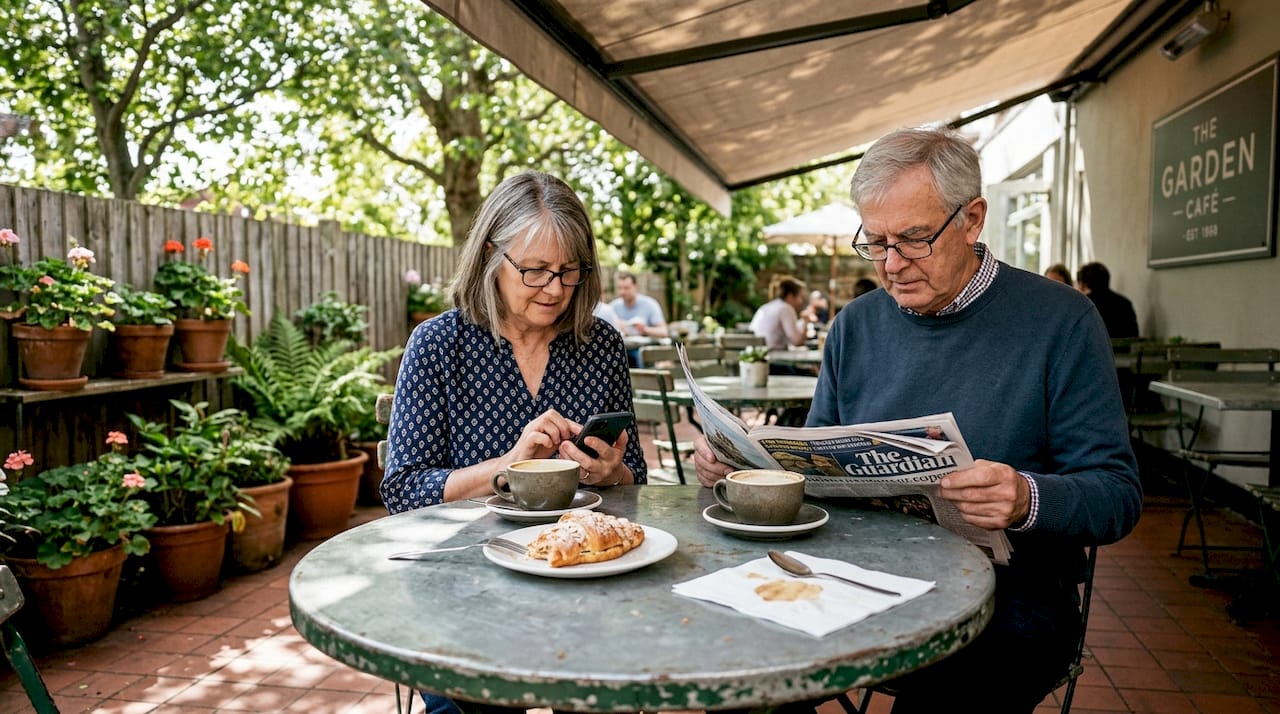
Revenue expansion tops the benefit list. Expanded seating capacity increases revenue by 10-35% depending on venue size and location. A 30-seat restaurant adding 12 covered outdoor seats typically sees £15,000-£25,000 additional annual revenue.
Venue type | Average capacity increase | Typical revenue uplift | ROI timeline |
Restaurant | 25-40% | 15-30% | 12-18 months |
Bar/pub | 20-35% | 10-25% | 15-20 months |
Hotel terrace | 30-50% | 20-35% | 10-15 months |
Café | 15-30% | 10-20% | 18-24 months |
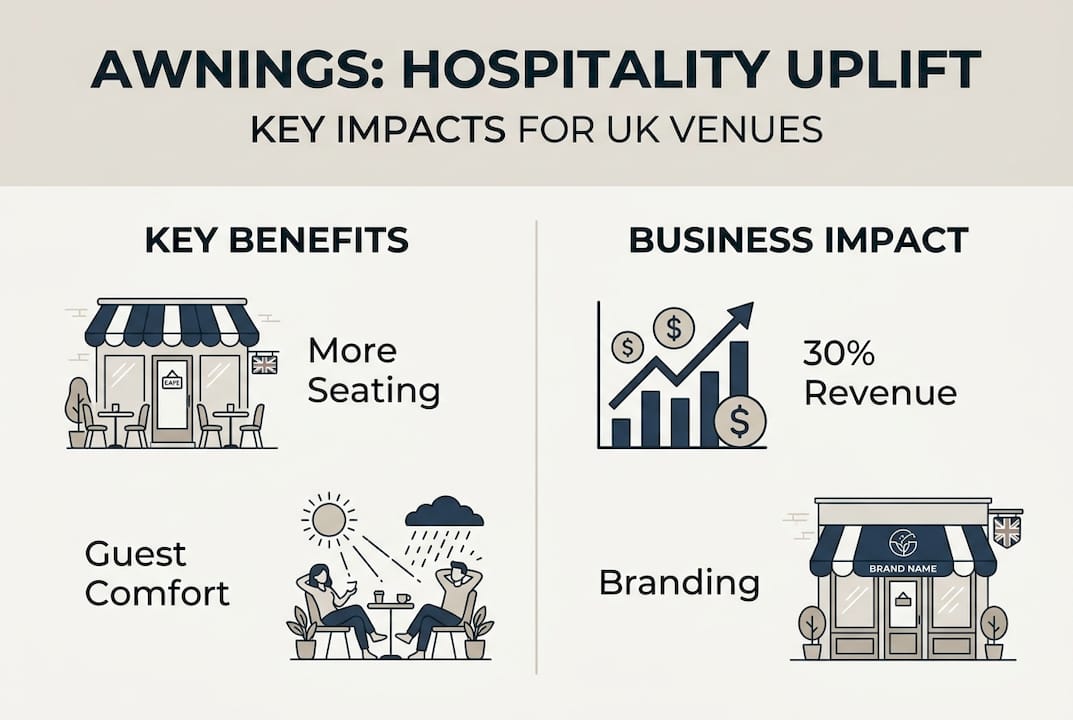
Guest comfort improvements drive satisfaction scores upward. Comfortable guests stay longer, order additional items, and return more frequently. Venues report 20-30% increases in average spend per head after installing quality awnings.
Energy savings provide ongoing operational benefits. Awnings reduce energy costs by blocking solar gain and lowering air conditioning demand in adjacent indoor spaces. Typical savings range from £800-£1,500 annually for medium-sized venues.
Branding opportunities enhance visibility and market positioning. Custom-printed awnings with logos and brand colours create distinctive street presence. They signal that your venue is open, welcoming, and invested in guest experience.
Operational resilience matters in unpredictable UK weather. Quality awnings enable service during light rain and intense sun, conditions that would otherwise force closure of outdoor areas. This translates to 40-60 additional service days annually.
Key operational advantages include:
Extended trading hours: Serve breakfast and late evening guests comfortably
Reduced weather cancellations: Maintain bookings during variable conditions
Staff efficiency: Servers work more comfortably, improving service quality
Furniture protection: Extend lifespan of outdoor furniture and fixtures
Noise management: Awnings provide acoustic dampening for outdoor conversations
Commercial awning uses extend beyond basic shading, whilst weatherproof awning features ensure year-round reliability. Empirical benchmarks show that prioritising durable fabrics and commercial-grade components delivers 10-35% revenue uplifts.
Making the right choice: Selection and installation considerations
Successful awning projects require careful planning and professional execution. Shortcuts lead to costly failures and safety risks.
Essential planning steps ensure proper specification:
Site assessment: Evaluate load-bearing capacity, wind exposure, and CDM compliance requirements before proceeding
Regulatory compliance: Verify planning permissions, building regulations, and insurance implications
Wind analysis: Determine exposure levels and specify appropriate wind ratings
Electrical requirements: Plan for motorised operation and sensor integration
Drainage planning: Ensure water runoff doesn’t create hazards or damage property
Pro Tip: Professional site surveys identify hidden challenges before installation begins. Investing £200-£400 in expert assessment prevents £2,000-£5,000 in corrective work later.
Material selection impacts longevity and maintenance requirements. Commercial-grade acrylic fabrics resist fading, mildew, and tearing better than cheaper alternatives. Expect to pay 40-60% more for premium materials, but they last twice as long.
Common pitfalls to avoid:
Undersizing: Awnings too small for the space provide inadequate coverage
Cheap components: Budget hardware fails within 2-3 years, requiring complete replacement
DIY installation: Improper mounting creates safety hazards and voids warranties
Ignoring wind ratings: Wind sensitivity limits use in exposed areas without proper sensors
Skipping maintenance: Neglected awnings deteriorate rapidly, losing functionality
“The difference between a successful awning installation and a problematic one often comes down to proper site assessment and professional installation. We’ve seen venues save thousands by getting it right the first time.”
Understanding how to choose awnings for specific applications helps operators specify appropriate solutions. Comparing outdoor shading solutions reveals why awnings often outperform alternatives for hospitality applications.
Future trends: The growing role of awnings in hospitality
The awnings market is expanding rapidly, driven by hospitality demand and technological innovation. Understanding these trends helps operators make future-proof investments.
Global awnings market reached £9.92 billion in 2024, with the hospitality segment growing fastest at 6.39% annually. This growth reflects increasing recognition of outdoor spaces as profit centres rather than amenities.
Technology integration transforms traditional awnings into smart systems:
Automated sensors: Wind, rain, and sun sensors adjust awnings automatically
Integrated lighting: LED systems extend evening service hours
Heating elements: Infrared heaters maintain comfort during cooler months
Smart controls: Mobile apps allow remote operation and scheduling
Weather forecasting: Systems anticipate conditions and adjust proactively
Sustainability focus drives material innovation. Recycled fabrics, solar-powered motors, and energy-efficient designs appeal to environmentally conscious operators and guests. These features increasingly influence purchasing decisions.
Design sophistication elevates awnings from functional items to architectural statements. Custom awning innovations enable venues to create distinctive outdoor environments that reinforce brand identity.
Key market drivers include:
Rising consumer preference for outdoor dining experiences
Increased focus on year-round revenue optimisation
Growing awareness of guest comfort’s impact on profitability
Technological advances making systems more reliable and user-friendly
Competitive pressure to differentiate venue offerings
For UK hospitality operators, these trends signal opportunity. Early adopters of advanced awning systems gain competitive advantages through enhanced guest experiences and operational efficiency.
Transform your venue with expert awning solutions
Quality awnings represent strategic investments in guest satisfaction and revenue growth. The difference between adequate and exceptional outcomes lies in expert guidance and professional installation.
We specialise in commercial awning solutions for hospitality venues across Yorkshire, Derbyshire, Nottinghamshire, and Lincolnshire. Our 15 years of experience with premium brands like Weinor, Llaza, and Selt ensures you receive systems engineered for demanding commercial environments. From initial consultation through installation and ongoing support, we help you maximise outdoor space potential whilst avoiding costly mistakes. Explore expert awning solutions tailored to your venue’s specific requirements and discover how the right shading transforms guest experience and profitability.
Frequently asked questions
How much does a commercial awning typically increase revenue?
Studies show well-designed awnings boost hospitality revenue by up to 30% by extending dwell time and usable space. Most venues achieve 15-25% increases within the first year.
What type of awning is best for restaurants and bars in the UK?
Retractable motorised awnings with sensors are preferred in the UK for their flexibility and durability in changing weather. They provide 10-20 year lifespans with proper maintenance.
What should I check before installing an awning on my business?
Carry out site assessment for load-bearing capacity, wind exposure, and ensure compliance with CDM guidelines. Professional surveys identify potential issues before installation begins.
Do awnings require much maintenance?
Quality awnings last 10-20 years with routine checks and professional servicing, especially those with sensor systems. Annual inspections and fabric cleaning maintain optimal performance and appearance.
Recommended
Comments