
Benefits of outdoor heating solutions for UK spaces
- Andrew Crookes

- Jun 20
- 8 min read
TL;DR:
Outdoor heating solutions using radiant technology extend the outdoor season by providing direct warmth, especially in windy conditions. Proper integration with shelter and zoning enhances efficiency, comfort, and property value while reducing energy costs. Infrared electric heaters are ideal for sheltered areas, while propane heaters suit large open spaces, and heated furniture benefits personal use.
Outdoor heating solutions are defined as systems that deliver direct warmth to people and surfaces in open-air environments, extending the usable season of patios, gardens, and commercial terraces well beyond summer. The most effective modern options rely on radiant heat technology rather than convection, which makes them far better suited to ventilated outdoor conditions. For UK homeowners and businesses across Yorkshire, Derbyshire, Nottinghamshire, and Lincolnshire, the benefits of outdoor heating solutions go well beyond staying warm. They add usable living space, lift property value, and transform a garden into a year-round room.
What are the benefits of outdoor heating solutions for comfort and usability?
Radiant heat is the foundation of effective outdoor warmth. Unlike convection heaters, which warm the surrounding air, radiant heat warms people and objects directly, making it reliable even when wind disperses ambient air temperature. This distinction matters enormously outdoors. A convection heater on a breezy patio is largely wasted energy. A radiant infrared heater mounted overhead delivers warmth you actually feel.
The most successful outdoor heating projects focus on creating micro-climates rather than heating entire air volumes. This means zoning your heat source to cover the area where people sit, not the whole garden. Combining a heater with a pergola, glass screen, or heavy outdoor curtains traps radiant warmth and blocks wind, multiplying the effect of every watt you spend.
Pro Tip: Pair your heater with a windbreak on the prevailing wind side. Thermal comfort outdoors depends more on stopping heat loss from the body than on raw heat output.
The social and psychological advantages are equally real. Watching a fire or sitting beneath an infrared heater activates the fireplace effect, lowering blood pressure and cortisol levels and encouraging longer, more relaxed gatherings. Brands like My Fireplace and Bromic Heating have built product ranges specifically around this principle, recognising that outdoor warmth is as much about atmosphere as temperature.
Key comfort benefits at a glance:
Radiant heat works regardless of ambient wind or air temperature
Micro-climate zoning reduces energy waste and improves perceived warmth
Integrated systems within pergolas or patio covers retain heat far better than portable units
Wind barriers such as glass screens or curtains amplify heater effectiveness dramatically
The fireplace effect supports relaxation and longer outdoor stays
What are the main types of outdoor heaters and their advantages?
Choosing the right heater starts with understanding what each type does well and where it falls short. The four main categories are infrared electric heaters, propane gas patio heaters, electric convection heaters, and heated furniture.
Comparing outdoor heater types
Type | Heat output | Energy cost | Coverage area | Installation complexity |
Infrared electric | High | Low to medium | Focused zone | Low to medium |
Propane gas patio heater | Very high | Medium | Wide open areas | None (portable) |
Electric convection | Medium | Medium | Small sheltered areas | Low |
Heated furniture/cushions | Low | Very low | Personal only | None |
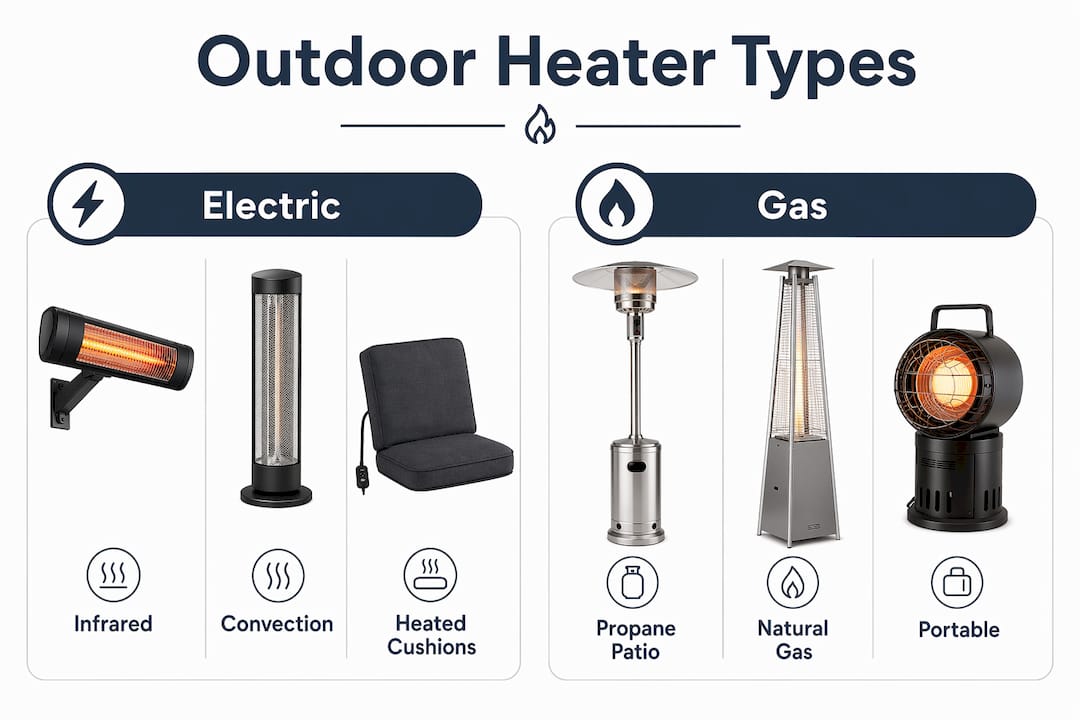
Infrared electric heaters are the best all-round choice for most UK patios and commercial terraces. Integrated infrared systems save 30–50% energy compared to traditional convection heaters. That saving comes from directing warmth precisely where people sit rather than losing it to open air.
Propane gas patio heaters suit wide, open spaces where running electrical cables is impractical. Portable propane heaters produce 30,000–48,000 BTUs and run for 8–10 hours on a standard 20-pound tank. That output covers a generous area, making them popular for restaurant terraces and event spaces. The trade-off is ongoing fuel cost and the need to store and replace tanks.
Electric convection heaters work adequately in small, sheltered spots such as a covered veranda with minimal airflow. They struggle in exposed conditions because wind strips away the warm air they produce. Understanding why convection fails in ventilated environments is the key insight that separates effective outdoor heating design from wasted spend.
Heated furniture and cushions are a practical option for renters or compact spaces. Heated cushions consume as little as 150–300 watts, making them the most energy-efficient choice per person warmed. They require no installation and no gas supply, though they only serve the individual sitting on them.
The right choice depends on three factors: the size of your space, whether it is sheltered or exposed, and whether you want a permanent fixture or a portable solution.
What are the broader benefits of outdoor heating beyond warmth?
The advantages of outdoor heaters extend well past temperature control. Property value, lifestyle quality, and physical wellbeing all improve when outdoor heating is done properly.
Investing in quality outdoor heating can increase property value by up to 10%. Estate agents consistently report that a functional, heated outdoor space reads as bonus living area to buyers. In competitive markets across Yorkshire and Nottinghamshire, a well-designed heated patio can be the detail that closes a sale.
The lifestyle shift is equally significant. Year-round outdoor entertaining becomes realistic rather than aspirational. Families use garden spaces for breakfast in october and dinner in february when a reliable heat source is in place. Restaurants and bars with heated terraces report longer customer dwell times and higher spend per visit, because guests are comfortable enough to stay for another round.
Integrated heating systems transform patios into extensions of indoor living areas, which is the core reason they command a premium. A pergola with built-in infrared heaters from brands like Weinor or Tarasola does not look like a temporary fix. It looks like a room. That perception drives both enjoyment and resale value.
Additional benefits worth noting:
Reduced cortisol and lower blood pressure from the fireplace effect support genuine wellbeing
Outdoor cooking and dining become comfortable across more months of the year
Commercial spaces recover investment through increased revenue from year-round trade
Low-maintenance electric systems require minimal servicing compared to gas alternatives
Combining heating with outdoor shading solutions creates a fully weatherproofed space
“The best outdoor spaces feel like rooms, not gardens. Heating is what makes that possible.”
How to choose and optimise outdoor heating for your space
Selecting the best outdoor heating option starts with an honest assessment of your space. Measure the area you actually use, not the full garden. A 4-metre by 3-metre seating zone needs far less heating capacity than a 10-metre open terrace, and sizing correctly avoids overspending on output you will never use.
Wind exposure is the single biggest variable in outdoor heating performance. Thermal comfort outdoors depends strongly on heat loss from the body, not just air temperature. A space that feels cold at 12°C in a breeze can feel comfortable at 8°C with a windbreak in place. Assess which direction the prevailing wind comes from and plan your shelter accordingly before choosing a heater.
Practical steps for optimising your setup
Map your usage zone. Identify exactly where people sit and focus heating on that area only.
Add wind protection first. Install a pergola, glass balustrade, or heavy curtains before purchasing a heater. The shelter does as much work as the heat source.
Choose integrated over portable where possible. Zoning heating within a patio structure reduces energy use and improves comfort compared to standalone units.
Match heater type to space size. Use infrared electric for sheltered zones up to 15 square metres. Use propane for larger, open areas where cabling is impractical.
Consider smart controls. Programmable timers and motion-activated switches prevent heaters running when no one is outside, cutting running costs significantly.
Pro Tip: Mount infrared heaters at a 30–45 degree angle rather than directly overhead. This angle directs heat at seated body mass rather than the top of heads, improving perceived warmth without increasing wattage.
Maintenance is straightforward for electric infrared systems. Wipe reflector panels clean each season and check fixings annually. Gas systems require annual safety checks on connections and regulators. Integrating your heater into an awning or pergola structure, as Infinityawnings does with its Weinor and Tarasola product range, also protects the unit from weather, extending its working life considerably. For more on combining shelter and warmth, the guide on heaters in awning systems covers the specifics in detail.
Key takeaways
Outdoor heating solutions deliver the most value when radiant technology, wind protection, and architectural integration work together rather than in isolation.
Point | Details |
Radiant heat outperforms convection outdoors | Infrared heaters warm people directly, making them effective even in breezy UK conditions. |
Energy savings are substantial | Integrated infrared systems use 30–50% less energy than traditional convection patio heaters. |
Property value increases with quality heating | Well-designed heated outdoor spaces can add up to 10% to a property’s market value. |
Wind protection multiplies heater effectiveness | Combining a heater with a pergola or screen dramatically reduces heat loss and running costs. |
Heater type must match space size and exposure | Propane suits large open areas; infrared electric suits sheltered zones; heated cushions suit personal use. |
Why I think most people underestimate outdoor heating
After more than 15 years working with outdoor structures across the north of England, the pattern I see most often is this: homeowners buy a heater and expect it to do all the work. They place a freestanding propane tower on an exposed patio, run it on full power, and still feel cold. Then they conclude that outdoor heating does not work.
The real problem is almost never the heater. It is the absence of shelter. Radiant heat is genuinely effective, but the body loses warmth to wind faster than any portable heater can replace it. The projects that work brilliantly are always the ones where a pergola or veranda goes in first, and the heater follows as the finishing layer.
The other mistake I see is treating outdoor heating as a seasonal add-on rather than a design decision. Integrated systems built into a pergola structure look considered and permanent. They protect the heater from weather, direct warmth precisely where it is needed, and add real value to the property. A freestanding tower heater does none of those things.
The trend I am watching closely in 2026 is the move towards smart-controlled infrared systems paired with sustainable energy sources, particularly solar-assisted setups for daytime use. The combination of low running costs and precise zoning makes these genuinely compelling for both residential and commercial clients. If you are planning an outdoor space now, build the infrastructure for smart controls from the start. Retrofitting is always more expensive.
Think about outdoor comfort as a system: shelter, warmth, and furnishing working together. Get all three right and your garden becomes a room you use in january as readily as july.
— Andrew
How Infinityawnings can help you heat your outdoor space
Infinityawnings designs and installs pergolas across Yorkshire, Derbyshire, Nottinghamshire, and Lincolnshire that are built to incorporate integrated heating from day one. Each structure is engineered to work as a complete outdoor room, combining weather protection with the option to add infrared heaters from premium brands including Weinor and Tarasola.
Whether you are a homeowner wanting year-round garden use or a business looking to extend your trading season, a bespoke pergola with integrated heating delivers both comfort and a measurable return on investment. Explore the full range of pergola solutions on the Infinityawnings website, or get in touch for a free consultation and quote tailored to your space.
FAQ
What is the most energy-efficient outdoor heater type?
Infrared electric heaters are the most energy-efficient option for sheltered outdoor spaces. Integrated systems save 30–50% energy compared to convection heaters by warming people directly rather than heating the surrounding air.
Do outdoor heaters work in windy conditions?
Radiant infrared heaters perform significantly better than convection heaters in wind because they warm surfaces and bodies directly. Combining any heater with a windbreak such as a pergola or glass screen dramatically improves effectiveness.
Can outdoor heating increase my property value?
Quality outdoor heating installations can increase property value by up to 10%. Estate agents recognise heated patios as functional bonus living space, which strengthens buyer appeal.
How long does a propane patio heater last on one tank?
A standard portable propane heater running at full output uses a 20-pound tank in 8–10 hours. Output ranges from 30,000 to 48,000 BTUs, making propane heaters well suited to large, open commercial terraces.
What is the best outdoor heating option for a small sheltered patio?
For small sheltered areas, infrared electric heaters or heated furniture such as cushions consuming 150–300 watts are the most practical choices. Both require minimal installation and deliver direct warmth without the need for gas connections.
Recommended
Comments