
Commercial Awning Selection Process for Businesses
- Andrew Crookes

- Feb 21
- 8 min read
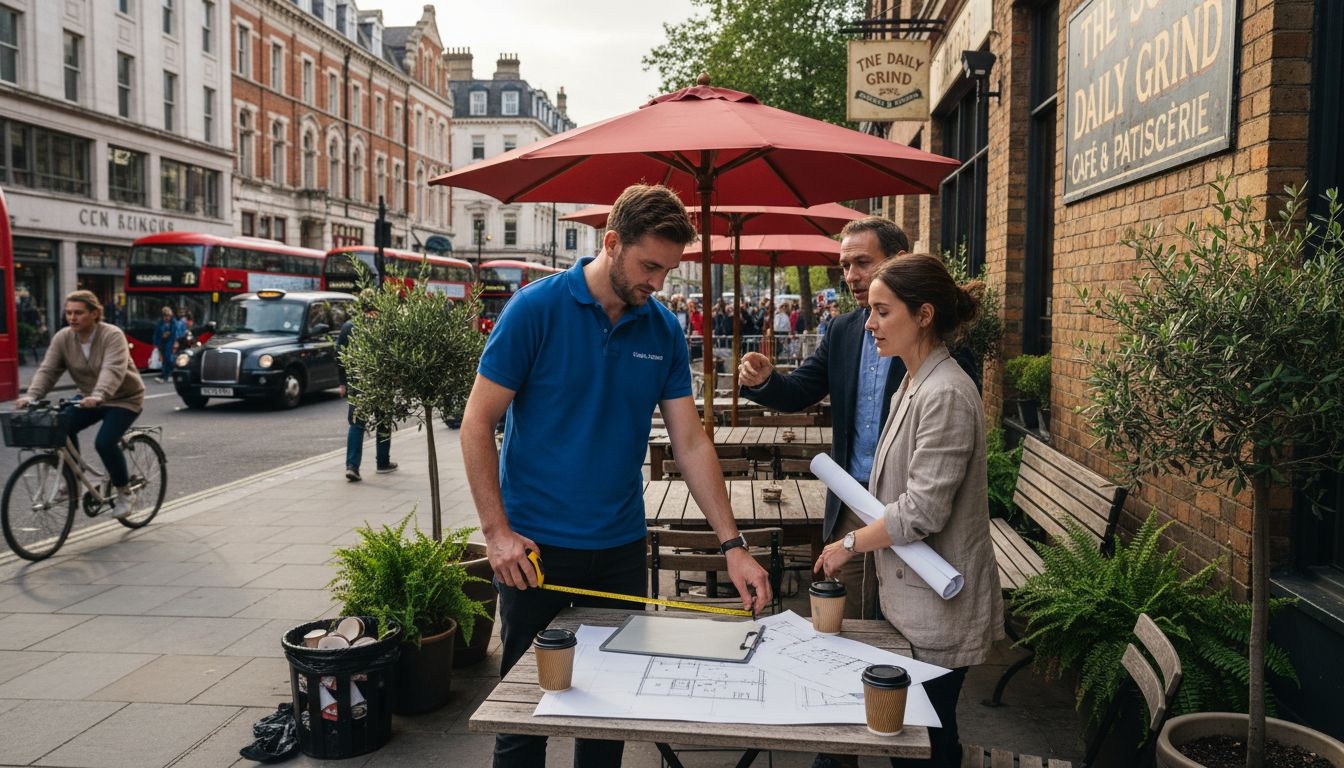
Rainy afternoons or bursts of sunshine can turn outdoor seating from a draw into a challenge for Yorkshire venues. Understanding the right way to assess your space lets you choose an awning that delivers both comfort and style for your customers. This guide helps you get clear on your needs, from customer comfort and operational flow to making your terrace a year-round destination.
Table of Contents
Quick Summary
Key Message | Explanation |
1. Assess your outdoor space needs | Measure dimensions and observe usage to ensure the awning meets practical requirements and customer comfort. |
2. Choose the right awning type | Select between retractable, freestanding, or fixed awnings based on flexibility and suitability for your venue’s layout. |
3. Customise features for your brand | Discuss colour, fabric, lighting, and heating with experts to enhance aesthetics and improve customer experience. |
4. Ensure proper installation and function | Conduct a thorough inspection after installation to confirm the awning works correctly and meets your expectations. |
Step 1: Assess Outdoor Space and Usage Requirements
Before you invest in a commercial awning, you need to understand exactly what you’re working with. This step involves measuring your space, observing customer behaviour, and matching those findings to the right solution.
Start by measuring your outdoor area carefully. Note the dimensions of your terrace, patio, or seating space. Consider not just the floor area, but also the height from ground to any obstructions like guttering, signage, or overhanging structures. These measurements become critical when determining awning size and installation feasibility.
Walk through your space at different times of day. Notice where the sun hits your seating areas during peak service hours. If you’re a Yorkshire bar or restaurant, understanding how afternoon and evening light falls across your outdoor space helps you position coverage where it matters most.
Observe how customers actually use the space. Do they cluster in certain zones? Do families prefer shaded areas whilst drinkers gather in open spots? Do people linger longer when weather improves?
Identify your main challenges:
Weather exposure: Rain, wind, or harsh midday sun
Seasonal usage patterns: Spring and summer peaks versus quieter months
Ambiance requirements: Do you need to create an intimate, covered lounge feel or maintain an open, airy atmosphere?
Operational needs: Space for staff movement, delivery access, or furniture arrangement
Customer comfort: Protection from elements whilst maintaining sightlines and a welcoming entrance
Consider your aesthetic goals too. An awning isn’t just functional—it’s a visual extension of your brand. Think about colour, style, and whether you want a modern, sleek look or something more traditional that suits Yorkshire’s character.
Check local planning requirements and any restrictions from your landlord or local authority. Some commercial properties have specific rules about external structures. Understanding these upfront prevents costly delays later.
Your space assessment directly influences awning size, type, and positioning—get this right, and the rest falls into place.
Pro tip: Photograph your space from multiple angles at different times of day, then sketch rough dimensions onto the images. This visual reference becomes invaluable when discussing options with awning specialists.
Step 2: Determine Suitable Awning Types and Features
Now that you understand your space and usage patterns, it’s time to match those needs with the right awning solution. Your choices here directly affect functionality, aesthetics, and long-term value.
Start by considering the main awning types available. Wall-mounted retractable awnings offer flexibility for changing weather, allowing you to extend coverage when needed and retract when you don’t. These work brilliantly for restaurants wanting to adapt throughout the day. Freestanding awnings provide independent coverage without relying on building walls, making them ideal for larger Yorkshire terraces or standalone seating areas. Fixed awnings deliver permanent protection, perfect if you want year-round shelter without moving parts.
Each type has distinct advantages depending on your business model. Retractable options give you control over your space’s appearance and functionality. Freestanding structures suit venues wanting flexibility in layout. Fixed installations work best when you’re committed to permanent coverage in one location.
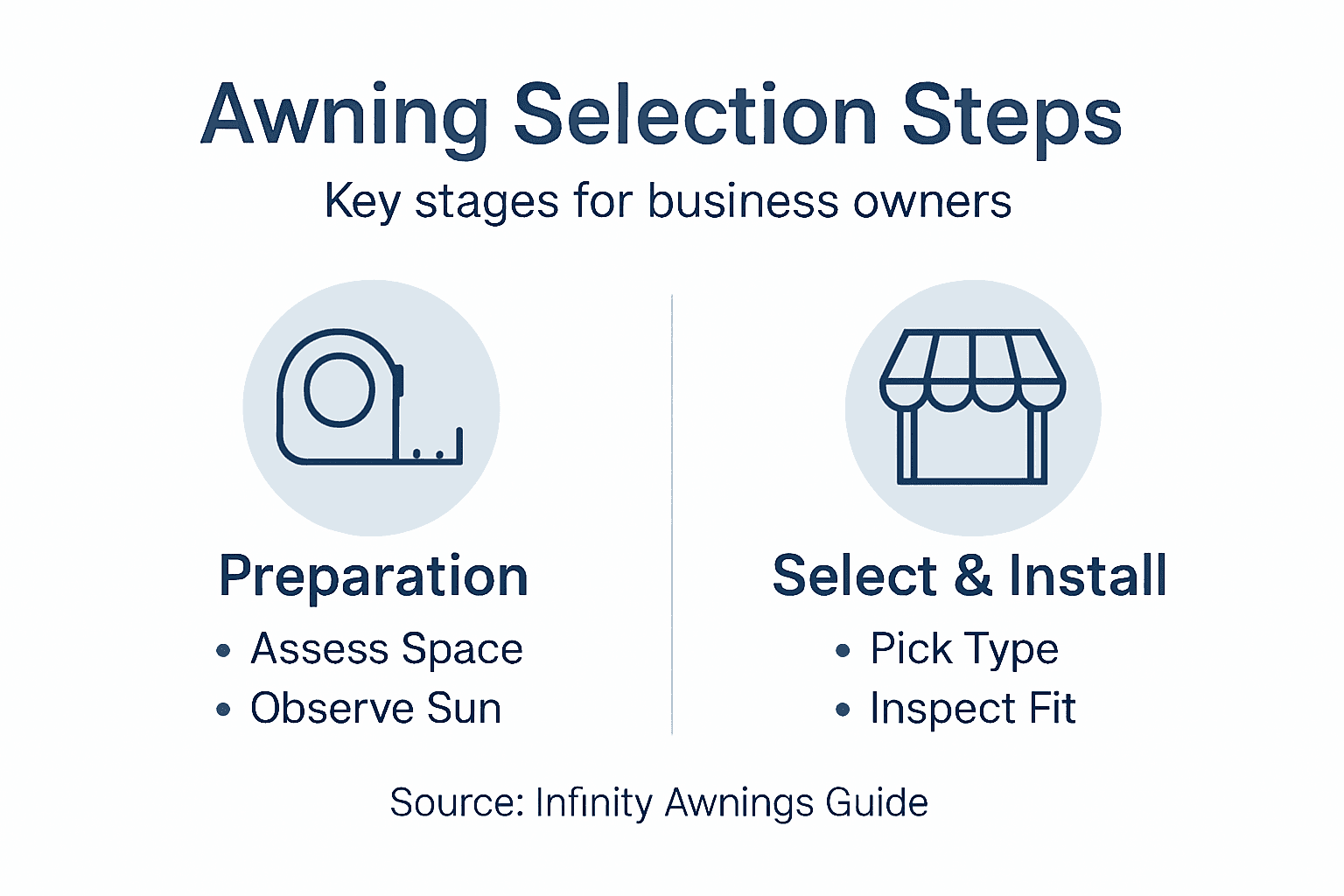
Here’s a comparison of popular commercial awning types for Yorkshire venues:
Awning Type | Flexibility | Typical Venue Suitability |
Retractable | High, adjust as needed | Bars with shifting weather demand |
Freestanding | Very flexible, movable | Large terraces, event spaces |
Fixed | Permanent, stable coverage | Year-round outdoor restaurants |
This helps clarify which awning fits various business needs and layout constraints.
Beyond type, evaluate specific features that matter for your operation:
Manual versus electric operation: Manual awnings cost less upfront but require physical effort. Electric versions offer convenience, especially for frequent adjustments during service hours.
Fabric choice: Durable outdoor fabrics come in various colours and patterns. Choose something reflecting your brand whilst offering UV protection.
Add-ons: LED lighting extends usable hours into evening. Integrated heaters keep customers comfortable during cooler months.
Weather resistance: Look for water-resistant, wind-resistant fabrics suitable for Yorkshire’s variable climate.
Consider retractable awning benefits and selection when evaluating your options, as these structures offer flexibility many bar and restaurant owners appreciate.
Think about maintenance too. Some fabrics require more care than others. Electric mechanisms need occasional servicing. Fixed structures demand less attention but offer less adaptability.
The right awning type matches your space, budget, and operational style, not just your immediate needs.
Pro tip: Request samples of different fabric colours and textures, then view them in your actual space during different lighting conditions. What looks perfect in showroom lighting might feel entirely different under your venue’s natural light.
Step 3: Consult Experts for Customisation Options
This is where your vision becomes reality. Speaking with specialists helps you unlock customisation possibilities you might not have considered and ensures your awning fits perfectly within your budget and space.
Reach out to awning providers with commercial experience, ideally those familiar with Yorkshire venues. Explain your specific situation: your space dimensions, customer demographics, usage patterns, and aesthetic goals. The more detail you provide, the better recommendations they’ll offer.
Prepare questions before your consultation. Ask about fabric options that suit your brand colours and offer durability. Enquire about motorisation choices and whether electric operation makes sense for your workflow. Discuss lighting integration if you want to extend evening service hours. Ask about heating options if you operate through cooler months.
Customisation possibilities worth exploring:
A quick reference guide for essential awning customisation features:
Feature Category | Business Benefit | Typical Use Case |
Colour Selection | Enhances branding impact | Matching venue identity |
Lighting Integration | Extends evening trading hours | Outdoor dining after sunset |
Heating Add-ons | Enables off-season usage | Keeping winter visitors comfortable |
Motorisation | Eases staff workload | Fast adjustments during service |
This table assists owners in prioritising features by business impact.
Colour and pattern selection: Match your venue’s existing décor or create striking visual contrast
Size and coverage configurations: Adapt awnings to irregular spaces or multiple seating zones
Operation type: Manual simplicity versus electric convenience depending on your daily needs
Weather protection levels: Enhanced wind resistance or waterproofing for exposed locations
Additional features: Integrated side screens, LED strips, or mounting solutions for unique structures
Experts can identify solutions you hadn’t thought of. They understand installation challenges in older Yorkshire buildings, recommend fabrics that handle local weather patterns, and suggest layouts maximising your outdoor space’s potential.
During consultation, ask about maintenance requirements and warranty coverage. Understand what upkeep different options demand and what happens if something fails. Request detailed quotes breaking down costs clearly, including installation and any add-ons.
Experienced consultants translate your rough ideas into practical, beautiful solutions tailored to your exact space.
Pro tip: Ask your consultant for photos of similar installations in comparable venues, then visit one if possible. Seeing how an awning performs in real conditions, with actual customers using the space, beats any showroom demonstration.
Step 4: Verify Installation Quality and Final Fit
Your awning is installed, but before you celebrate, thorough inspection ensures everything works perfectly and meets your expectations. This step protects your investment and catches any issues whilst corrections are still straightforward.
Begin with a visual inspection of the entire installation. Check that the awning sits level and symmetrically. Look for gaps between the awning frame and your building’s wall or support structures. Examine all bolts, brackets, and fixings to confirm they’re tight and secure. Step back and assess whether the finished product matches what you envisioned.
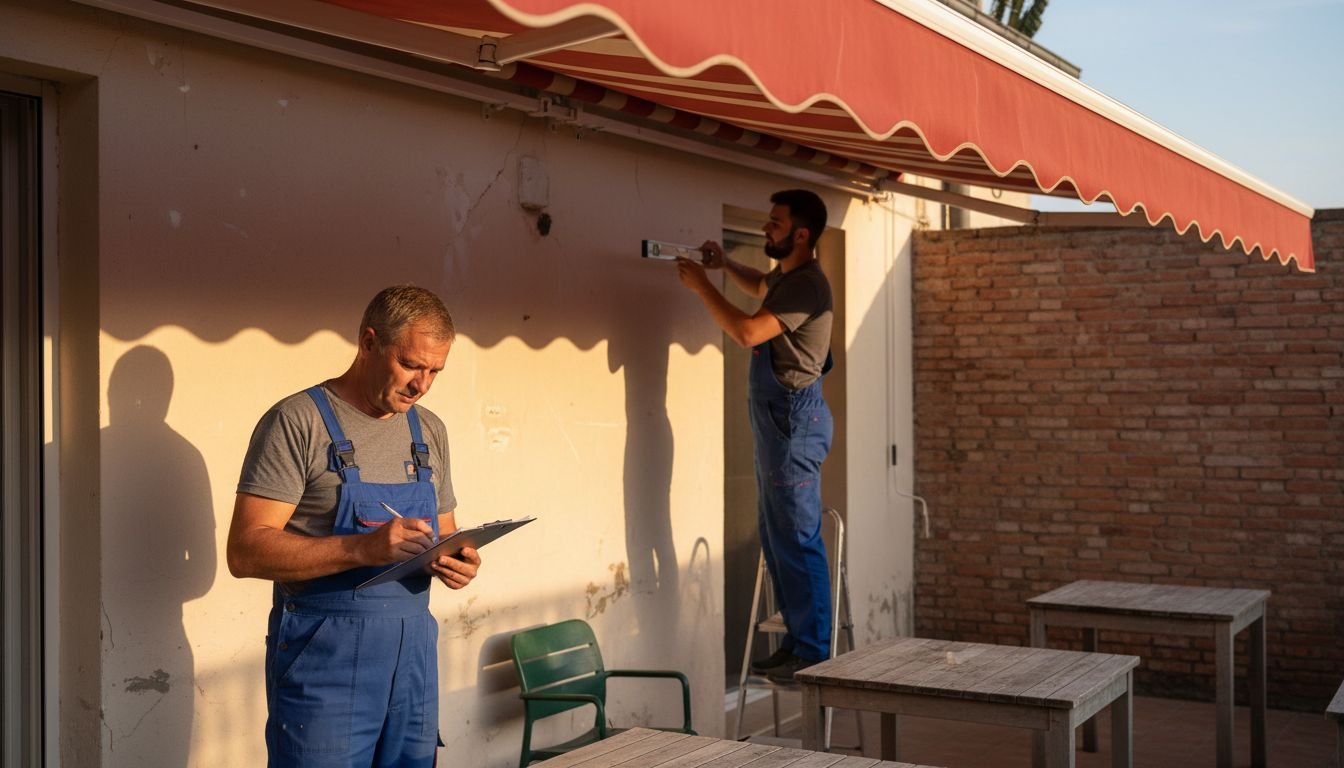
Test all operational functions thoroughly. If your awning is retractable, extend and retract it multiple times, checking for smooth movement and any grinding sounds. With electric models, verify the motor operates quietly and the controls respond correctly. Test any integrated lighting or heating systems to ensure they work as promised.
Perform these specific checks:
Alignment: Confirm the awning hangs straight without tilting or sagging
Fabric tension: Look for wrinkles or loose areas that shouldn’t exist
Weatherproofing: Inspect seams and edges for proper sealing
Clearance: Verify the awning doesn’t obstruct doorways, windows, or signage
Safety features: Check that any wind sensors or rain sensors function correctly
Test the awning under actual weather conditions if possible. Deploy it during drizzle to confirm water runs off properly. Extend it in breeze to verify stability. These real-world tests reveal issues that calm conditions might hide.
Review your awning selection guide documentation to understand every feature and ensure nothing was missed during installation.
Request written confirmation that the installation is complete and all components are functioning. Keep this documentation with your warranty papers for future reference.
Installation quality determines whether your awning performs beautifully for years or becomes a source of frustration.
Pro tip: Photograph the installation from multiple angles and document how everything operates whilst the installer is still present. This visual record proves invaluable if you need to reference the original condition later.
Transform Your Outdoor Space with Expert Commercial Awnings from Infinity Awnings
Choosing the perfect commercial awning involves understanding your space, weather challenges, customer comfort, and aesthetic goals. At Infinity Awnings, we know that these factors play a crucial role when creating outdoor environments that elevate your business experience. Whether you need retractable flexibility, tailored coverage, or integrated features like lighting and heating, our solutions are designed to solve the very challenges highlighted in the commercial awning selection process such as weather protection, branding alignment, and operational ease.
Discover how our bespoke awnings can transform your Yorkshire, Derbyshire, Nottinghamshire, or Lincolnshire venue into a welcoming and stylish outdoor destination. Visit Infinity Awnings to explore our range of premium shading solutions, request a free quote, and access expert advice that fits your commercial needs. Take the first step today and turn your outdoor vision into reality with confidence and quality craftsmanship.
Frequently Asked Questions
How can I assess my outdoor space before selecting a commercial awning?
Begin by carefully measuring your outdoor area, noting dimensions and any obstructions. Observe customer behaviour at different times of day to identify usage patterns and sunlight exposure, which helps in determining the right awning size and type.
What types of commercial awnings are suitable for my business?
Consider three main types: wall-mounted retractable awnings, freestanding awnings, and fixed awnings. Choose wall-mounted retractable options for flexibility, freestanding styles for larger areas, or fixed awnings for year-round coverage, depending on your operational needs.
How important is the aesthetic aspect of my commercial awning?
The aesthetic of your awning is vital as it serves as a visual extension of your brand. Select colours and styles that complement your venue’s identity while providing adequate function for customer comfort and weather protection.
What features should I consider when selecting a commercial awning?
Evaluate features like manual versus electric operation, fabric choice, and add-ons such as lighting and heating. Prioritise these based on your business model to enhance functionality and customer experience.
How do I ensure a quality installation of my commercial awning?
Conduct a thorough visual inspection after installation, checking for level alignment and operational functions. Test all features, and if possible, verify performance under actual weather conditions to ensure durability and satisfaction with your awning.
What should I discuss with experts during the consultation for customisation?
Prepare to discuss your space dimensions, customer demographics, and specific features you need, such as fabric options and motorisation. This dialogue helps the specialists offer tailored solutions that meet your exact requirements.
Recommended
Comments