
Commercial vs Residential Awnings: Choosing Wisely
- Andrew Crookes

- Feb 20
- 11 min read
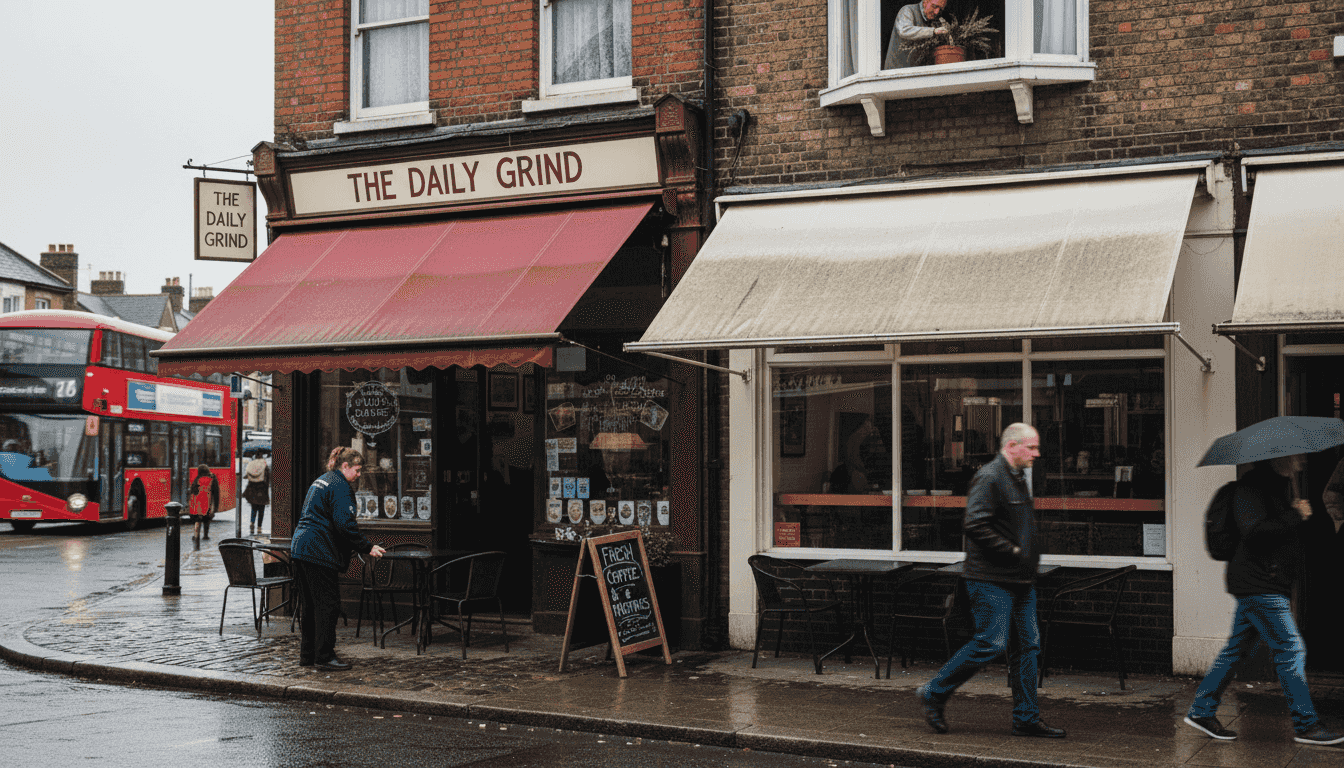
Rain or glaring sun can disrupt even the best-planned outdoor dining experiences in Yorkshire, leaving customers uncomfortable and restaurant spaces underused. For property managers and business owners, understanding the key differences between commercial and residential awnings shapes smarter investment choices and supports smoother operations. This guide clarifies what sets commercial-grade retractable awnings apart, helping you make decisions that protect your business, delight diners, and meet Yorkshire’s building standards.
Table of Contents
Key Takeaways
Point | Details |
Commercial Awnings Ensure Durability | They are engineered for high-traffic environments, providing robust protection against adverse weather conditions. |
Regulatory Compliance is Crucial | Understanding building regulations for commercial awnings prevents legal complications and financial liabilities. |
Differentiate Between Systems | Choose between retractable, fixed, or motorised awnings based on your restaurant’s specific operational needs. |
Invest in Quality Materials | Premium fabrics and materials extend lifespan and performance, reducing long-term maintenance costs. |
Understanding Commercial and Residential Awnings
Awnings have provided practical shelter and aesthetic appeal for centuries, with their core function remaining unchanged: protection from the elements. However, the way restaurants and businesses deploy awnings differs significantly from residential installations, and understanding these distinctions is crucial when choosing the right solution for your space.
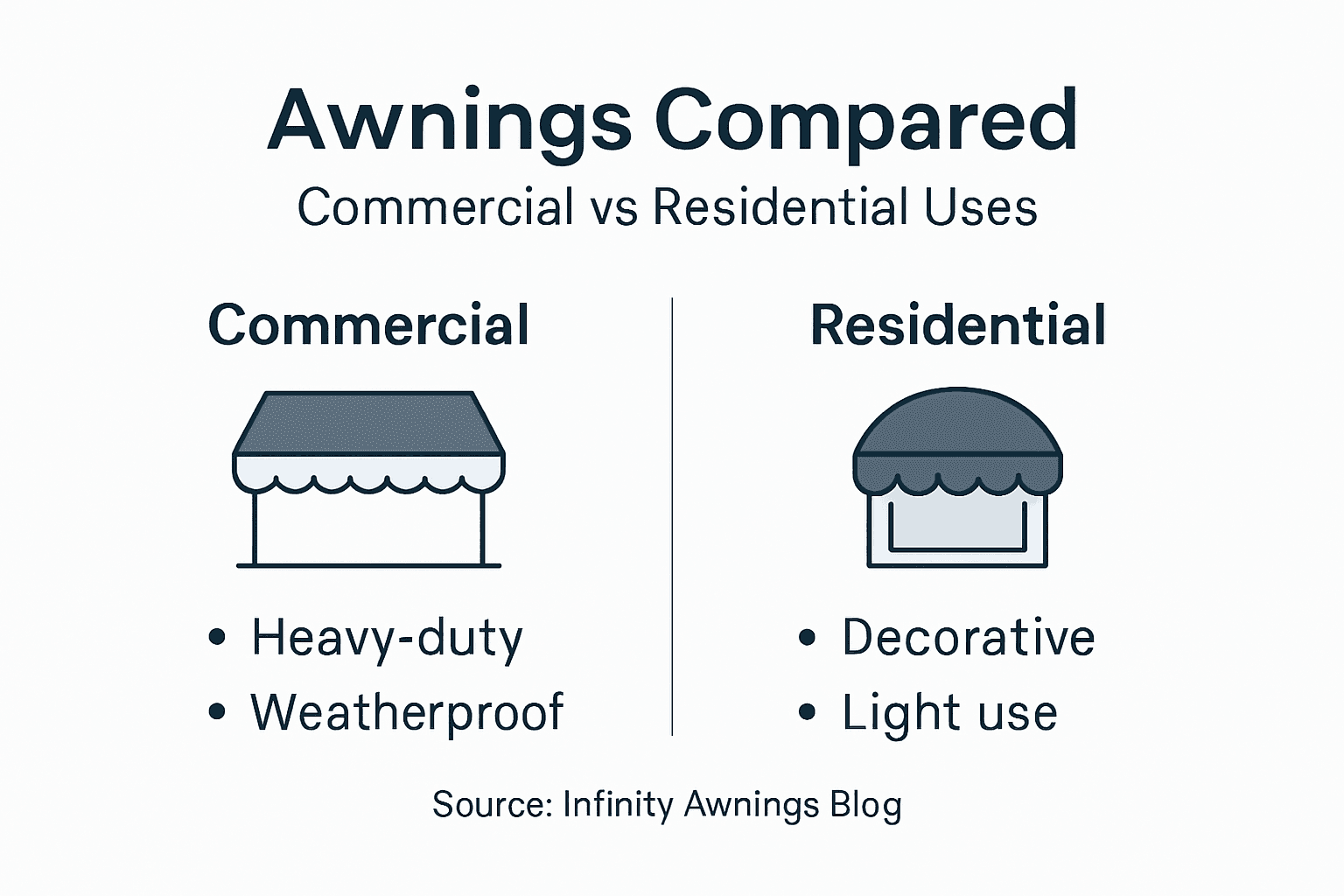
Commercial awnings serve a different purpose than their residential counterparts. Your restaurant operates as a public-facing business where the awning becomes part of your brand identity and customer experience. Residential awnings prioritise personal comfort and property protection. These fundamental differences shape everything from durability requirements to design possibilities.
Historically, awnings and canopies have been used to regulate sunlight, prevent heat and glare, and protect buildings from rain—roles that remain essential today. Yet commercial applications demand additional considerations beyond these basic functions.
Key Differences at a Glance
Commercial awnings are engineered for high-traffic environments where durability and performance are non-negotiable. Residential awnings prioritise aesthetic integration and personal preference within a home setting.
Consider these essential distinctions:
Usage intensity: Your restaurant’s outdoor dining area operates during peak hours, often daily. Home awnings experience intermittent use.
Weather exposure: Commercial spaces typically remain deployed longer, facing continuous weathering. Residential awnings often retract for storage.
Structural demands: Restaurants need to accommodate customer traffic, furniture, and equipment. Homes support lighter loads.
Regulatory requirements: Building regulations impose stricter safety and installation standards for commercial properties.
Aesthetic expectations: Your awning reflects your brand; residential owners prioritise personal style preferences.
Why This Matters for Your Restaurant
Selecting a commercial-grade awning isn’t simply choosing a larger residential model. Commercial units incorporate reinforced frameworks, weather-resistant fabrics designed for extended exposure, and electrical systems rated for continuous operation. Your restaurant’s outdoor dining space needs equipment that withstands Yorkshire’s variable climate while maintaining visual appeal throughout the season.
When selecting the right awning for your space, commercial specifications ensure your investment delivers consistent performance without frequent maintenance or premature replacement.
Commercial awnings aren’t a luxury upgrade—they’re a foundational investment in customer comfort, safety, and operational reliability that directly impacts your business.
Pro tip: Request awning specifications designed specifically for commercial hospitality use, not adapted residential models, to ensure your installation meets Yorkshire’s building regulations and your restaurant’s operational demands.
To clarify the primary distinctions, here is a side-by-side comparison of commercial and residential awning requirements:
Aspect | Commercial Awnings | Residential Awnings |
Primary Purpose | Customer comfort and business branding | Personal comfort and home aesthetics |
Regulatory Burden | Stringent building and safety requirements | Local and less strict regulations |
Structural Materials | Reinforced aluminium or steel, heavy-duty engineering | Lightweight materials for easy storage |
Operational Demands | Frequent, extended use and fast operation | Occasional, less intensive use |
Role in Property | Direct business impact and liability | Enhances private enjoyment |
Key Distinctions in Design and Functionality
Design and functionality diverge dramatically between commercial and residential awnings, reflecting their contrasting operational environments. Your restaurant’s awning operates under completely different demands than a homeowner’s patio shelter, and these distinctions influence every decision from materials to mechanisms.
Commercial awnings prioritise durability, weather resistance, and brand integration. Residential awnings emphasise aesthetic harmony with the home and personal comfort. These competing priorities shape how each type is engineered, deployed, and maintained.
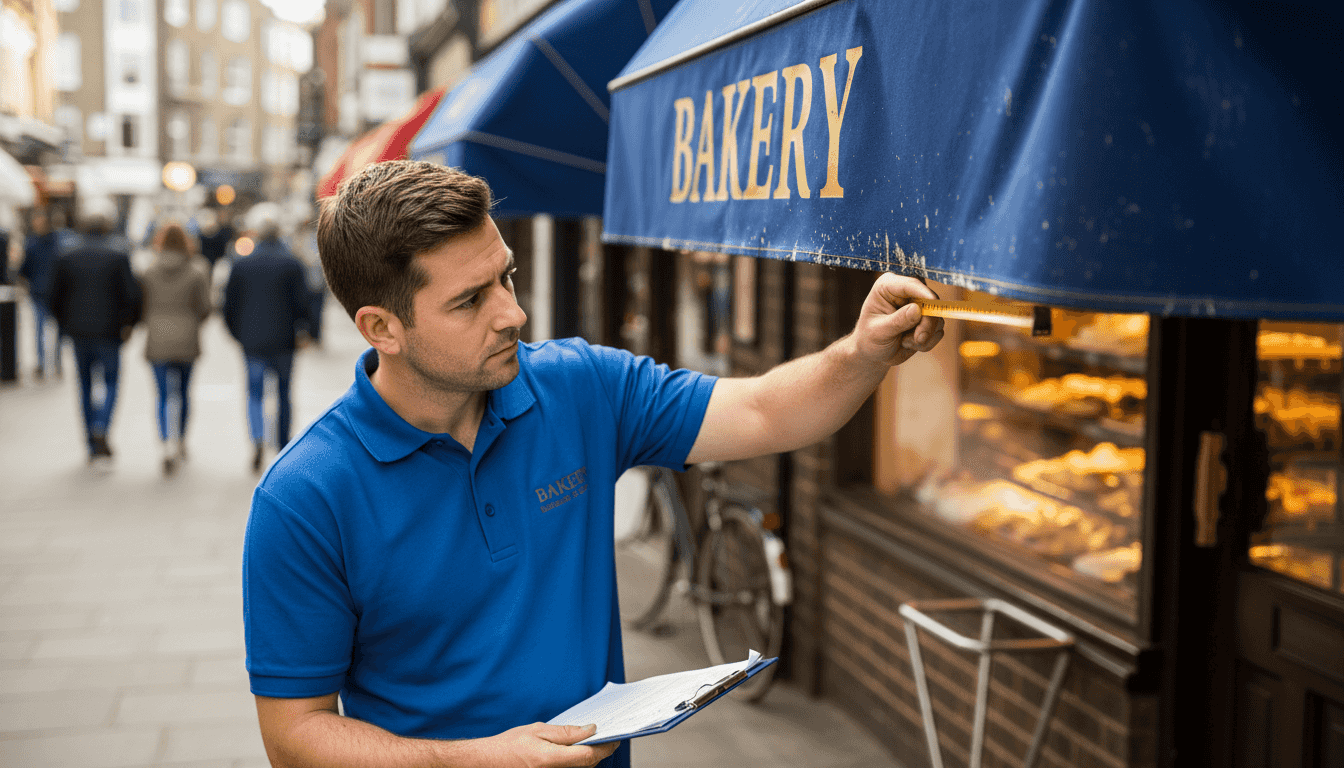
Structural Design Differences
Commercial frameworks are built to withstand continuous use and exposure. They employ reinforced aluminium or steel supports capable of handling wind loads, water weight, and customer activity. Residential structures use lighter materials suited for intermittent deployment and lighter environmental stresses.
Your restaurant’s awning frame must endure:
Heavy wind gusts across Yorkshire’s exposed outdoor areas
Water pooling during extended rainfall
Vibration from foot traffic and furniture movement
Daily retraction and extension cycles during service hours
Residential awnings simply aren’t engineered for this intensity. Their lighter frames would fail prematurely under commercial-grade demands.
Fabric and Material Selection
Commercial and residential fabrics serve distinctly different purposes. Commercial-grade textiles feature superior water repellency, UV resistance, and mould prevention. These fabrics withstand months of continuous exposure without degradation.
Residential fabrics prioritise appearance and cost-effectiveness. They’re typically stored when not in use, extending their lifespan artificially. Commercial applications demand materials rated for sustained outdoor performance.
Key fabric considerations for restaurants:
Colour fastness: Maintains brand appearance through extended sun exposure
Water shedding: Prevents pooling and mould growth in wet climates
Flame resistance: Meets safety standards for public-facing spaces
Cleaning resilience: Withstands regular maintenance without fading
Operational Mechanisms
Commercial awnings often feature electric motors with weatherproof controls, allowing staff to deploy and retract units quickly throughout service hours. Residential awnings commonly use manual cranks or lighter electrical systems designed for occasional use.
Your restaurant benefits from electric operation because it enables flexible deployment without physical effort. Staff can adjust coverage based on weather changes, time of day, or customer comfort—something impractical with manual residential systems.
Accessibility and Compliance
Accessibility requirements for commercial properties demand that awnings don’t impede sightlines, wheelchair access, or emergency egress. Residential installations face no such regulatory scrutiny. This influences awning height, projection distance, and control placement.
Your installation must accommodate patrons with varying mobility needs whilst maintaining clear pathways—regulations that don’t apply to home awnings.
Commercial awnings aren’t simply larger residential models; they’re fundamentally different systems engineered for public safety, continuous operation, and regulatory compliance.
Pro tip: Specify commercial-grade fabrics with proven performance data in Yorkshire’s climate rather than accepting residential alternatives, ensuring your investment maintains appearance and functionality throughout multi-season use.
Types and Features for Business Use
Commercial awnings come in several distinct types, each suited to different business scenarios. Understanding which system works best for your restaurant depends on your space layout, customer needs, and operational preferences.
Retractable Awnings
Retractable systems offer maximum flexibility for restaurants managing variable weather and customer comfort. You deploy them when needed and retract during calm periods or overnight, protecting the fabric whilst maintaining aesthetic appeal.
Retractable awnings excel when you need:
Quick deployment and retraction throughout service hours
Protection from unexpected weather changes
Extended fabric lifespan through storage
Flexible outdoor space management
Electric retractable models allow staff to adjust coverage instantly using wall-mounted controls or remote switches. This responsiveness matters significantly when Yorkshire’s weather shifts rapidly.
Fixed Awnings
Fixed installations remain permanently extended, providing consistent shade and weather protection year-round. These suit restaurants with covered outdoor areas where retraction isn’t practical or desired.
Fixed systems work when your restaurant requires:
Permanent, reliable shelter for outdoor dining
Minimal mechanical maintenance
Maximum structural stability
Consistent brand presence and coverage
They demand robust engineering because they endure continuous environmental exposure without relief periods.
Motorised Features and Add-Ons
Commercial awning systems increasingly incorporate motorised mechanisms offering convenience and precision control. Motorisation allows automated deployment based on wind sensors, rainfall detection, or time-based schedules.
Popular commercial add-ons include:
Wind and rain sensors: Automatically retract awnings when conditions become unsafe
LED lighting: Extend outdoor dining appeal into evening service
Heating elements: Maintain comfort during cooler Yorkshire months
Programmable controls: Deploy awnings on specific schedules without manual intervention
These features transform your outdoor space into a genuinely year-round business asset rather than a seasonal amenity.
Premium Materials and Durability
Premium commercial fabrics provide superior performance compared to residential alternatives. High-quality textiles resist fading, water penetration, and mould growth even under continuous exposure.
Established commercial suppliers offer robust material options with:
Enhanced UV stability maintaining colour vibrancy
Superior water shedding preventing pooling and damage
Mould and mildew resistance suited to damp Yorkshire climates
Flame retardant properties meeting safety standards
Investing in premium materials ensures your awning maintains its appearance and function throughout years of intensive use.
Commercial awning systems aren’t one-size-fits-all solutions; selecting the right type and features directly impacts your restaurant’s operational flexibility, customer comfort, and long-term value.
Pro tip: Choose motorised retractable systems with integrated wind sensors for restaurants with unpredictable exposure, allowing automatic protection without requiring staff intervention during peak service hours.
Before making your final choice, use this summary to compare main types of commercial awnings for restaurants:
Awning Type | Key Advantage | Ongoing Maintenance | Best Use Scenario |
Retractable | Flexibility, quick adjustment | Moderate; moving parts | Spaces needing weather control |
Fixed | Permanent, robust protection | Low; no retraction | All-weather outdoor dining |
Motorised | Automated operation and safety | Higher; electronics | Staff convenience, automation |
Legal and Financial Considerations in the UK
Installing a commercial awning involves more than aesthetic choices and technical specifications. UK property owners and business operators face specific legal obligations and financial implications that directly affect project viability and long-term liability.
Building Regulations Compliance
Building regulations apply to awning installations across England, Wales, Scotland, and Northern Ireland. These statutory requirements address structural safety, fire protection, and weather resistance to ensure installations don’t compromise building integrity or public safety.
Your commercial awning must comply with regulations covering:
Structural stability under wind and weather loads
Fire safety standards for public-facing spaces
Electrical safety if incorporating motorised systems or lighting
Access and egress requirements ensuring pathways remain clear
Drainage provisions preventing water damage to adjacent structures
Non-compliance invites enforcement action, forced removal, or liability claims if accidents occur. Building Control approval is typically required before installation begins.
Lease and Tenancy Considerations
If your restaurant operates under a lease rather than freehold ownership, the lease document likely restricts external alterations without landlord consent. Installing an awning constitutes a structural modification requiring explicit permission.
Common lease restrictions include:
Prohibition on external alterations without written landlord approval
Requirements for professional installation by approved contractors
Restoration obligations if the lease terminates
Shared cost responsibilities for building maintenance
Review your lease carefully before committing financially. Landlord disputes can halt projects midway or result in costly removal orders.
Insurance and Liability
Commercial property considerations include liability coverage for structures you own or operate. Your business insurance provider should be notified about awning installations because they affect building risk profiles.
Key insurance implications:
Enhanced coverage may be required for motorised or electrical components
Wind damage liability differs between retractable and fixed systems
Personal injury claims if customers are injured by awning failure
Structural damage claims affecting adjacent properties
Failing to disclose awning installations could void coverage entirely if claims arise.
Planning Permission Requirements
Whilst many awnings fall outside planning permission requirements, certain installations may require approval from your local planning authority. Size, prominence, and location determine whether permission applies.
Contact your local council to confirm whether your installation needs planning permission. Proceeding without required approval invites enforcement action and costs far exceeding the original savings.
Financial Planning
Budget for installation, regular maintenance, insurance adjustments, and eventual replacement. Commercial awnings represent capital investments requiring multi-year financial planning.
Overlooking legal compliance doesn’t eliminate obligations—it simply creates hidden liabilities that materialise unexpectedly through enforcement action, insurance disputes, or accident claims.
Pro tip: Consult with your local Building Control and lease landlord simultaneously before submitting installation specifications, avoiding costly redesigns after submission or rejection.
Choosing the Best Awning for Your Needs
Selecting between commercial and residential awnings requires matching your specific circumstances to the right system. The decision involves assessing your space, usage patterns, budget, and regulatory obligations. Making the wrong choice wastes money and creates operational frustrations.
Assess Your Space and Usage
Start by evaluating how you’ll actually use your outdoor area. Your restaurant’s outdoor dining operates differently from a residential patio used occasionally for entertaining.
Consider these practical questions:
How many hours daily will the awning remain deployed?
Will customers occupy the space year-round or seasonally?
Does your location experience extreme weather requiring robust engineering?
Do you need flexibility to adjust coverage throughout the day?
Will the awning integrate with electrical systems like heating or lighting?
Frequent, intensive use demands commercial-grade durability. Occasional residential use permits lighter systems. Mismatching usage to system type creates premature failures.
Evaluate Your Budget Comprehensively
Commercial awnings cost significantly more than residential alternatives, but this reflects genuine durability differences rather than unnecessary expense. Budgeting requires considering installation, maintenance, repairs, and eventual replacement.
Realistically budget for:
Initial purchase and professional installation
Annual maintenance and fabric cleaning
Motor or mechanical servicing
Fabric repair or replacement after 7-10 years
Electrical system upgrades or repairs
A cheaper residential system requiring replacement within three years costs more over time than a durable commercial installation lasting fifteen years.
Check Regulatory Requirements
Building regulations approval applies to many awning installations. Understanding your obligations prevents costly delays or enforcement action. Commercial installations typically require formal approval; residential requirements vary by local authority.
Contact your local Building Control to confirm whether your planned installation requires:
Structural calculations and engineering drawings
Fire safety assessments
Formal approval before installation begins
Post-installation inspections
Factoring approval timescales and costs into your project planning prevents unwelcome surprises.
Consider Architectural Context
Selecting awnings that complement your building’s style ensures aesthetic integration rather than visual jarring. Listed buildings and conservation areas impose strict requirements; modern properties offer greater flexibility.
Your restaurant’s awning should enhance rather than detract from streetscape appeal. Brand identity matters commercially; aesthetic harmony matters residentially. Either way, poor choices undermine property value and customer perception.
Compare System Types Directly
Retractable systems offer flexibility but require more maintenance. Fixed installations provide reliability with less mechanical complexity. Motorised systems enhance convenience but increase electrical costs. Manual systems reduce expenses but demand staff effort.
Weigh operational convenience against maintenance burden, considering your actual capacity to manage mechanical systems.
Choosing the right awning means matching system capability to your genuine usage patterns and operational capacity, not selecting based on initial cost alone.
Pro tip: Request detailed maintenance schedules and cost estimates from installers before committing, ensuring you understand long-term obligations beyond the initial purchase price.
Enhance Your Outdoor Space with Expert Commercial Awnings from Infinity Awnings
Choosing between commercial and residential awnings involves critical considerations about durability, regulatory compliance, and operational demands as highlighted in the article. If you are a restaurant or business owner seeking commercial-grade retractable awnings designed to withstand Yorkshire’s challenging climate and meet stringent safety standards, Infinity Awnings offers tailored solutions with premium materials and motorised features that simplify daily use and protect your investment.
Discover how our expertly engineered commercial awning systems can transform your outdoor dining or business space with options for electric operation, weather-sensing automation, and custom fabrics that maintain your brand’s appearance. Visit Infinity Awnings to explore our comprehensive range and request a free, personalised quote today. Take the first step towards enhancing customer comfort and boosting your business’s curb appeal by consulting with our experienced team who understand the unique requirements of commercial installations in Yorkshire, Derbyshire, Nottinghamshire, and Lincolnshire. Learn more and choose wisely to secure a durable, functional, and stylish outdoor shading solution tailored just for your business.
Frequently Asked Questions
What are the main differences between commercial and residential awnings?
Commercial awnings are designed for high-traffic environments, focusing on durability and brand identity, while residential awnings prioritise personal comfort and aesthetics for home settings.
Why should I choose a commercial-grade awning for my restaurant?
A commercial-grade awning is engineered to withstand frequent use and exposure to elements, making it essential for maintaining customer comfort and safety, compared to residential models that aren’t built for such intensity.
What are the maintenance requirements for commercial awnings?
Commercial awnings typically require regular maintenance, including inspections of structural integrity, cleaning of fabrics, and servicing of mechanical components, to ensure they remain operational and safe throughout their lifespan.
How do I decide between a retractable and a fixed awning for my business?
Choosing between a retractable and fixed awning depends on your need for flexibility; retractable awnings allow quick deployment and storage based on weather, while fixed awnings provide permanent shelter and stability without the need for mechanical adjustments.
Recommended
Comments