
How to choose school awnings: a step-by-step guide
- Andrew Crookes

- 2 days ago
- 8 min read
TL;DR:
Proper planning and regional expertise ensure safe, compliant, and cost-effective school awning installations.
Well-chosen awnings extend outdoor usability, protect pupils from weather, and support well-being.
Professional site surveys, suitable materials, and ongoing maintenance are crucial for long-term success.
Choosing the right awning for a school is not as straightforward as picking one from a catalogue. You are balancing pupil safety, planning regulations, structural constraints, and the unpredictable weather that anyone managing a site in Yorkshire, Derbyshire, Nottinghamshire, or Lincolnshire knows all too well. Get it wrong and you face delays, extra costs, or worse, a safety incident. Get it right and you unlock genuinely usable outdoor space that supports learning, wellbeing, and everyday school life. This guide walks you through every stage of the process, from understanding why awnings matter to avoiding the pitfalls that catch schools out.
Table of Contents
Key Takeaways
Point | Details |
Check regulations first | Always confirm planning permission and permitted development exemptions before you proceed. |
Prioritise safety and compliance | Choose awnings with at least 2.4m clearance and robust materials for school environments. |
Use local experts | Regional installers know area rules and keep your project on track and compliant. |
Follow a structured process | Site surveys, shortlisting, and maintenance planning are essential steps for long-term success. |
Why awnings matter for schools in Yorkshire and beyond
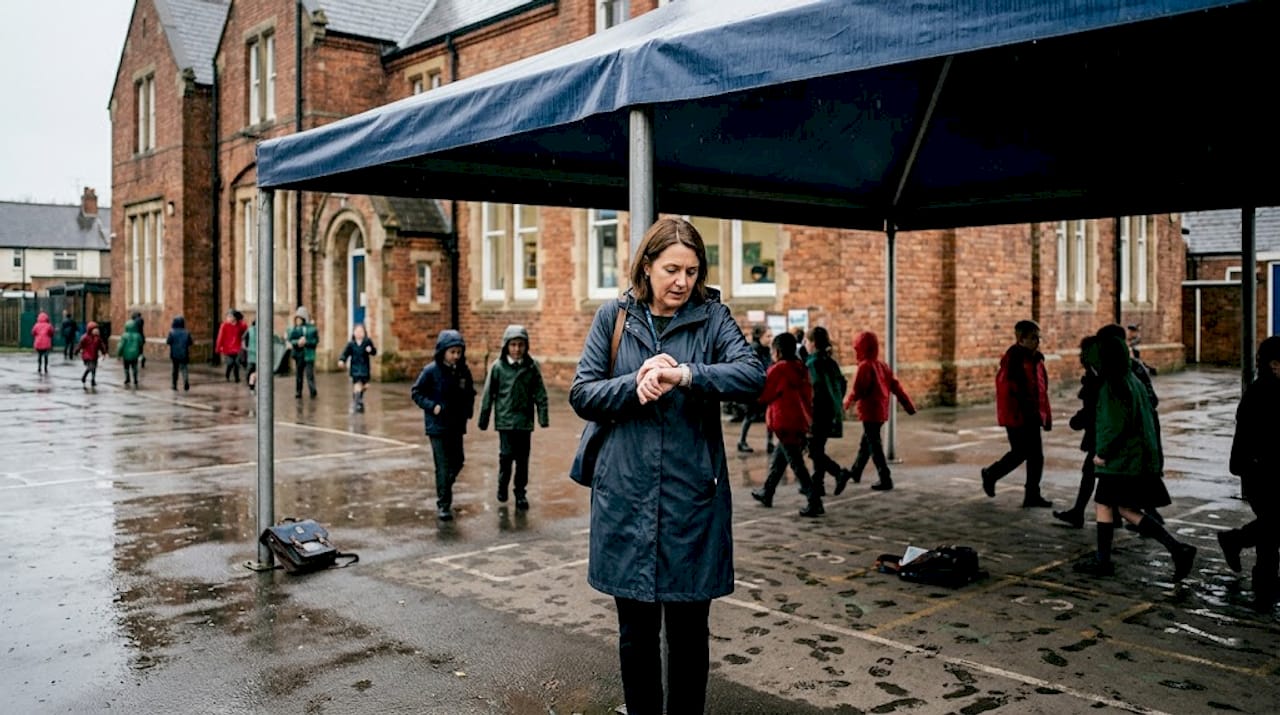
The weather across Yorkshire and the East Midlands is not kind to outdoor plans. Rain arrives without warning, summer sun can be surprisingly fierce, and wind is a near-constant presence. For facilities managers, this means outdoor spaces that should be used for lessons, break times, and activities often sit empty because there is no reliable shelter. A well-specified awning changes that entirely.
The benefits go beyond simple weather protection. Research consistently links outdoor time with improved pupil concentration, reduced stress, and better physical health. Schools that invest in covered outdoor areas report more consistent use of those spaces throughout the year. That translates into real value for pupils and staff alike.
Here is what a quality school awning can deliver:
Year-round usability of playgrounds, dining areas, and outdoor classrooms
UV protection for pupils during summer months, reducing sun exposure risks
Reduced glare in areas adjacent to classrooms with glazed facades
Weather resilience so that outdoor timetabled activities are not cancelled at short notice
Improved wellbeing by giving pupils a reason to spend break times outside rather than indoors
The variety of outdoor solutions for schools available today means there is a genuine fit for almost every school layout, whether you need a wall-mounted retractable awning over a dining terrace or a freestanding canopy covering a busy walkway.
One important factor that is often underestimated is the choice of supplier. UK companies serving schools in target regions include Yorkshire-focused specialists like Infinity Awnings, alongside Shade Zone and Samson Awnings, each bringing different strengths to educational projects. Choosing a supplier with direct experience of school installations in your region means they already understand the compliance landscape, the structural challenges common to older school buildings, and the aftercare demands of a busy site.
When it comes to materials and construction, not all awnings are equal. Understanding durability and safety explained for school-specific products helps you compare options with confidence rather than relying solely on a supplier’s sales pitch.
Key considerations before you choose an awning
Before you shortlist any product, there are non-negotiable groundwork steps. Skipping these is where many school projects run into trouble.
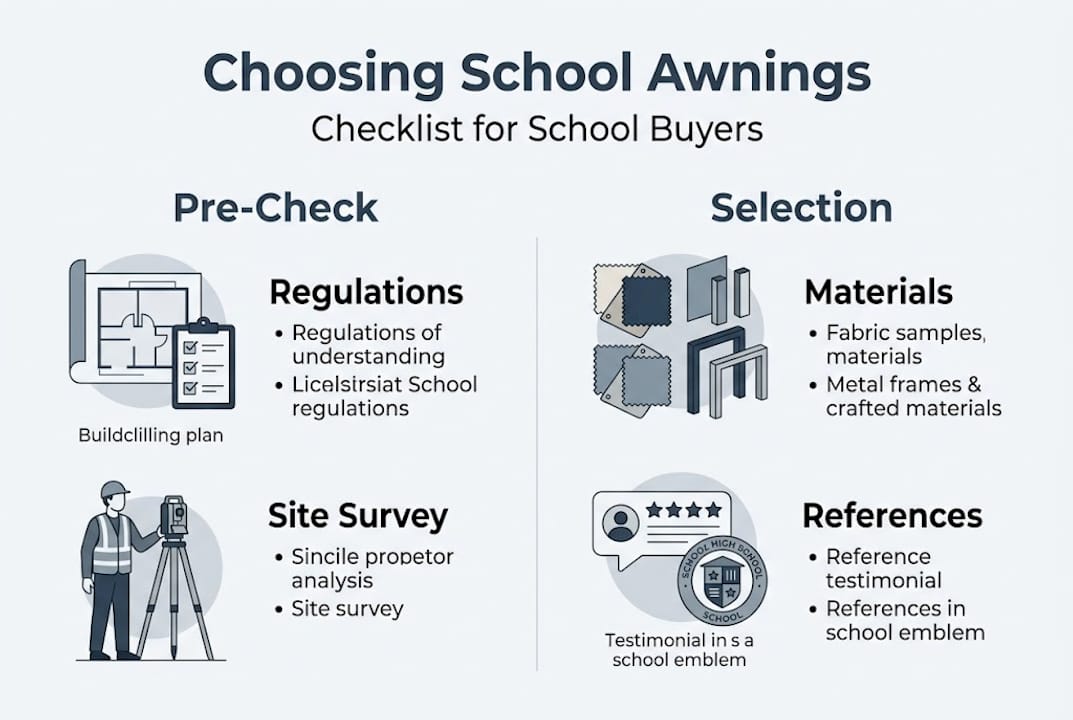
Planning permissions and permitted development rights are the first hurdle. Class M permitted development rights allow many school awning structures without full planning permission, provided the structure is under 100 square metres, below 5 metres in height, and positioned more than 5 metres from site boundaries. However, if your school is in a conservation area or is a listed building, these exemptions do not apply and full permission is required. Always check with your local planning authority before proceeding.
Here is a quick reference for pre-selection criteria:
Consideration | Requirement | Notes |
Planning permission | Check Class M exemptions | Mandatory in conservation areas |
Minimum clearance height | 2.4m above walkways | Critical over pupil routes |
Structure suitability | Wall load capacity assessed | Older buildings need structural check |
Distance from boundaries | More than 5m for exemption | Verify with site plans |
Listed building status | Full permission required | No exemptions apply |
Beyond planning, assess the physical site carefully. Key questions include:
Is the mounting wall or structure strong enough to carry the awning load?
Are there underground services, drainage, or obstacles affecting freestanding post positions?
What is the prevailing wind direction, and does the proposed location expose the awning to excessive gusts?
Will the awning obstruct fire escape routes or emergency access?
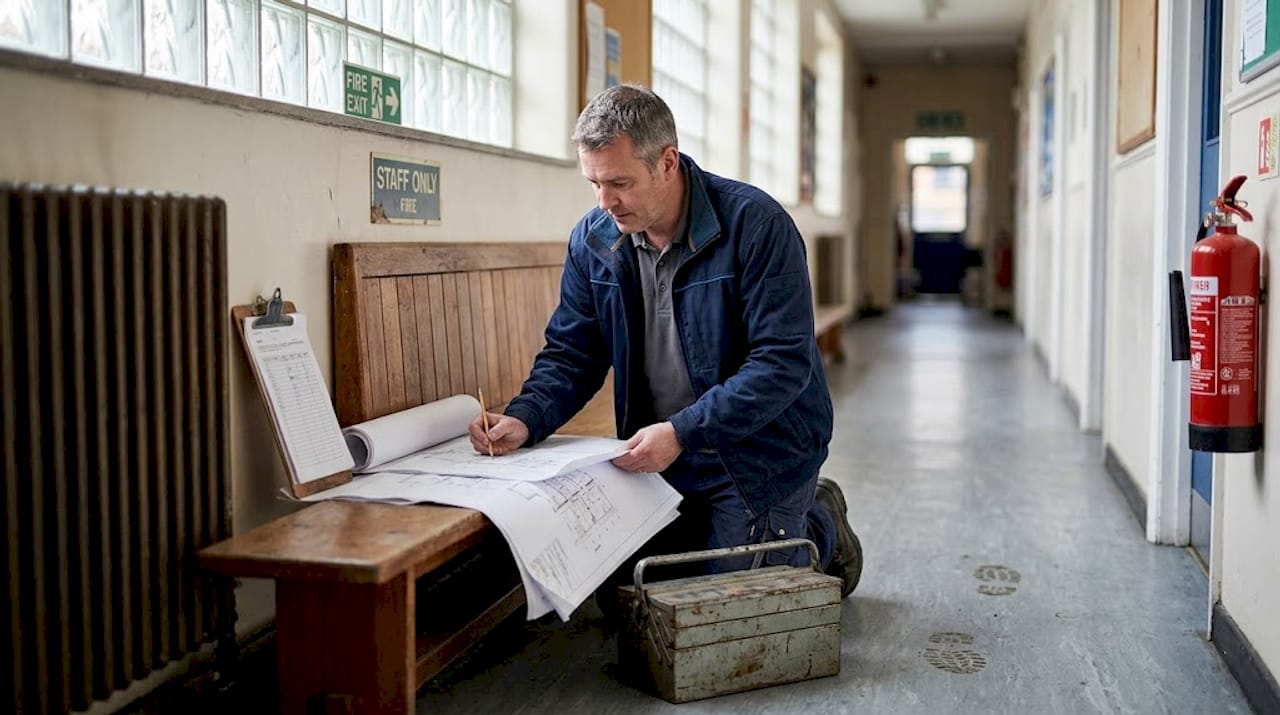
Pro Tip: Always request a copy of your school’s as-built drawings before any installer visits. Knowing where services run and where structural reinforcement exists saves significant time during the survey stage and avoids costly surprises.
For schools in Yorkshire and surrounding areas, checking awning regulations Yorkshire specific guidance is a sensible early step. Regional nuances in planning policy can affect timelines, and knowing these upfront keeps your project on schedule.
Step-by-step: How to select the right awning for your school
With legal and practical constraints understood, follow this process to make a confident, well-informed decision.
Commission a professional site survey. A qualified installer will assess wall structural integrity, load capacity, and recommend mounting heights, typically between 2.4 and 3.6 metres for school environments. This is not optional for schools; liability concerns make professional assessment essential.
Define the intended use. A covered dining terrace has different requirements from a walkway canopy or an outdoor classroom shelter. Intended use determines the size, fabric weight, wind resistance rating, and whether manual or motorised operation is more practical.
Select the awning style and material. Retractable awnings suit flexible spaces. Fixed canopies work better for permanent, high-traffic areas. Fabric should be UV-stabilised, mould-resistant, and rated for the wind loads typical in your region.
Compare installation types. Use the table below to weigh your options:
Installation type | Best for | Key consideration |
Wall-mounted retractable | Dining areas, classrooms | Requires strong wall structure |
Freestanding canopy | Open playgrounds | Ground anchoring and drainage needed |
Lean-to veranda | Covered walkways | Permanent, low maintenance |
Pergola with canopy | Multi-use outdoor zones | Higher cost, maximum flexibility |
Obtain at least three quotes. Compare not just price but warranty length, fabric specification, wind resistance rating, and aftercare provision. A cheap awning with no service agreement is a false economy on a school site.
Review awning maintenance advice before signing any contract. Understanding what ongoing servicing looks like helps you budget accurately and set expectations with your governing body.
Pro Tip: Ask every supplier for references from other educational or commercial installations in your region. A supplier who has completed professional awning installation on similar sites will have solved the problems you have not yet thought of.
Common pitfalls to avoid and safety checks
Even well-intentioned projects go wrong. These are the mistakes that cost schools time, money, and occasionally their reputation with parents and governors.
Skipping the planning check is the most common error. Assuming an exemption applies without verifying it can result in enforcement notices, removal orders, and the full cost of reinstatement. A five-minute call to your local planning authority is always worth it.
Choosing the wrong installer is equally damaging. Unqualified fitters may use inadequate fixings, fail to account for dynamic wind loads, or install at the wrong height. Any of these issues can void your school’s public liability insurance and leave you personally exposed if an incident occurs.
Ignoring clearance height is a safety-critical oversight. A minimum of 2.4m clearance above walkways is required for commercial school awnings to prevent head injuries, particularly over routes used by older pupils and staff.
Additional pitfalls to watch for:
Selecting fabric that is not rated for local wind speeds, leading to premature failure
Failing to include the awning in the school’s routine maintenance schedule
Overlooking the need for seasonal retraction of retractable awnings during winter storms
Not specifying anti-vandal fixings in areas accessible to pupils after hours
“The most expensive awning project is the one you have to do twice. Build compliance and quality into the specification from day one, not as an afterthought when something goes wrong.”
Routine safety checks should be built into your facilities management calendar. Inspect fixing points, fabric condition, and mechanical components at least twice a year. Follow the school awning installation tips relevant to your structure type, and keep records of every inspection. This documentation is valuable if questions arise during an Ofsted visit or insurance review.
Our perspective: Why local expertise is the game-changer
After working with schools across Yorkshire, Derbyshire, Nottinghamshire, and Lincolnshire, we have noticed a consistent pattern. The projects that run smoothly are almost always the ones where a local, experienced installer was involved from the very first conversation. Not because national suppliers cannot do good work, but because regional knowledge genuinely shortens every stage of the process.
A local specialist already understands which planning officers to contact, which conservation areas have particular sensitivities, and which building types present recurring structural challenges. That knowledge is not in any manual. It comes from years of completing installations in the same postcodes.
There is also the aftercare argument. An installer based in Leeds or Sheffield can respond to a service call within hours. A national company managing a call centre might take days. On a school site where a storm has damaged a canopy over a main entrance, that difference matters enormously.
We would encourage any facilities manager to treat local awning installation expertise as a specification criterion, not an optional preference. It is one of the most practical decisions you can make.
Connect with trusted school awning specialists
If your school is ready to create safer, more usable outdoor spaces, the next step is straightforward. Infinity Awnings has been working with educational institutions across Yorkshire, Derbyshire, Nottinghamshire, and Lincolnshire for over 15 years, bringing genuine regional expertise to every project.
From retractable awnings to pergolas for schools, our range is designed to meet the specific demands of educational environments, covering compliance, durability, and long-term value. We offer free site surveys, transparent quotes, and ongoing maintenance support so your investment is protected for years to come. Contact the Infinity Awnings specialists today to arrange your school site survey and take the first step towards outdoor spaces your pupils will actually use.
Frequently asked questions
Do schools need planning permission for new awnings?
Many awnings are exempt under Class M permitted development if under 100 sqm, below 5m in height, and more than 5m from boundaries, but schools in conservation areas or listed buildings must always seek full planning permission.
What is the recommended minimum height for an awning over school walkways?
Awnings must sit at least 2.4m above walkways where pupils pass to prevent head injuries and meet commercial safety standards.
Why choose a regional installer for school awnings?
Regional specialists understand local planning regulations and site-specific challenges, which means faster approvals, fewer delays, and a safer, more compliant installation overall.
What is involved in a site survey for school awnings?
A qualified installer checks wall strength and load capacity, assesses mounting height requirements, and confirms the site is structurally and legally fit for awning installation before any work begins.
Recommended
Comments