
Innovative outdoor shade ideas for restaurants in 2026

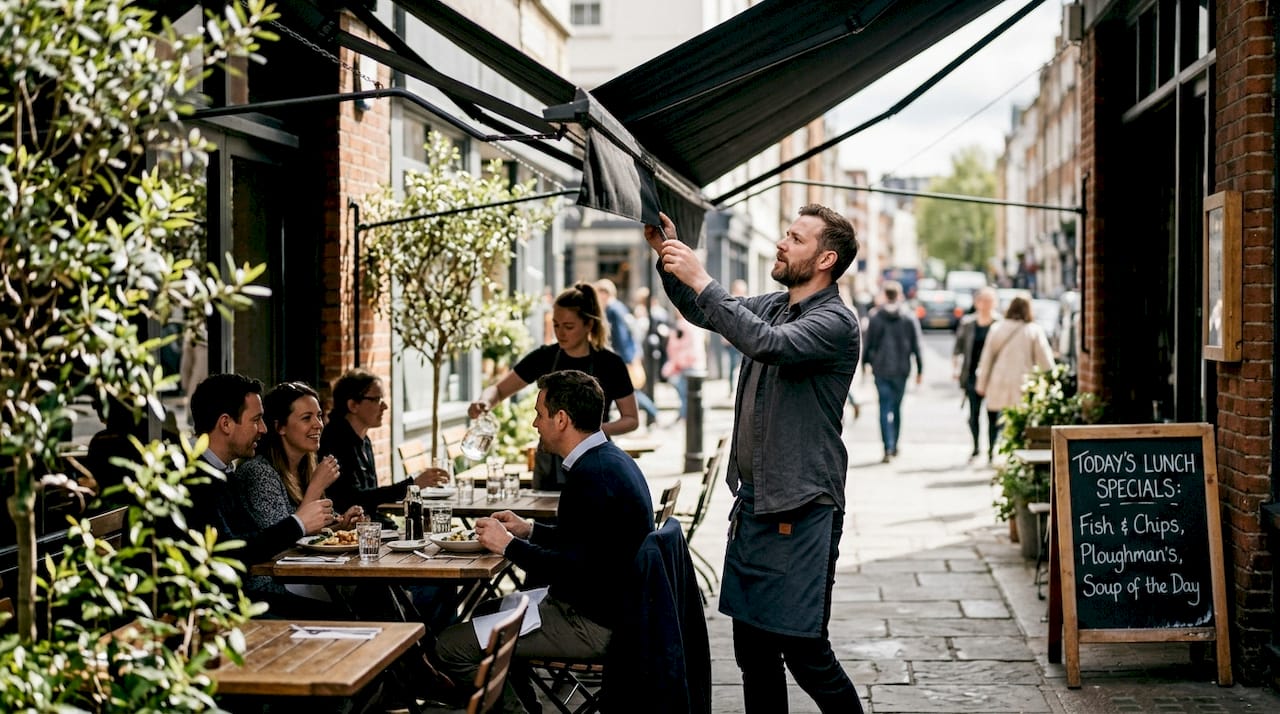
Creating comfortable outdoor dining spaces presents a persistent challenge for restaurant owners across Yorkshire, Derbyshire, Nottinghamshire, and Lincolnshire. Customers expect pleasant alfresco experiences regardless of weather conditions, yet many establishments struggle to provide adequate shade that protects from harsh sun whilst maintaining aesthetic appeal. Selecting the right outdoor shade solution requires balancing durability, functionality, and visual impact. This guide examines essential criteria for evaluating shade options, explores five popular solutions tailored to restaurant environments, compares their practical benefits, and provides actionable recommendations to help you enhance customer comfort whilst maximising your outdoor dining revenue.
Table of Contents
Key Takeaways
Point | Details |
Weather resistance priority | The climate requires shade solutions that withstand wind gusts, heavy rain and strong sun without frequent repairs. |
Comfort drives spend | Effective shade maintains pleasant temperatures, reduces glare and encourages longer stays, boosting customer spend. |
Maintenance cost consideration | Assess realistic maintenance requirements to avoid excessive staff time and budget strain. |
Aesthetic brand alignment | Shade structures should harmonise with the restaurant’s brand identity and architecture to avoid distracting the dining experience. |
Criteria for selecting outdoor shade for restaurants
Before exploring specific shade solutions, restaurant owners must establish clear evaluation criteria. The Yorkshire climate demands robust weather resistance to withstand variable conditions throughout the year. Your chosen solution must endure wind gusts, heavy rain, and intense summer sun without compromising structural integrity or requiring constant repairs.
Customer comfort directly influences dining satisfaction and repeat business. Effective shade maintains pleasant temperatures, reduces glare, and creates an inviting atmosphere that encourages longer stays and higher spending. Consider how different solutions affect air circulation, light quality, and overall ambience during peak dining hours.
Maintenance requirements significantly impact operational costs over time. Solutions demanding frequent cleaning, repairs, or seasonal storage consume staff hours and budget resources. Evaluate the realistic maintenance commitment each option requires, factoring in your team’s capacity and available time.
Aesthetic style must align seamlessly with your restaurant’s brand identity and architectural character. The awning selection process should prioritise visual harmony whilst enhancing your outdoor space’s appeal. Mismatched shade structures can detract from carefully cultivated atmospheres and confuse brand messaging.
Budget constraints require balancing initial investment against long-term value. Cheaper solutions may demand replacement sooner, whilst premium options often deliver superior durability and lower lifetime costs. Calculate total ownership expenses including installation, maintenance, and expected lifespan when comparing alternatives.
Pro Tip: Request fabric samples and view installations at similar establishments before committing to ensure the shade solution complements your specific outdoor environment and meets practical needs.
Top outdoor shade options for restaurants
Retractable awnings represent the most versatile solution for restaurant outdoor spaces. These adjustable shade systems extend when needed and retract during favourable weather, offering complete control over coverage. Modern motorised versions operate via remote control or smartphone apps, allowing staff to respond instantly to changing conditions. The primary advantages include weather adaptability, space efficiency when retracted, and customisable fabric patterns that reinforce brand identity. However, installation costs typically exceed fixed alternatives, and mechanical components require periodic servicing.
Cantilever umbrellas provide portable, flexible shade for smaller outdoor areas. These freestanding structures feature offset poles that maximise usable space beneath the canopy, allowing unobstructed table arrangements. Their mobility enables seasonal repositioning and easy storage during winter months. Cantilever umbrellas suit budget-conscious establishments and temporary setups, though they offer limited coverage area and reduced stability during strong winds compared to permanent installations.
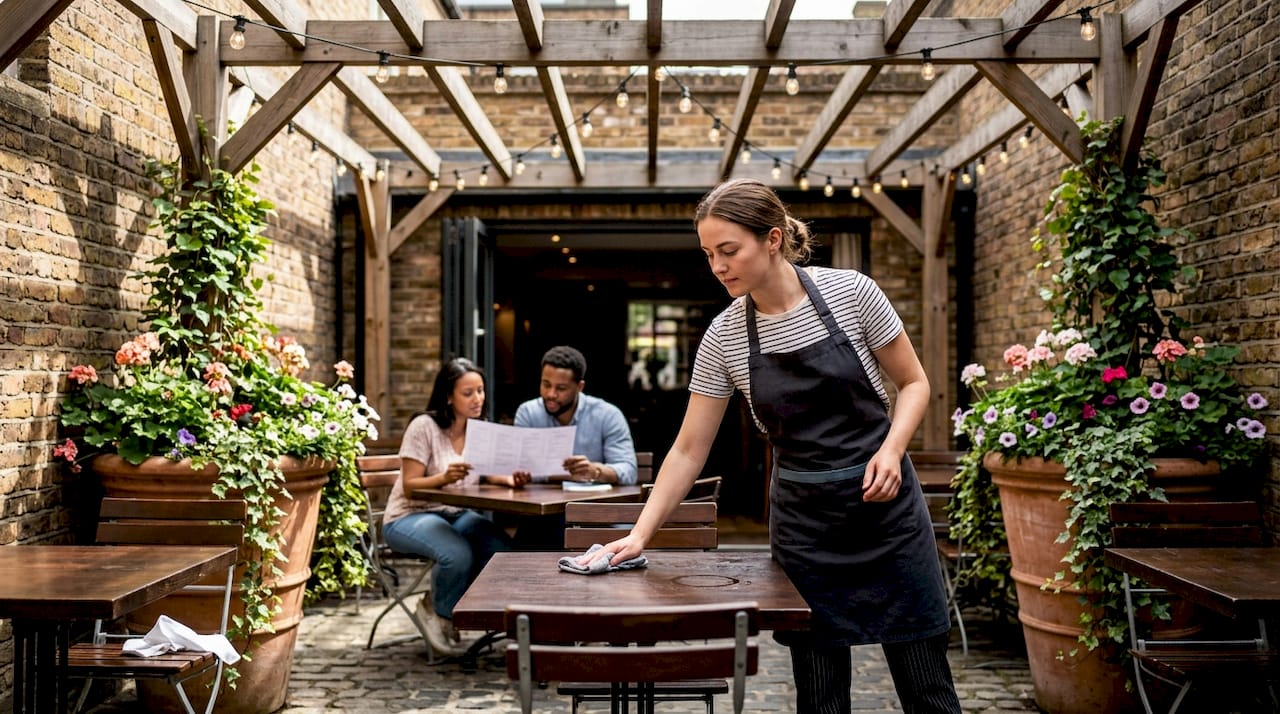
Gazebos and pergolas create substantial, permanent shade structures that define outdoor dining zones. These architectural features add significant visual impact whilst providing reliable year-round protection. Pergolas with adjustable louvres offer variable shade control similar to retractable awnings. The substantial construction delivers exceptional durability and weather resistance, though higher material and installation costs require larger upfront investments. Permanent structures also limit future layout flexibility.
Shade sails present contemporary, sculptural alternatives that transform outdoor spaces into striking visual statements. Tensioned fabric stretched between anchor points creates dynamic shapes whilst filtering sunlight effectively. Installation proves relatively straightforward and costs remain moderate compared to complex mechanical systems. However, shade sails provide minimal rain protection and require careful positioning to achieve desired coverage patterns throughout the day as sun angles shift.
Retractable roofs represent premium solutions offering complete environmental control. These sophisticated systems combine solid panels or reinforced fabric with motorised operation, creating weatherproof enclosures that function year-round. Advanced models integrate heating, lighting, and drainage systems for comprehensive outdoor climate management. Whilst delivering unmatched versatility and customer comfort, retractable roofs demand substantial investment and professional installation expertise.
Comparing outdoor shade options for restaurants
Solution | Cost | Durability | Maintenance | Weather protection | Aesthetic appeal |
Retractable awnings | Moderate to high | Excellent | Low to moderate | Sun, light rain, adjustable | Clean, professional, customisable |
Cantilever umbrellas | Low to moderate | Good | Low | Sun only, limited wind | Casual, flexible, temporary feel |
Gazebos/pergolas | High | Excellent | Low | Sun, some rain, permanent | Substantial, architectural, premium |
Shade sails | Low to moderate | Good | Very low | Sun only, minimal rain | Modern, artistic, distinctive |
Retractable roofs | Very high | Excellent | Moderate | Complete all-weather | Sophisticated, versatile, high-end |
This comprehensive comparison reveals distinct trade-offs across solutions. Cost considerations extend beyond purchase price to encompass installation complexity, ongoing maintenance, and expected replacement cycles. Retractable systems command premium pricing but deliver operational flexibility that fixed structures cannot match.
Durability correlates strongly with material quality and engineering sophistication. Permanent installations like gazebos withstand decades of exposure when properly maintained, whilst fabric-based solutions require periodic replacement regardless of care quality. Yorkshire’s variable weather patterns particularly stress mechanical components and fabric integrity.
Maintenance demands vary considerably. Simple structures like shade sails need occasional cleaning and tension adjustments, whereas motorised retractable systems require annual servicing to maintain optimal performance. Factor realistic maintenance commitments into your decision, considering staff availability and technical capabilities.
Weather protection capabilities directly impact usable dining days throughout the year. Solutions offering rain protection alongside sun shading extend operational seasons and maximise revenue potential. Complete enclosure systems enable year-round outdoor dining even during inclement weather, though at substantially higher investment levels.
Aesthetic appeal influences customer perceptions and dining atmosphere. Modern shade sails create contemporary statements, whilst traditional pergolas convey established elegance. Ensure your chosen solution reinforces rather than contradicts your restaurant’s brand positioning and target customer expectations.
Pro Tip: Prioritise solutions offering the best weather protection your budget allows, as extended usable dining periods generate revenue that offsets higher initial investments over time.
Choosing the right shade solution for your restaurant
Selecting optimal outdoor shade begins with thorough space assessment. Measure your outdoor dining area precisely, noting existing architectural features, utility connections, and structural mounting points. Large terraces accommodate multiple shade zones using varied solutions, whilst compact courtyards may require single comprehensive systems. Consider traffic flow patterns to ensure shade structures enhance rather than obstruct customer movement and service efficiency.
Yorkshire’s climate patterns demand particular attention to weather resilience. Analyse historical weather data for your specific location, noting prevailing wind directions, average rainfall, and seasonal temperature variations. Coastal establishments face different challenges than inland venues, requiring adjusted material specifications and structural reinforcement.
Customer preferences provide valuable guidance often overlooked during planning. Survey regular patrons about their outdoor dining experiences, identifying specific comfort concerns and desired improvements. Direct feedback reveals whether sun protection, rain coverage, or wind shielding matters most to your clientele, enabling targeted solution selection.
Budget management requires balancing immediate affordability against long-term value. Calculate total ownership costs including installation, maintenance, energy consumption for motorised systems, and expected replacement intervals. Premium solutions delivering superior durability often prove more economical over ten-year periods despite higher upfront costs.
Professional installation ensures safety compliance, structural integrity, and aesthetic excellence. Experienced installers navigate building regulations, obtain necessary permits, and execute flawless fitting that maximises product lifespan. Attempting DIY installation on complex systems risks safety violations, warranty invalidation, and suboptimal performance that diminishes customer experience.
Enhance your restaurant’s outdoor space with Infinity Awnings
Transforming your outdoor dining area into a comfortable, revenue-generating asset requires expert guidance and quality solutions tailored to your specific needs. Infinity Awnings brings over 15 years of commercial shading expertise to restaurants across Yorkshire, Derbyshire, Nottinghamshire, and Lincolnshire, delivering bespoke installations that enhance customer comfort whilst reflecting your brand identity.
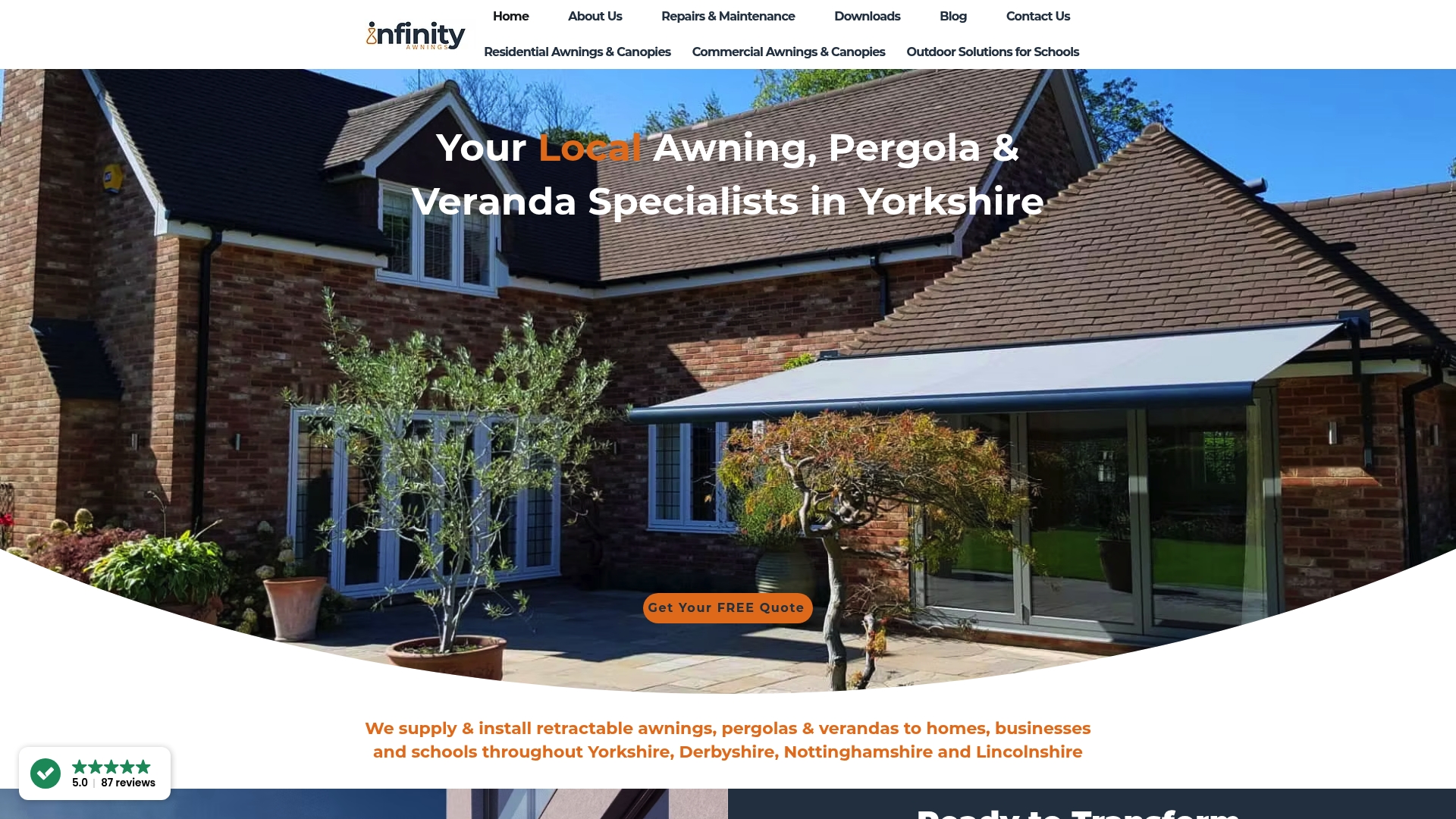
Our commercial awning specialists work directly with restaurant owners to assess outdoor spaces, recommend optimal solutions, and execute professional installations that meet rigorous safety and aesthetic standards. From initial consultation through final fitting, we ensure your shade investment delivers maximum value and operational performance. Explore our comprehensive restaurant shading solutions and discover how tailored outdoor protection can extend your dining season, increase customer satisfaction, and boost revenue throughout the year.
Frequently asked questions
What is the most cost-effective outdoor shade for a small restaurant?
Cantilever umbrellas and shade sails typically offer the lowest initial investment for compact outdoor spaces. These solutions provide adequate sun protection without extensive installation requirements or structural modifications. However, consider that retractable awnings deliver superior weather versatility and longer operational lifespans that may justify higher upfront costs through extended usability and reduced replacement frequency.
How does retractable awning installation benefit restaurants?
Retractable awnings provide exceptional operational flexibility by allowing instant adjustment to changing weather conditions throughout service periods. Staff can extend coverage during intense sun or light rain, then retract systems during pleasant conditions to maximise natural light and open-air ambience. This adaptability extends profitable outdoor dining seasons whilst protecting fabric and mechanisms from unnecessary weather exposure when not required.
Can outdoor shade solutions withstand typical UK weather?
Quality commercial awning systems utilise engineered fabrics and robust frameworks specifically designed for UK weather patterns, including wind resistance, waterproofing, and UV stability. Premium manufacturers test products against extreme conditions to ensure reliable performance across seasons. Regular professional maintenance and prompt repairs when damage occurs preserve structural integrity and extend operational lifespans well beyond a decade for properly specified installations.
What maintenance is required for outdoor shading structures?
Most outdoor shade solutions require quarterly cleaning to remove debris, dirt, and organic growth that can degrade fabrics and mechanisms over time. Annual professional inspections identify wear patterns, lubricate moving components, and address minor issues before they escalate into costly repairs. Retractable systems benefit from seasonal servicing that verifies motor function, checks fabric tension, and ensures safety mechanisms operate correctly. Establishing consistent maintenance schedules prevents premature failure and preserves aesthetic appeal that influences customer perceptions.
Recommended
Comments