
How to Keep Warm Under a Pergola All Year Round


The most reliable way to keep warm under a pergola is to combine three things: a roof that stops heat escaping upwards, screens that stop the wind, and an electric infrared heater fixed at the right height. Any one of them helps. Together they turn a summer-only structure into a space you can use on a cool October evening. At Infinity Awnings we design, supply and install pergolas, verandas and awnings across Yorkshire, Derbyshire, Nottinghamshire and Lincolnshire, and heaters, LED lighting and side screens are options we build in from the start rather than bolt on later.
This guide is for homeowners who want to use the garden for longer, and for pubs, restaurants, hotels and schools that want to extend the outdoor season without creating a fire or electrical risk.
TL;DR
Warmth under a pergola comes from three layers: a solid or louvred roof, wind screens on the exposed sides, and a heater that warms people directly.
Electric infrared heaters suit pergolas best. Mount them at roughly 2.2 to 2.5 m and angle them down towards the seating.
A 2 kW heater costs about 53p an hour to run at the October to December 2026 price cap rate, so zone the heat to where people sit.
Keep heaters well clear of canopy fabric, timber and anything combustible, and never use them indoors.
Planning the heater, wiring and screens together at design stage is cheaper and neater than retrofitting.
Table of Contents
Why a pergola feels cold in the first place
A pergola is open to the air, so warmth has three ways to disappear. Heat rises through an open or slatted roof. Wind strips warmth from skin and from the air around you. And cold surfaces, such as paving and bare walls, draw heat from anyone sitting nearby.
That is why a heater alone often disappoints. A heater on an open, windy patio is fighting all three losses at once. Fix the losses first and a modest heater does the rest.
The order of work therefore matters:
Roof, to hold heat in and keep rain off.
Screens, to cut the wind.
Heater, to top up what is left.
Soft furnishings and lighting, to make the space feel inviting.
Start with the roof
A roofed pergola keeps in more warmth and keeps the seating dry, which is half of what makes an evening comfortable. Options range from fixed solid roofing to adjustable louvres and retractable canopies that you close when the temperature drops. If you want to compare them, our guide to pergola roofing explains how each type behaves in sun, rain and cold. Our piece on all-weather pergolas covers how a pergola becomes a year-round room.
For a fully enclosed feel, a glazed structure goes further. Our glass verandas page shows what that looks like when you want the garden usable in every season.

If you are choosing between structures, the pergolas and verandas pages show the range we supply and fit.
Block the wind
Wind is usually what sends people indoors, even when the air temperature is tolerable. Side screens, glass panels or drop-down blinds on the exposed sides make the biggest difference per pound spent. We offer side screens as an option on our pergolas and awnings, and they can be fitted so the structure still opens up in summer.
Garden layout helps too. Ideal Home’s outdoor dining guide quotes a JYSK designer recommending furniture, rugs and fencing to zone a dining area and help block gusts. The same article notes that hedges or tall trees can act as screening and create a more sheltered corner. Put the seating on the lee side of the house if you can, and keep the table away from gaps between buildings where wind funnels.
Choose the right heater
There are three broad types of outdoor heater, and they behave very differently under a roof.
Type | How it warms | Under a pergola |
Electric infrared | Radiant heat warms people and objects directly, not the air | Best fit: no flame, no fumes, fixed out of the way |
Freestanding gas patio heater | Burns LPG, warms the air and radiates from the top | Needs generous clearance and ventilation, and takes up floor space |
Fire pit or chimenea | Open flame and smoke | Unsuitable under a roof |
Why infrared suits a pergola
An infrared heater sends out radiant heat that warms whoever and whatever it reaches, which is why it still works in a breeze that would blow warm air away. It is electric, so there is nothing to refill and no combustion fumes. It is mounted on a beam or wall, so it takes no floor space and cannot be knocked over by a guest.
To be used outdoors it should be rated for the weather, which is where an IP rating (a code showing how well a device resists water and dust) comes in. Check that the model you choose states it is intended for outdoor use, and that the manufacturer permits it under a roof or canopy.
What about gas?
Gas heaters are common in pub gardens, but they add rules. Trade guidance for temporary structures says gas heaters should only be installed by Gas Safe engineers, and spare LPG containers kept at least 6 metres away. The same guide advises against direct-fired heaters in enclosed structures because fumes can accumulate. For a permanent pergola at home or at a venue, electric heating avoids those complications.
Where to put the heater
Placement decides whether a heater feels generous or useless. As a rule of thumb from our own installation guide, mount electric infrared heaters at roughly 2.2 to 2.5 m and angle them down at about 45 degrees towards the seating, unless the manufacturer’s instructions say otherwise. We go through height, angle and spacing in detail in our pergola heater placement guide.
Some practical points:
Place the heater above and slightly to the side of the seating, so heat arrives on shoulders and knees rather than only on the head.
Use one heater per seating group rather than one in the middle of a large space. Radiant heat falls off with distance.
Keep it away from the canopy fabric, timber slats and any hanging decoration.
On a dining table of four to six, two heaters at opposite corners feel more even than one powerful unit.
Wiring is part of the plan. Heaters need a proper supply, and outdoor sockets should be splashproof or waterproof with cords kept tidy, according to Electrical Safety First’s patio heater advice. Running cable to a beam after the pergola is built is fiddly. Running it before is straightforward, which is a good reason to settle the heating at the design stage.
Safety clearances you should respect
This is the part that should not be skipped, especially for businesses.
At home. Electrical Safety First says patio heaters should stand on a level surface with space around them, away from combustible materials, and never be used indoors. Always follow the heater manual and the pergola manufacturer’s instructions for clearances.
At a venue. Commercial insurer guidance from May 2021 sets out figures for business premises. It says infrared heaters should be at least 1 metre from canopy material, have heat shields and be used only where the manufacturer permits. It also calls for at least 2 metres of clear space from combustible fixtures and from combustible construction such as timber decking or cladding. Heaters should be serviced regularly by a qualified technician. If you run a pub or restaurant, confirm your heater arrangement with your insurer before the season starts.
If you want a barbecue or outdoor kitchen under the same roof, read our guide on what is safe over a barbecue before you plan the layout.

What it costs to run
Electric heaters turn nearly all the power they draw into heat, so the running cost is simple arithmetic: kilowatts multiplied by hours multiplied by the unit price. The unit price moves. Ofgem reviews the price cap every quarter, and for October to December 2026 the typical household cap is £1,723 a year. One calculator uses 26.32p per kWh, the electricity cap for that quarter, as its default.
At that rate, a worked example:
A 2 kW heater uses 2 kWh an hour, so about 53p an hour.
Three hours on an autumn evening is about £1.58.
Two 2 kW heaters for a four-hour dinner service is about £4.21.
Your own rate will differ, so use the unit rate on your latest bill or tariff. Some points keep the figure down: heaters with several power settings, a roof and screens that hold heat in, and switching off when the table is empty. For a restaurant, the extra covers on a cool evening usually matter far more than the electricity, but it is worth budgeting per table.
Do infrared heaters actually work?
Yes, when they are sized and placed for the space. They work by warming you rather than the air, so the result is a feeling of sun on the skin. They disappoint when they are mounted too high, aimed at nothing, or used in an open, windy space without screens. Match one heater to roughly one seating group, keep the roof and screens in place, and the effect is noticeable within a minute or two of switching on.
Finishing touches that add comfort
Small things add up once the structure and heater are right:
Throws and blankets. Insurers suggest blankets as a comfort measure for venues, and guests like them.
Rugs and cushions. Insulation from cold paving makes a surprising difference.
LED lighting. Warm-white lighting makes a space feel warmer and keeps the evening going. It is one of the options we fit.
Weather sensors. On retractable roofs, sensors can retract or close the cover when wind or rain arrives.
For more ideas on getting the best from the space, see our outdoor comfort improvement guide and our article on outdoor comfort upgrades to extend your season.
Extending the dining season for a business
For a bar, restaurant or hotel, a warm pergola is extra seating when the weather turns. The plan is the same as at home, with more discipline:
Decide how many covers you want outside in October to March and work back to the number of heaters.
Choose a roof or canopy that can close in rain and open in summer.
Add screens on the sides facing the prevailing wind.
Have the electrics designed for the load, so heaters and lighting do not trip a circuit on a busy night.
Follow the clearances above and keep records of servicing.
Schools and nurseries have a different aim, shade and shelter rather than heat, and we cover that separately on our outdoor solutions for schools page.
Our view
Most people ask us which heater to buy. The better question is what the structure around the heater is doing. A well-designed pergola with the right roof and side screens needs a smaller heater, costs less to run and feels better to sit in. That is why we prefer to plan warmth into the design. Over more than 15 years we have supplied and installed awnings, pergolas and verandas for homes and businesses across Yorkshire and the neighbouring counties, from premium makers such as Weinor, Llaza, Selt, Tarasola and Morvelle. Heaters, LED lighting, side screens and weather sensors are options we can specify on the same project, so the wiring, the fixings and the fabric all suit each other. Our approach is consultative and without pressure: we look at how you use the space, which way it faces and how exposed it is, and we recommend accordingly. Andrew
Plan a warm pergola with us
If you would like a pergola, veranda or awning that is built to be used in cooler months, we can design, supply and install it with heaters, lighting and side screens as options. We work with homeowners, hospitality venues, schools and property managers, and we offer a free quote. Start with our pergolas range, or talk to us about a residential or commercial project through the Infinity Awnings homepage.
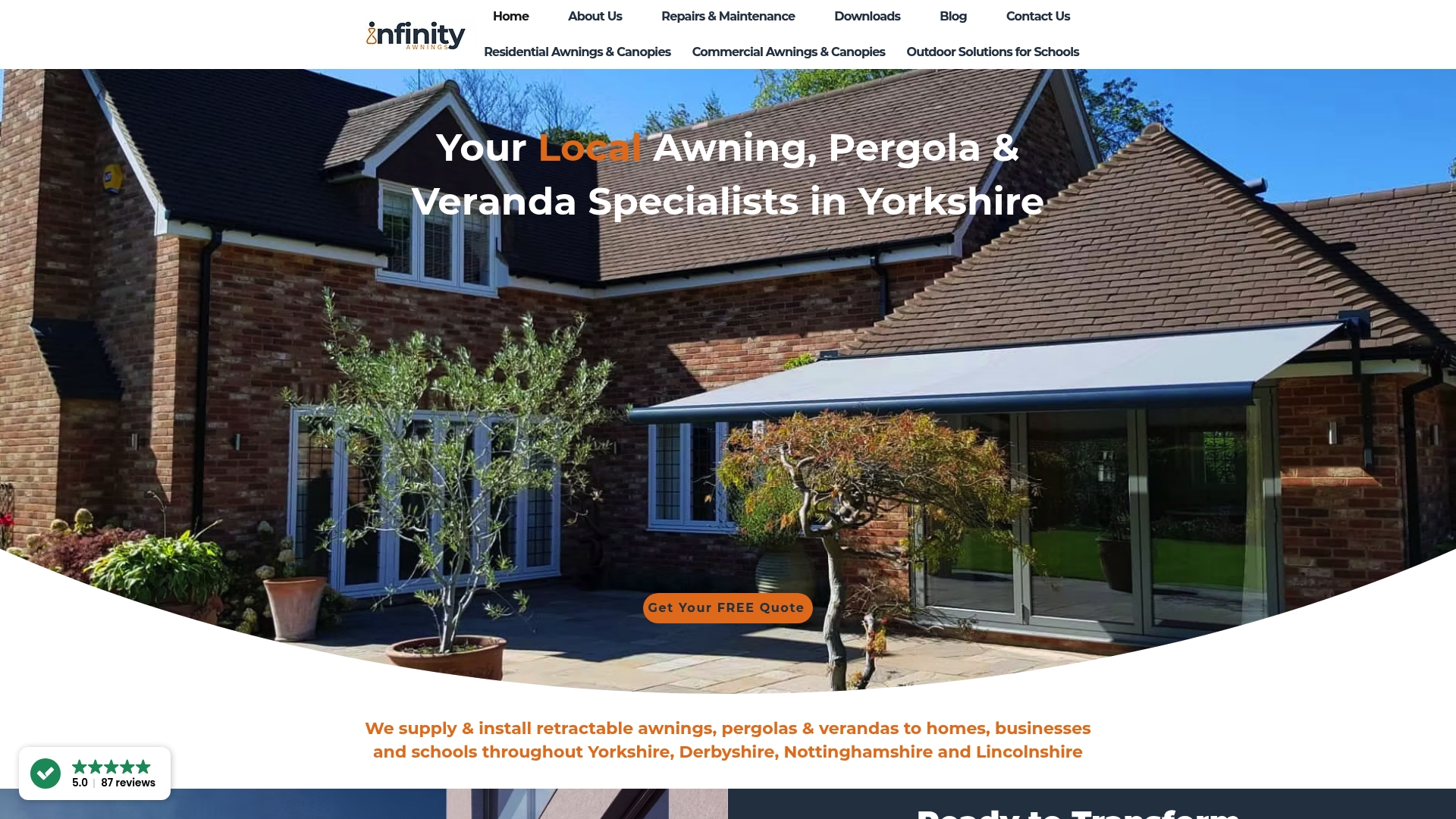
For a business, our commercial awnings and canopies page covers shop fronts, Dutch canopies and terrace covers.
FAQ
Can I use a patio heater under a pergola?
It depends on the heater and the roof. Follow the manufacturer’s instructions on clearances, keep the heater away from combustible materials and use it on a level surface. For a fixed pergola, an electric infrared heater mounted on the structure is the tidier choice because it takes no floor space.
How high should I mount an infrared heater?
Our guidance is roughly 2.2 to 2.5 m, angled down at about 45 degrees towards the seating, unless the manufacturer’s instructions say otherwise. Our placement guide explains how the height changes with the size of the seating area.
How much does it cost to run a pergola heater?
A 2 kW electric heater uses 2 kWh an hour. At 26.32p per kWh, the Ofgem cap electricity rate for October to December 2026, that is about 53p an hour. The cap changes every quarter, so check your own tariff.
How do I keep a pergola warm without a heater?
Start with a roof and side screens, then add rugs, cushions and blankets. Putting furniture or planting on the windward side also reduces gusts. A heater then needs to do much less.
Is an electric heater safer than gas under a pergola?
Electric heaters have no flame, no fumes and no gas bottles to store. They still need correct clearances and weatherproof wiring, so plan them with the structure and follow the manufacturer’s manual.
Sources
Recommended
Comments