
Pergola lifespan: what UK homeowners need to know

In UK conditions, a pergola’s lifespan depends almost entirely on what it is made from and how well it is looked after. Treated softwood typically lasts 10–15 years; cedar and redwood push that to 15–30 years; oak and durable hardwoods can exceed 20–30 years where well-detailed and ventilated. Aluminium structures commonly last 20 years or more with quality coatings, galvanised steel sits in a similar bracket when properly maintained, and vinyl or uPVC structures tend to hold their shape for 20–25 years before UV degradation becomes visible. Composites vary widely by brand and specification.
Three things shift every one of those ranges: how exposed the site is, how well the structure was installed, and whether maintenance happens at all.
Immediate steps to take in the next 24–72 hours:
Walk around the pergola and look for any visible rot, rust, cracked timber, or loose fixings at post bases.
Clear debris from joints, beam tops, and any drainage channels where water can pool.
Locate your manufacturer warranty document and note the installer’s contact details before you need them in a hurry.
Pro Tip: Take dated photographs of every post base and joint connection right now. If a dispute or warranty claim arises later, those photos are your strongest evidence.
Key takeaways
Material choice, installation quality, and consistent maintenance together determine whether a pergola reaches the top or bottom of its expected lifespan range in UK conditions.
Point | Details |
Material drives the baseline | Treated softwood lasts 10–15 years; cedar 15–30; aluminium and oak can exceed 20–30 years with correct installation. |
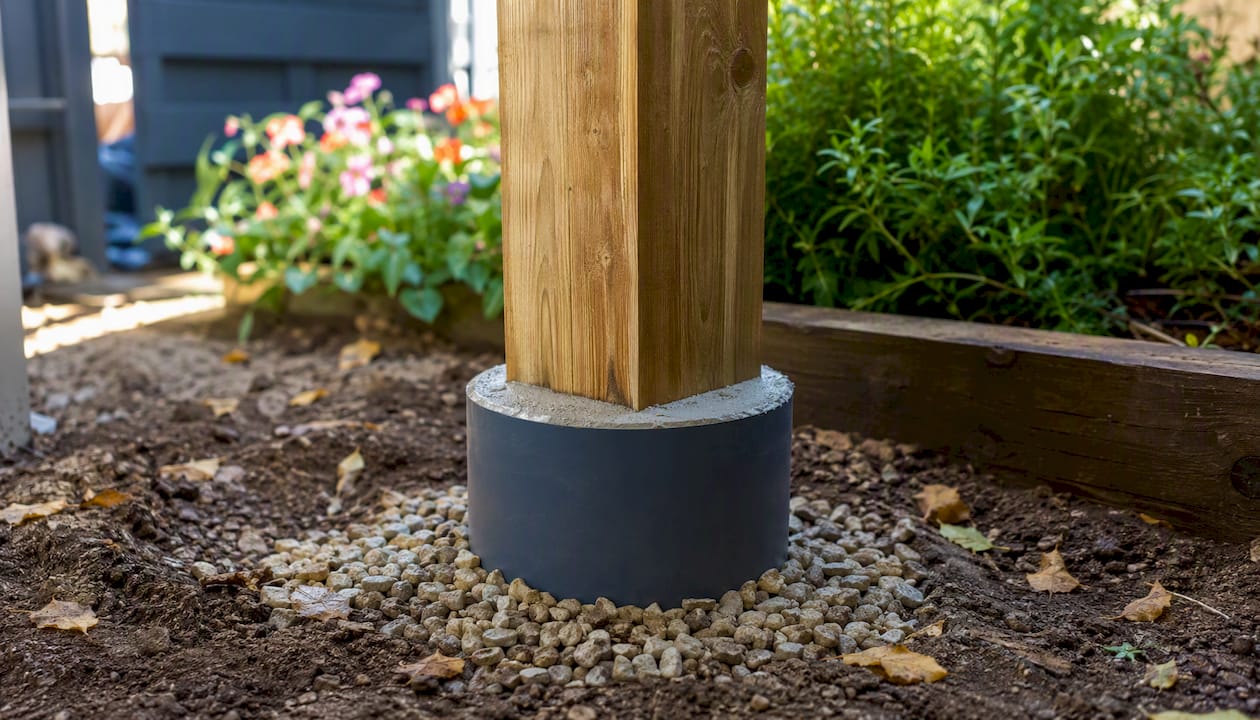
Post isolation is the critical detail | Timber posts set directly in soil rot from the base; use gravel, a drainpipe sleeve, and a cement cap to isolate end grain from moisture. |
Annual inspection is non-negotiable | Check fixings, post bases, and coating integrity every year; small repairs done promptly prevent structural failure later. |
Read the warranty carefully | Finish warranties typically run 5–10 years; structural warranties 10–20 years; moving parts and electrics are often excluded. |
Infinityawnings covers the full process | Design, supply, installation, and aftercare across Yorkshire and surrounding counties, with a full specification and care guide at handover. |
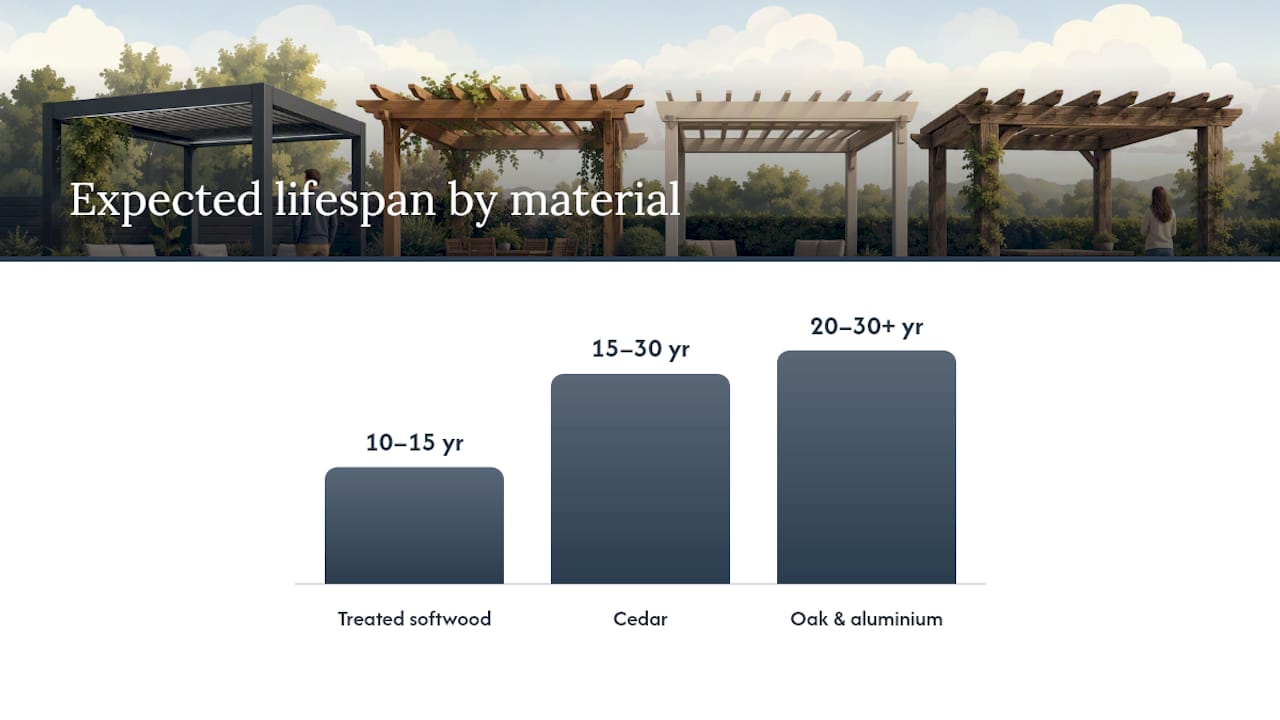
Table of Contents
How long do pergolas last by material?
Material choice is the single biggest variable in pergola lifespan, and the differences between options are large enough to change the economics of a project entirely.
Treated softwood (pressure-treated pine)
Pressure-treated pine is the most common entry-level timber in UK gardens. Expect a realistic service life of 10–15 years, sometimes shorter in wetter, shadier spots where the wood stays damp for extended periods. The typical failure mode is rot at the post base, where end grain sits closest to soil moisture, followed by splitting and warping in the horizontal members as the wood cycles through wet and dry seasons. In a sheltered, well-drained garden, 15 years is achievable; on a north-facing plot with heavy clay soil, 8–10 years is more honest.
Pro Tip: Specify UC4 pressure-treated timber for any post that goes into or near the ground — it carries a higher preservative loading than the UC3 grade commonly sold at builders’ merchants.
Cedar and redwood
Both species contain natural oils that resist moisture and insect attack far better than softwood. Cedar and redwood typically last 15–30 years in good conditions, and they weather to an attractive silver-grey if left untreated. The main failure mode is surface checking (fine surface cracks) rather than structural rot, which means the timber often remains sound long after it looks tired. Coastal exposure accelerates surface weathering but rarely compromises structural integrity as quickly as it does with softwood.
Pro Tip: If you want cedar to hold its colour, apply a UV-stable oil finish every two to three years. Left unfinished, the greying is cosmetic rather than structural, but clients often mistake it for deterioration.
Oak and durable hardwoods
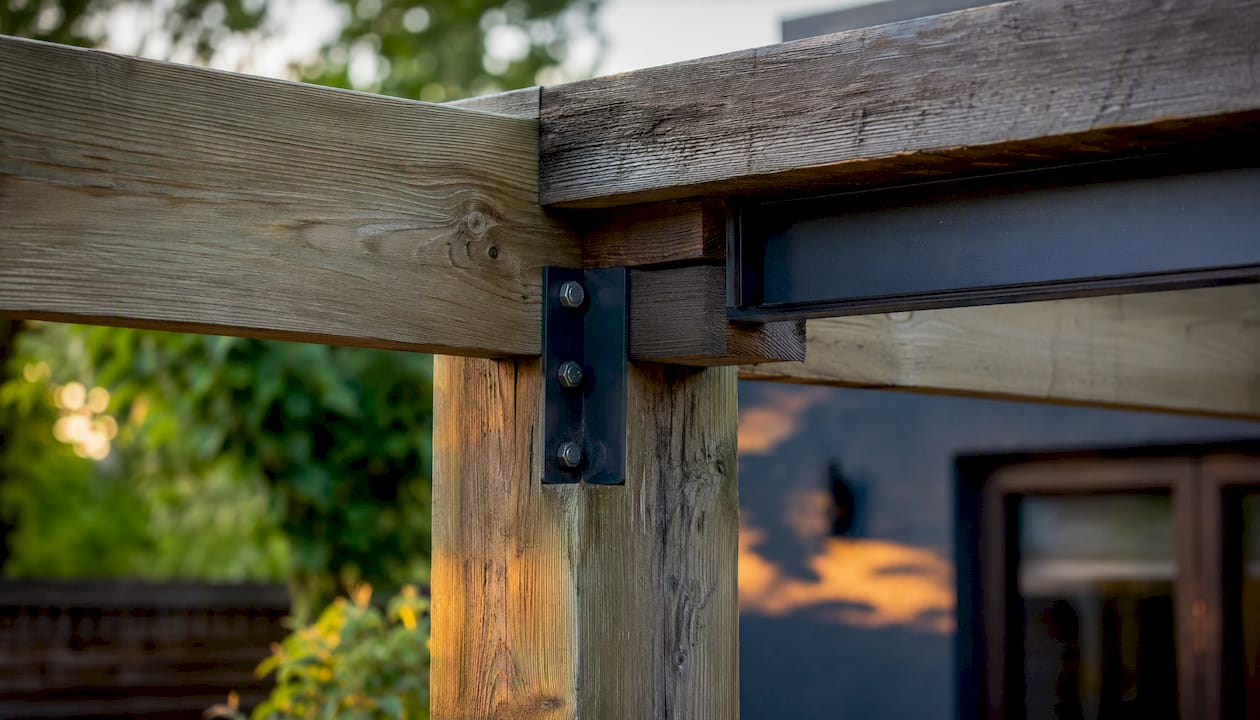
Oak is the premium choice for longevity. A well-detailed oak pergola, with posts properly isolated from ground moisture, can realistically last 30 years or more. The wood is dense, slow to absorb water, and highly resistant to rot. The failure mode, when it does occur, tends to be at fixings rather than in the timber itself: steel bolts corrode and stain the wood before the oak shows any structural weakness. Specify stainless steel or hot-dip galvanised fixings throughout.
Pro Tip: Oak posts should never sit directly in soil. Use a steel post shoe bolted to a concrete pad — it keeps the end grain clear of ground moisture entirely and adds decades to the post’s life.
Aluminium (powder-coated and louvred)
Aluminium does not rot, warp, or corrode in the way timber does, which is why aluminium pergolas can last 20 years or more with decent upkeep. The main degradation mechanism is coating breakdown: powder coat that is too thin, poorly applied, or specified without a primer layer will chalk, flake, and allow oxidation underneath within 10–12 years. In coastal areas, the coating specification matters even more. Ask for a minimum 60–80 micron powder coat thickness and confirm whether a primer coat is included.
Louvred aluminium pergolas carry additional complexity because the motorised louvre mechanism and drainage channels need annual attention. The frame outlasts the moving parts.
Pro Tip: Request the technical data sheet for the powder coat system, not just the brochure. A quality system will reference a primer coat and a minimum dry film thickness — if the supplier cannot provide this, treat it as a warning sign.
Galvanised and painted steel
Steel is heavier and stronger than aluminium but more vulnerable to corrosion where the coating is breached. Hot-dip galvanised steel, properly painted, can match aluminium’s lifespan in sheltered UK gardens. The failure mode is localised rust at cut edges, drilled holes, and weld points where the galvanising is thinnest. Coastal installations are a particular risk: salt-laden air finds every imperfection. Annual inspection of coating integrity, with prompt touch-up of any chips or scratches, is non-negotiable for steel structures near the coast.
Vinyl and uPVC
Vinyl pergolas require almost no maintenance and resist moisture entirely, which makes them attractive for low-effort installations. The realistic lifespan is 20–25 years before UV embrittlement becomes a structural concern rather than just a cosmetic one. In practice, the colour fades and the surface becomes brittle in high-UV positions. North-facing or shaded installations will outlast south-facing ones by several years. Vinyl cannot be repaired in the way timber can: a cracked structural member usually means replacement of that section.
Composite structures
Composite pergola components (typically a wood-fibre and polymer blend) sit between timber and vinyl in behaviour. They resist rot and require less maintenance than timber, but quality varies enormously between manufacturers. A well-specified composite from a reputable supplier can last 25 years; a budget product may show surface degradation within five to eight years. Always ask for the specific polymer content and UV stabiliser specification before purchasing.
What shortens or extends a pergola’s life in the UK?
The lifespan ranges above assume a reasonably well-installed structure in a typical UK garden. Several factors push the outcome significantly in either direction.
Exposure and climate
The UK’s prevailing south-westerly winds carry moisture and, in coastal areas, salt. A pergola on an exposed west-facing boundary in Cornwall faces a fundamentally different environment from one in a sheltered courtyard in Leeds. Coastal salt spray accelerates coating breakdown on metal structures and drives moisture into timber grain faster than rain alone. Shade and humidity create a different problem: a pergola under a large tree stays damp for longer after rain, which shortens timber life and encourages algae growth on all materials.
UV exposure is often underestimated in the UK. Prolonged summer sun degrades polymer-based materials and breaks down oil finishes on timber, particularly on south-facing structures.
Installation quality
This is where the biggest lifespan differences are made, and it is largely invisible once the structure is up. Post-to-ground detail is the most critical single factor for timber: RHS guidance recommends placing 5–7cm of coarse gravel at the base, setting the post inside a large drainpipe, filling with gravel, and capping with cement to isolate the wood from ground moisture. Posts set directly into soil, even treated ones, rot from the base upward and the damage is often invisible until the post fails.
For metal structures, footing design, drainage provision, and fixing quality determine whether water pools at connection points. A pergola installation guide that skips drainage detail is one to question.
Added loads and usage
Climbers are one of the most common causes of premature structural stress. A mature wisteria can exert considerable force on beams and fixings, and its weight holds moisture against timber surfaces. Retractable canopies, lighting rigs, and heaters all add load and, in the case of electrical fittings, create penetrations in coatings where water can enter. Plan for these loads at the design stage rather than adding them retrospectively.
Exposure and installation risk summary:
High longevity risk: coastal or exposed site + timber posts set in soil + no drainage provision + heavy climbers added later
Medium longevity risk: sheltered suburban garden + standard pressure-treated timber + basic annual maintenance
Low longevity risk: sheltered site + aluminium or oak + correct post isolation + annual inspection and touch-up
Seasonal maintenance to keep your pergola in good shape
Consistent, light-touch maintenance is what separates a pergola that reaches the top of its lifespan estimate from one that fails a decade early. The maintenance habits that matter most are cleaning, re-coating chips, treating exposed timber end-grain, and checking fixings.
Task | Frequency | Why it matters |
Clear debris from beam tops and joints | Monthly (autumn weekly) | Trapped wet debris accelerates rot and corrosion at contact points |
Inspect fixings and tighten loose bolts | Annual | Movement at joints causes coating cracks and accelerates wear |
Wash down all surfaces | Annually (spring) | Removes algae, salt deposits, and grime that hold moisture |
Re-apply timber oil or stain | Every 2–3 years | Maintains moisture resistance and UV protection in timber |
Touch up powder coat chips on metal | As found, at least annually | Prevents oxidation spreading under the coating |
Full structural inspection | Annually | Catches rot, corrosion, or movement before it becomes a safety issue |
Spring
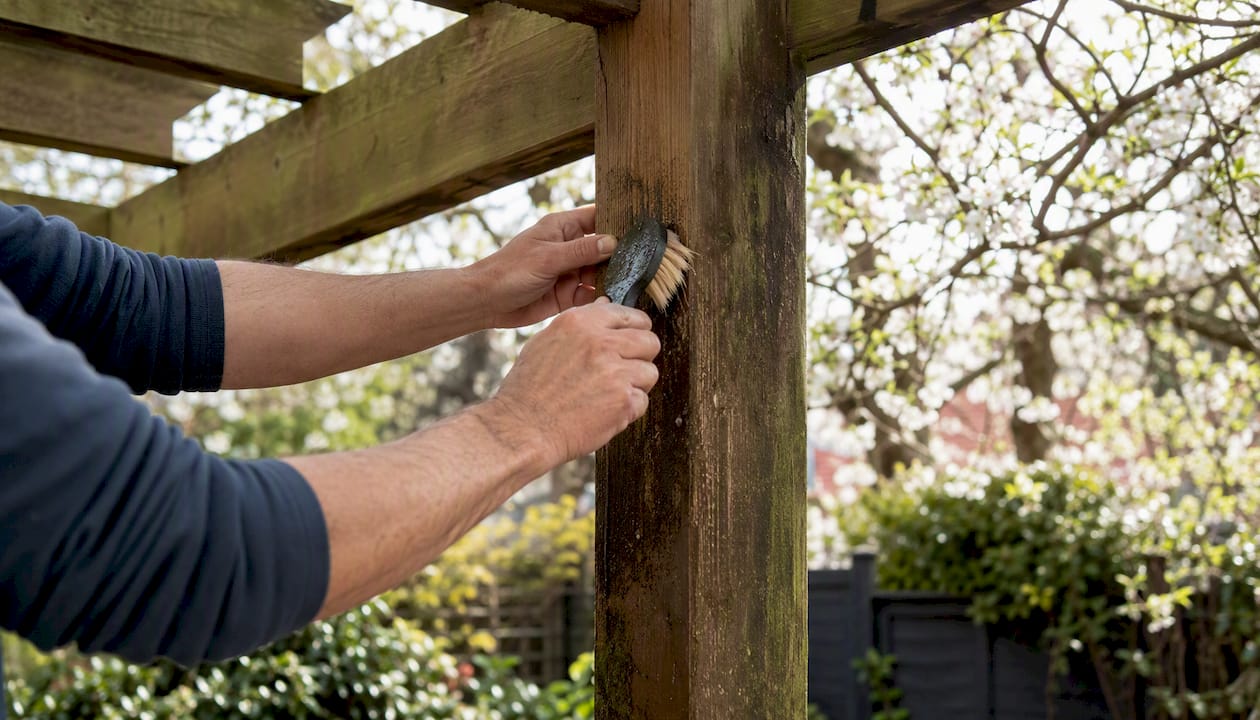
Spring is the most productive maintenance window. Wash the entire structure with a mild detergent and a soft brush, paying particular attention to joints, beam tops, and post bases. Check every fixing for movement. On timber, look for any areas where the finish has worn through and apply a fresh coat of preservative or oil before the growing season begins.
Summer
Summer maintenance is mostly about monitoring. Check that any climbers are not overloading beams or trapping moisture against surfaces. If you have a louvred aluminium pergola, test the drainage channels after heavy rain to confirm they are clear.
Autumn
Autumn is critical for timber structures. Clear fallen leaves from every horizontal surface promptly — wet leaf matter sitting on timber through winter is one of the fastest routes to surface rot. Trim back any climbers that are pressing against the structure.
Winter
A visual check after any significant storm is worth doing. Look for any posts that have shifted, any beams that have developed new cracks, and any fixings that have worked loose. Metal structures in coastal areas benefit from a rinse with fresh water after prolonged exposure to salt-laden air.
Pro Tip: Isolating timber post bases from ground moisture using the RHS-recommended gravel and drainpipe sleeve method is the single highest-return maintenance investment you can make at installation. It costs very little and can add years to the post’s life.
When should you repair, and when should you replace?
Most pergola problems are repairable if caught early. The question is whether the repair restores genuine structural integrity or simply delays an inevitable replacement.
Repairs that genuinely extend life
Replacing a single rotted beam or brace, where the posts and main structure remain sound, is almost always worth doing. Sanding back a small area of surface corrosion on a steel structure and applying a zinc-rich primer followed by a topcoat can arrest the problem for years. Treating localised timber rot with a consolidant and filler, then improving drainage at the affected post, works well when the rot is surface-level rather than through the full section.
Small repairs to powder coat on aluminium, done promptly with a matched touch-up kit, prevent the kind of spreading oxidation that eventually requires full recoating.
Warning signs that point to replacement
Leaning posts are the clearest signal that the structure has reached the end of its useful life. If a post has moved from vertical, the footing or the post base has failed, and the repair required is essentially rebuilding the structure from the ground up. Repeated movement at joints, where bolts keep working loose despite retightening, indicates that the timber or metal around the fixing has deteriorated beyond the point where a fastener can grip reliably.
Widespread rot across multiple members, heavy-section corrosion that has penetrated through the metal wall, and cracked structural members (rather than surface checking) all indicate that replacement is the safer and more cost-effective route. A structure showing two or more of these signs simultaneously is not a repair project.
Pro Tip: Before committing to either repair or replacement, get a professional inspection. A qualified installer can probe post bases, check fixing integrity, and assess load-bearing capacity in a way that a visual inspection from ground level cannot. The cost of an inspection is small relative to the cost of a wrong decision.
The repair-versus-replace decision comes down to three questions: Is the structure safe right now? Will the repair restore at least five to ten years of service life? And does the repair cost represent reasonable value against the cost of a new structure? If the answer to any of those is no, replacement is the right call. For readers weighing the longer-term investment case, why choose a pergola covers how longevity links to property value.
Warranties and questions to ask before you buy
A warranty is only as useful as what it actually covers, and pergola warranties vary considerably in scope.
What warranties typically cover
Manufacturer finish warranties for powder-coated aluminium commonly run for 5–10 years, while structural frame warranties may extend to 10–20 years. Moving parts, motorised louvre mechanisms, and electrical components are frequently excluded or covered for a shorter period. Read the small print carefully: many warranties are voided by modifications, by the addition of loads not specified at purchase, or by failure to follow the maintenance schedule in the care guide.
Timber warranties, where offered, tend to cover manufacturing defects rather than natural weathering or maintenance-related deterioration. A supplier who offers no warranty at all on a timber structure is worth questioning.
Technical checks to request
Before signing any contract, ask for the following in writing:
Timber: species, treatment class (UC3 or UC4), and whether end-grain treatment is included in the installation process.
Aluminium: wall thickness in millimetres, powder coat system specification (primer coat, dry film thickness in microns), and whether the coating is tested to a recognised standard such as Qualicoat.
Steel: galvanising grade and whether cut edges and weld points are treated after fabrication.
Footings: depth, concrete specification, and drainage provision at post bases.
Questions to ask your installer
How are posts isolated from soil moisture?
What is the minimum powder coat thickness on the frame?
What maintenance does the warranty require me to carry out, and how often?
What is excluded from the structural warranty?
Can you provide a specification sheet and care guide at handover?
Pro Tip: Photograph the installation process, particularly post footings before they are backfilled and any coating applied on site. Note down the product serial numbers and specification sheet references. If a warranty claim arises in five years, this documentation is the difference between a straightforward claim and a protracted dispute.
For a broader look at the features and build-quality details that affect long-term performance, essential pergola features covers the specification points worth prioritising.
UK planning rules and neighbour considerations
Most freestanding pergolas in UK gardens do not need planning permission, but the exceptions are specific enough to catch people out.
Under permitted development rules, a freestanding pergola is generally allowed provided it meets height and siting limits: typically up to 2.5m if it sits within 2m of a boundary, or up to 3m elsewhere for flat-topped structures. Conservation areas, listed buildings, and some Article 4 direction areas remove these permitted development rights entirely, meaning full planning permission is required regardless of size.
In 2026, the position remains that a freestanding pergola is usually permitted development provided it is single-storey, sits behind the principal elevation, and complies with the height limits above. When there is any doubt, a Lawful Development Certificate from the local planning authority is the safest route: it provides written confirmation that the structure is lawful and protects you if the question is ever raised later.
One cautionary note: attempting to make a pergola “non-permanent” by placing it on wheels does not reliably avoid planning rules in restricted areas. Councils have ordered the removal of wheeled pergolas in conservation areas on the basis that permanence is judged by impact and intention, not mobility.
On neighbour relations: property legal experts recommend early consultation because privacy, outlook, and light concerns frequently trigger complaints that escalate into formal planning investigations. A brief conversation before work starts, followed by a simple written note confirming what was discussed, costs nothing and significantly reduces dispute risk. Keep a record of any agreements reached.
An installer’s perspective on building pergolas that last
The gap between a pergola that lasts a decade and one that lasts three decades is rarely about the material alone. In practice, it comes down to three things: how the posts meet the ground, whether the drainage has been thought through before the first bolt is tightened, and whether the coating or finish specification matches the actual exposure of the site.
Post isolation is the detail that most separates experienced installers from those working to a price. Setting a timber post directly into soil, even UC4-treated timber, is a shortcut that costs the client years of service life. The correct approach, as the RHS construction guidance confirms, is gravel at the base, a drainpipe sleeve, and a cement cap that keeps end grain clear of moisture entirely. For metal structures, the equivalent discipline is ensuring that water cannot pool at the base plate or at any horizontal surface where a fixing penetrates the coating.
What Infinityawnings documents at handover matters as much as what is built. A specification sheet, a care guide keyed to the actual materials used, and a clear warranty summary give clients the information they need to maintain the structure correctly and to make a warranty claim if something goes wrong. Clients who receive this documentation and follow the maintenance schedule consistently reach the upper end of the lifespan ranges in this guide. Those who do not tend to find themselves replacing structures earlier than necessary.
For owners preparing for an installation, the most useful things to do in advance are: clear the site of any climbers or planting that would obstruct access to post positions, note where existing drainage runs, and photograph the area before work begins. These steps save time on installation day and create a useful baseline record.
Pergolas built to last, from Infinityawnings
If you want a pergola that reaches the top of its lifespan range rather than the bottom, the specification and installation decisions made at the outset are what determine that outcome.
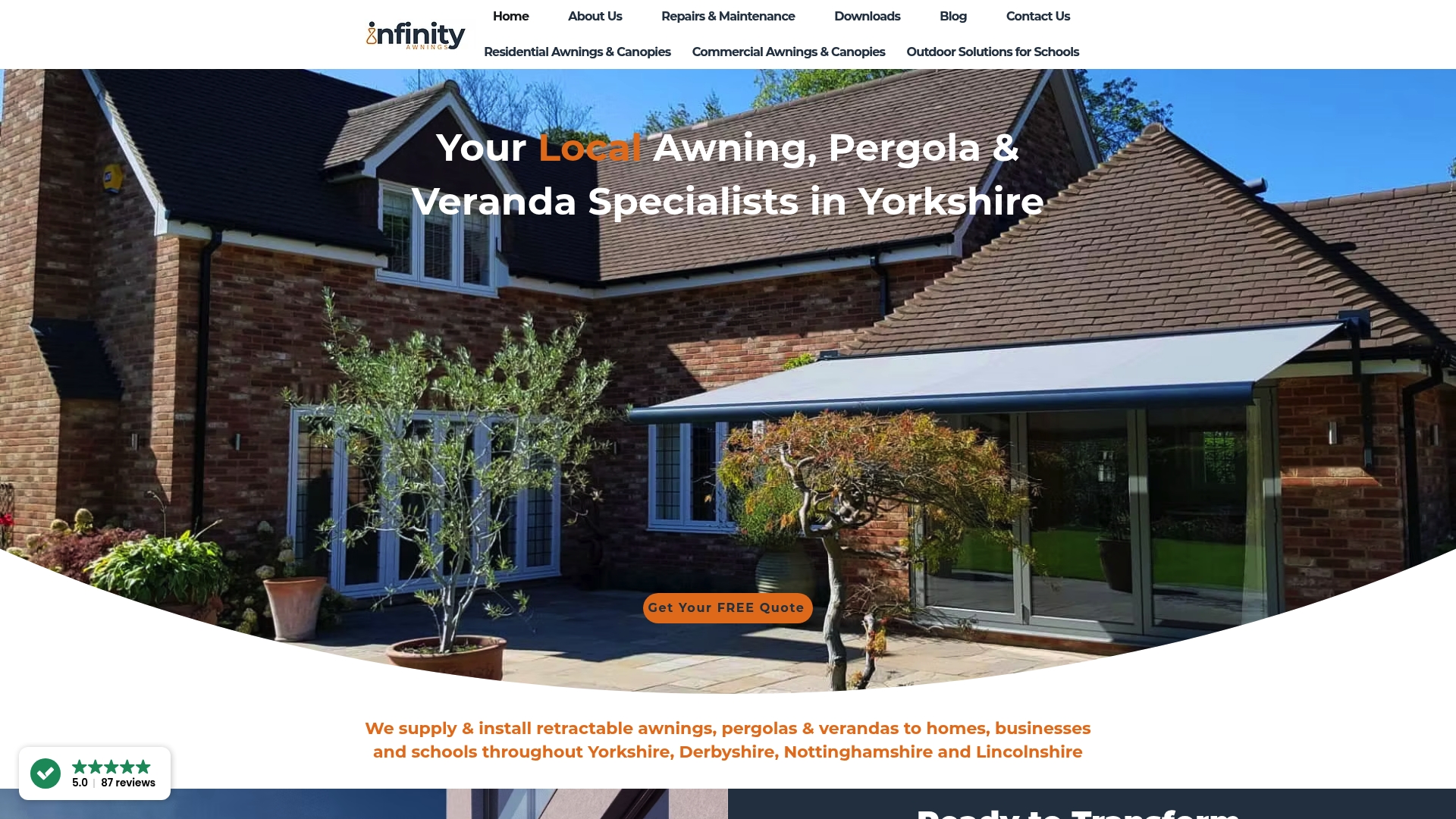
Infinityawnings designs, supplies, and installs pergolas across Yorkshire, Derbyshire, Nottinghamshire, and Lincolnshire, with a focus on getting the details right from the ground up: correct post isolation, drainage-aware footings, coating specifications matched to your site’s exposure, and a full handover pack including warranty summary and care guide. The service covers residential gardens, commercial terraces, and hospitality spaces, with options ranging from retractable pergola systems to fixed louvred structures. If you have an existing pergola that needs an inspection or repair assessment, that is available too.
To find out which materials and specification suit your site, request a free survey or quote and a member of the team will visit to assess exposure, drainage, and load requirements before recommending a solution.
Sources
The sources below underpin the guidance in this article. Use them to verify specific claims or to read the primary guidance before making planning or installation decisions.
Planning decisions:
Construction and installation detail:
Material lifespan and maintenance:
Neighbour and dispute guidance:
Recommended
Comments