
Keep Pergola Colours Sharp for 5 Years: UK Palette and Finish


Pick a palette that sits comfortably with your house and garden, then choose the finish that suits your pergola’s material: a microporous, flexible exterior coating for timber, and Qualicoat-grade powder coat for aluminium. Get this pairing right and the colour will still look sharp in five years, not just five months. Start with sample pots or RAL swatches, and confirm the coating warranty with your supplier before you commit.
TL;DR:
Use a microporous, flexible exterior coating for timber and confirm that the finish respects moisture and recoat times specified by the manufacturer.
Choose colours that respond to your garden’s existing materials, with muted tones suited for planting-heavy areas and darker shades for modern or architectural styles.
Always test colours in situ across different lighting conditions and weather to ensure they match expectations before committing to a final choice.
Confirm RAL codes, gloss levels, and warranty details with suppliers, especially for bespoke aluminium finishes, to avoid costly miscommunications.
Be aware of local planning rules, especially near listed buildings or conservation areas, which can influence material choices and finishes beyond just colour selection.
Table of Contents
Material matters: finishes and technical choices for timber, aluminium and composite pergolas
Planning and regulatory considerations that can affect colour and finish choices
Considerations for colour impact on pergola heat absorption and durability
Trends in pergola colour choices and their influence on garden aesthetics
How Infinity Awnings can help with colour matching and installation
Popular palette families and where to use them
Most pergola colours fall into five families, each suited to a different garden character. Muted greens blend a pergola into planting and work well where climbers and borders already dominate the view. Anthracite and dark greys give a modern, architectural edge against render, glass or contemporary brickwork. Soft coastal blues suit relaxed, seaside-influenced gardens, while warm neutrals and terracottas sit naturally against stone, gravel and rustic timber fencing. Bold reds and oranges work best as accents on trims or roof edges rather than across a whole frame, where they can overwhelm a small plot.
Colour experts writing for House & Garden recommend drawing outdoor shades from the natural world and testing them against the actual brick, stone or fence they’ll sit beside, rather than choosing in isolation.
Muted greens and olive tones for gardens with heavy planting.
Anthracite or charcoal grey for modern extensions and glass-walled spaces.
Soft blues for relaxed or coastal-style gardens.
Warm neutrals and terracotta for stone, gravel and cottage settings.
Bold accent colours reserved for trims, not the whole structure.
Pergola colour choice works best when it echoes an existing material in the garden, whether that’s a brick wall, a fence stain or a dominant plant colour, rather than competing with it. The same House & Garden guidance also suggests going a shade or two deeper outdoors than an indoor paint card suggests, since daylight washes colour out more than it does indoors. Always confirm with a physical sample rather than a screen or swatch book alone.
Material matters: finishes and technical choices for timber, aluminium and composite pergolas
The right palette means little if the finish fails within a couple of seasons, and the correct coating depends entirely on what your pergola is made from.
For timber, a microporous, flexible exterior wood coating is the only sensible choice, since it moves with the wood as it expands and contracts rather than cracking and peeling. Tikkurila’s Ultra Matt is one widely available example: a tintable, vapour-permeable exterior finish, with manufacturer guidance specifying that timber should be clean, dry and below 20% moisture before application. A flexible, breathable coating like this reduces the risk of trapped moisture causing peeling later, which is the main reason homeowners who reach for an interior-style emulsion outdoors tend to regret it within a year.
For aluminium frames, you’re choosing a powder coat rather than a paint. Qualicoat UK sets the approved standards for powder-coating systems and notes that bespoke RAL colours are often special orders, adding cost and lead time compared with stock shades. Always ask for the exact RAL code, the gloss level and the coating warranty in writing before signing off a quote.
Timber: flexible, breathable exterior wood coatings; respect manufacturer moisture limits.
Aluminium: Qualicoat-grade powder coat; confirm RAL code, gloss and warranty.
Composite or uPVC: usually factory-finished; use the manufacturer’s own touch-up product, never a general-purpose exterior paint.
How to test colours and make a final choice
Screen colours and paint swatches never show you the real thing outdoors, so testing in situ matters more than it does for interior work.
Order a sample pot or a painted offcut rather than relying on a chart.
Apply it to a real section of the pergola, or an offcut of the same material.
Check it in morning light, afternoon sun and at dusk, and once wet and once dry.
Photograph each viewing so you can compare them later rather than trusting memory.
Keep leftover paint from the same batch for touch-ups, since colour can shift slightly between production runs.
For aluminium, ask for a physical RAL swatch or, for a bespoke shade, a powder-coat test plate, since a baked finish can read quite differently on a complex extrusion than on a flat sample card. A good installer will offer a painted sample panel on request rather than expect you to commit from a brochure image.
Preparation and painting sequence
Longevity comes down to preparation as much as the product itself. A condensed trade sequence looks like this:
Clean the surface and let it dry fully; damp timber or chalky old coatings ruin adhesion.
Remove loose or flaking material and lightly abrade where the surface is glossy or uneven.
Mask hardware and protect nearby plants before opening a tin.
Prime where the product specifies it, and respect the stated recoat times exactly.
Pay particular attention to end grain and horizontal surfaces, where water collects and coatings fail first.
Product-specific guidance matters here: moisture limits and recoat intervals vary by brand, and light shades on porous softwood sometimes need a third coat for even coverage. Large surfaces, powder coating, difficult access or any job where a workmanship warranty matters are usually better handed to a professional installer.
Pro Tip: Seal and prime cut ends and joints first, before the flat faces, since these are the spots that fail soonest on an otherwise well-finished pergola.
Planning and regulatory considerations that can affect colour and finish choices
Colour itself rarely changes a planning outcome, but the materials and finishes involved sometimes do, particularly near listed buildings or in conservation areas. Gov makes clear that rules vary by location, and that Article 4 directions can remove permitted-development rights that would otherwise apply.
Check your local planning authority’s website before ordering materials, not after.
Ask specifically about conservation-area design guidance if your property falls within one.
Treat colour as secondary to material and visibility from public viewpoints, which is what most sensitive-area rules actually target.
Our guide to pergola planning rules covers the size and siting limits that trip up most homeowners before colour ever becomes an issue.
Installer-verified tips from Infinity Awnings
A few questions separate a smooth job from a disappointing one. Ask for the exact RAL code or paint name in writing, not just “grey” or “anthracite”, along with the gloss level, the coating warranty and the lead time if you’re specifying a bespoke colour. On site, we watch for three recurring pitfalls: unsealed end grain, horizontal ledges where rainwater pools, and mismatched colour between batches on larger structures. Catching these before installation, rather than after, is what separates a pergola that still looks sharp in year five from one that needs repainting by year two.

We can offer sample panels and site-matched colour advice, and where a pergola pairs with a roof or canopy finish, we coordinate the two so the frame and roof read as one considered scheme rather than two separate decisions.
Considerations for colour impact on pergola heat absorption and durability
Darker colours absorb more heat than light ones, which has two practical consequences for a pergola. The first is comfort: a dark anthracite frame can get noticeably warmer to the touch in direct sun than a pale grey or white equivalent, which matters if you’re resting a hand on it or sitting close beside it on a hot afternoon. The second is material stress. Timber expands and contracts more as it heats and cools, and a dark, heat-absorbing finish on softwood can accelerate that movement slightly compared with a lighter shade, which is one more reason a flexible, microporous coating matters more than the colour itself.
Aluminium behaves differently. It expands and contracts too, but the frame’s structural tolerance for that movement is usually built in by the manufacturer, so a dark powder coat is less of a durability concern than it is for timber, provided the coating itself meets Qualicoat standards. The bigger risk with any dark exterior colour, on either material, is UV fade: strong pigments in deep reds, blues and blacks tend to lose depth faster under direct sun than muted greens, greys and neutrals, which is worth weighing if your pergola sits in an unshaded, south-facing spot. Choosing a slightly more muted version of the colour you want, rather than the most saturated version on the chart, often ages better for exactly this reason.

Trends in pergola colour choices and their influence on garden aesthetics
Pergola colour choices have shifted away from the stained-pine defaults of a decade ago toward darker, more architectural palettes: anthracite, charcoal and deep bronze tones now sit alongside the softer greens and off-whites that have always suited planted gardens. This mirrors a broader move in garden design toward treating outdoor structures as an extension of the house’s own colour scheme, rather than a separate, purely functional addition.
The effect on garden aesthetics is noticeable. A dark-framed pergola against pale render or glazing reads as a deliberate architectural feature, almost like an outdoor room, whereas a muted green or grey frame recedes and lets planting take the visual lead. Bold accent colours, meanwhile, tend to appear on smaller details such as fascia trims or roof edges rather than across an entire structure, which keeps the look current without dating quickly if trends move on. Whichever direction you lean, the palette still needs to answer to the house and the planting around it first, with the trend itself a secondary consideration. Our gallery of pergola design ideas shows several of these palettes applied to real layouts, which is a useful starting point before you commit to sample pots.
Author perspective: balancing style and longevity
I’d rather see a pergola painted a muted colour that sits well with the house for a decade than a trend-led shade that looks dated in two years. Cohesion with your garden beats chasing a colour trend, and the correct coating for your material matters more than the exact shade you pick. Test samples properly, and bring in a professional for anything beyond a small DIY job.
— Andrew
How Infinity Awnings can help with colour matching and installation
If you’d rather skip the trial and error, we can offer help with palette and finish decisions. Our process includes a site visit to consider your house colours, planting and hard landscaping before suggesting options, with physical sample panels provided for more accurate colour choice.
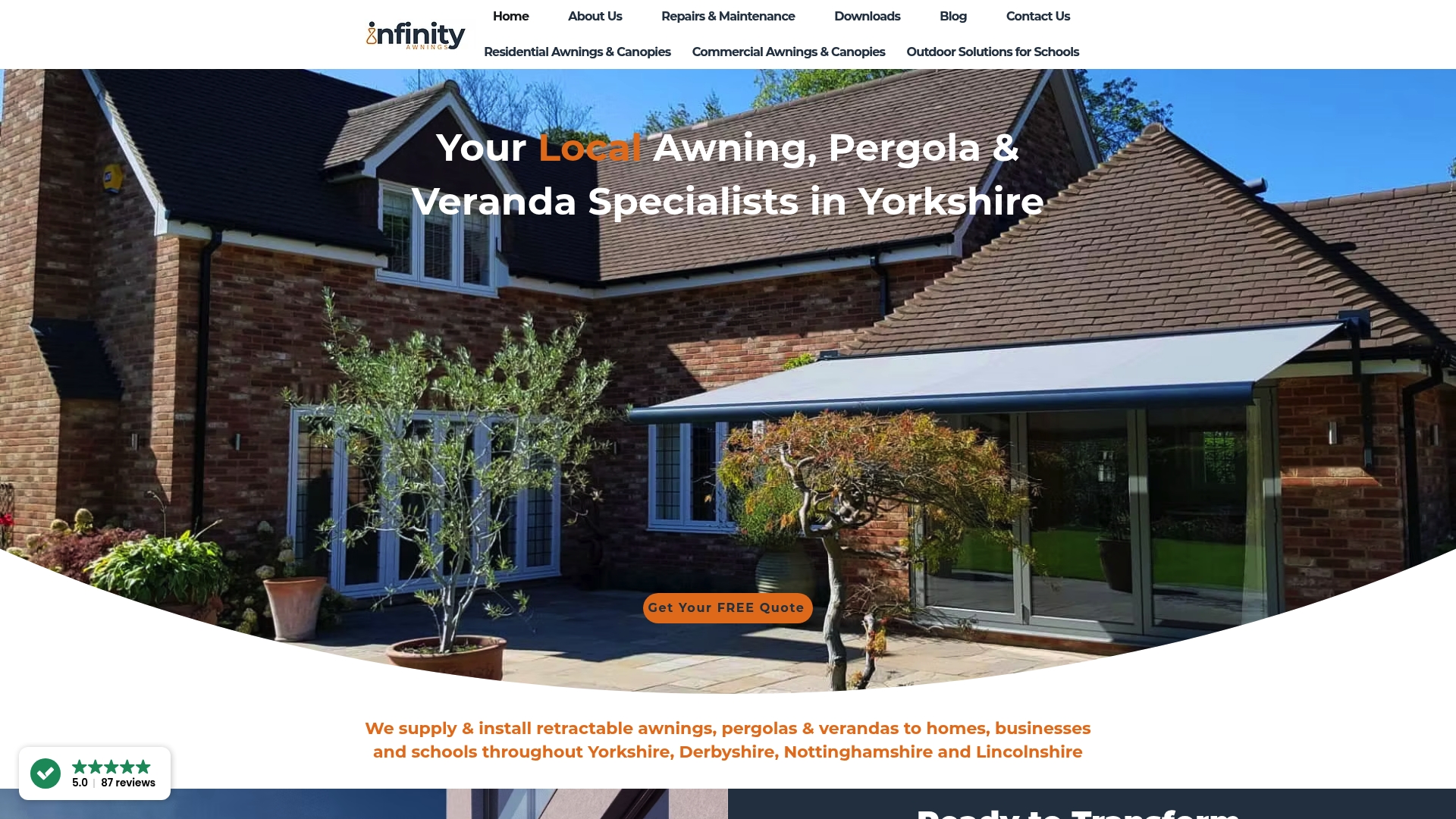
We install pergolas finished to your chosen colour specification, paying attention to end-grain sealing and joint protection described earlier, and can coordinate accessories such as lighting or heaters once the finish is agreed.
Site consultation and colour shortlisting based on your house and garden.
Physical sample panels rather than screen-based colour choices.
Supply and installation of pergolas with custom colour and finish options.
Optional accessories, including lighting and heating, coordinated with the finish.
Visit our pergolas page to see the range or request a free quote, and we’ll talk you through colour and finish options for your specific garden.
FAQ
What is the best colour for a pergola?
There’s no single best colour: a muted green or grey tends to suit planted gardens, while anthracite suits modern, architectural settings. Expert guidance from House & Garden recommends choosing a shade that responds to your house and garden’s existing materials, then testing it in situ before committing.
What are common pergola mistakes?
The most frequent mistakes are using an interior-style paint outdoors, which tends to crack and peel because it can’t flex with the timber, and neglecting end grain and horizontal surfaces where water collects. Mismatched colour between paint batches on large structures is another common issue, best avoided by keeping leftover paint from the same batch.
What are the best pergola designs for 2026?
Darker, more architectural frames in anthracite and charcoal are increasingly popular alongside the muted greens and neutrals that have long suited planted gardens. Our pergola design ideas gallery shows several current layouts and colour pairings.
What are the rules for pergolas in the UK?
Permitted-development rules vary by location, and GOV.UK’s technical guidance notes that listed buildings, conservation areas and Article 4 directions can all affect what you’re allowed to build without permission. Always check with your local planning authority before installation, since size and siting matter more than colour in most cases.
Do I need planning permission to paint my pergola a different colour?
Painting an existing pergola doesn’t usually require planning permission on its own, but conservation areas and listed buildings can carry separate rules about finishes and materials. It’s worth checking local conservation-area design guidance if your property falls within one, since some areas prefer traditional finishes on garden structures.
Sources
Recommended
Comments