
Reclaim Floor Space with Courtyard Shade Ideas for Small UK Spaces


The best shade for a small courtyard comes from retractable awnings, shade sails, compact pergolas, portable parasols and living plants, each suited to a different budget and level of permanence. A wall-mounted retractable awning is the single most space-efficient choice, since it folds flat against the wall and needs no floor-standing base or central pole. Before fitting anything fixed, check whether your project needs planning permission.
TL;DR:
Retractable awnings are ideal for small courtyards because they save floor space and can extend between 1.5 to 2.5 meters, depending on the seating depth.
Shade sails require correct tensioning and anchoring to prevent pooling and tearing, and should be installed at at least 30 degrees slope for proper rain runoff.
Fixed structures like pergolas and verandas create permanent shaded areas but can alter the visual space depending on roof type and size, with lighter roofs feeling less enclosed.
Moveable options such as parasols and pop-up gazebos are budget-friendly and flexible but require careful consideration of wind safety and stability; heavier bases improve safety.
Long-term shading and privacy are best achieved through planting small evergreen trees or climbers, which grow over several seasons and soften the hardscaping as they mature.
Table of Contents
Quick shortlist: best options for a small courtyard
If you want to jump straight to a decision, here is how the main options stack up before you read the detail.
Retractable awning: best for reclaiming floor space; mid to upper budget.
Shade sail or canopy: best for a modern look on a tight budget; low to mid cost.
Compact pergola or veranda: best for a permanent focal point; upper budget.
Large parasol: best for flexible, moveable shade; low cost.
Pop-up gazebo: best for occasional use and events; low cost.
Climbers and small trees: best for long-term cooling and privacy; low ongoing cost.
Each is covered in its own section below, with the trade-offs that matter most in a small space.
Retractable awnings: why they suit small courtyards
A retractable awning mounts to a wall or fascia and extends outward, so it uses no floor area when retracted and none when open beyond the fabric itself. That makes it the natural pick for a courtyard where every square metre of paving matters, and because the arm angle is adjustable, you can drop the shade lower in the afternoon sun without moving furniture. One practical comparison found that swapping a parasol for a wall-mounted crank awning increased usable shaded area and cleared the floor space a central pole and base previously obstructed.
For a small courtyard, look for:
A projection of around 1.5 to 2.5 metres, matched to the depth of your seating area.
Solid masonry or a structurally sound fascia for the fixing points.
Manual operation for lower upfront cost, or motorised for one-touch convenience.
Most fabric awnings have a wind rating and should be retracted above that limit, so check the manufacturer’s figure before you rely on one through a windy spell.
Pro Tip: If your courtyard is narrow, choose an awning with a slightly shorter projection rather than a full-width one, so the open fabric does not clip boundary walls on each side.

Shade sails and canopies: simple, modern and budget options
A shade sail’s clean, angular fabric panel suits a contemporary courtyard far better than a bulky frame, and because it is tensioned between fixing points rather than standing on legs, it leaves the floor clear underneath. Sails work particularly well in square or rectangular courtyards where you already have two or three solid walls to anchor from.
Getting the installation right matters more than the fabric choice:
Fix to masonry, steel posts or a structurally sound fascia, never to fencing alone.
Install the sail at an angle, with a slope of at least 30 degrees often recommended, so rainwater drains off instead of pooling and tearing the fabric.
Leave turnbuckles and tensioners accessible so you can adjust the sail seasonally or take it down before a storm.
Shade sails are budget-friendly and suit minimalist urban spaces, though incorrect tensioning can lead to dangerous pooling and fabric tear. Expect fading over a few summers with lighter fabrics, so budget for eventual replacement rather than treating a sail as a permanent fixture.
Pergolas and verandas: small-scale fixed structures
A compact pergola or veranda makes sense once you are ready to commit to a permanent structure rather than seasonal shade, and the long-term benefit is a defined outdoor room that adds character to the courtyard year-round. Because these structures have legs and a roof, they do take up more visual and physical space than an awning or sail, so scale matters more here than with any other option.
The roof type changes how heavy the structure feels:
Slatted or louvred roofs let dappled light through and feel lighter in a tight courtyard.
Solid polycarbonate roofs give full weather protection but can make a small space feel enclosed.
Pairing a pergola with climbers or a retractable fabric canopy softens the structure and adds adjustable shade on top of the fixed frame.
A veranda attached to the house extends the roofline and works well where you want year-round cover without a separate roofed structure further into the courtyard.
Parasols, compact umbrellas and pop-up gazebos: moveable, low-commitment shade
A large parasol gives you shade without any fixing work, but the trade-off is floor space lost to the base, which can be as wide as the canopy itself once you account for stability. A cantilever or side-post design avoids a central pole through the seating area, which matters more in a small courtyard than in a larger garden.
Before you buy, weigh up:
Portability against footprint: a lighter parasol is easier to angle toward the sun but needs a heavier base to stay stable.
Wind safety: close and store a parasol in strong gusts, and never leave a pop-up gazebo unattended above gusts stronger than a gentle breeze.
Budget: Which? testing shows a decent pop-up gazebo can cost under a low three-figure amount in pounds sterling, though wind performance varies between models.
Fold both away in winter to extend their working life, since UV and damp are the main causes of early wear.
Planting, climbers and small trees: living shade for courtyards

Plants add shade that improves every year rather than depreciating, and they soften hard landscaping in a way no fabric or frame can. The RHS recommends planting small multi-stem trees and suitable climbers to create shade and privacy in tight urban gardens, choosing species with mature dimensions that suit the space rather than ones that will outgrow it.
A few planning points save trouble later:
Choose multi-stem or small evergreen specimens bred for compact gardens rather than standard full-size trees.
Plant at least 45cm from a wall base to avoid rain shadowing and give roots room to spread, as RHS shade gardening guidance advises.
Sketch the mature canopy spread before planting, so you are not cutting it back hard in five years.
Pro Tip: A fast-growing climber on a trellis can give usable shade within one or two seasons, while a small tree may take several years to fill out, so combine the two if you want shade sooner rather than later.
Privacy, multi-function shading and atmosphere
Shade and privacy often come from the same feature. A side screen or section of trellis fitted to an awning or pergola blocks low-angle sun and overlooking windows at once, while also cutting wind that funnels between tight courtyard walls.
A few additions extend how much you use the space:
LED strip lighting integrated into an awning or pergola frame keeps the courtyard usable after dusk without a separate fitting.
A wall-mounted or freestanding heater stretches evening use into cooler months, particularly under a fixed roof that traps some warmth.
Powder-coated aluminium frames and weather-resistant fabrics resist damp and need far less upkeep than untreated timber.
Combining these elements turns a shade structure into a space you use for most of the year, not just on the hottest afternoons.
Planning, permissions and practical constraints for courtyard shade
Whether you need planning permission depends on what you are installing and whether anything like it existed before. Local-authority guidance notes that installing a new awning or canopy commonly requires a full planning application, while replacing an existing one on a like-for-like basis is often treated differently.
Before you commit to a structure:
Contact your local planning authority to check whether your specific project needs permission, since rules vary by structure type and location.
Skipping a required application carries real risk: gov.uk warns that unauthorised work needing permission can trigger an enforcement notice ordering you to undo the changes.
Listed buildings, conservation areas and any structure that overshadows a neighbour’s property usually face tighter restrictions, so flag these early.
Our guide to permitted development versus planning permission covers the distinction in more detail if you are unsure which category your project falls into.
How to choose: a compact checklist for courtyard shade decisions
Work through these steps in order and you will land on a shortlist that actually fits your space and budget.
Measure the courtyard’s usable depth and width, then subtract space needed for walking and furniture.
Identify solid fixing points on walls or fascia before assuming a sail or awning will work.
Check wind exposure at different times of day, since courtyards can funnel gusts unpredictably.
Set a budget band before contacting suppliers, so quotes are easy to compare on a like-for-like basis.
Confirm whether your chosen structure needs planning permission before ordering anything.
When comparing quotes, ask each supplier about fixing methods, wind ratings, warranty length and who handles any required paperwork.
Pro Tip: As a rough decision flow: start with a moveable parasol or gazebo if you are renting or unsure, move to a shade sail for a modern fixed look on a tighter budget, and choose an awning or pergola once you want a permanent, adjustable solution.
Professional installation and design tips
A proper site survey checks fixing points for load-bearing strength, confirms clearance above head height, and plans cable routes early if you want motorisation, lighting or heaters built in from the start. Retrofitting these later usually costs more than specifying them upfront. Our case studies show how a measured approach to shading increases the amount of outdoor space a courtyard can actually be used for, in each season.
Author perspective: a practising installer’s take
Most courtyards benefit from mixing a fixed structure with something soft and moveable, rather than betting everything on one solution. An awning handles daily shade, a climber softens the walls over a couple of seasons, and a spare parasol covers the gaps. Small changes genuinely add up to more usable time outside.
— Andrew
How Infinity Awnings can help
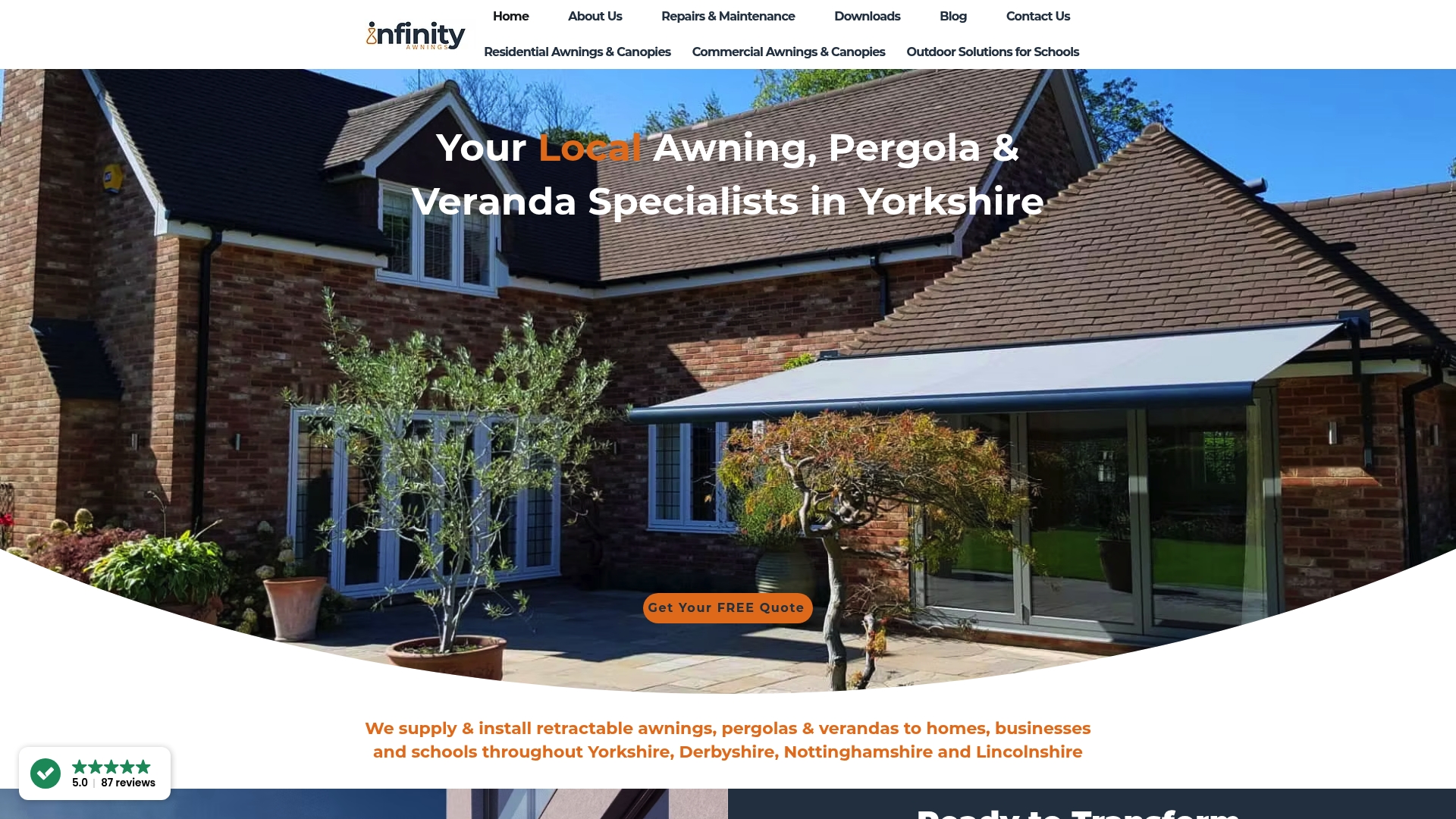
Some companies design, supply and install retractable awnings, pergolas and verandas suited to small courtyards, drawing on experience working across varied property types and layouts.
If you want a second opinion on what will actually fit and perform in your space, request a free survey or quote and we will talk through the options on site before you commit to anything.
FAQ
What is the disadvantage of a shade sail?
A shade sail needs secure anchor points and correct tensioning, and getting the angle or tension wrong can cause fabric to pool with rainwater and tear. It also offers less flexibility than a parasol, since you cannot simply move or angle it once fixed.
What are some stylish ways to shade my outdoor patio?
A wall-mounted retractable awning gives adjustable shade without using floor space, while a tensioned shade sail suits a modern, minimalist courtyard. Climbers on a trellis or a small multi-stem tree add a softer, living alternative that improves with time.
What can I use instead of a parasol?
A retractable awning or a shade sail both give coverage without a central pole or heavy base taking up floor space. A compact pergola with a slatted or retractable roof is a more permanent alternative if you want a defined shaded area.
What is the cheapest way to shade my patio?
A pop-up gazebo is one of the lowest-cost options, with decent models available for under a low three-figure amount in pounds sterling, though wind performance varies and it should not be left unattended in strong gusts. A large parasol with a stable base is a similarly affordable, flexible option.
Sources
Recommended
Comments