
Awning and Drop Screen to Block Evening Sun on West Facing Patios, UK


The most effective fix for a west facing patio is an adjustable-projection awning or pergola paired with a western drop or zip screen, since low-angle evening sun needs side coverage rather than just an overhead canopy. Add planting for long-term cooling, and use a parasol or shade sail as a stopgap while you plan the bigger job. A company with extensive experience in residential and commercial sites sees this combination solve the problem most reliably.
TL;DR:
Combining an adjustable-projection awning or pergola with a western drop or zip screen provides the most reliable shade for west facing patios, especially during low-angle evening sun.
Wind exposure significantly influences shading choices, requiring higher wind ratings and stronger fixings for structures like pergolas, with professional surveys recommended for larger installations.
Planting fast-growing trees, climbers, or hedges on the west side adds year-over-year cooling and aesthetic value, but takes multiple seasons to develop effective shade.
Proper size projection and side screening are critical; undersized awnings and omitted side screens often fail to block low evening sun or glare effectively.
External shutters or blinds are the most effective way to block low sun from windows, with fixed shading measures counting toward overheating regulations, unlike internal blinds.
Table of Contents
Practical shading options for west facing patios
A west facing patio doesn’t get more sun than other aspects, but it gets it at the worst possible angle. Late afternoon and evening sun sits low on the horizon, so overhead shade alone lets light straight underneath it. That’s why side or vertical screening matters as much as anything mounted above.
Retractable awnings with drop screens: an adjustable-projection awning extends further as the sun drops, and a vertical drop screen blocks the glare an overhead fabric misses. Electric drives suit larger spans and let you retract quickly if wind picks up.
Pergolas with louvres or western screens: louvred roofs adjust the angle of coverage through the day, and a screen fitted to the western side stops low sun getting in underneath. Training a climber across the frame adds shade that improves each year.
Vertical or zip screens and guided roller blinds: these run in a track, so they resist wind better than a loose curtain and still let you keep a clear view when retracted.
Shade sails and cantilever parasols: useful for smaller budgets or rented properties, but fixed-angle sails and parasols struggle against sun that moves fast and low across the horizon in the evening.
External shutters and external blinds: Approved Document O lists fixed external devices, including shutters, external blinds, overhangs and awnings, among the accepted measures for limiting solar gains, and specifically notes that internal blinds should not be counted toward compliance.
For most west facing gardens, the strongest result comes from combining methods: an awning or pergola for the main canopy, a drop screen for the low sun, and a parasol for the corner the fixed structure doesn’t reach. Our guide to exterior shading systems breaks down how each performs against wind, glare and running cost.
How to choose the right shading solution for your patio
Before comparing products, work out what your patio actually needs. Stand outside in the late afternoon and watch where the sun sits relative to your seating area. That single observation tells you more than any brochure.
Track the sun path and note how far the shadow line moves between 4pm and 8pm in summer.
Check wind exposure, since an exposed patio needs a higher wind rating and stronger fixings than a sheltered courtyard.
Decide if the view matters, because retaining a sunset view usually points towards a retractable or louvred system over a fixed solid roof.
Set a budget band: temporary fixes such as sails and parasols sit at the low end, retractable awnings in the middle, and pergolas or verandas at the top.
List the technical specs to request: projection distance, fabric openness or g-value, wind rating, drainage and fixing type, and warranty length.
Follow a clear sequence: measure, shortlist products, book a site survey, get a formal quote, then agree an installation date.
Pro Tip: Ask any installer for the wind rating in writing, not just verbally, since this is the figure that determines whether your awning survives its first gusty evening.
Our outdoor shading checklist covers the same ground in more detail if you want a printable version before contacting suppliers.
DIY options versus professionally supplied and fitted solutions
Small, low-stakes shading is fair game for a DIY approach. Portable parasols, lightweight shade sails and temporary screens can be put up and taken down without specialist tools, and they’re forgiving if you get the angle slightly wrong.
DIY suits: parasols, freestanding sails, and removable screens for short-term or rented situations.
Professional installation suits: large retractable awnings, pergolas, and anything wired for electric operation, where incorrect fixings or wiring create real safety risk.
Warranty and wind performance differ: bought-in kits rarely carry the same wind rating or after-sales cover as a professionally supplied and fitted system.
Foundations and fixings matter most for pergolas, especially once climbers add sustained weight and wind resistance to the frame, as the RHS notes for pergola planting.
A professional site survey checks wall or ground fixing points, wind exposure, drainage and structural loading before any quote is finalised.
Planting and living-shade ideas for west facing patios
Planting won’t help this summer, but it’s the only option that gets better every year without extra spending. A multi-stem small tree or a pleached specimen positioned to the west of the patio starts casting useful shade within a couple of seasons. Climbers on a pergola frame, such as wisteria, clematis or a grape vine, typically take two to four years to establish enough cover to matter, so pairing them with an awning or screen in the meantime avoids a shadeless gap.
Fast-establishing options: multi-stem trees and pleached hedging give height and shade sooner than a standard sapling.
Climbers for pergolas: wisteria, clematis and grape vine all suit a pergola frame once uprights are sized for the extra load.
Structural care matters: the RHS recommends sizing uprights and crossbeams for the expected weight of foliage and wind uplift, since an underspecified timber frame can fail under a mature climber.
Beyond shade: planting brings cooling, biodiversity and year-round interest that hard structures can’t match.
Planning, installation and regulatory checks
Most awnings and smaller pergolas fall within permitted development, but size, height and proximity to boundaries can trigger the need for planning permission or a building warrant, so it’s worth a quick check with your local authority before ordering anything substantial. Larger or roofed structures may also need a structural survey, particularly where foundations have to carry a solid roof or a mature climber’s weight.
Shading choices increasingly link to national building guidance too. Approved Document O treats fixed external shading as a genuine tool against overheating, alongside ventilation strategies covered in building regulations more broadly.
Check local permitted development rules before committing to a design.
Request a written specification covering projection, materials and fixings.
Confirm the wind rating and warranty terms in writing.
Ask whether a structural survey is needed for pergolas or verandas.
Our piece on why architectural shading matters goes into the specification side in more depth.
Installer tips for shading a west facing patio properly
The most common mistake installers see is undersizing the projection, so the awning shades the table at 2pm but not at 6pm when the sun has dropped and moved round. The second is skipping side screening altogether, which leaves evening glare unaddressed no matter how large the canopy. The third is a wind rating chosen for the product’s price point rather than the site’s actual exposure.

Measure the late-afternoon sun path before ordering, specify a drop screen for the western edge, and consider an electric drive on anything wider than a standard patio door. A reputable installer has supplied and fitted awnings, pergolas and verandas for many years, working with established brands, and a proper site survey should always precede a formal quote.
Balancing sunset views with evening comfort
The real trade-off on a west facing patio isn’t shade versus sun, it’s shade versus view. An adjustable awning paired with a retractable drop screen lets you keep the sunset when you want it and shut out the glare when you don’t. Decide which matters more to you before you decide on a structure.
— Andrew
How Infinity Awnings can help with your west facing patio
Professional companies supply and fit retractable awnings, pergolas, verandas and drop screens in regional areas, typically starting with a free site survey that checks sun path, wind exposure and fixing points before quoting.
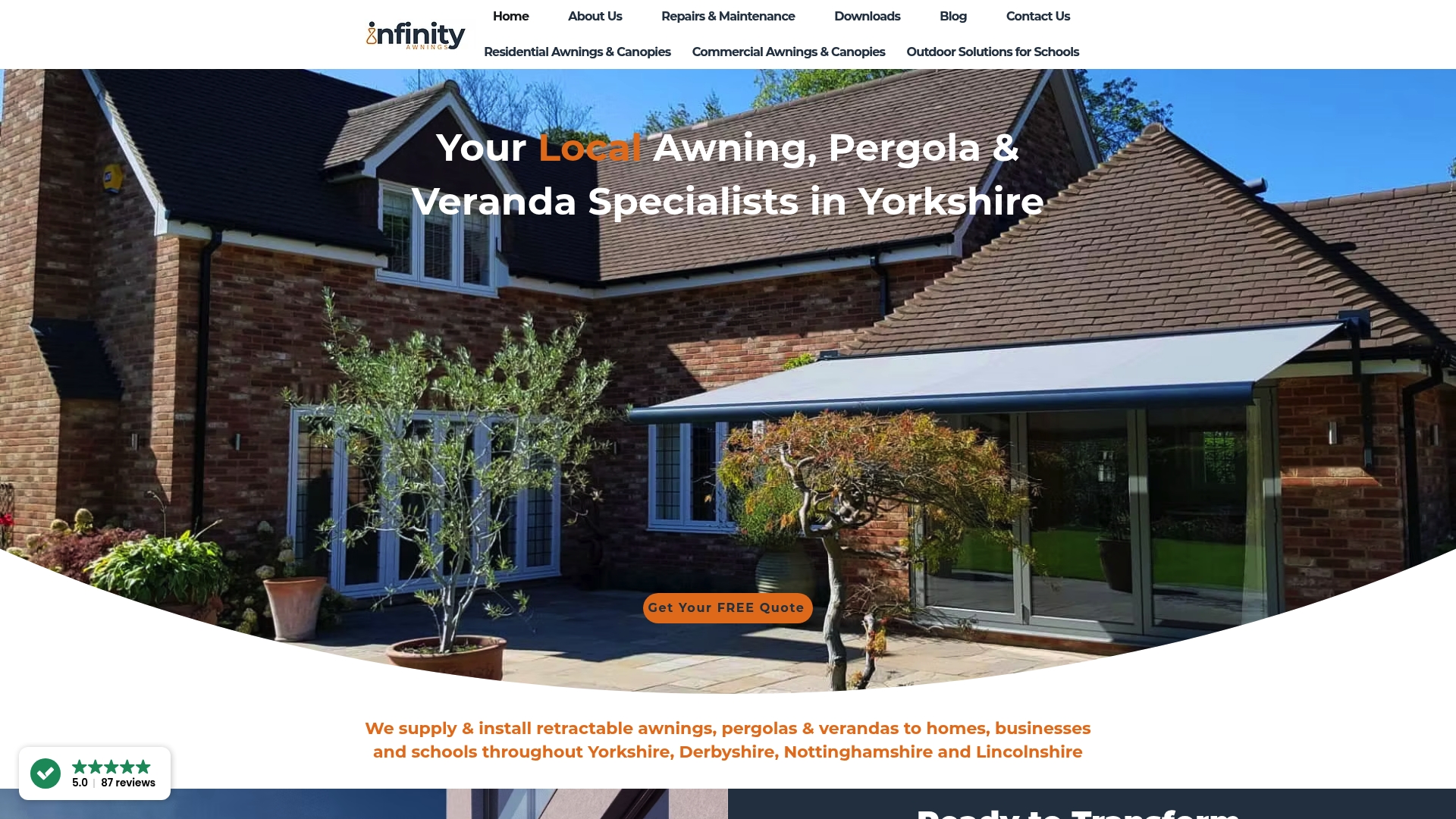
From there you get a written specification and an installation timetable, with warranty terms confirmed up front. Browse retractable awnings or pergolas, or head to our homepage to request a free quote for your patio.
Sources
FAQ
How do you shade a west facing patio?
Combine an adjustable-projection awning or pergola with a western drop or zip screen, since overhead cover alone won’t block low-angle evening sun. Add planting for long-term cooling and use a parasol or sail while the main structure is planned and fitted.
Is a south-west facing garden good for sun exposure?
A south-west facing garden gets sun for much of the day and into the evening, making it one of the sunnier aspects, though the same low-angle evening problem applies as with a due west garden. Side or vertical screening still matters more than overhead shade alone once the sun drops in the late afternoon.
Will a west facing garden get a lot of afternoon sun?
Yes, a west facing garden gets its strongest sun through the afternoon and into the evening, when the Met Office notes conditions can still feel intense even as the sun angle drops. This timing is exactly why side screening matters more here than on other aspects.
How can you block low sun from west facing windows?
External shutters or external blinds are the most effective option, since Approved Document O specifically excludes internal blinds from counting towards overheating compliance. A projecting awning with a drop screen fitted close to the window also cuts low-angle glare before it reaches the glass.
Should you keep windows open or closed during hot afternoons?
Close windows and curtains during the hottest part of the day, then open them in the evening once temperatures drop, as recommended by the Energy Saving Trust. This ventilation pattern works best alongside external shading rather than instead of it.
Recommended
Comments