
The role of pergolas in education: a 2026 guide
- Andrew Crookes

- 2 days ago
- 9 min read
TL;DR:
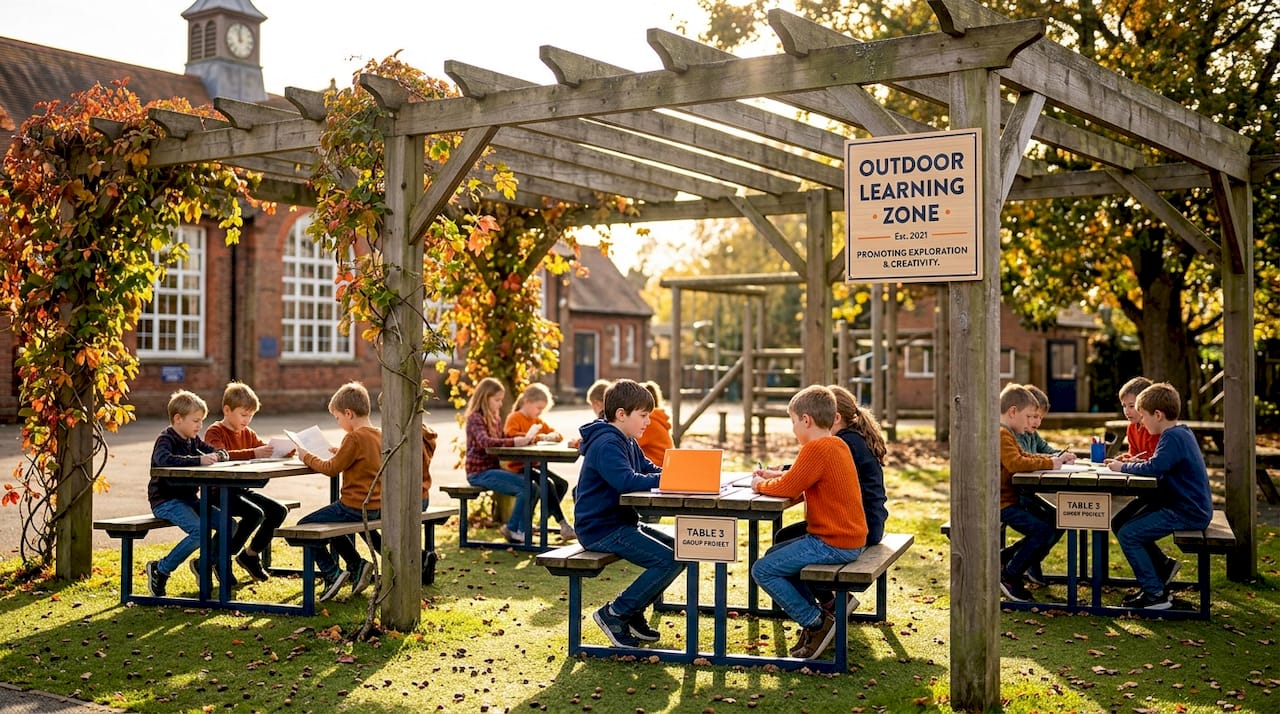
Pergolas enhance outdoor learning by providing shaded, functional spaces that support engagement and focus. They foster environmental comfort, natural integration, and community ownership, making outdoor education sustainable. Embedding pergolas into daily routines and natural elements maximizes their educational and climate benefits.
Pergolas are defined as open-sided, overhead structures that provide partial shade and spatial definition to outdoor areas, and their role in education is to create usable, comfortable learning environments beyond the classroom walls. Schools across Europe and Australia are now treating pergolas not as decorative additions but as functional educational infrastructure. Girona City Council’s 2026 GiroNat programme and Queensland’s early childhood guidelines both place pergolas at the centre of outdoor learning strategy. Institut Vallvera’s student-built shade structure in Catalonia demonstrates that these structures can simultaneously serve as teaching tools, community assets, and climate adaptation measures.
How do pergolas enhance student engagement and outdoor learning experiences?
Pergolas create the physical conditions that make outdoor learning practical rather than aspirational. Without shade, a school courtyard becomes unusable during peak heat hours, which effectively eliminates outdoor teaching as a daily option. A pergola-covered shaded area transforms that same space into a venue for tutoring, group discussion, and calm break-time activity across the full school day.
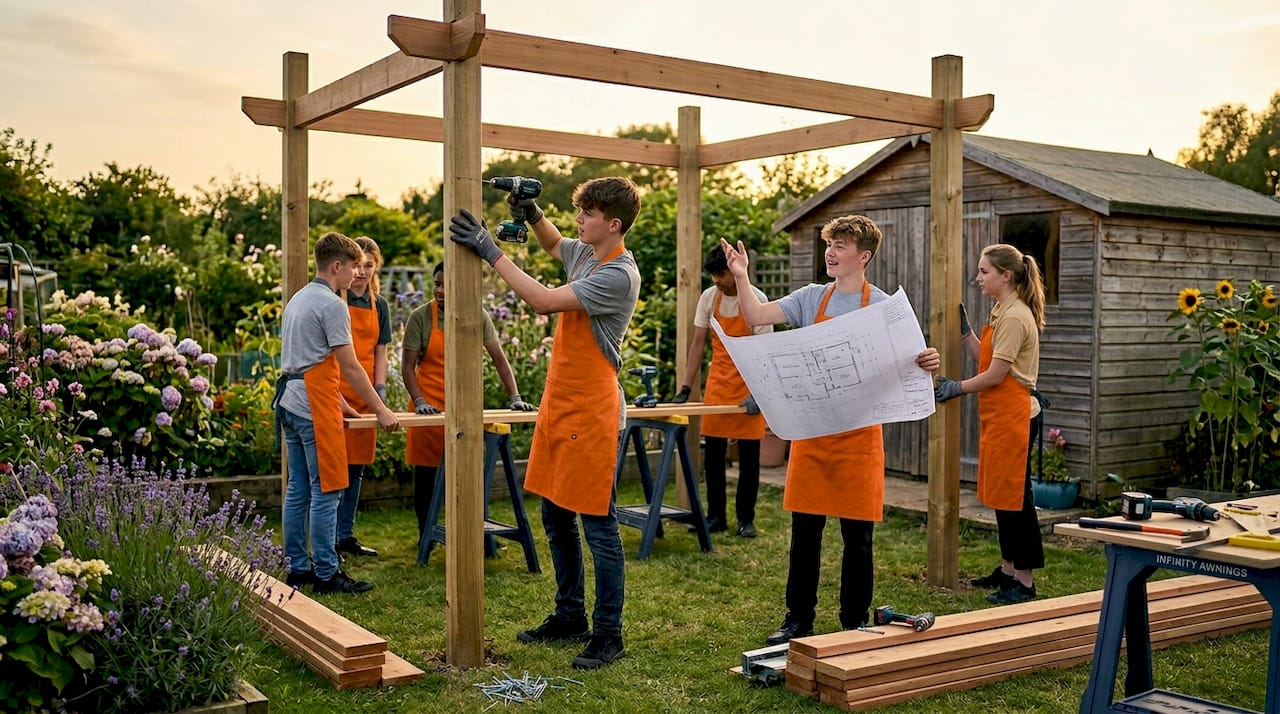
The evidence from Institut Vallvera in 2026 is instructive. Students at the school designed and built a pergola covered with reed panels, which was then used for outdoor tutoring sessions and as a respite space during recess. The structure gave pupils a defined, sheltered zone that felt distinct from the main building, which research consistently links to improved focus and reduced anxiety during unstructured time. Girona officials confirmed that pergolas support free play and emotional development by creating greener, healthier schoolyard environments.
The benefits of pergolas in schools extend beyond physical comfort. Experiential learning, the practice of acquiring knowledge through direct activity, requires spaces that feel purposeful and distinct. A pergola signals to students that outdoor activity is structured and valued, not merely tolerated. That psychological framing matters as much as the shade itself.
Pro Tip: When planning outdoor learning sessions under a pergola, assign specific activities to the space consistently. Students who associate a location with a type of task settle into learning mode faster.
Key benefits educators report from pergola-equipped outdoor spaces include:
Reduced heat stress during outdoor lessons, extending usable hours into midday periods
Defined spatial zones that support supervision and group management
Improved attendance at outdoor activities due to increased comfort
Greater student willingness to engage in unstructured creative and social learning
A tangible connection to nature that supports emotional regulation and wellbeing
What design considerations ensure pergolas effectively support educational goals?
Pergola design for educational spaces must prioritise function over form. A structure that looks attractive but fails to provide adequate shade, accommodate supervision sightlines, or withstand daily use by hundreds of pupils will quickly become a liability rather than an asset.
The most effective school pergolas integrate natural elements alongside the structure itself. Girona’s GiroNat project combined pergolas with vegetation and drip irrigation to manage thermal comfort beyond what shade alone can achieve. Climbing plants on pergola frames reduce radiant heat, improve air quality, and introduce biodiversity into the schoolyard. This approach, sometimes described as ecosystem-based adaptation, treats the pergola as a framework for a living system rather than a standalone object.
Participatory design produces measurably better outcomes in school settings. When teachers and students contribute to the specification process, the resulting structure reflects actual patterns of use. Institut Vallvera’s student-involved design process produced a pergola that met real needs because the users themselves identified those needs. Administrators who commission structures without consulting staff often find them underused.
Practical design features worth specifying for educational outdoor structures include:
Seating integration: Fixed benches or ledges within the pergola footprint prevent furniture from being moved away and disrupting the learning zone
Supervision visibility: Open sides and a maximum height of around 2.4 metres allow staff to monitor activity from multiple angles
Durable materials: Pressure-treated timber or powder-coated aluminium withstands daily contact and outdoor conditions across Yorkshire and Derbyshire winters
Modular adaptability: Structures that accept add-ons such as retractable canopies or side screens extend usability into cooler or wetter months
Accessible surfaces: Level, non-slip flooring beneath the pergola meets inclusion requirements and supports wheelchair access
How do pergolas compare with other outdoor shading solutions in schools?
Shade is an operational necessity in outdoor learning settings, not a luxury. Queensland’s 2026 early childhood guidance mandates at least 7m² of usable outdoor space per child, with shaded areas counting towards that requirement only when they meet safety and usability standards. That regulatory context makes the choice of shading structure a decision with direct compliance implications.
The table below compares pergolas with the most common alternatives schools consider.
Feature | Pergola | Shade sail | Retractable awning |
Durability | High (10 to 25 years) | Moderate (5 to 10 years) | High with maintenance |
Aesthetic integration | Excellent | Moderate | Good |
Flexibility of use | High (fixed structure, adaptable add-ons) | Low (fixed position) | Very high (retractable) |
Vegetation integration | Excellent | Poor | Poor |
Maintenance demand | Low to moderate | Moderate (cleaning, re-tensioning) | Moderate (mechanism servicing) |
Upfront cost | Higher | Lower | Moderate to higher |
Planning considerations | May require permission | Usually permitted development | Usually permitted development |
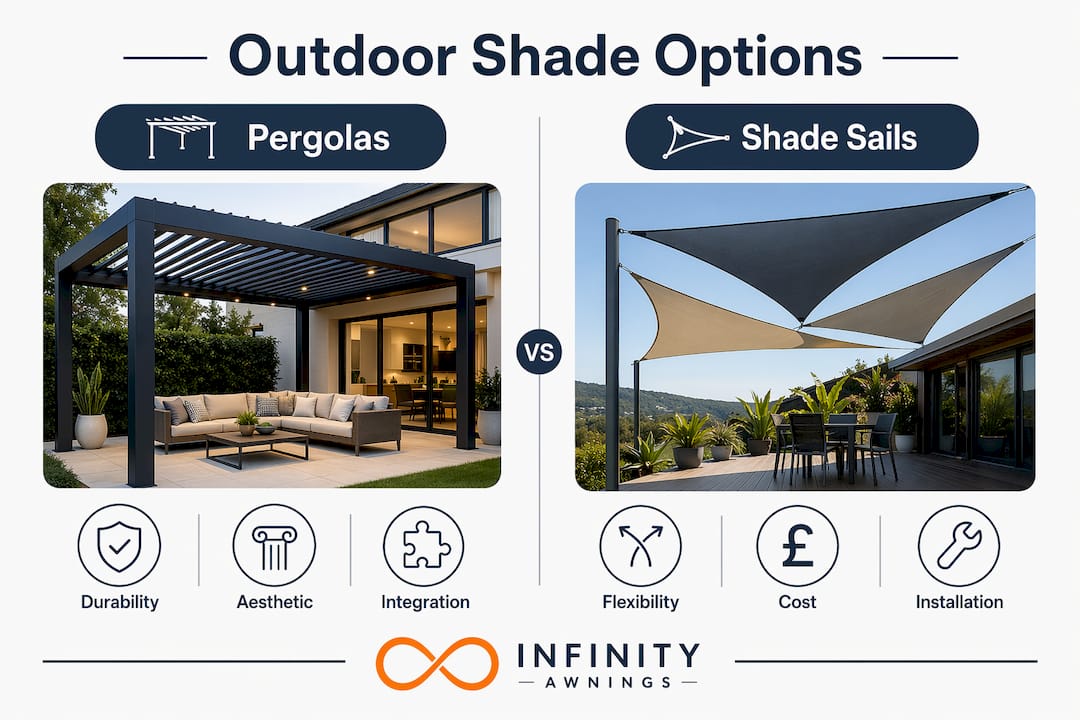
Comparative analyses of shading structures consistently show that pergolas offer greater longevity and integration potential than shade sails or temporary umbrellas. The trade-off is upfront cost and, in some cases, planning permission. For schools making a long-term investment in outdoor learning infrastructure, the durability argument is strong.
Retractable awnings offer the greatest operational flexibility and suit schools that need to switch between covered and open-sky conditions rapidly. Shade sails are cost-effective for covering large areas quickly but degrade faster and offer no scope for vegetation integration. The right choice depends on the school’s climate, budget cycle, and pedagogical priorities.
Pro Tip: Before specifying any shading structure, map your courtyard’s solar path across the school day. A pergola positioned without that analysis may cast shade in the wrong place at the wrong time.
Practical applications: how pergolas are transforming school outdoor spaces
The most compelling evidence for the educational value of pergolas comes from documented projects rather than theory. Two 2026 examples from Spain illustrate what is achievable when schools treat outdoor structures as pedagogical infrastructure.
Girona City Council’s GiroNat programme installed three wooden pergolas across two educational centres as part of a broader renaturalisation effort replacing concrete with vegetation and shade. The project addressed the urban heat island effect directly, reducing surface temperatures in school courtyards and extending the hours during which outdoor activity was safe and comfortable. The pergolas were not installed in isolation. They formed part of an integrated system including climbing plants, drip irrigation, and play infrastructure.
Institut Vallvera took a different but equally instructive approach. Rather than commissioning a contractor, the school involved students in the physical construction of a reed-panel pergola. The active involvement of students in design and construction promoted ownership, practical skills, and community cohesion. The finished structure was used for tutoring sessions and as a calm recess space, demonstrating that a pergola built with educational intent functions differently from one installed purely for shade.
Project | Location | Key feature | Outcome |
GiroNat programme | Girona, Spain | Three wooden pergolas with vegetation | Reduced heat, extended outdoor use |
Institut Vallvera | Catalonia, Spain | Student-built reed-panel pergola | Tutoring space, community ownership |
Queensland guidance | Australia | Mandated shaded outdoor space | Compliance framework for schools |
The pattern across these examples is consistent. Pergolas deliver the greatest educational return when they are designed with specific learning outcomes in mind, integrated with natural elements, and embedded in the school’s daily routine rather than left as passive infrastructure.
How can schools integrate pergolas into their outdoor learning strategy?
Integrating a pergola into a school’s outdoor learning strategy requires more than procurement. The structure must be embedded in timetabling, supervision planning, and curriculum design to function as an active learning space rather than a covered seating area.
A practical integration process follows these steps:
Assess your outdoor space. Map current usage patterns, identify underused areas, and note where heat or weather currently prevents outdoor activity. This baseline informs both placement and sizing decisions.
Consult stakeholders. Involve teachers, support staff, and where appropriate, students in specifying requirements. Participatory design produces structures that reflect real use patterns.
Explore funding routes. European urban greening funds, local authority sustainability grants, and school capital budgets have all supported pergola projects in 2026. The GiroNat programme in Girona was municipally funded as part of a climate adaptation strategy.
Commission a site survey. A professional installer will assess ground conditions, solar orientation, and planning requirements before specifying materials and dimensions. Infinityawnings provides this service for educational clients across Yorkshire, Derbyshire, Nottinghamshire, and Lincolnshire.
Operationalise the space. Assign the pergola to specific activities in the timetable. Outdoor reading groups, science observation sessions, and pastoral support conversations all benefit from a defined, sheltered outdoor zone.
Plan maintenance. Timber structures require annual treatment. Aluminium frames need periodic inspection of fixings. Build maintenance into the facilities budget from the outset.
Pro Tip: Treat your pergola as a classroom, not a shelter. Assign it a name, put it on the timetable, and equip it with the same resources you would provide indoors. That shift in framing changes how staff and students use it.
Key takeaways
Pergolas deliver their greatest educational value when they are designed with specific learning outcomes in mind, integrated with natural elements, and embedded in daily school operations rather than treated as passive shade structures.
Point | Details |
Shade enables daily outdoor learning | Without reliable shade, outdoor teaching is limited to cooler hours, reducing its practical value. |
Participatory design improves outcomes | Involving teachers and students in specification produces structures that reflect actual use patterns. |
Pergolas outperform alternatives long-term | Greater durability and vegetation integration make pergolas the stronger investment over shade sails or umbrellas. |
Integration with nature amplifies benefits | Combining pergolas with climbing plants and irrigation delivers thermal comfort beyond shade alone. |
Operational embedding is non-negotiable | A pergola assigned to specific timetabled activities functions as a classroom; one left unassigned does not. |
Why I think schools are still underestimating what a pergola can do
I have worked with educational clients long enough to recognise a pattern. A school installs a pergola, students use it enthusiastically for a term, and then it quietly becomes the place where bins are stored. That outcome is not a failure of the structure. It is a failure of integration.
The schools that get genuine educational value from outdoor structures are the ones that treat them with the same intentionality they apply to indoor spaces. They put the pergola on the timetable. They equip it. They assign a member of staff to champion it. The Institut Vallvera approach, where students built the structure themselves, is the most powerful version of this principle because ownership is established before the first lesson takes place.
What I find genuinely encouraging about the 2026 projects in Girona and Catalonia is that they treat pergolas as climate infrastructure, not just amenities. That framing matters for funding conversations. A pergola positioned as a response to urban heat and a tool for climate education is a much easier case to make to governors and local authorities than one described as a nice addition to the courtyard.
The challenge for UK schools, particularly those in Yorkshire and the East Midlands, is that the climate argument feels less urgent than it does in southern Europe. That is a mistake. Summers are getting hotter, and the schools that invest in outdoor learning infrastructure now will be better placed to use their grounds productively as conditions change. The versatile roles of pergolas in outdoor environments extend well beyond shade, and schools that recognise this early will have a genuine advantage.
— Andrew
Enhance your school’s outdoor learning spaces with Infinityawnings

Infinityawnings designs and installs high-quality pergolas for educational institutions across Yorkshire, Derbyshire, Nottinghamshire, and Lincolnshire. With over 15 years of experience supplying structures from premium brands including Weinor, Tarasola, and Morvelle, the team understands the specific requirements of school environments. From initial site survey through to professional installation, every project is tailored to the school’s layout, climate, and learning objectives. Whether you need a single shaded tutoring zone or a series of outdoor classroom structures, Infinityawnings can specify and install a solution that meets both your pedagogical goals and your budget. Explore the full range of school pergola options or contact the team for a free, no-obligation quote.
FAQ
What is the role of pergolas in education?
Pergolas provide shaded, defined outdoor spaces that make daily outdoor learning practical and comfortable. They support tutoring, group work, free play, and emotional development by extending the usable hours and functions of school courtyards.
How do pergolas support student wellbeing in schools?
Shaded outdoor spaces reduce heat stress and provide calm break areas that support emotional regulation. Girona officials confirmed that pergolas contribute to healthier, greener schoolyard environments that benefit both free play and structured learning.
What regulations apply to outdoor shading in schools?
Queensland’s 2026 early childhood guidance requires at least 7m² of usable outdoor space per child, with shaded areas such as pergolas counting towards that figure when they meet safety and usability standards. UK schools should consult local authority guidance and planning requirements before installation.
Are pergolas better than shade sails for schools?
Pergolas offer greater durability, better vegetation integration, and stronger long-term value than shade sails, though they carry a higher upfront cost. For schools making a sustained investment in outdoor learning infrastructure, the longevity and adaptability of a pergola make it the stronger choice.
How can schools fund a pergola installation?
European urban greening funds, local authority sustainability grants, and school capital budgets have all supported pergola projects in 2026. Framing the installation as climate adaptation infrastructure, as Girona did with GiroNat, strengthens the case for external funding.
Recommended
Comments