
What Is a Retractable Awning and Why It Matters

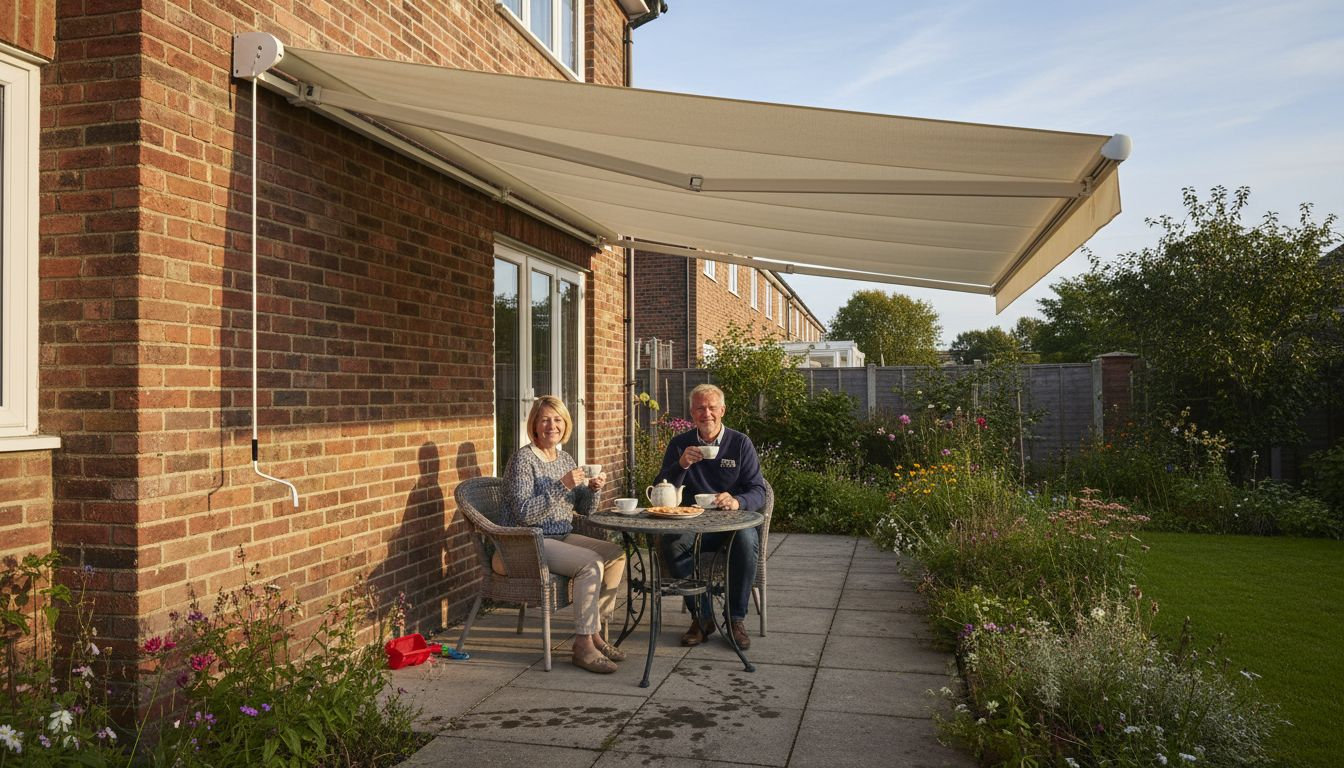
Sunshine brings Yorkshire patios to life, but too much exposure quickly turns comfort into inconvenience. Homeowners across Yorkshire want to enjoy their outdoor spaces without sacrificing shade, style, or their home’s character. A well-chosen retractable awning offers you flexible protection from changing weather, increased property value, and a customisable look that blends seamlessly with your surroundings. Discover how modern retractable awnings create inviting patios and challenge myths about durability, cost, and functionality.
Table of Contents
Key Takeaways
Point | Details |
Retractable Awnings Offer Flexibility | They provide adjustable shade, allowing homeowners to manage sunlight and improve energy efficiency throughout the year. |
Quality and Durability Matter | Selecting awnings from reputable manufacturers ensures longevity, with systems lasting 10 to 20 years when properly maintained. |
Professional Installation is Crucial | Engaging experienced installers guarantees compliance with regulations and optimises functionality, protecting your investment. |
Understand Planning Regulations | Most residential retractable awnings do not require planning permission, but checking local regulations is essential, especially for listed properties. |
Defining Retractable Awnings and Common Myths
A retractable awning is a secondary covering attached to the exterior walls of buildings, typically made from fabric materials stretched over a frame that extends or retracts as needed. Unlike fixed awnings that permanently shade a specific area, retractable models give you complete control. You can deploy them during sunny days or rainy spells and retract them entirely when you want unobstructed views or during harsh weather. Modern systems operate either manually using hand cranks or through motorised mechanisms controlled by a button or remote control. The mechanics are straightforward: a roller mechanism stores the fabric neatly when closed, and an aluminium or steel frame extends outward to create your shaded zone. What makes them particularly valuable for Yorkshire homeowners is their flexibility. You get the benefits of a permanent shade structure without the visual bulk when it’s not in use, which matters if you’re working with a modest patio or want to preserve your property’s architectural character.
Now here’s where misconceptions often creep in. Many people believe retractable awnings are fragile, flimsy contraptions that won’t survive British weather. Not accurate. Modern engineering has addressed these concerns substantially. Contemporary awning designs incorporate wind sensors and reinforced compression joints that automatically retract the fabric during strong winds, protecting both the mechanism and your investment. Quality retractable awnings from reputable manufacturers can withstand standard UK weather conditions when properly maintained. Another persistent myth suggests they’re temporary solutions that won’t last more than a few years. The reality is that retractable awnings have evolved into sophisticated, durable systems with proper maintenance and quality materials capable of functioning reliably for 10 to 20 years or longer. Families across Yorkshire have had their retractable awnings performing without major issues for over a decade. They’re not permanent installations like brick or mortar, but they’re certainly not throwaway structures either.
Another common misconception centres on cost and complexity. Some assume retractable awnings demand expensive specialist installation or are overly complicated to operate. The installation process is straightforward when handled by experienced installers, and daily operation couldn’t be simpler. A quick button press or crank handle is all you need. Regarding energy efficiency, there’s often scepticism about whether shade structures actually reduce cooling costs. The evidence suggests otherwise. Retractable awnings effectively block solar heat before it reaches your windows and doors, reducing the workload on air conditioning systems and lowering energy bills during warm months. For Yorkshire homeowners, this translates to measurable savings, especially during spring and summer when you’re most likely to use them. Understanding what retractable awnings actually are and debunking these myths helps you see them for what they genuinely offer: a practical, stylish solution for managing sunlight and weather on your terms.
Pro tip: When evaluating retractable awnings, ask potential installers about wind resistance ratings and the specific materials used in their frames and fabrics, as these factors directly influence durability and performance in your local Yorkshire climate.
Types of Retractable Awnings and Key Distinctions
Retractable awnings come in two main operational categories: manually operated and motorised. Manual awnings use a hand crank mechanism that you physically turn to extend or retract the fabric, making them straightforward to use and generally more affordable. They’re reliable workhorses that require no electrical connection, which means no batteries to replace or motors to maintain. Motorised awnings, by contrast, operate at the push of a button or via remote control, offering genuine convenience particularly if you have a large awning or simply prefer hands-free operation. The choice between manual and motorised often comes down to budget, frequency of use, and personal preference. Many Yorkshire homeowners appreciate manual systems for smaller patios where extending the awning is quick work, whilst others invest in motorised versions for larger installations or when they plan to adjust shading multiple times throughout the day.
Beyond operation type, awnings differ significantly in their structural design and materials. Frame materials typically include aluminium or steel, each with distinct advantages. Aluminium frames are lightweight, rust-resistant, and require minimal maintenance, making them popular for residential installations. Steel frames offer superior strength and longevity, particularly valuable in exposed or windy locations common across Yorkshire. The fabric covering ranges from traditional canvas to modern synthetic textiles engineered for durability, UV resistance, and weather protection. Design styles also vary considerably. Shed-style awnings feature a simple angled design perfect for straightforward installations, whilst arched or curved designs add architectural interest and shed water more effectively during rain. Motorised versions sometimes include integrated LED lighting or heating elements, transforming your patio into a genuinely usable outdoor room throughout different seasons. Some premium systems incorporate wind sensors that automatically retract when gusts exceed safe thresholds, protecting your investment during unpredictable British weather.
The specific distinctions matter when you’re deciding which type suits your situation. A small east-facing patio with limited space might benefit from a compact manual awning in a neutral colour that maintains your property’s aesthetic. A sprawling garden or commercial outdoor space might warrant the convenience and capability of a motorised system with additional features. Modern retractable awnings vary by design to accommodate different building architectures, meaning there’s genuine flexibility in matching an awning to your home’s character rather than compromising your vision. Lateral arm systems provide support without requiring vertical posts, keeping sightlines clear and maximising usable space underneath. Vertical support designs work better for certain structural situations or when you want additional stability. Fabric choices extend beyond basic colours too. Contemporary awnings come in patterned options, stripes, solids, and even custom designs that complement your garden’s colour scheme or your home’s exterior finish. Understanding these distinctions helps you move beyond simply buying “an awning” and instead selecting a system genuinely tailored to your Yorkshire home, climate, and how you actually use your outdoor space.
Pro tip: If you’re comparing manual versus motorised options, request a demonstration of both systems to experience the effort difference firsthand, then honestly assess whether you’ll actually use the adjustment feature regularly enough to justify the motorised investment.
Here is a quick guide to distinguishing between main types of retractable awnings:
Type | Operation Method | Typical Advantages | Ideal Use Case |
Manual | Crank handle | Lower cost, no wiring required | Small patios or infrequent adjustment |
Motorised | Button or remote control | Greater convenience, seamless operation | Large installations or frequent use |
How Retractable Awnings Function and Main Features
Retractable awnings operate through a deceptively simple mechanical system that proves remarkably reliable once you understand it. The core mechanism involves lateral arms that extend outward from the mounting brackets attached to your building, paired with a roller system that stores and deploys the fabric. When you turn a manual crank or press a motorised button, these lateral arms slide smoothly outward, and simultaneously the fabric unrolls from the roller mechanism above. The fabric stretches taut across the extended frame, creating your shaded area. When you reverse the process, the arms retract and the fabric rolls back onto the cylinder, neatly storing everything flush against your wall. This straightforward design means there are fewer moving parts to fail compared to more complex shading systems. The beauty lies in the engineering precision required to make those movements smooth and reliable season after season, which is why quality manufacturing matters significantly. Retractable awnings function by rolling the fabric on a frame mounted to the building, with the entire apparatus designed to withstand your local weather patterns.
The main features that distinguish quality retractable awnings focus on comfort, durability, and practical usability. Adjustable pitch allows you to change the angle of the awning as the sun moves throughout the day, maximising shade coverage when you need it most without requiring full extension. This means on a cool spring morning, you might deploy just 30 percent of the fabric for gentle shade, then extend fully by midday. Lateral arm and roller systems extend or retract the fabric covering through manual or motorized control, providing either the simplicity of hand operation or the convenience of electric control. Weather protection emerges as a genuinely important feature. Quality fabrics block ultraviolet radiation effectively, protecting your skin and preventing furniture fading. They also shed water during light rain, though retractable awnings aren’t designed to stay deployed during heavy downpours or storms. Speaking of storms, modern systems include wind sensors that automatically detect dangerous gusts and retract the awning before damage occurs. This safety feature proves invaluable during unpredictable Yorkshire weather, providing peace of mind when you’re away from home or forget to manually retract before conditions deteriorate. The frame itself, whether aluminium or steel, incorporates reinforced joints and compression mechanisms that allow the entire structure to withstand specified wind loads without deforming.
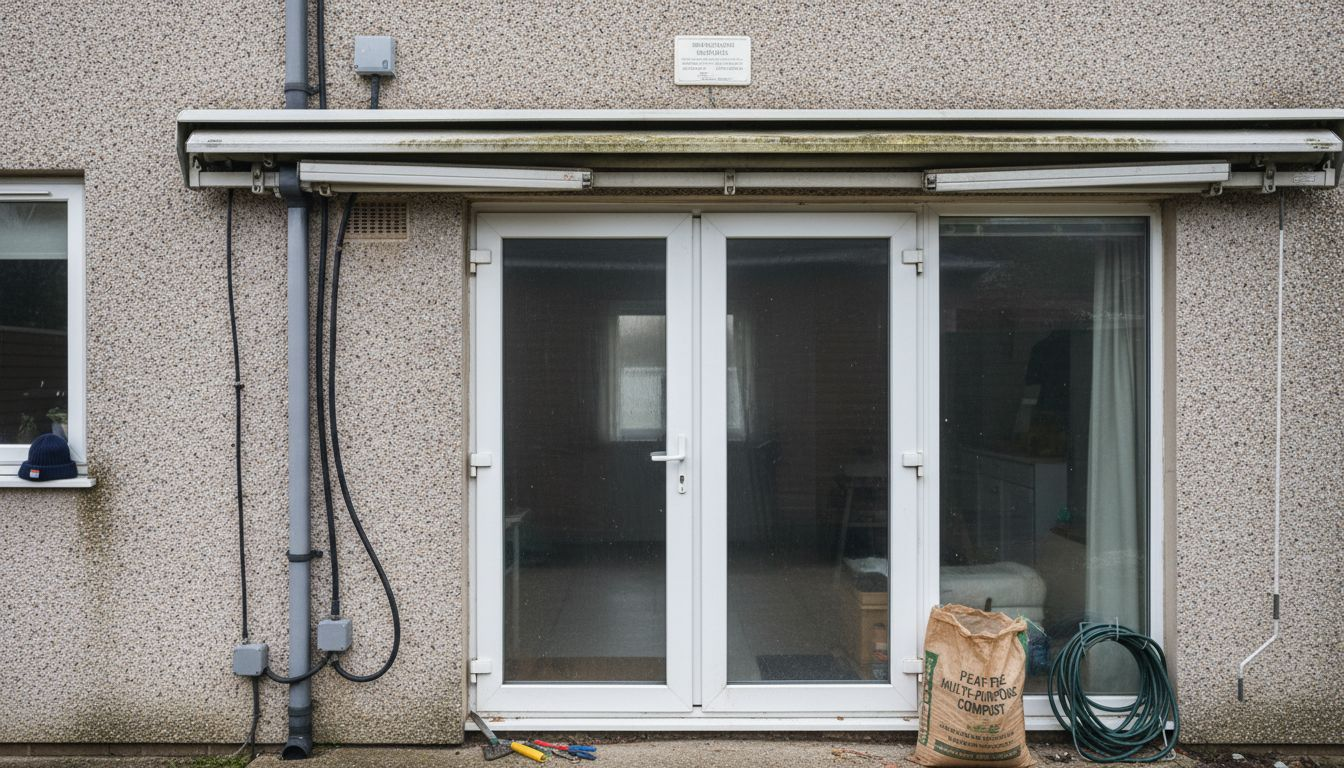
Additional features transform modern retractable awnings into genuinely versatile outdoor solutions. Integrated LED lighting built into the frame edges extends your patio usability into evenings, creating atmospheric outdoor dining and entertaining spaces. Some premium systems include heating elements that provide warmth during cooler months, essentially giving you a usable outdoor room from spring through autumn. Motorised versions often allow remote control operation, meaning you can adjust your shading from inside your home or whilst entertaining guests without interrupting conversation. Fabric choices matter too. Contemporary awnings use solution-dyed acrylic textiles engineered for superior UV resistance and water repellency compared to traditional canvas, meaning your colours remain vibrant for years and maintenance stays minimal. The frame finishing also contributes to longevity. Powder-coated aluminium or galvanised steel resists rust and corrosion far better than untreated metals, particularly important in areas with salt air or high humidity. Understanding these features helps you appreciate why investing in quality makes genuine sense. You’re not just buying fabric stretched over a frame. You’re acquiring a precision mechanism designed to deliver reliable shade and weather protection, with safety features built in and maintenance requirements kept low.
Pro tip: When a retailer demonstrates an awning, specifically ask them to show how the wind sensor operates and request clarity on what wind speed triggers automatic retraction, as this varies between models and directly impacts protection during Yorkshire storms.
Planning, Regulations and Installation in the UK
Before you order a retractable awning, understanding UK planning regulations saves frustration and protects your investment. The good news for most Yorkshire homeowners is straightforward: most residential retractable awnings do not require planning permission. This applies particularly to standard installations on domestic properties that don’t materially alter your building’s appearance or affect neighbouring properties. However, exceptions exist and knowing them matters. If your property is listed, located within a conservation area, or if your awning is unusually large and prominently visible from the street, you may need to check with your local council. Similarly, if the awning extends significantly onto shared land or encroaches towards a neighbour’s property line, obtaining prior approval protects you from future disputes. Planning permission regulations in the UK mainly apply if retractable awnings materially alter a building’s exterior, so understanding what counts as material change is crucial. Your local authority planning department can provide specific guidance for your postcode and property type. A quick phone call or email with basic details about your proposed installation typically receives a response within days, giving you certainty before committing financially.
Building regulations represent a separate consideration from planning permission, and they apply to virtually all retractable awning installations. Building regulations ensure structural safety and electrical compliance, protecting you and your property. For motorised awnings, electrical safety becomes particularly important. The wiring must comply with current UK electrical standards, incorporating proper grounding, circuit protection, and weatherproofing. The structural supports must be adequate for wind loads and the weight of the awning system itself. Installation must account for your specific wall construction, whether it’s brick, stone, timber, or rendered surfaces. Poor installation can damage your building fabric, void warranties, and create genuine safety hazards. This is why professional installation genuinely matters rather than representing an unnecessary cost. Qualified installers understand building regulation requirements in your area, know how to mount systems securely to different wall types, and can verify their work meets compliance standards. Local authority building control departments can advise on specific requirements for your installation, and many offer inspection services to confirm compliance once the awning is installed. The cost of professional installation proves substantially cheaper than remedial work or dealing with structural problems later.
Professional installation brings genuine value beyond meeting regulations. Experienced installers assess your specific situation comprehensively. They evaluate wall condition, identify potential structural issues, determine optimal positioning for your climate and sun angles, and ensure all mechanical and electrical components function perfectly before handing over the system. They handle complex aspects like running electrical cables safely through walls for motorised systems, ensuring proper drainage so water doesn’t pool behind the awning, and positioning brackets to avoid hidden services like pipes or cables. They also provide crucial aftercare guidance on maintenance, seasonal care, and operation in various weather conditions. Attempting DIY installation risks damaging your property, creating safety hazards, and voiding manufacturer warranties. Many awning manufacturers require professional installation to honour their guarantees. The investment in quality installation protects your purchase, ensures your system performs reliably for years, and gives you peace of mind knowing the work meets all relevant safety standards. When you’re ready to proceed, obtaining quotes from installers with proven local experience helps ensure you receive appropriate guidance and quality workmanship specific to Yorkshire properties and weather conditions.
Pro tip: Contact your local council’s building control department before ordering your awning to confirm specific structural and electrical requirements for your property type and location, potentially saving costly modifications later.
Benefits, Costs and Comparison with Fixed Solutions
Retractable awnings deliver genuine advantages that fixed awnings simply cannot match, though understanding the trade-offs helps you make the right choice for your specific situation. The primary benefit centres on flexibility and control. You extend shade exactly when you need it, whether that’s blocking intense afternoon sun in July or allowing winter sunlight to warm your patio in February. This adaptability means your outdoor space functions year-round rather than being permanently shaded or fully exposed. Beyond comfort, this flexibility translates directly to energy savings. Retractable awnings offer adjustable shading by blocking sunlight on demand and retracting when not needed, allowing you to reduce cooling costs substantially during warm months. Studies show well-positioned awnings can reduce solar heat gain through windows by 65 to 77 percent, meaning your air conditioning works less hard and your bills drop accordingly. In Yorkshire’s variable climate, this translates to measurable savings, particularly during spring and summer. Your outdoor furniture and window treatments also benefit from selective rather than constant UV exposure, extending their lifespan and maintaining colours better. Fixed awnings provide none of this control. They shade permanently, regardless of season or time of day, which can feel oppressive during grey Yorkshire winters when you actually want available daylight.
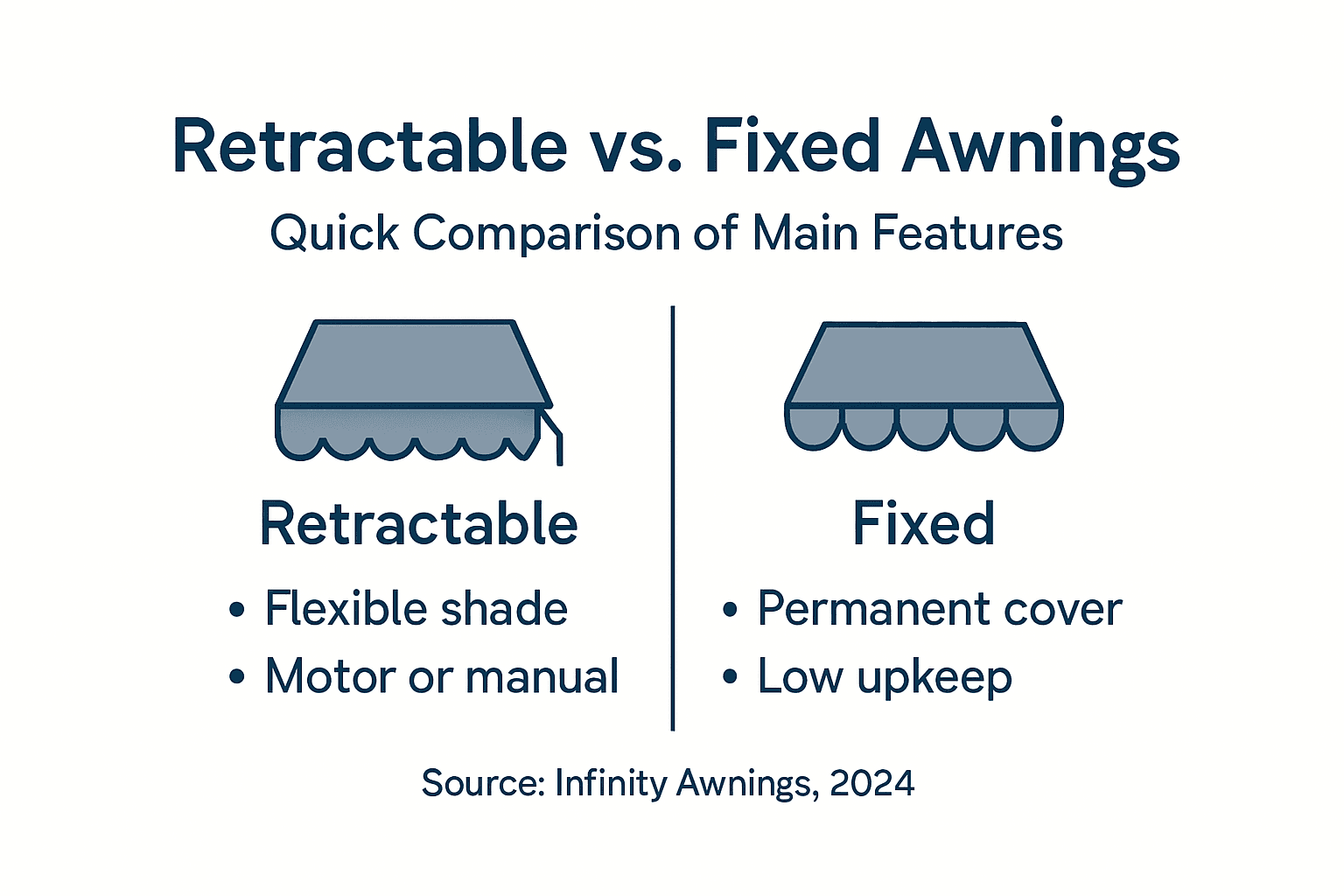
The cost difference between retractable and fixed awnings reflects their complexity and capability. Fixed awnings cost less upfront, typically 40 to 50 percent less than comparable retractable systems. They’re simpler to manufacture and install, requiring no mechanical components, motors, or sophisticated control systems. However, this lower initial cost tells only part of the story. Retractable awnings may have higher initial costs due to mechanisation and installation but can reduce cooling costs and prolong outdoor furniture lifespan, meaning the investment recovers over time through energy savings and reduced replacement costs for protected items. Consider a typical scenario: a fixed awning costs £2,500 installed whilst a comparable retractable system costs £4,200. The retractable system saves approximately £150 annually in cooling costs, recovering the £1,700 difference within roughly 11 years. Beyond that, you’re benefiting from energy savings indefinitely, plus the flexibility value of controlling your outdoor environment. Fixed awnings face constant weather exposure, meaning fabrics degrade faster and may require replacement every 8 to 10 years. Retractable awnings, deployed selectively and retracted during harsh weather, often last 12 to 15 years before fabric replacement becomes necessary. Life expectancy varies significantly with materials and maintenance, but this durability difference favours retractable systems when you calculate total cost of ownership across two decades.
Fixed awnings suit specific situations despite their limitations. If you have a covered walkway or retail storefront requiring permanent weather protection, or if budget constraints make initial cost the overwhelming priority, fixed awnings make sense. They’re lower maintenance and face no mechanical failure risks. However, for residential patios where flexibility matters and you want to enjoy seasonal variation, retractable systems prove superior. They preserve your view during winter months, allow you to close them during storms rather than exposing them constantly to wind and rain, and let you adjust shade coverage throughout the day. The comparison table below summarises key differences:
Factor | Retractable Awnings | Fixed Awnings |
Initial Cost | Higher (£3,500–6,000+) | Lower (£2,000–3,500) |
Energy Savings | Substantial | Minimal |
Flexibility | Complete | None |
Weather Exposure | Reduced (retracted in storms) | Constant |
Fabric Lifespan | 12–15 years | 8–10 years |
Maintenance | Moderate (moving parts) | Minimal |
Aesthetic Control | Variable (can retract) | Fixed appearance |
Total 20-Year Cost | Often lower | Often higher |
For Yorkshire homeowners prioritising comfort, energy efficiency, and maintaining control over their outdoor environment, retractable awnings represent the superior long-term investment despite higher upfront costs. You’re not just purchasing shade. You’re acquiring adaptability that enhances your property’s usability and reduces operational costs across years of ownership.
Pro tip: When comparing costs, obtain total-cost-of-ownership quotes from installers that include energy savings projections, fabric replacement intervals, and maintenance costs across 15 to 20 years rather than focusing purely on initial purchase price.
Common Pitfalls When Choosing or Installing
Making mistakes when selecting or installing a retractable awning can undermine performance, void warranties, and waste money. Understanding common pitfalls helps you avoid frustration. The first significant mistake occurs during the selection phase when homeowners underestimate sizing requirements. Many people choose awnings that are too small, thinking they’ll save money or avoid visual prominence. This backfires. An undersized awning leaves portions of your patio unshaded, defeats the purpose of having the installation, and fails to deliver the energy savings you anticipated. Conversely, oversizing without considering your wall structure can create mounting challenges and structural strain. Proper sizing requires measuring your specific patio dimensions, understanding sun angles throughout the day, and considering how your building’s architecture influences where you can mount the system. Poor fit and inadequate structural support result from failure to comply with building codes and incorrect sizing in relation to building features, which impairs function and creates safety concerns. Another selection error involves ignoring local weather conditions when choosing materials. Yorkshire’s wet climate demands fabrics with superior water resistance and frames engineered to withstand repeated moisture exposure. Selecting budget materials designed for drier climates virtually guarantees premature deterioration and costly replacement.
Installation pitfalls cause problems ranging from minor annoyances to serious safety issues. Improper mounting height ranks among the most common mistakes. Installing your awning too high means you’re standing outside during extension and retraction, genuinely uncomfortable when adjusting it dozens of times seasonally. Too low, and the fabric hangs in your way. The correct height, typically around 2.1 to 2.4 metres above ground level, allows comfortable operation and adequate clearance. Improper mounting height affects usability, and failing to verify all supplied parts before installation prevents successful completion, so thorough pre-installation checks matter enormously. Neglecting to read the entire installation manual seems obvious, yet installers often skip steps, creating functionality problems later. Incorrect pitch adjustment reduces shade effectiveness and prevents water from shedding properly, causing pooling that accelerates fabric deterioration. For motorised systems, electrical safety represents a critical concern. Improper wiring, inadequate grounding, or failing to use weatherproof connections creates genuine hazards including electrical shock and fire risks. This isn’t an area for compromise or DIY shortcuts.
Drainage and water management emerge as practical problems that damage buildings when overlooked. Choosing or installing retractable awnings improperly can result in inadequate drainage or water pooling, which compromises building integrity. When an awning is deployed, water running off the fabric must have somewhere to go. Without proper slope and drainage provisions, water pools behind the awning where it contacts your wall, eventually causing damp, rot, and structural damage. Experienced installers angle the mounting brackets so water runs away from your building and position the system to allow airflow beneath, preventing moisture accumulation. Material handling during unpacking and installation represents another overlooked pitfall. Retractable awning fabrics are surprisingly delicate despite their durability in use. Dragging the rolled fabric across rough surfaces, dropping components, or handling them incorrectly during unpacking can cause tears or damage that compromises waterproofing. Professional installers understand how to handle components safely and verify nothing is damaged before beginning work. Finally, many homeowners neglect maintenance guidance provided by manufacturers. Following seasonal care recommendations, cleaning fabrics periodically, and lubricating moving parts extends lifespan substantially. Ignoring maintenance needs allows small problems to become major failures requiring expensive repairs or replacement.
The common thread connecting these pitfalls is rushing the decision or installation process. Quality awning selection requires thoughtful measurement, material evaluation against local conditions, and honest assessment of your wall structure. Professional installation addresses mounting height, electrical safety, structural adequacy, and drainage properly because installers have seen what goes wrong. Purchasing the cheapest option or attempting DIY installation to save money typically costs more ultimately through repairs, reduced lifespan, warranty voidance, or safety concerns.
Pro tip: Before installation, request that your installer provide a detailed site assessment report documenting mounting height, pitch angle, drainage routing, electrical specifications for motorised systems, and compliance verification so you have documentation for future maintenance or insurance purposes.
Consider these common installation pitfalls and how to avoid them:
Pitfall | Possible Consequence | How to Avoid |
Undersized awning | Inadequate shade coverage | Measure patio and sun angles carefully |
Improper mounting height | Difficult operation, poor clearance | Install 2.1–2.4 metres above ground |
Wrong fabric choice | Premature wear or fading | Choose UV- and water-resistant material |
Poor drainage planning | Damp, rot, or wall damage | Ensure runoff is directed away from building |
Skipped professional installer | Safety risk, voided warranty | Hire qualified local professionals |
Discover the Perfect Retractable Awning for Your Yorkshire Home or Business
If you have been exploring what a retractable awning is and why it truly matters for managing sunlight and weather, then you understand the value of flexibility, durability, and style for your outdoor spaces. Many homeowners and businesses in Yorkshire face challenges like unpredictable weather, the need for energy savings, and maintaining their property’s aesthetic appeal. Choosing the right awning with the correct materials, wind resistance, and operation mode is key to overcoming these challenges. Whether you want manual control or the convenience of motorised operation, selecting a system tailored to your property’s architecture and climate is essential.
At Infinity Awnings, we specialise in high-quality retractable awnings designed to meet these exact needs. With over 15 years of experience servicing residential and commercial clients across Yorkshire, Derbyshire, Nottinghamshire, and Lincolnshire, we ensure your awning is perfectly sized, expertly installed, and built to withstand local weather conditions. Discover our full range of manual and motorised awnings that come with options like UV-resistant fabrics, wind sensors, LED lighting, and heating elements to transform your outdoor space. Don’t wait until the next storm or sunny spell to wish you had better control of your outdoor environment. Request your free, no-obligation quote today and take the first step towards comfort, energy efficiency, and style with an awning customised just for you.
Frequently Asked Questions
What is a retractable awning?
A retractable awning is a secondary covering made of fabric attached to a frame that can extend or retract based on your needs, providing shade and protection from the weather.
How does a retractable awning work?
Retractable awnings work using a mechanical system with lateral arms and a roller mechanism that allows you to easily extend or retract the fabric, either manually with a crank or automatically with a motor.
What are the benefits of having a retractable awning?
Retractable awnings offer flexibility in controlling shade, reducing cooling costs, protecting outdoor furniture from damaging UV rays, and allowing for unobstructed views when not in use.
How long do retractable awnings typically last?
With proper care and quality materials, retractable awnings can last between 10 to 20 years, making them a durable option compared to fixed awnings that may need replacing every 8 to 10 years.
Recommended
Comments