
Why commercial awnings matter: 30% more usable space in 2026

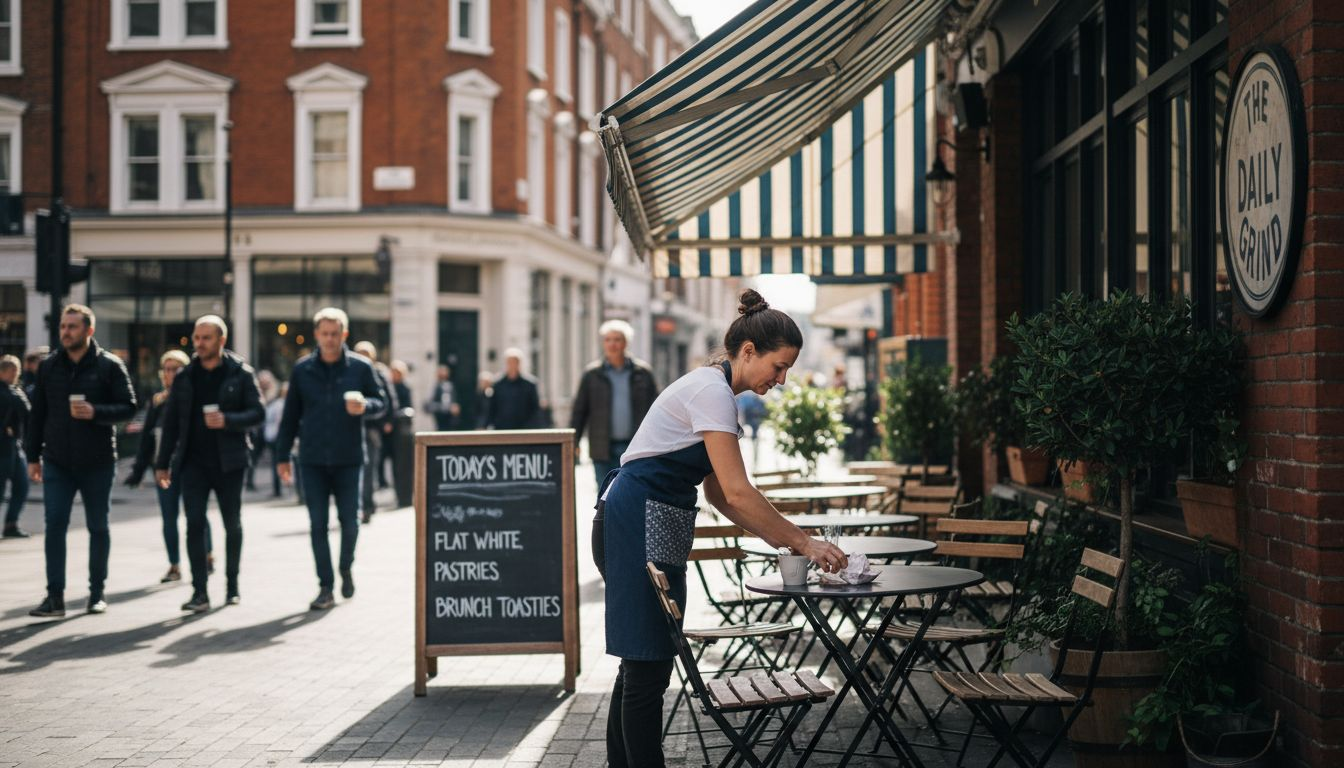
Commercial awnings can extend outdoor seating usability by up to 30% even in the unpredictable UK weather, a game changer for restaurants, hotels, and cafes across Yorkshire, Derbyshire, Nottinghamshire, and Lincolnshire. These versatile structures transform exposed outdoor spaces into comfortable, year round business assets that welcome customers regardless of rain or sun. Beyond weather protection, they enhance brand identity, reduce operational costs, and deliver measurable returns on investment that make them essential for modern commercial properties.
Table of Contents
Key takeaways
Point | Details |
Extended usability | Commercial awnings extend outdoor seating usability by up to 30% even in rainy UK weather |
Energy savings | Awnings can reduce cooling costs by up to 25% by shading windows and outdoor areas |
Customer retention | Proper awning branding increases customer return rates by 15% through enhanced perception |
Financial returns | Commercial awnings deliver 20-30% ROI within three years of installation |
Minimal maintenance | Modern awnings require servicing only once or twice annually with proper fabric selection |
Introduction to commercial awnings and their importance
Commercial awnings are retractable or fixed fabric structures installed above outdoor business spaces to provide shade, shelter, and aesthetic appeal. For UK businesses, particularly in Yorkshire and surrounding regions, they solve a critical challenge: the unpredictable climate that alternates between heavy rain, strong winds, and occasional sunshine often within the same day. This weather variability makes outdoor seating areas unreliable revenue generators without proper protection.
Yorkshire’s climate presents unique obstacles. Summer months bring pleasant days interrupted by sudden showers, while spring and autumn deliver weeks of persistent drizzle. Without protection, outdoor spaces sit empty during these periods, representing lost revenue opportunities. Commercial awnings extend outdoor seating usability by up to 30% even in rainy weather, transforming previously underutilized areas into consistent profit centers.
Several business types gain immediate advantages from commercial awnings:
Restaurants and cafes with outdoor dining areas need weather protection to maximize table turnover and customer comfort
Hotels and bed and breakfasts benefit from enhanced outdoor lounging spaces that improve guest satisfaction scores
Bars and pubs extend their usable area beyond limited indoor capacity, particularly valuable post pandemic
Educational institutions create sheltered outdoor learning environments and gathering spaces
This article explores how commercial awnings deliver functional benefits through weather protection, enhance brand identity, provide measurable economic returns, and dispel common misconceptions. You’ll discover practical guidance for selecting the right awning type and implementing solutions that match your specific business needs. Understanding these key benefits of commercial awnings positions you to make informed decisions that improve both customer experience and operational efficiency.
Functional benefits: how awnings improve business outdoor spaces
Commercial awnings deliver immediate operational advantages that directly impact your bottom line. The most significant benefit is extended usability: properly installed awnings keep outdoor seating areas functional during light to moderate rain and provide essential shade during sunny periods. This weather adaptability means you maintain revenue from outdoor tables that would otherwise sit vacant.
Pro Tip: Select fabrics with high UV protection ratings above 95% to maximize cooling effects and protect customers from harmful sun exposure, extending comfortable outdoor hours.
Awnings can reduce cooling costs by up to 25% by shading windows and adjacent outdoor areas. This energy efficiency stems from blocking direct sunlight before it penetrates building interiors, reducing air conditioning demand during warmer months. For businesses with large glass facades or conservatory style dining areas, this translates to hundreds of pounds in annual savings.
Key functional advantages include:
Temperature regulation that keeps outdoor areas 5 to 10 degrees cooler than unshaded spaces
Rain protection allowing service to continue during typical UK drizzle conditions
Wind deflection from properly angled awnings that creates more comfortable microclimates
Glare reduction improving customer comfort and reducing eye strain for diners
Extended operational hours represent another crucial benefit. With awnings providing shelter and shade, you can serve customers comfortably from early breakfast through late evening without weather dictating your schedule. This flexibility proves particularly valuable during shoulder seasons when weather unpredictability typically limits outdoor service.
Usability Increase: Businesses report serving outdoor customers 30% more frequently after awning installation compared to unprotected spaces.
The combination of weather protection and temperature control creates inviting environments that encourage customers to linger longer and spend more. Choosing the right awnings ensures these functional benefits align with your specific operational needs. Additionally, integrating commercial LED lighting benefits with awning installations extends usability into evening hours while maintaining energy efficiency.
Weather protection: adapting to the UK climate
UK businesses face a harsh reality: without awnings, customer footfall can drop by up to 20% on rainy days. This statistic underscores why weather protection isn’t optional for commercial properties with outdoor spaces. The financial impact of empty tables during rainfall accumulates quickly, particularly during Yorkshire’s famously wet spring and autumn months.
Modern commercial awning fabrics address UK specific weather challenges through advanced engineering. Acrylic and polyester blends resist mold and mildew growth, critical considerations in damp climates where traditional fabrics deteriorate rapidly. These materials maintain their appearance and structural integrity through years of exposure to rain, while UV resistant treatments prevent color fading during sunny periods.
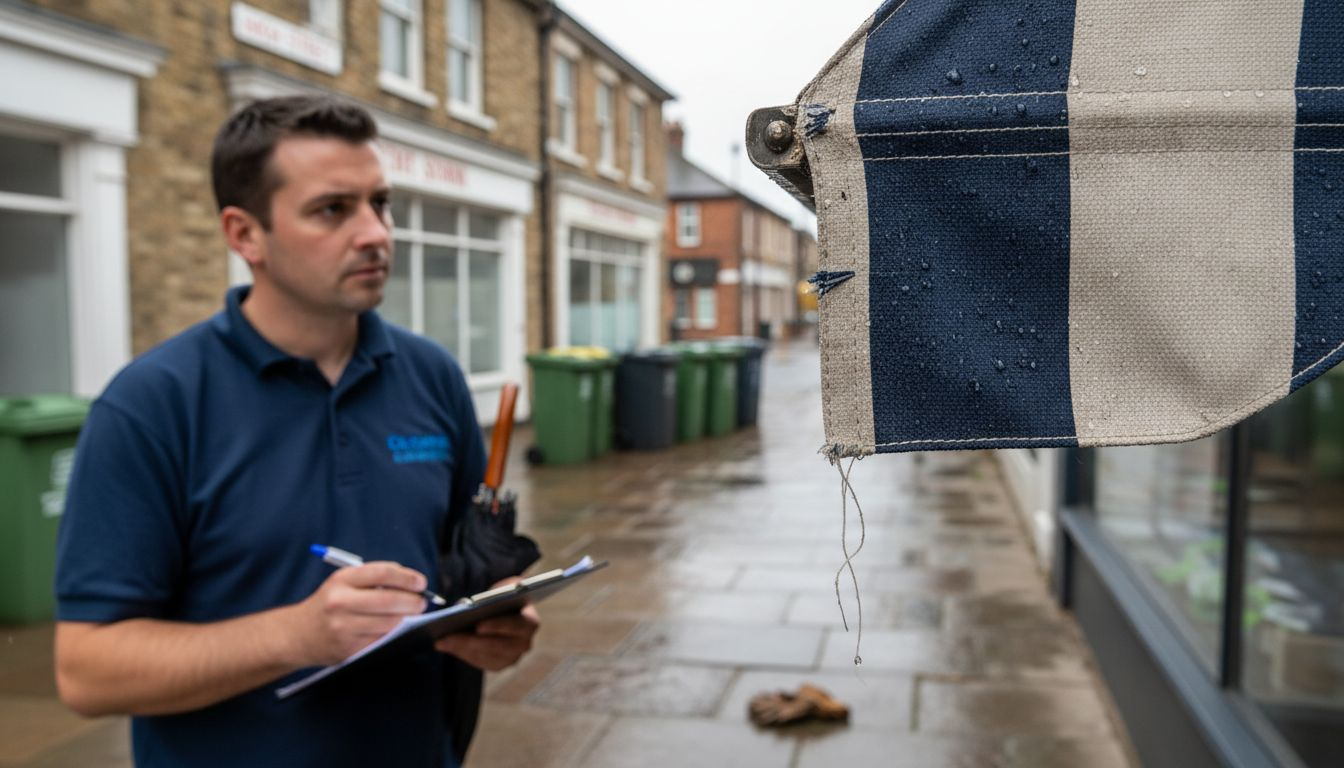
Pro Tip: Prioritize awnings with waterproof and mildew resistant fabric treatments specifically rated for marine or high moisture environments to maximize lifespan in UK conditions.
Durability features that matter:
Waterproof coatings that shed rain immediately rather than allowing saturation
Reinforced stitching at stress points preventing tear propagation during wind events
Powder coated aluminum frames resisting corrosion from constant moisture exposure
Quick dry fabrics that prevent water pooling and weight accumulation
Seasonal adaptability provides additional value. Retractable awnings allow you to extend coverage during unpredictable weather while retracting them on clear days to maximize natural light and views. This flexibility helps businesses adapt to Yorkshire’s rapidly changing conditions without compromising outdoor space appeal.
Fixed awnings work well for year round coverage in areas with consistent exposure patterns. They provide permanent protection for high traffic zones like entrance areas or consistently used dining sections. The choice between retractable and fixed options depends on your specific weather exposure patterns and operational preferences. Exploring weatherproofing awnings in Yorkshire provides deeper insights into climate specific considerations, while reviewing awning installation tips ensures proper setup for maximum weather protection.
Aesthetic and brand impact: enhancing business identity
Commercial awnings function as prominent exterior design elements that communicate your brand identity before customers enter your establishment. Customization options allow precise alignment with existing branding through color matching, logo printing, and style selection. This visual consistency reinforces brand recognition and creates memorable first impressions that influence customer decisions.
Proper awning branding can increase customer return rates by 15% by improving overall perception and creating distinctive visual markers. Customers remember businesses with attractive, well maintained outdoor spaces, leading to higher recommendation rates and repeat visits. The awning becomes part of your marketing infrastructure, working continuously to attract and retain customers.
Brand enhancement opportunities include:
Custom color matching to exact Pantone specifications ensuring perfect brand alignment
Logo printing or embroidery creating instant brand recognition from street level
Valance styles and trim options adding architectural character that reflects business personality
Lighting integration highlighting your space during evening hours while maintaining brand visibility
Local regulations require consideration, particularly in conservation areas or listed buildings where exterior modifications face scrutiny. Yorkshire councils typically permit awnings that harmonize with existing architecture and don’t obstruct sightlines or create visual clutter. Working with experienced suppliers familiar with regional planning requirements streamlines approval processes.
Awnings also contribute to streetscape aesthetics, potentially benefiting entire commercial districts. Well designed awning installations elevate neighborhood appeal, attracting more foot traffic that benefits all nearby businesses. This collective improvement effect makes awnings a community investment beyond individual business advantages.
The psychological impact shouldn’t be underestimated. Covered outdoor spaces signal permanence and investment in customer comfort, subconsciously communicating that your business values guest experience. This perception influences spending behavior and customer loyalty in measurable ways. Discovering awning design for brand enhancement reveals additional strategies for maximizing aesthetic impact.
Economic benefits: return on investment and operational gains
Commercial awnings can deliver 20-30% return on investment within three years through multiple revenue and cost saving mechanisms. This ROI stems from increased seating capacity utilization, extended service hours, reduced energy costs, and improved customer satisfaction leading to repeat business. For most commercial properties, the payback period ranges from 24 to 36 months depending on initial investment and usage intensity.
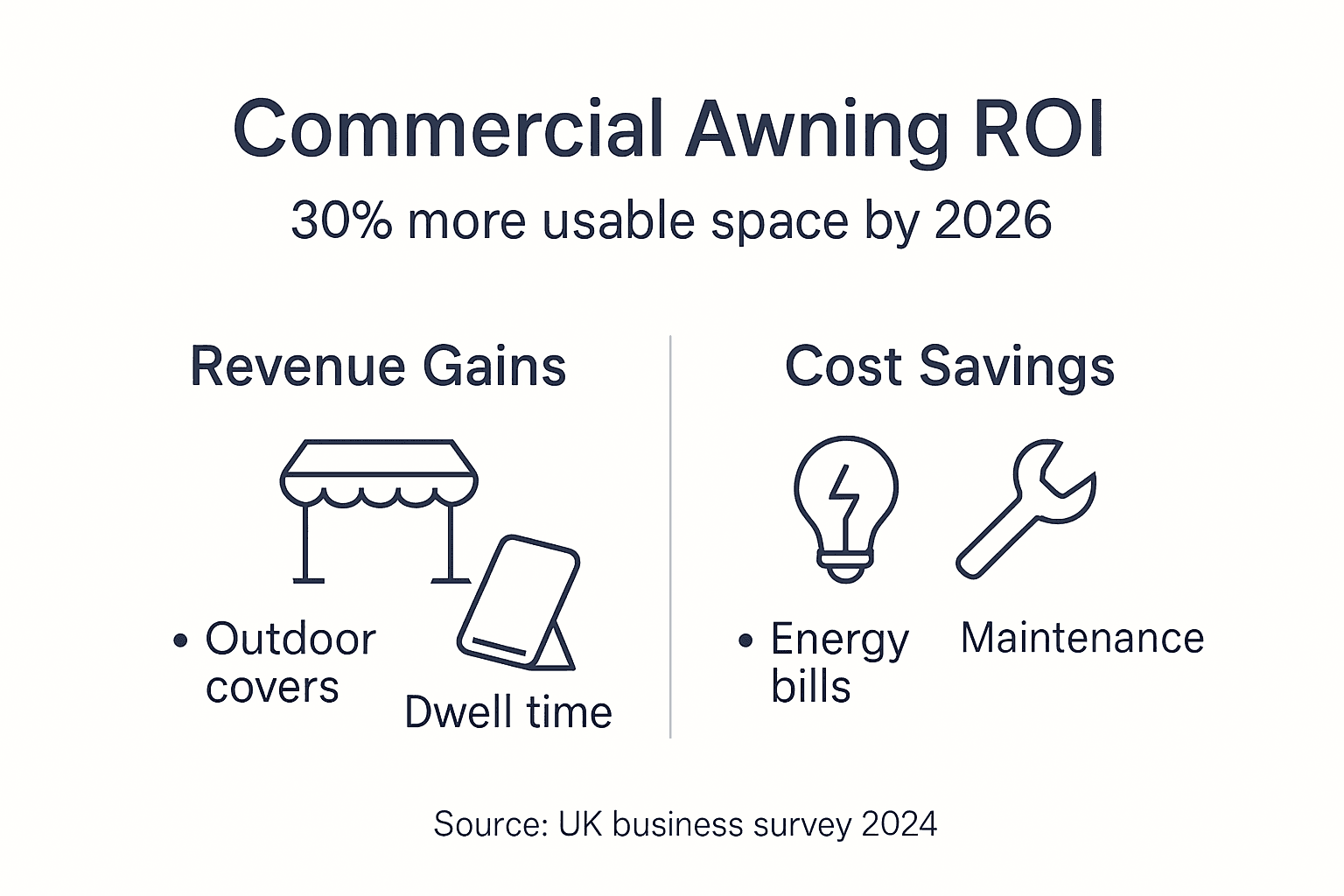
Pro Tip: Calculate your full ROI by including both direct revenue gains from extended outdoor service and indirect savings from reduced cooling costs and maintenance compared to alternative shade solutions.
Extended operational hours directly increase revenue potential. Restaurants report serving 20 to 40 additional covers weekly during peak seasons after awning installation, translating to thousands of pounds in additional annual revenue. Hotels see improved guest satisfaction scores that justify premium room rates and generate positive reviews driving future bookings.
Benefit Category | Impact | Timeframe |
Revenue increase | 15-25% from outdoor seating | First season |
Energy savings | 20-25% cooling cost reduction | Annually |
Maintenance costs | 40% lower than pergola structures | 5 year average |
Customer retention | 15% improvement in return rates | 12-18 months |
Property value | 3-5% increase for commercial spaces | Long term |
Enhanced customer comfort translates to longer dwell times and higher per visit spending. Diners sitting in comfortable, shaded environments order additional courses and beverages more frequently than those in uncomfortable conditions. This behavioral pattern compounds over time, significantly impacting annual revenue.
The investment includes initial purchase and installation costs ranging from £2,000 to £8,000 depending on size, mechanism type, and customization level. Electric retractable models command premium prices but offer superior convenience and longevity. Manual options provide budget friendly entry points for smaller businesses or limited spaces.
Operational efficiency gains extend beyond direct financial metrics. Staff productivity improves when they work in comfortable conditions, reducing turnover and training costs. Customer complaint rates drop when weather related service interruptions decrease. These indirect benefits support the overall business case for awning investments. Understanding commercial awning ROI benefits helps frame investment decisions within broader business strategy.
Common misconceptions about commercial awnings
Several persistent myths prevent businesses from adopting awning solutions that would significantly improve their outdoor spaces. The most common misconception positions awnings as primarily decorative elements with minimal functional value. This outdated view ignores modern engineering advances that make contemporary awnings robust weather protection systems delivering measurable operational benefits.
Maintenance requirements are frequently overestimated. Modern awnings need maintenance only once or twice a year, contrary to outdated beliefs about frequent cleaning and repairs. This minimal upkeep stems from advanced fabric treatments and corrosion resistant frames that withstand UK weather without constant attention. Simple procedures like brushing off debris and hosing down fabric suffice for most maintenance needs.
Durability concerns also lack foundation. High quality commercial awnings withstand Yorkshire weather for 10 to 15 years with proper installation and basic care. Modern fabrics resist tearing, fading, and water damage far better than materials from even a decade ago. Frames constructed from marine grade aluminum or powder coated steel maintain structural integrity through years of wind and rain exposure.
Common misconceptions include:
Belief that awnings cannot withstand strong winds, when properly installed models handle gusts up to 25 mph safely
Assumption that fabric requires frequent replacement, despite modern materials lasting 7 to 10 years minimum
Concern that awnings look dated or cheap, ignoring contemporary designs that enhance architectural appeal
Fear that installation damages building facades, when professional mounting leaves minimal marks
Another myth suggests awnings suit only certain architectural styles. Modern designs range from traditional striped patterns to sleek contemporary solids, accommodating virtually any aesthetic preference. Customization options ensure compatibility with listed buildings, modern developments, and everything between.
The misconception that awnings provide insufficient rain protection stems from experience with residential grade products. Commercial awnings use heavier fabrics with superior waterproofing that handles typical UK rainfall effectively. They won’t protect against torrential downpours, but they maintain usability during the light to moderate rain that characterizes most wet weather days. Exploring commercial vs residential awning myths clarifies these important distinctions.
Comparing awning types: choosing what fits your business needs
Selecting the right awning type requires understanding how different mechanisms and configurations align with your operational requirements, budget constraints, and space characteristics. The primary decision involves choosing between manual and electric operation, followed by determining whether retractable or fixed installation better serves your needs.
Awning Type | Initial Cost | Operating Convenience | Durability | Maintenance | Best For |
Electric retractable | £4,000-£8,000 | Highest - remote control | 12-15 years | Low - biannual | High traffic restaurants, hotels |
Manual retractable | £2,000-£4,000 | Moderate - crank handle | 10-12 years | Low - biannual | Small cafes, limited budgets |
Fixed awnings | £1,500-£3,500 | N/A - permanent | 15+ years | Very low | Entrances, permanent coverage zones |
Electric retractable awnings are preferred for ease of use despite higher upfront costs. Staff can deploy or retract them instantly with remote controls or wall switches, responding immediately to changing weather conditions. This convenience proves invaluable during busy service periods when manually cranking awnings would disrupt operations.
Manual retractable awnings offer excellent value for smaller spaces or budget conscious businesses. The crank mechanism requires minimal physical effort and provides reliable operation for years. However, deployment takes several minutes, making rapid weather response less practical. These work best for predictable usage patterns or spaces serving limited customer numbers.
Fixed awnings eliminate operational considerations entirely through permanent installation. They provide constant coverage regardless of weather, making them ideal for entrance areas, outdoor bars, or zones requiring year round protection. The tradeoff involves sacrificing flexibility for durability and reduced complexity.
Key selection factors:
Space size determines awning dimensions and structural requirements, with larger areas benefiting from motorized operation
Usage frequency affects mechanism choice, with high turnover businesses gaining more value from electric models
Budget constraints may favor manual or fixed options initially, with upgrade potential later
Weather exposure patterns influence fabric weight and waterproofing specifications
Fabric selection matters as much as mechanism type. Acrylic fabrics offer superior color retention and weather resistance, while polyester blends provide excellent waterproofing at lower price points. Solution dyed acrylics represent the premium choice, maintaining appearance through years of UV exposure and rain.
Consulting the awning selection guide provides detailed comparisons, while understanding professional selection processes demonstrates systematic approaches to matching products with requirements.
Practical steps to implement commercial awnings effectively
Successful awning implementation follows a structured process that ensures your investment delivers maximum value. Start by thoroughly assessing your business needs and outdoor space characteristics. Measure available mounting surfaces, note sun and wind exposure patterns, and document usage requirements across different seasons. This groundwork prevents costly mistakes and guides appropriate product selection.
Assess business needs and outdoor space configuration by measuring dimensions, identifying mounting points, evaluating sun angles throughout the day, and documenting typical weather exposure patterns your space experiences.
Choose fabric and mechanism focusing on durability appropriate for Yorkshire climate, ease of operation matching your staff capabilities, aesthetic alignment with brand identity, and warranty coverage protecting your investment.
Customize aesthetic elements including color selection matching existing branding, logo placement maximizing visibility, trim and valance styles complementing architecture, and optional lighting integration for evening operation.
Engage local professional installers for precise fitting and warranty support, ensuring compliance with local building regulations, proper structural mounting that withstands wind loads, and comprehensive operational training for staff.
Professional local installation ensures precise fitting and warranty support, key factors for long lasting awning performance. Experienced installers understand regional weather patterns and building codes, avoiding common pitfalls that compromise durability or create regulatory issues. They also provide valuable guidance on optimal positioning for maximum weather protection and aesthetic impact.
Durability planning extends beyond initial installation. Establish simple maintenance schedules covering fabric cleaning, mechanism lubrication, and frame inspection. Most commercial awnings require only biannual attention, but consistent care prevents minor issues from becoming expensive repairs.
Working with established suppliers like Infinity Awnings provides access to premium products from manufacturers including Weinor, Llaza, and Selt, alongside expert consultation tailored to commercial applications. Local suppliers understand Yorkshire specific challenges and recommend solutions proven effective in regional conditions.
Budget realistic timelines allowing 4 to 6 weeks from initial consultation through final installation. This period accommodates site surveys, custom fabrication, and professional installation scheduling. Rushing the process increases error likelihood and may compromise final results. Following comprehensive awning installation tips and consulting the right awning selection guide maximizes implementation success.
Explore stylish commercial awnings with Infinity Awnings
Transform your commercial outdoor space with expertly designed awning solutions from Infinity Awnings. Our 15 years of experience across Yorkshire, Derbyshire, Nottinghamshire, and Lincolnshire ensures you receive products perfectly matched to regional climate challenges and your specific business requirements. We specialize in premium retractable awnings from leading manufacturers including Weinor, Llaza, and Selt, offering the durability and aesthetic appeal commercial properties demand.
Discover comprehensive information about benefits of retractable awnings for commercial applications, including detailed comparisons of manual versus electric operation. Our installation guides explain how to install retractable awnings professionally, ensuring optimal performance from day one. Every project receives personalized consultation addressing your unique space configuration, operational requirements, and budget considerations. Contact Infinity Awnings today for a free quote and expert guidance transforming your outdoor business space into a year round asset.
Frequently asked questions
Why are commercial awnings important for businesses in the UK?
Commercial awnings protect outdoor customers from unpredictable UK weather while extending usable space by up to 30%, directly impacting revenue generation. They transform weather vulnerable outdoor areas into reliable seating zones that operate profitably regardless of rain or excessive sun. This weather independence improves customer comfort and satisfaction, leading to higher spending per visit and increased return rates. For Yorkshire businesses specifically, awnings address the region’s characteristic drizzle and variable conditions that otherwise limit outdoor service to only the sunniest days.
What maintenance do commercial awnings require?
Modern awnings require maintenance only once or twice annually due to durable fabrics and corrosion resistant frames. Basic care involves brushing off accumulated debris, hosing down fabric to remove dirt, and lubricating moving parts on retractable mechanisms. Proper fabric choice with waterproof and mildew resistant treatments significantly extends lifespan while reducing upkeep intensity. Professional installation also minimizes future maintenance needs by ensuring correct mounting and optimal operational setup from the start.
How do I choose the right commercial awning type for my business?
Consider your business size, outdoor space dimensions, typical weather exposure, and daily usage frequency when selecting awnings. Electric retractable models suit high traffic operations like busy restaurants needing instant weather response and frequent adjustments throughout service periods. Smaller cafes or budget limited businesses often prefer manual retractable or fixed awnings that provide excellent protection at lower initial investment. Evaluate your specific operational patterns, staff capabilities for manual operation, and long term budget including both purchase and maintenance costs to identify the optimal solution.
Can awnings withstand Yorkshire’s strong winds and heavy rain?
Yes, properly installed commercial grade awnings handle typical Yorkshire weather including winds up to 25 mph and moderate to heavy rainfall. Modern fabrics feature waterproof coatings and reinforced stitching that prevent tearing during wind events, while aluminum or steel frames maintain structural integrity through years of exposure. Retractable models should be retracted during severe weather warnings, but they withstand normal operational conditions reliably. Professional installation ensures adequate structural mounting and appropriate product selection for your specific exposure levels.
Recommended
Comments