
Aluminium vs Steel Pergola: Which Suits UK Weather?


For most UK homes and hospitality terraces, aluminium is the better pergola material. It doesn’t rust, it needs little upkeep, and it is the metal that louvred and retractable roofs are built from. Steel is stiffer and is often chosen for very long spans and heavy structures, but it relies on its coating to stay rust-free for decades. Below we compare the two on strength, weight, corrosion, finish, heat and cost of ownership, then cover awning frames, because the same logic applies.
TL;DR
Aluminium is light, naturally corrosion resistant and low maintenance, which suits wet, frosty UK conditions and most domestic and commercial terraces.
Steel is stiffer, so it can carry longer beams between posts. It must be galvanised and coated, and any damage to that coating needs attention.
Finish matters as much as metal. A well-pretreated powder coat on aluminium gives a long life, and a poor pretreatment shortens it whatever the metal.
Heat is not a reason to avoid aluminium: it warms in sun but sheds heat quickly, and a louvred roof gives you shade control.
For awnings, powder-coated aluminium is the usual frame choice because it keeps the structure light enough to fix to a wall.
Table of Contents
Aluminium vs steel pergola at a glance
Factor | Aluminium | Steel |
Weight | Light, easier to handle and fix | Much heavier, needs stronger foundations |
Stiffness | Lower, so spans need planning and posts | Higher, suits long beams |
Rust | Forms a protective oxide layer, does not rust | Rusts where bare steel meets water and air |
Upkeep | Occasional wash | Check coating, touch up chips and joints |
Roof systems | Louvred and retractable systems are made in aluminium | Mostly fixed roofs |
Coastal sites | Strong natural resistance | Coating condition becomes critical |
Best for | Patios, gardens, terraces, bars and restaurants | Very large spans and heavy structural loads |
The rest of this article explains each row so you can judge it against your own site.
Strength and weight: what the difference means in practice
Steel is considerably stiffer than aluminium, and it is also around three times the weight for the same volume of metal. Those two facts drive almost every difference between the materials.
Stiffness decides how far a beam can reach before it sags. A steel beam can span a wider opening between posts. An aluminium beam of the same section will flex more, so designers either deepen the section, add a post or add bracing. On a typical patio of three to five metres, that is a design choice and not a limitation. Aluminium sections are extruded into hollow, ribbed profiles that put the metal where it carries load, and this is how a slim aluminium frame can still carry a roof, gutters and a sensor.
Weight decides how the pergola is delivered, lifted and fixed. Aluminium is easier to position, puts less load on a wall or deck, and usually needs smaller foundations. If your pergola sits on an existing patio, terrace or raised deck, a lighter frame can reduce groundwork. Our guide to pergola foundations in the UK explains the options and when to leave this to an installer.
Steel’s advantage is real for long clear spans or heavy planting. Where a design needs a very wide opening with no mid-span post, a steel frame is one way to get it. For most homes and hospitality terraces, though, the span is within what a properly engineered aluminium frame handles comfortably, and the lower weight and zero rust risk are worth more day to day.
Rust, rain and frost: how each metal copes with UK weather
This is where the two materials part ways most clearly.
Steel rusts when bare steel meets water and oxygen, and the UK’s regular rain, frost and damp give it plenty of chances once the protective layer is breached. Steel pergolas are therefore galvanised with zinc and then painted or powder-coated. That works well when the coating is intact. The weak points are chips from impact, scratches during installation, cut edges and drilled holes, and joints where water can sit.
Aluminium behaves differently. It forms a thin oxide layer on its surface that protects the metal underneath and re-forms if the surface is scratched. The same source describes this as self-healing, and says aluminium needs little more than an occasional rinse. In practice, that means a pergola you can leave through a Yorkshire winter without a maintenance schedule.
Coastal and exposed sites make the case stronger. Salt in the air attacks coatings and zinc layers faster, so a steel structure near the sea needs more frequent inspection. Aluminium’s natural resistance is the reason it is so widely specified for seafront properties, hotels and terraces.
If you want a broader view of how long a pergola should last and what shortens that life, see our guide to pergola lifespan for UK homeowners.
Powder coated vs anodised aluminium
Both finishes protect aluminium and give it colour or a uniform look, but they work differently.
Powder coating is a dry polymer powder applied electrostatically and baked on, forming a thick skin. It offers a wide range of colours, including the anthracite greys, whites and textured finishes that dominate UK pergola design. It is the usual finish for pergolas and awning frames.
Anodising is an electrochemical process that thickens the metal’s own oxide layer. The finish is part of the metal and not a coat sitting on top, so it can’t peel in the same way, but the colour range is narrower and it is more often used for architectural trim and smaller components.
For powder coating, quality depends on preparation. QUALICOAT UK & Ireland explains that powder coating must have a ‘key’ on the aluminium to adhere to, and without one it is prone to chipping or flaking. The same body notes that when pretreatment is done correctly, architectural powder-coated products offer an extensive life expectancy in most locations. If the conversion coating is poor or missing, the quality of the powder on top cannot make up for it.
The practical advice is to ask any supplier about the pretreatment and coating standard behind the frame, not only the colour. The same applies to steel: a galvanised and coated frame is only as good as the preparation underneath. For colour choice and keeping finishes looking sharp, read our guide to pergola colours and finishes.
Does an aluminium pergola get hot?
It warms in direct sun like any outdoor material, but it is not an outlier. In a test carried out in Rochester, Kent, aluminium decking averaged 46.65°C in direct sunlight, against 54.15°C for timber and 55.95°C for composite, and the test reported that aluminium cooled more quickly. That test was on decking, not pergola frames, but it shows the principle: aluminium conducts heat well, so it sheds it rather than holding it.
Pergola frames are rarely touched for long, and the surface that matters for comfort is the roof. A louvred roof lets you angle the blades to block the sun, release warm air or close against rain. Lighter colours reflect more sunlight than darker ones, which is worth considering if the frame sits at head height beside seating.

Roof systems: where aluminium pulls ahead
The most useful difference for a UK buyer may be the roof. Louvred and retractable roof systems are engineered around aluminium: its light weight lets motors move blades and canopies smoothly, and its corrosion resistance keeps tracks and pivots working. That turns a pergola from a summer feature into a space usable much further into autumn, because you can close the roof in rain and open it in sun.
If you are weighing these systems against a fixed structure, our comparison of louvred roofs, pergolas and gazebos shows how much more usable space a movable roof gives. Our article on why retractable pergolas suit UK homes goes into the day-to-day benefits. Lighting, heaters and motors need power, so also read about pergola electrics, safety rules and costs.
Aluminium vs steel for awnings and metal awning frames
The same trade-offs apply to awnings, with weight even more important because an awning is cantilevered from a wall.
Aluminium is the standard material for retractable awning frames and arms. It is light enough to mount on brickwork or a fascia without heavy reinforcement, it does not rust, and a powder-coated finish keeps it looking neat for years.
Steel is stiffer and can suit large, fixed, welded canopy frames, but it needs galvanising and a protective coat, and it adds weight to the building fabric.
Stainless steel appears in fixings, bolts and some small components, where corrosion resistance matters more than weight.
For moving parts, such as folding arms, a low weight means smaller motors, smoother movement and less strain on the fixings. That is why most retractable awnings on UK homes, shops and bars use aluminium. Our guide to aluminium frame construction for bespoke awnings shows how these frames are built.
Which should you choose?
Work through these questions in order.
Do you want a retractable or louvred roof? Choose aluminium.
Is the site coastal, exposed or damp? Aluminium’s natural resistance is a strong advantage, and you avoid the coating inspections steel needs.
How wide is the opening? For typical domestic and terrace widths, a well-designed aluminium frame with the right posts works. For unusually wide, unsupported spans, discuss structural options with the installer before you commit.
How much upkeep will you accept? If the answer is a rinse once or twice a year, choose aluminium.
What is the ground like? A lighter frame is gentler on decks, terraces and walls.
How long should it last? Both materials can last for decades when properly finished, so the quality of the coating and installation matters more than the label on the metal.
For budgets, see our breakdown of what UK homeowners pay for a pergola, and for the wider material picture, our guide to sustainable pergola materials.
Our perspective
In our work across Yorkshire, Derbyshire, Nottinghamshire and Lincolnshire, the question is rarely which metal is strongest on paper. It is which structure will still work, look good and need no attention in year ten. For most homes, bars, restaurants and hotels, we believe that points to aluminium. It stays light, it doesn’t rust, and it is the material that makes retractable and louvred roofs practical. A customer who wants to sit out in October, close the roof when it rains and not think about the frame again is well served by it. What matters just as much is the build: the pretreatment behind the powder coat, the fixings, the drainage and the installation. That is why we take a consultative approach, with no pressure, and look at your site, your wall, your use and your budget before recommending anything. With over 15 years in the trade, and as official suppliers for premium brands such as Weinor, Llaza, Selt, Tarasola and Morvelle, we choose products on their merits. Andrew
Talk to us about your pergola or awning
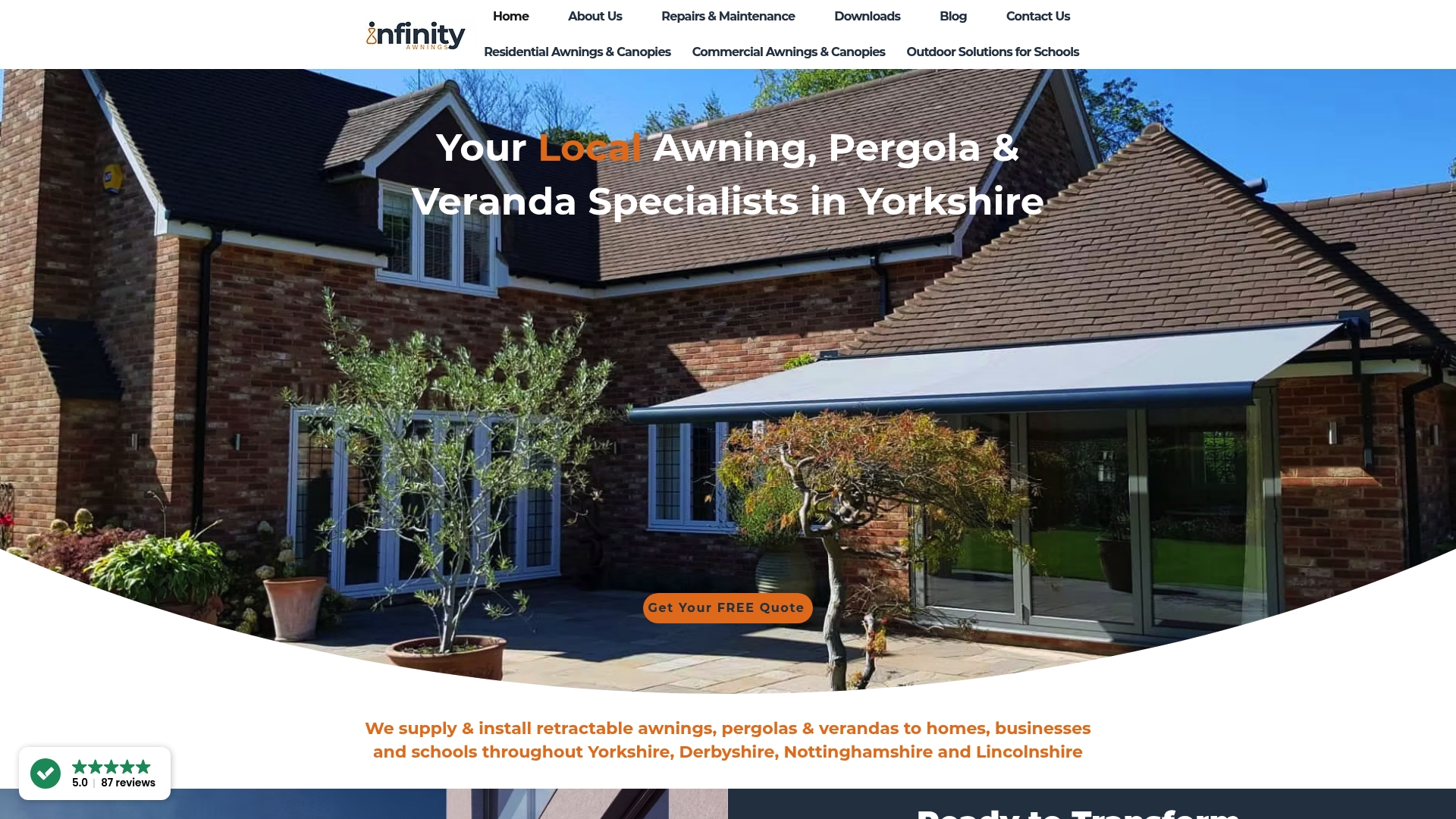
If you are comparing frames for a home, a hospitality venue or a school, we can design, supply and install a shading solution for your site, with manual or electric operation, a choice of fabrics and finishes, and options such as LED lighting, heaters, weather sensors and side screens. Take a look at our pergolas, retractable awnings and verandas, or request a free quote and tell us about your space.
We also supply commercial awnings and canopies for shops, bars and restaurants, and outdoor solutions for schools.
FAQ
Does an aluminium pergola rust?
No. Aluminium forms a protective oxide layer that re-forms if the surface is scratched, so it does not rust the way steel does. A powder-coated finish adds colour and extra protection. A rinse with water and mild soap keeps it clean.
Is a steel pergola stronger than an aluminium one?
Steel is stiffer, so it can carry longer beams between posts. For most domestic and terrace pergolas, a properly engineered aluminium frame is strong enough for the roof and wind conditions it is designed for. Ask your installer about the design for your span and site.
Does an aluminium pergola get hot?
It warms in direct sun, but it conducts and sheds heat quickly. A test in Kent found aluminium decking cooler than timber or composite in sunlight. A lighter colour and a louvred roof that you can angle against the sun help keep the space comfortable.
What is the difference between powder coated and anodised aluminium?
Powder coating is a baked-on polymer layer with a wide colour range. Anodising thickens the metal’s own oxide layer and has a narrower range of looks. Powder coating is the usual choice for pergolas and awnings, and its life depends on good pretreatment of the aluminium beneath.
Which metal is best for an awning frame?
Powder-coated aluminium is the standard choice for retractable awning frames because it is light, does not rust and suits wall mounting. Steel can suit large fixed frames but adds weight and needs a protective coating to stay rust-free.
Sources
Recommended
Comments