
Architectural trends in outdoor spaces 2026

TL;DR:
Outdoor architecture in 2026 emphasizes ecological, functional, and immersive design focused on daily human rituals. Developers prioritize native plants, layered spaces, and integrated shading and technology to create sustainable, comfortable outdoor zones, moving away from formal lawns. Proper utility planning and patience are essential for lasting, adaptable outdoor environments that enhance everyday living.
Outdoor architecture in 2026 is defined by immersive, functional, and ecologically grounded design. The leading architectural trends in outdoor spaces 2026 move decisively away from formal, staged gardens toward spaces built around daily human rituals, native ecology, and climate comfort. Traditional lawn square footage declined 25% year-over-year in favour of native grass, clover blends, and gravel gardens. That shift signals a fundamental change in how property owners think about outdoor space: less showpiece, more sanctuary. Demand for privacy and shade features has risen sharply, and technology is quietly handling the maintenance burden so you can focus on living in your garden rather than managing it.
What are the architectural trends in outdoor spaces 2026?
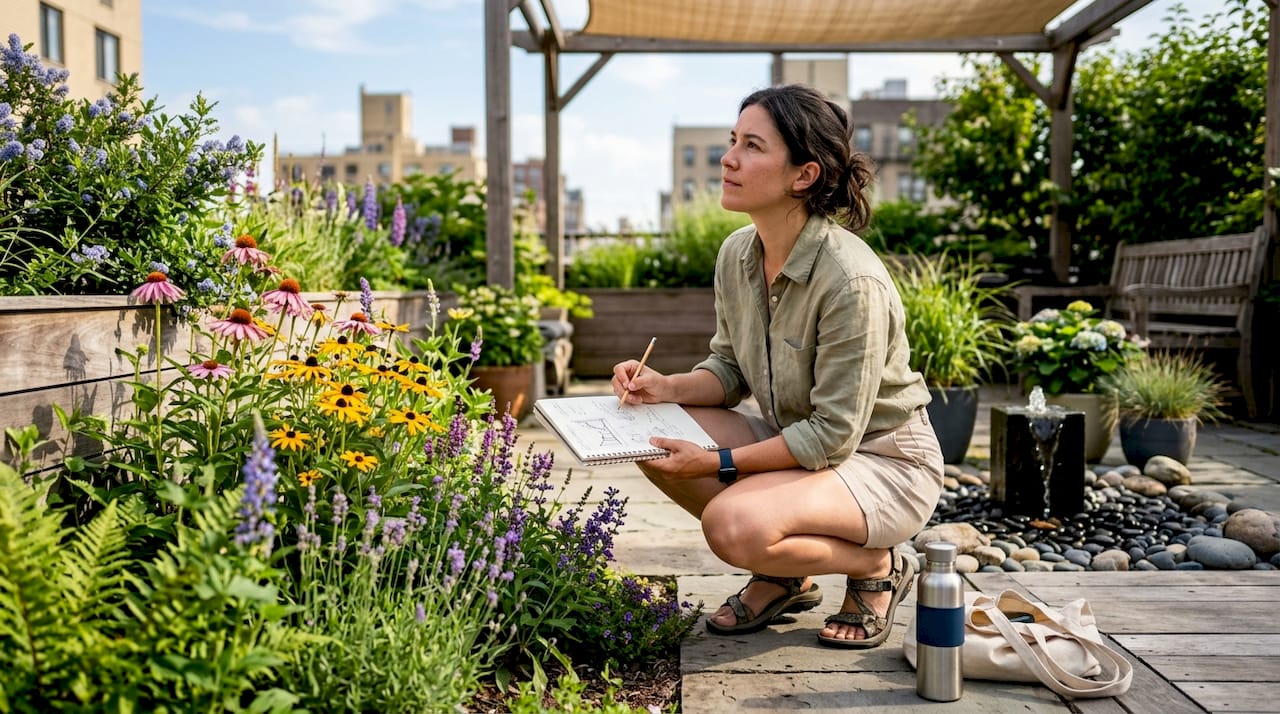
The defining shift in 2026 outdoor space design is ecological intentionality. Gardens are no longer designed to impress visitors. They are designed to support the people who live in them every day.
Requests for native, pollinator-friendly plantings have surged 23% year-over-year. That figure reflects a genuine change in priorities: property owners want gardens that work with the local climate rather than against it. Native species require less water, less feeding, and far less intervention than traditional ornamental planting schemes.
The practical benefits extend beyond maintenance. Textured groundcovers such as creeping thyme, clover, and ornamental grasses create sensory richness that a flat lawn simply cannot. They attract pollinators, manage surface water more effectively, and provide visual interest across every season without demanding constant attention.
How to plan a sustainable planting scheme
Sustainable outdoor architecture in 2026 is built on three principles: climate adaptation, low intervention, and sensory layering. A well-planned scheme combines plants at different heights to create depth, uses species native to your region to reduce watering, and incorporates textured groundcovers to replace high-maintenance turf.
Choose plants native to your region first. They are already adapted to local rainfall and temperature patterns.
Layer planting heights from ground level up to canopy to create visual depth and wildlife habitat.
Replace sections of lawn with clover or creeping thyme. Both tolerate foot traffic and require minimal mowing.
Use gravel or permeable paving between planting zones to manage surface water and reduce weeding.
Plan seasonal interest deliberately. Choose species that offer colour, texture, or structure in at least three seasons.
Pro Tip: Mark out your planting zones before you order any plants. Knowing the exact square metreage of each zone prevents over-ordering and helps you calculate water requirements accurately from the start.
Maintenance planning matters as much as plant selection. The most common mistake is designing a scheme that looks beautiful at installation but becomes unmanageable by the second summer. Build in annual cutting schedules, mulching routines, and a clear plan for dividing perennials every few years.
How is experiential design reshaping outdoor living?
Outdoor spaces designed for daily rituals represent the most significant shift in residential design thinking this decade. Property owners now treat their gardens as extensions of their floor plans, not separate spaces reserved for occasional entertaining.
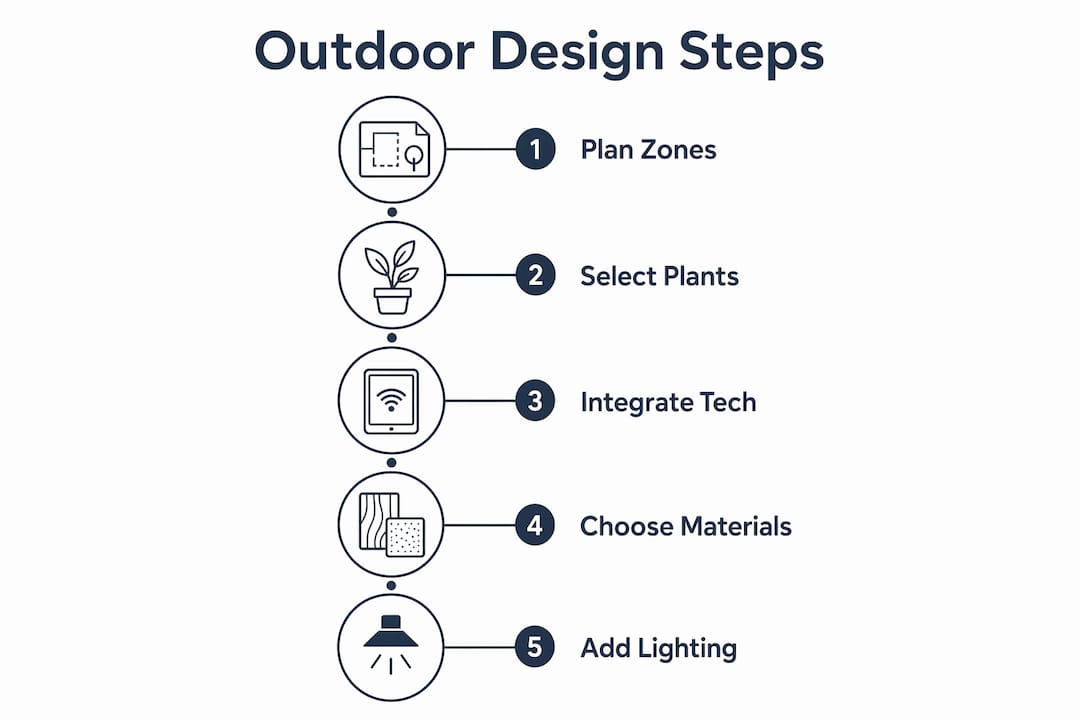
The practical result is outdoor areas divided into distinct zones: a morning coffee corner, a shaded workspace, a yoga or stretching area, and a social gathering space. Each zone serves a specific daily function. The garden becomes as purposeful as any room inside the house.
Landscapes are moving away from formal, staged looks toward calm, grounded spaces connected to the regional environment. Organic geometry replaces rigid symmetry. Curved pathways, layered planting, and natural materials create environments that feel discovered rather than constructed.
Four design moves that create immersive outdoor spaces
Replace straight edges with curves. Curved pathways and softened bed borders create a sense of movement and discovery that rigid layouts cannot achieve.
Layer planting vertically. Combine ground-level groundcovers, mid-height perennials, and taller shrubs or climbers to create depth and enclose space naturally.
Define zones with materials, not walls. A change in paving texture or a low planting border signals a transition between spaces without creating physical barriers.
Connect indoor and outdoor sightlines. Position key outdoor features so they are visible from inside the house. This makes the garden feel like a living part of the home year-round.
Pro Tip: Design your outdoor zones around your actual daily schedule, not an idealised version of it. If you drink coffee at 7am, your morning corner needs eastern light and shelter from wind, not a sunset view.
What role does technology play in outdoor design?
Smart gardening technology is the quiet engine behind 2026’s most liveable outdoor spaces. Soil sensors and AI-driven plant diagnostics automate the repetitive maintenance tasks that previously consumed weekend hours. Automated irrigation systems deliver water precisely when and where plants need it, reducing waste and improving plant health simultaneously.
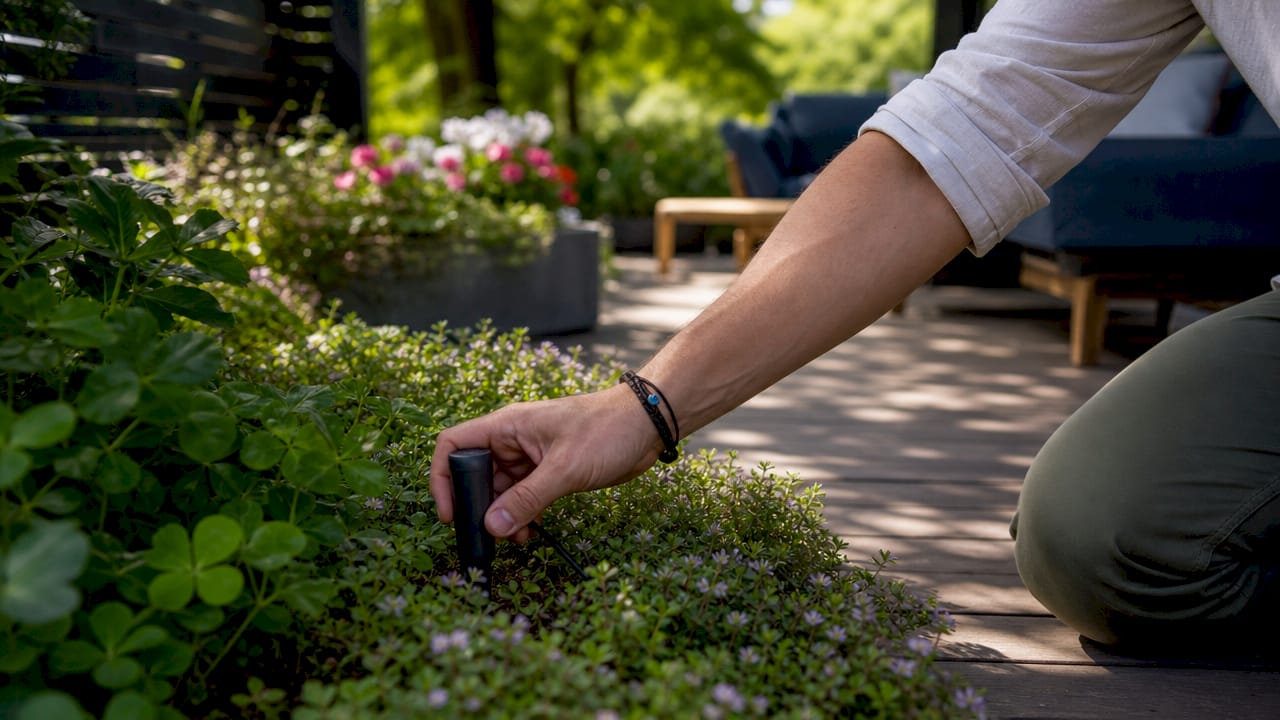
Smart gardening technologies reduce maintenance burdens while keeping the property owner connected to the natural environment. The goal is not a sterile, automated garden. The goal is a garden where technology handles the chores so the human experience remains central.
Climate comfort technology follows the same logic. Demand for privacy-focused design increased 10% in 2026, following a 22% rise the previous year. Shade and cooling features rose 13%. Those numbers confirm that property owners are investing in outdoor comfort infrastructure, not just aesthetics.
Feature | Primary benefit | Design consideration |
Soil moisture sensors | Reduces water use and plant loss | Requires power or battery access near planting zones |
Automated irrigation | Consistent watering without manual effort | Plan pipe routes before laying hard surfaces |
Shade and cooling structures | Extends usable hours in warm weather | Position relative to sun path for maximum effectiveness |
Integrated outdoor lighting | Extends evening use and improves safety | Layer at multiple heights for best effect |
The most common pitfall in technology integration is poor utility planning. Planning infrastructure before hardscaping avoids costly retrofits. Conduit for power, irrigation pipe runs, and drainage channels must be installed before any paving or decking goes down.
Which materials define outdoor spaces in 2026?
Material choices in 2026 prioritise warmth, texture, and continuity between indoor and outdoor environments. Wood, stone, and warm earthy tones define current hardscape aesthetics. Terracotta, natural sandstone, and aged timber create surfaces that feel grounded and tactile rather than clinical.
The shift away from large-format grey porcelain pavers is pronounced. Smaller, rustic brick formats and irregular natural stone are replacing the clean, cool palettes that dominated the previous decade. Permeable surfaces are gaining ground too, driven by both aesthetic preference and practical drainage requirements.
Material type | Characteristics | Best application |
Warm natural stone | Textured, heat-retaining, aged appearance | Patios, pathways, seating areas |
Terracotta tile | Earthy colour, tactile surface, period character | Covered outdoor rooms, sheltered terraces |
Natural timber decking | Warm tone, tactile, weathers to silver-grey | Raised platforms, dining areas |
Permeable brick | Drainage-friendly, rustic scale, varied colour | Driveways, informal pathways |
Textured concrete | Versatile, cost-effective, can mimic stone | Large areas requiring uniformity |
Continuity between indoor and outdoor flooring materials is one of the most effective ways to visually enlarge a space. Carrying the same stone or tile tone from an interior floor through glazed doors to an outdoor terrace removes the visual boundary between the two environments. The result feels like a larger, more connected living area rather than a house with a separate garden.
Luxury outdoor design increasingly relies on sensory comfort through shade, cooling, privacy, and textured plantings rather than costly formal features. That reframing matters for property owners working within a budget. Sensory richness costs far less than formal stonework or elaborate water features.
How do you design flexible outdoor spaces for everyday use?
Flexible outdoor living spaces serve multiple functions across a single day. The most effective designs layer different zones so the space can shift from a quiet morning retreat to a social evening gathering without any physical rearrangement.
Morning zones benefit from eastern orientation, shelter from prevailing wind, and seating at a comfortable height for coffee or reading.
Working areas need shade from direct midday sun, a stable surface for a laptop, and proximity to a power source.
Wellness spaces such as yoga areas or cold plunge zones require privacy screening, a level surface, and easy access from the house.
Social gathering areas work best with shaded dining provision, flexible seating arrangements, and evening lighting.
Layered outdoor lighting extends usability by four or more hours daily through combinations of pathway lighting, uplighting, and accent lights. That extension transforms a garden from a daytime feature into a genuine evening living space. Position lights at three heights: ground level for pathways, mid-level for planting beds, and overhead for dining or seating areas.
Smaller, intimate garden nooks are replacing large showcase spaces as the preferred format for personal retreat. A well-designed corner with a single seat, a planted backdrop, and a canopy overhead delivers more daily use than a grand formal terrace that requires full preparation before every visit.
Key takeaways
The most effective outdoor spaces in 2026 are built around daily human habits, native ecology, and early infrastructure planning rather than visual spectacle alone.
Point | Details |
Sustainability drives planting | Native, climate-adapted plants reduce maintenance and support local ecology year-round. |
Experiential design leads | Zone your outdoor space around actual daily rituals, not occasional entertaining. |
Plan utilities first | Install power, irrigation, and drainage conduit before any hard surfaces go down. |
Materials favour warmth | Terracotta, natural stone, and timber create sensory richness that cool grey palettes cannot. |
Lighting extends use | Layered lighting at three heights adds four or more usable hours to your outdoor space daily. |
Andrew’s view: what most outdoor design advice gets wrong
Most outdoor design coverage focuses on aesthetics and misses the single most important factor: how you actually use your garden on a Tuesday morning in october. I have seen property owners invest significantly in beautiful terraces that sit unused for nine months of the year because nobody thought about wind direction, morning shade, or the distance from the kitchen door.
The utility planning point deserves more emphasis than it typically receives. Planning infrastructure before hardscaping is not a technical detail. It is the single decision that determines whether your outdoor space works properly for the next twenty years or becomes an expensive source of frustration. Retrofitting power or irrigation through finished paving is genuinely costly and disruptive.
The technology conversation also needs rebalancing. Soil sensors and automated irrigation are genuinely useful tools. But the property owners who get the most from their outdoor spaces are those who use technology to remove chores, not to remove themselves from the garden. The goal is more time sitting in your garden, not less time thinking about it.
Patience is the hardest thing to sell in outdoor design. A newly planted garden looks sparse for two to three years before it reaches the layered, immersive quality shown in design photography. Build that timeline into your expectations from the start. The spaces that look best at year five are almost always the ones that were planted with restraint at year one.
— Andrew
Pergolas from Infinityawnings: built for 2026 outdoor living
The shift toward shaded, multi-purpose outdoor rooms makes structural shading one of the most practical investments a property owner can make this year.
Infinityawnings designs and installs pergolas for gardens across Yorkshire, Derbyshire, Nottinghamshire, and Lincolnshire. A pergola creates the overhead structure that defines an outdoor room, provides shade and cooling, and supports integrated lighting for evening use. Infinityawnings works with premium brands including Weinor, Tarasola, and Morvelle, offering electric and manual options with LED lighting and heating add-ons. Whether you are creating a shaded dining area, a sheltered workspace, or a private retreat, Infinityawnings can help you build an outdoor space that works every day of the year. Request a free quote to get started.
FAQ
What are the biggest outdoor design trends for 2026?
The leading trends are experiential zoning, native and ecological planting, warm natural materials, and integrated shading and technology. Outdoor spaces are being designed around daily lifestyle habits rather than occasional entertaining.
Why are traditional lawns declining in 2026?
Traditional lawn area declined 25% year-over-year as property owners switch to native grasses, clover blends, and gravel gardens that require less water and maintenance while supporting local wildlife.
How does shading improve outdoor space functionality?
Shading extends the usable hours of an outdoor space by reducing heat and glare. Demand for shade and cooling features rose 13% in 2026, reflecting how central climate comfort has become to outdoor design.
What materials are trending for outdoor spaces in 2026?
Warm natural stone, terracotta, aged timber, and permeable brick are the preferred materials. They create tactile, sensory-rich surfaces and connect visually with interior flooring to enlarge the perceived living area.
When should I plan utilities for an outdoor project?
Plan all power, irrigation, and drainage infrastructure before any hard surfaces are installed. Retrofitting utilities through finished paving is costly and often requires significant disruption to completed work.
Recommended
Comments