
Weather protection methods for playgrounds: a parent's guide
- Andrew Crookes

- Jun 27
- 8 min read
TL;DR:
Proper weather protection in playgrounds, including shade structures and drainage, extends safe playtime throughout the year. Regular maintenance and strategic design prevent hazards caused by UV exposure, rain, wind, and cold, ensuring a safer outdoor environment for children.
Weather protection methods for playgrounds are the essential measures that keep children safe from UV exposure, rain, wind, and extreme heat during outdoor play. Without proper shading, surfacing, and drainage, playgrounds become uncomfortable or even dangerous in typical British weather. The industry term for this discipline is “climate-smart playground design,” and it covers everything from shade fabric selection to flooring thickness ratings. Get these decisions right and you extend usable play hours across every season while reducing injury risk and equipment wear.
What are the best weather protection methods for playgrounds?
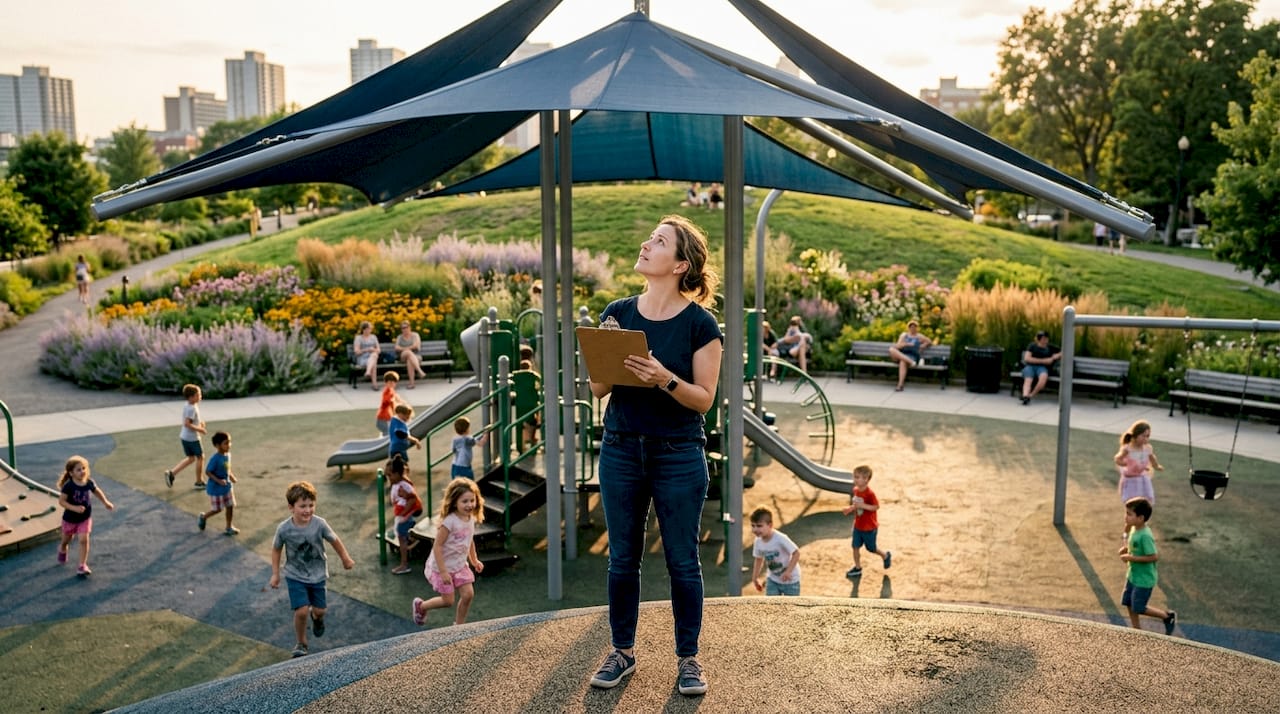
Shade structures are the single most effective tool for protecting children from sun and heat on a playground. The two most common types are canopy shades (fixed or retractable fabric panels supported by posts) and shade sails (tensioned fabric stretched between anchor points). Pergolas offer a third option, combining structural permanence with the ability to support fabric or polycarbonate roofing panels.
The material choice matters enormously. HDPE shade fabrics block up to 98% of harmful UV rays. That figure means children playing beneath a quality HDPE canopy receive protection comparable to a high-factor sunscreen applied to every exposed surface.
Positioning is just as critical as material. Shade placement based on sun angles between 10 a.m. and 4 p.m. ensures maximum coverage over high-contact equipment such as slides and climbing frames. A shade structure installed without this calculation can leave the hottest surfaces fully exposed during peak hours.
HDPE canopies and shade sails block the majority of UV radiation and reduce surface temperatures significantly.
Pergolas with fabric or polycarbonate panels provide year-round cover and can be adapted for rain as well as sun.
Breathable fabrics are generally preferred over fully waterproof options in active play zones. Breathable shade fabrics prevent water pooling on the canopy surface and reduce wind-load stress on the structure.
Retractable awnings allow you to adjust coverage based on weather conditions without removing the structure entirely.
Pro Tip: Audit your playground’s sun exposure at 11 a.m. on a clear day in june or july. Mark every surface that is in direct sunlight. Those are your priority zones for shade installation.
Outdoor coverings including fabric canopies and metal roofs filter up to 95% UV radiation while still allowing natural light through. This balance matters because children need daylight for wellbeing, and parents need clear sightlines for supervision.
How does playground surfacing affect weather safety?
The ground beneath play equipment is a critical but often overlooked part of outdoor play area protection. Surfacing affects fall safety, heat retention, drainage, and slip resistance, all of which change with the weather.
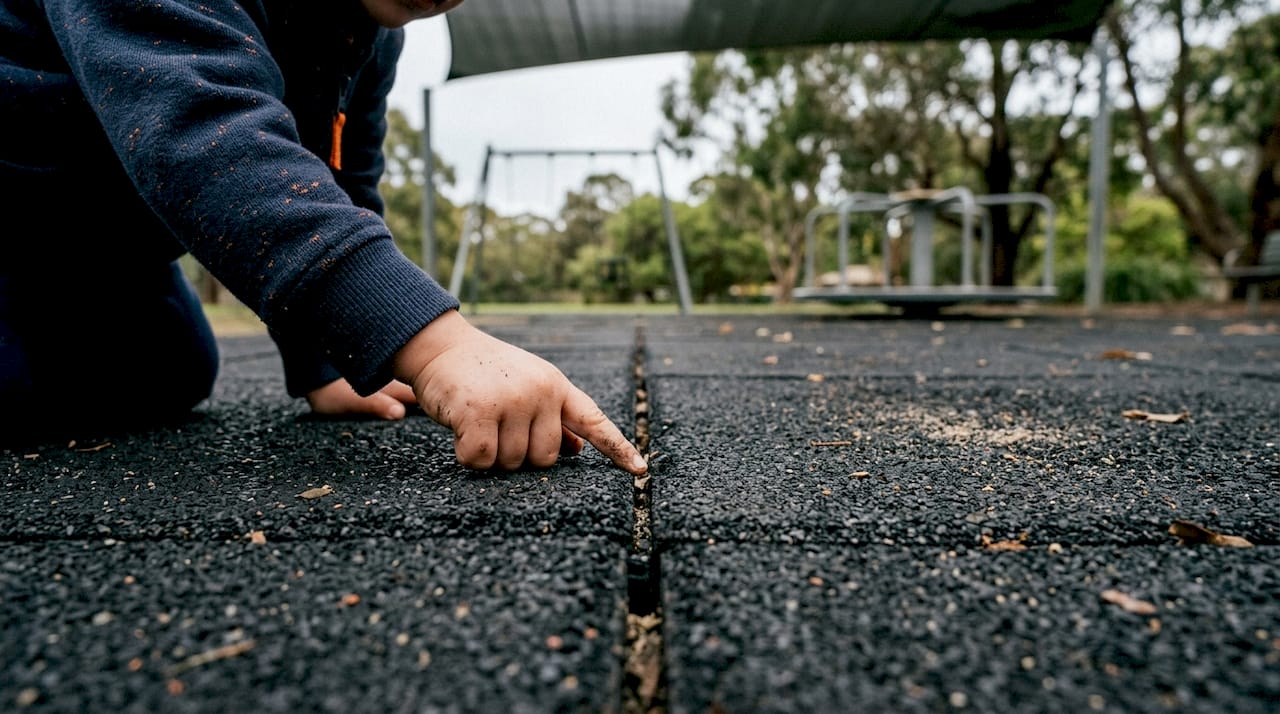
Flooring thickness directly determines how safely a child lands after a fall. 2.25-inch rubber tiles are rated for 4-foot falls, while 5-inch tiles are rated for 10-foot falls. In weather-exposed environments, this rating must be maintained even after freeze-thaw cycles compress or shift the material.
Colour choice affects surface temperature more than most parents realise. Light-coloured surfacing runs 20 to 30 degrees Fahrenheit cooler than darker alternatives. On a warm British summer day, that difference is enough to prevent contact burns on bare feet and hands.
Surface type | Weather resilience | Drainage | Maintenance level |
Rubber tiles | High; freeze-thaw resistant | Moderate; joints allow drainage | Low; easy to replace sections |
Poured-in-place rubber | High; seamless surface | Good if graded correctly | Low; no loose pieces |
Wood chips / bark | Moderate; compacts over time | Good; natural permeability | High; replenish annually |
Artificial grass | Moderate; can retain heat | Variable; depends on base | Medium; brush and clean regularly |
Permeable playground surfacing speeds drying after rain, reduces slipping hazards, and cuts maintenance time. This is particularly relevant in urban settings where drainage infrastructure may be limited.
Pro Tip: When replacing playground surfacing, choose light-coloured rubber tiles with a permeable joint design. You gain fall protection, heat reduction, and drainage in a single material choice.
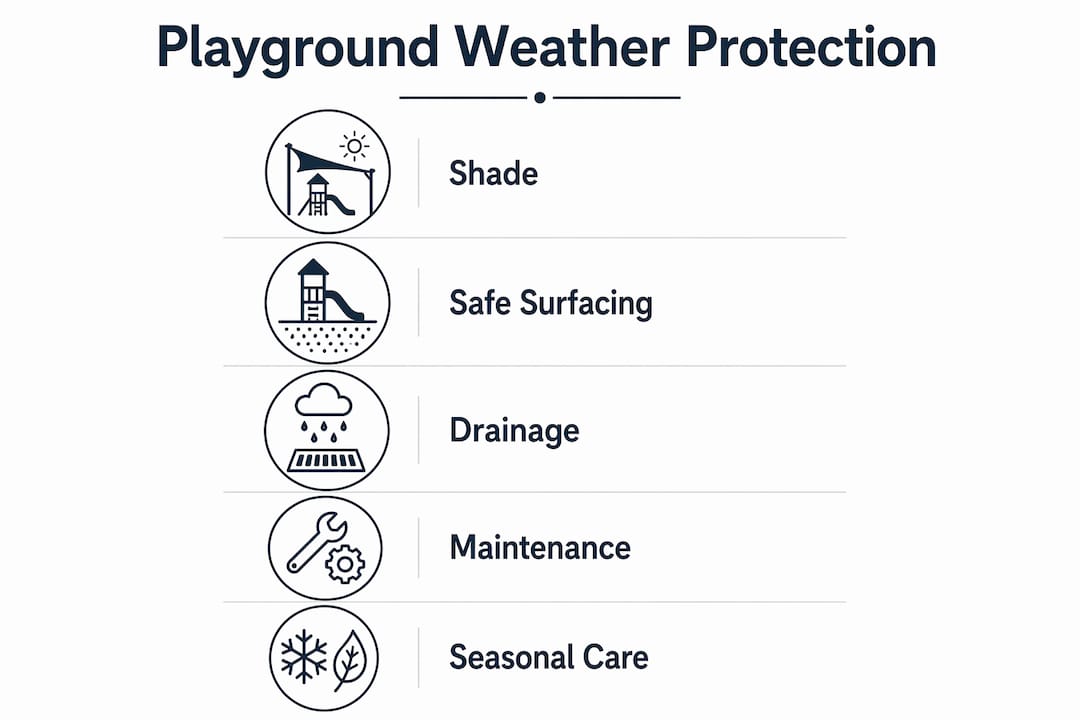
How do you protect a playground from rain, wind, and cold?
Rain, wind, and freezing temperatures each create distinct hazards. Addressing them requires a combination of structural design, surface treatments, and seasonal maintenance.
Rain protection
Install a permanent or retractable canopy over the highest-use equipment. A canopy keeps surfaces dry, reducing slip risk and extending the time children can play after a rain shower.
Grade the ground surface away from equipment bases. Water pooling around post foundations accelerates corrosion and creates muddy, slippery patches.
Use permeable surfacing throughout. Water drains through the material rather than sitting on top, which is the most reliable form of rain protection for playgrounds at ground level.
Check drainage channels monthly. Blocked channels are the most common cause of persistent puddles on otherwise well-designed playgrounds.
Wind and cold weather
Shade structures engineered to withstand local wind gusts and snow loads include quick-release mechanisms that allow fabric panels to be removed rapidly before a storm.
Remove shade fabrics when wind exceeds Beaufort scale 5, which is approximately 29–30 km/h. Leaving fabric in place above this threshold risks structural damage and creates a safety hazard.
Non-slip mats or traction strips added to climbing areas and steps prevent falls during icy or wet conditions. These are inexpensive and can be fitted without specialist tools.
Inspect metal fixings and anchor points before winter. Frost expands moisture inside fixings, which loosens bolts and weakens connections over repeated freeze-thaw cycles.
Apply a water-repellent treatment to timber components in autumn. This reduces moisture absorption and slows the cracking and splitting that British winters cause.
The safest approach combines permanent structural measures with seasonal adjustments. A fixed canopy handles everyday rain. Removable fabric panels manage storm risk. Non-slip additions address ice. No single solution covers every condition.
What maintenance keeps playground weather protection working?
Maintenance is where most weather protection systems fail. A well-chosen shade structure or quality surfacing material loses its effectiveness quickly without scheduled upkeep.
Inspect shade fabric every three months. Look for fraying edges, UV degradation (fading and brittleness), and loose fixings. Fabric that has degraded no longer blocks UV effectively even if it appears intact.
Check hardware integrity after every significant storm. Post bases, tension cables, and anchor bolts are the points most likely to shift or corrode after high winds or heavy rain.
Clean rubber surfacing twice yearly with a mild detergent and stiff brush. Algae and moss growth reduce grip significantly, particularly in shaded or damp areas.
Monitor drainage effectiveness after heavy rain. Walk the site within an hour of a downpour and note any pooling. Address drainage issues before the next wet season.
Store or remove removable shade fabrics during winter months if the playground sees low use. Proper protective covering reduces equipment wear by up to 30%, and the same principle applies to the covers themselves.
Designers and site managers should audit local environmental risks including heatwaves, flooding, and wind loads when selecting materials. The same audit logic applies to ongoing maintenance. A playground in Yorkshire faces different wind and frost conditions than one in Lincolnshire, and maintenance schedules should reflect that.
Pro Tip: Set a calendar reminder for the first week of march and the first week of september. These are the two best times to carry out a full inspection: once before summer play peaks and once before winter sets in.
Weather protection is essential infrastructure, not a secondary feature. Playgrounds that are uncomfortable or unsafe in poor weather simply get used less. Children who cannot play outdoors regularly miss the physical and developmental benefits that outdoor play provides.
Key takeaways
Combining shade structures, correctly rated surfacing, drainage design, and scheduled maintenance is the most reliable approach to protecting a playground from weather hazards across all seasons.
Point | Details |
Shade fabric material | HDPE fabrics block up to 98% of UV rays; position shade to cover high-contact surfaces during peak sun hours. |
Surfacing thickness and colour | Match tile thickness to fall height ratings; choose light-coloured permeable materials to reduce heat and improve drainage. |
Wind and storm management | Remove shade fabrics when wind exceeds 30 km/h; use quick-release mechanisms to protect structures during storms. |
Cold and wet weather safety | Fit non-slip traction strips to climbing areas and inspect metal fixings before winter to prevent freeze-thaw damage. |
Maintenance schedule | Inspect fabric, hardware, and drainage every three months; proper covering reduces equipment wear by up to 30%. |
Why I think most playgrounds get weather protection wrong
Most playground weather protection decisions are made once, at installation, and then largely forgotten. That is the real problem. A shade sail installed without considering sun angles at peak hours provides a false sense of security. A rubber surface that drains well in september can become a slip hazard by november if algae growth is not managed.
The sites I see that work best treat weather protection as a living system. They have a maintenance log. They remove shade fabrics before forecasted storms rather than after damage occurs. They replenish wood chip surfacing before it compresses below safe depth, not when a child gets hurt.
The other mistake I see regularly is prioritising coverage area over supervision visibility. A large canopy that blocks sightlines creates a supervision problem that outweighs its weather benefits. The safest shade solution balances usage patterns, drainage, and supervision visibility. Coverage that a parent cannot see through is not a safety feature.
If you are planning a playground upgrade, start with a site audit in the worst weather your area typically produces. Stand on the site in rain, note where water pools. Visit on the hottest day of summer and touch the equipment surfaces. Those direct observations will tell you more than any specification sheet.
— Andrew
Pergolas and shade structures from Infinityawnings
Infinityawnings designs and installs durable pergolas built to handle the full range of British weather conditions, from summer UV exposure to autumn wind and winter frost. Each structure can be specified with UV-blocking fabric panels, polycarbonate roofing, or retractable canopies to suit the specific needs of your outdoor play area.
Products from brands including Weinor, Tarasola, and Morvelle are available with customisable dimensions, fabric colours, and add-ons such as integrated drainage channels. Infinityawnings serves residential and commercial clients across Yorkshire, Derbyshire, Nottinghamshire, and Lincolnshire. Explore the full range of playground shading options or request a free quote to discuss your site requirements directly with the team.
FAQ
What is the most effective shade material for playground sun protection?
HDPE fabric is the most effective material for playground shade. It blocks up to 98% of UV rays while remaining breathable, which reduces wind-load stress and prevents water pooling on the canopy surface.
How thick should playground rubber tiles be for weather-exposed sites?
Tile thickness must match the fall height of the equipment. A 2.25-inch tile is rated for 4-foot falls and a 5-inch tile for 10-foot falls. In freeze-thaw conditions, check thickness ratings annually as compaction can reduce effective depth.
When should shade fabrics be removed in windy weather?
Shade fabrics should be removed when wind speed reaches approximately 30 km/h, equivalent to Beaufort scale 5. Structures with quick-release mechanisms make this straightforward and reduce the risk of damage to the frame.
Does playground surfacing colour affect safety in hot weather?
Light-coloured surfacing runs 20 to 30 degrees Fahrenheit cooler than dark alternatives. On warm days, this difference prevents contact burns on children’s bare feet and hands, making colour a genuine safety consideration rather than an aesthetic one.
How often should playground weather protection systems be inspected?
Inspect shade fabric, hardware fixings, and drainage every three months. Carry out a full site check in early march and early september to catch issues before peak summer use and before winter conditions set in.
Recommended
Comments