
Essential features of pergolas for stylish outdoor living

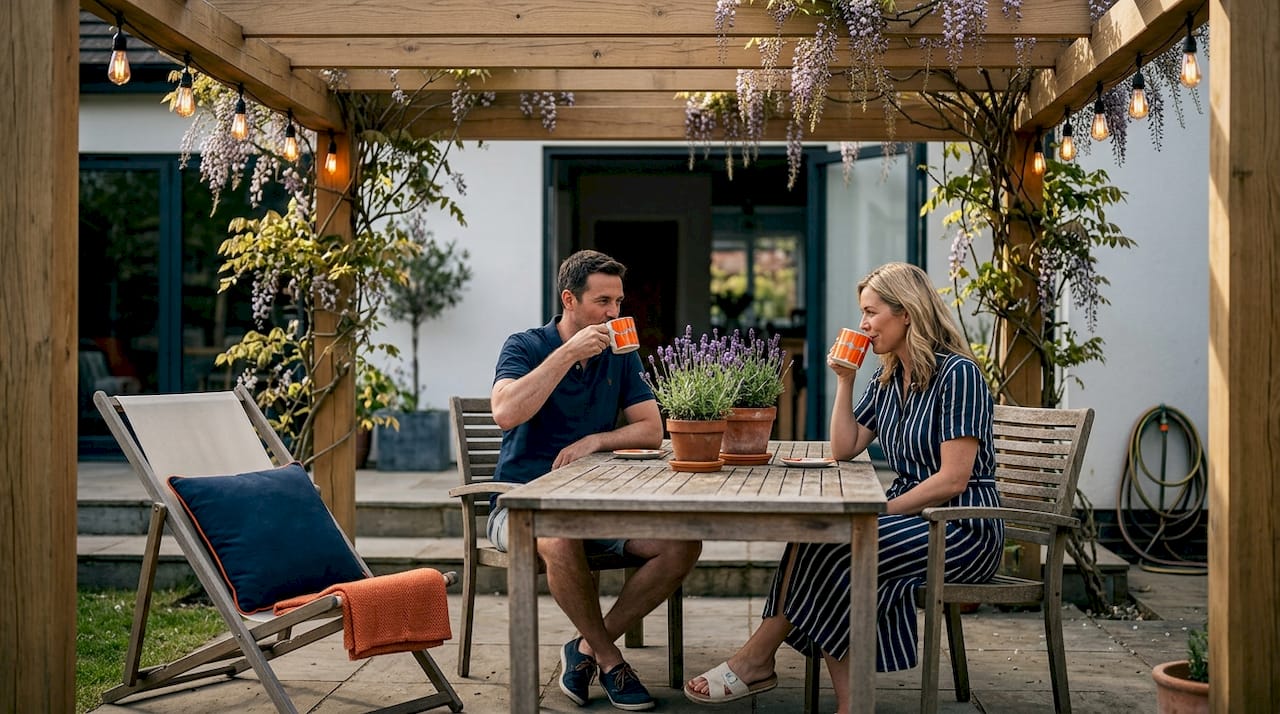
TL;DR:
Choosing a pergola requires balancing durability, style, comfort, planning rules, and low maintenance.
Material choice impacts weather resistance, with aluminium offering long-term low upkeep suited for northern climates.
Proper planning of roofing, lighting, and privacy enhances usability and aesthetic appeal of outdoor spaces.
Choosing the right pergola for a home or business in Yorkshire, Derbyshire, Nottinghamshire, or Lincolnshire is rarely straightforward. With so many designs, materials, and roofing options available, it is easy to feel pulled in too many directions before a single post has gone into the ground. Add local planning rules, unpredictable northern English weather, and the pressure to create something that looks stunning year after year, and the decision quickly becomes genuinely complex. This guide cuts through the noise with a practical, regionally focused checklist that covers everything from structural integrity to finishing touches, helping you make a confident, well-informed choice.
Table of Contents
Key Takeaways
Point | Details |
Prioritise core features | Durability, compliance, and comfort are essential for long-term satisfaction with your pergola. |
Mind the regulations | Most pergolas up to 2.5 metres high avoid planning permission hassles if placed correctly. |
Choose the right roof | Roofing and shade options greatly affect how much you use your outdoor space throughout the year. |
Personalise for style | Finishing touches like lighting and privacy screens elevate both the look and usefulness of your pergola. |
What makes a pergola essential?
A pergola is far more than a decorative frame at the end of the garden. At its best, it transforms an underused patch of outdoor space into a sheltered, social, and functional area that adds real value to a property or commercial venue. But not every pergola delivers on that promise. Understanding the criteria that separate an outstanding structure from a disappointing one is where good decision-making begins.
Our pergola features checklist identifies five key areas worth evaluating before committing to any product:
Durability: Can the materials handle rain, frost, strong winds, and UV exposure? In the North of England, weather resilience is non-negotiable.
Style and customisation: Does the design complement the existing garden, home exterior, or business brand identity?
Comfort: Is the height sufficient for easy movement? Does the roofing provide shade and shelter without feeling oppressive?
Permitted development compliance: Does the structure meet local planning rules, particularly around height and boundary proximity?
Low maintenance: Will it look good in five years without constant repainting, treating, or replacing?
Each of these criteria interacts with the others. A beautiful timber pergola that rots within three years, or an imposing steel structure that breaches planning limits, creates problems that far outweigh any initial visual appeal. As pergolas explained in our detailed overview, matching the right design to the right setting is as much about practicality as it is about aesthetics.
Pro Tip: Write down your primary use case before visiting a showroom or browsing online. A restaurant owner extending outdoor seating has very different priorities to a homeowner seeking a shaded summer retreat. Knowing your purpose narrows the options dramatically.
Structural essentials: Materials, height, and stability
Having identified the key criteria, it is worth examining the backbone of any pergola more closely. The structure itself determines how long your investment lasts, how safe the space is, and whether the build requires planning permission.
Material choices and their trade-offs
Timber remains popular for its natural warmth and traditional appeal. Hardwoods such as oak or iroko resist decay better than softwoods, but all timber requires periodic staining or treating to maintain its look and longevity. In Lincolnshire’s coastal-influenced air or Yorkshire’s wet winters, untreated softwood can deteriorate noticeably within just a few seasons.
Aluminium has become the go-to material for homeowners and commercial operators who want durability without ongoing maintenance. It does not rot, it handles moisture and frost without distortion, and it can be powder-coated in a wide range of colours to suit any property. The trade-off is a slightly more industrial aesthetic, though modern aluminium profiles are remarkably slim and elegant.
Steel offers exceptional strength and is often used for larger commercial installations. Its weight and the need for protective coatings to prevent rust make it a less practical choice for most residential gardens. Composite materials, typically combining timber fibres with recycled plastics, bridge the gap between the warmth of wood and the durability of aluminium, though they tend to carry a higher upfront cost.
Height, headroom, and planning compliance
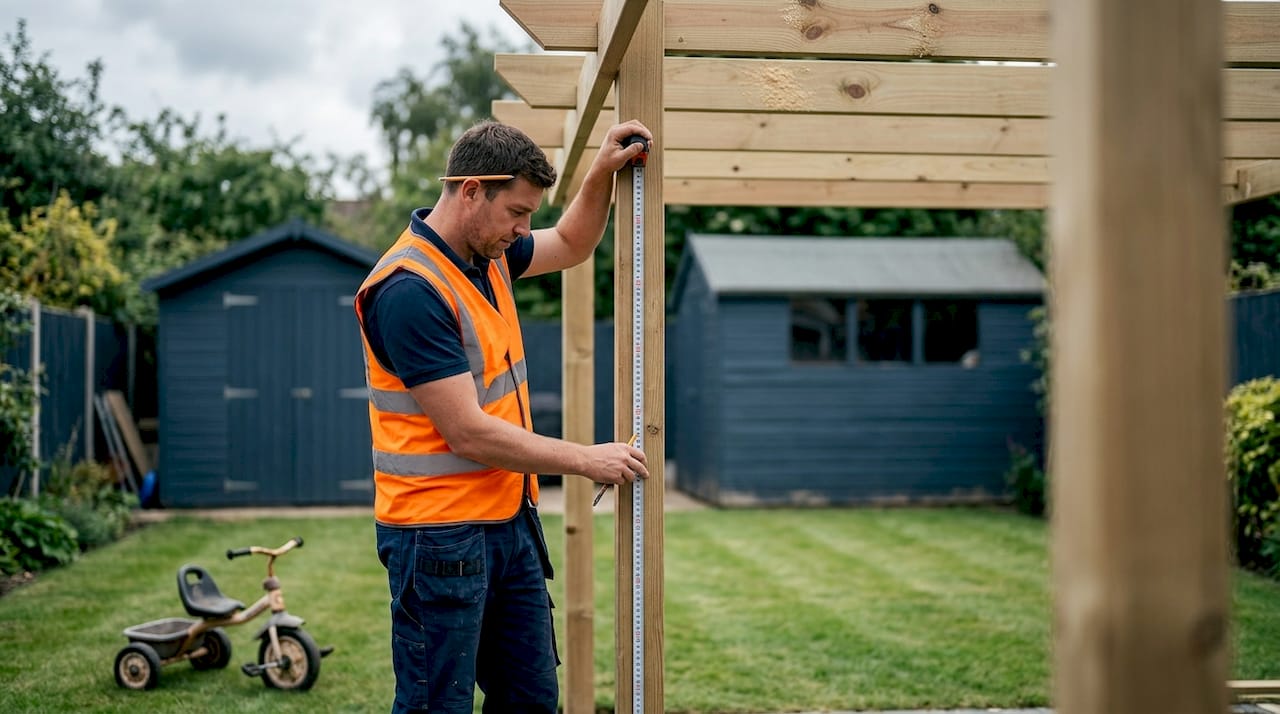
Getting the height right matters on two levels: comfort and compliance. Pergola heights of between 2.2 and 2.5 metres deliver comfortable headroom and generally fall within permitted development rules, with the key threshold being a maximum of 2.5 metres if the structure sits within 2 metres of a boundary. Exceeding this without permission can result in an enforcement notice and costly alterations.
Height | Headroom feel | Compliance notes |
Below 2.2m | Restrictive for many adults | Likely permitted, but uncomfortable |
2.2m to 2.5m | Comfortable for most users | Permitted development in most cases |
Above 2.5m within 2m of boundary | Spacious | Planning permission usually required |
Above 2.5m beyond 2m of boundary | Very spacious | Likely permitted, but always verify locally |
Stability features that matter
Footings deserve serious attention. A pergola anchored with shallow or undersized fixings becomes a liability in high winds, which are common across the Pennines and open Lincolnshire countryside. Concrete pad footings or bolt-down ground anchors, sized appropriately for the structure’s span and height, are the reliable minimum. Cross-bracing between uprights and robust bracket connections at beam junctions further improve wind resistance. For a full breakdown of what the installation process involves, our pergola installation guide walks through every stage from site preparation to final fixing.
Pro Tip: If you are in an exposed location, such as a hilltop property in Derbyshire or a coastal-adjacent site in Lincolnshire, ask your installer specifically about wind load ratings. Not all off-the-shelf pergolas are tested to the same standard.
Roofing, shade, and comfort upgrades
Once your structure is sound, the next layer of comfort comes from smart shading and roofing. This is arguably where the most significant decisions happen, because the roof determines how much of the year you can actually use the space.
Three main roofing approaches
Open lattice roofs are the classic pergola look. They provide partial shade, allow climbing plants to weave through the beams, and give the structure an airy, garden-friendly feel. The downside is obvious: they offer no protection from rain. For a patio dining area or a restaurant terrace in Nottinghamshire, a downpour means everyone retreats indoors.
Louvred roofs are a significant upgrade. Adjustable slats allow you to control the amount of light and ventilation, open fully on sunny days, and close to shed rain when the weather turns. Many motorised louvred systems can be adjusted via remote control or even smartphone apps. They are genuinely transformative for businesses that need the space to function rain or shine.
Retractable fabric roofs sit between these two options in both cost and flexibility. They provide excellent sun shading and some rain resistance, and retract to leave the space fully open when conditions allow. Our detailed guide to pergola roofing explained covers the technical differences in depth.
Roof type | Best for | Rain protection | Ventilation | Cost range |
Open lattice | Traditional gardens, plant lovers | None | Excellent | Low |
Louvred (manual) | Homes and small businesses | Good | Adjustable | Medium |
Louvred (motorised) | Commercial venues, frequent users | Excellent | Adjustable | High |
Retractable fabric | Residential patios | Moderate | Good when open | Medium |
Solid polycarbonate | Year-round, all-weather use | Excellent | Low | Medium |
Choosing the right option for your situation
A numbered approach helps simplify the decision:
Define your climate exposure. A south-facing sheltered garden in the Vale of York needs different shading to a north-facing terrace in the Derbyshire Peak District.
Set a usability target. If you want to use the space ten months of the year, prioritise rain protection. If June to August is enough, an open lattice may suffice.
Consider your audience. Commercial venues need solutions that handle unpredictable British weather without sending customers inside. Motorised louvred roofs consistently outperform other options in this context.
Factor in maintenance. Fabric panels may need replacing every ten to fifteen years. Powder-coated aluminium louvres typically last thirty years or more with minimal intervention.
Check compatibility with add-ons. Integrated guttering, LED lighting channels, and heater mounts are much easier to incorporate if designed into the structure from the outset.
As our overview of pergola roof types explained makes clear, the roof is not an afterthought. It is one of the most consequential choices in the entire project.
Finishing touches: Lighting, privacy, and style
With the fundamentals locked in, the right finishing touches can turn your pergola into a signature outdoor retreat. These details are often underestimated during planning, but they are what guests and customers notice first.
Lighting options that work hard
Integrated LED lighting strips fitted into the pergola’s beam channels create a warm, ambient glow that extends evening use well into autumn. Solar-powered pendant lights are a lower-cost alternative but depend on adequate daylight for reliable charging, which can be inconsistent across northern England from October onwards. Fairy lights remain perennially popular for residential gardens and add a relaxed, festive atmosphere with minimal investment. For commercial properties, brighter task lighting above seating areas keeps the space functional after dark, while subtle accent lighting highlights architectural features.
Privacy, screening, and enclosure
Side panels, whether fixed or retractable, offer shelter from wind and create a sense of enclosure that makes the space feel more like a room than a garden feature. Slatted timber or aluminium screens let in light while blocking sightlines from neighbouring properties, an important consideration in urban areas of Leeds, Sheffield, or Nottingham. Planter boxes integrated into the pergola’s uprights allow climbing plants such as wisteria or jasmine to add natural screening over time, softening the structure’s edges and connecting it more naturally to the garden.
Customisation for homes and businesses alike
Paint finishes, trims, and cladding options allow the structure to reflect the wider aesthetic of your property. For businesses, this presents a subtle but effective branding opportunity. Matching the pergola’s colour palette to a restaurant’s interior or a hotel’s external signage creates a coherent, professional impression. For homeowners, complementing the render, brick, or stonework of the house ensures the structure feels built-in rather than bolted-on.
The pergola design ideas we have collated show just how varied these combinations can be. Beyond aesthetics, there are tangible financial returns. Adding a well-specified pergola to a residential property has a measurable impact on kerb appeal and, in many cases, on resale value. The benefits of a pergola extend well beyond the lifestyle improvements most buyers initially consider.
Pro Tip: If you are investing in lighting and privacy screens, plan the cabling and fixing points during the structural design phase. Retrofitting electrical work or adding brackets after installation is always more expensive and less tidy.
Our perspective: What truly matters in a pergola for the North
After more than fifteen years of designing, supplying, and installing pergolas across Yorkshire, Derbyshire, Nottinghamshire, and Lincolnshire, we have seen a consistent pattern. Buyers who prioritise appearance above everything else often end up disappointed. Not because their pergola is unattractive, but because it underperforms in the northern English climate that it was never quite designed to handle.
There is a real temptation, especially when browsing online, to choose a pergola based on how it looks in a sun-soaked showroom photograph taken somewhere in southern Europe. The reality of a Pennine winter or a Lincolnshire coastal gust is quite different. Structures with inadequate footings shift and creak. Low-grade timber splits and stains within two or three seasons. Fabric roofing that lacks proper water runoff channels pools and sags. These are not hypothetical problems. They are the calls we receive from customers who went with the cheapest option first and are now looking for a proper solution.
Our experience tells us that the sweet spot lies in prioritising structural soundness and weather adaptability first, then layering in style. A correctly specified aluminium frame with a motorised louvred roof might cost more initially than a basic timber kit, but it will still be performing reliably in twenty years while the cheaper alternative has been replaced twice. The pergola setup workflow we recommend reflects this thinking: get the specification right from the start, work with installers who understand local conditions, and treat every finishing detail as an investment rather than an optional extra.
The uncomfortable truth is that beauty fades fast when a structure is not built to last. In the North, durability is not a premium feature. It is the baseline.
Upgrade your outdoor space with the perfect pergola
You now have the knowledge to evaluate pergola options with confidence, understanding what separates a structure that performs for decades from one that disappoints within seasons. The next step is putting that knowledge into practice with a team who knows your region inside out.
At Infinity Awnings, we have spent over fifteen years helping homeowners and businesses across Yorkshire, Derbyshire, Nottinghamshire, and Lincolnshire create outdoor spaces they genuinely use and enjoy. Our Infinity Awnings pergolas range covers everything from elegant residential structures to robust commercial installations, all backed by a limited pergola warranty that gives you lasting peace of mind. Get in touch today for a free, no-obligation quote tailored to your space, style, and budget.
Frequently asked questions
Do I need planning permission for a pergola in my garden?
Most pergolas under 2.5 metres and positioned more than 2 metres from your boundary do not require planning permission in the UK, though it is always worth checking with your local authority for any site-specific restrictions.
What is the best material for a low-maintenance pergola?
Aluminium and composite materials are the most practical choices, as they resist rot, frost, and moisture with minimal upkeep, making them well suited to the changeable northern climate across Yorkshire and its surrounding counties.
How can a pergola improve my business’s outdoor space?
A well-specified pergola extends usable seating or reception areas, provides shelter that keeps customers comfortable regardless of the weather, and creates a polished, professional impression that enhances the overall appeal of any commercial venue.
What is the typical height for a comfortable and compliant pergola?
A height of 2.2 to 2.5 metres provides sufficient headroom for most adults and aligns with the UK’s permitted development guidelines, striking the right balance between practicality and regulatory compliance.
Recommended
Comments