
Features of modern verandas: 2026 homeowner guide

TL;DR:
Modern verandas feature slim-profile roofs, ultra-thin frames, weather-resistant materials, and integrated smart technology for year-round outdoor living. They are designed with proportions matching existing architecture, using durable finishes like powder-coated aluminium, porcelain tiles, and composite decking to ensure longevity. Incorporating retractable roofs, automated controls, low-profile furniture, and built-in storage enhances usability and psychological wellbeing throughout all seasons.
A modern veranda is defined by clean architectural lines, balanced geometry, and a deliberate integration with the home’s existing structure to create a seamless outdoor living space. Unlike traditional covered porches, contemporary veranda styles prioritise visual openness, year-round usability, and a refined material palette that works with the home rather than against it. The features of modern verandas have evolved considerably, with smart technology, weather-adaptive roofing, and considered furnishing layouts now standard expectations rather than optional extras. This guide covers every key feature worth understanding before you plan or commission a new veranda.
1. Architectural design features that define modern verandas
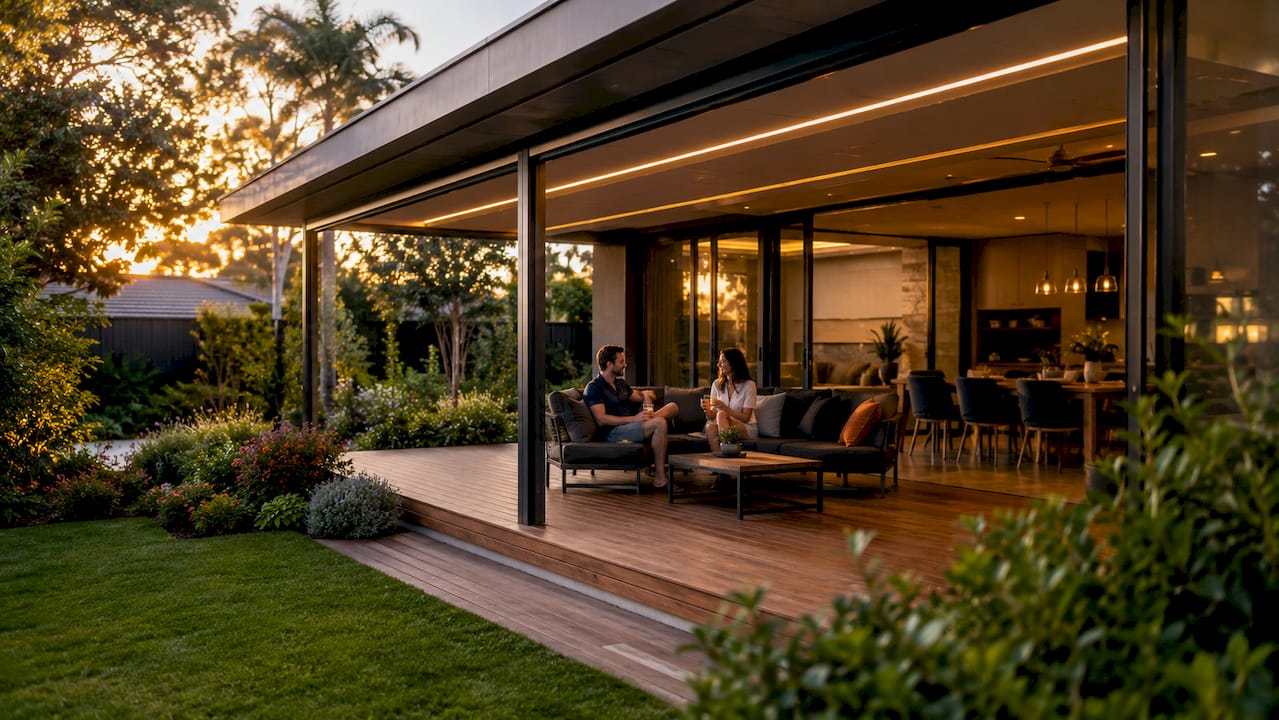
The most immediate distinction between a modern and a traditional veranda is the roof profile. Contemporary roof systems include slim-profile fixed translucent coverings, retractable canopies, and pergola-style open frameworks, each chosen to balance weather protection with light and airflow. The result is a structure that feels open rather than enclosed, even when fully covered.
Frame design is equally defining. Modern verandas use ultra-slim aluminium or steel profiles, often paired with glass balustrades or thin metal railings, to maximise openness and preserve sightlines into the garden. This approach removes the visual weight that characterises older timber-framed designs.
Proportional alignment with the home’s doors and windows is a non-negotiable principle in contemporary veranda design. The veranda’s width, height, and roofline are calibrated to echo the home’s existing geometry, reducing visual clutter and creating a coherent architectural statement.
Roof options: Fixed translucent polycarbonate or glass, retractable fabric or louvred systems, open pergola frames
Frame materials: Powder-coated aluminium, galvanised steel, engineered timber
Balustrades and screens: Frameless glass panels, slim metal verticals, modular glazing sections
Pro Tip: When planning proportions, align the veranda’s fascia height with the top of your nearest window or door frame. This single decision creates visual harmony without any additional design effort.
Flooring continuity is the final architectural layer. Large-format porcelain tiles, textured concrete, or composite decking that matches or complements the interior floor material anchors the veranda visually and makes the transition from inside to outside feel deliberate rather than abrupt.
2. Veranda materials and finishes that last
Material selection determines how a veranda looks on day one and how it performs after five Yorkshire winters. Treated wood, stone-look porcelain, and architectural concrete are the three structural material categories most commonly specified in modern veranda design, chosen for durability and their ability to age gracefully without heavy maintenance.
For the structure itself, powder-coated aluminium is the dominant choice in contemporary installations. It resists corrosion, holds colour without fading, and is available in any RAL shade, making it straightforward to match an existing window or door colour scheme.
Flooring materials deserve particular attention because they bear the most physical wear. Porcelain tiles rated R11 or above for slip resistance are the practical choice for UK climates. Composite decking from brands such as Trex or Millboard offers a timber aesthetic without the annual oiling and staining that natural wood demands.
Structural frames: Powder-coated aluminium, galvanised steel
Flooring: Large-format porcelain, composite decking, textured concrete
Roofing panels: Toughened glass, polycarbonate, powder-coated aluminium louvres
Furniture: Aluminium frames with quick-dry cushions, powder-coated steel, teak with protective oil finish
Colour palettes in modern veranda design lean towards anthracite grey, warm white, and natural stone tones. These shades support a minimalist aesthetic and age well against brick, render, or stone facades. Exploring veranda style options can help you identify which palette suits your home’s character before committing to materials.
3. Technology and features for year-round usability
A veranda that sits unused from October to March represents poor value. The defining technological features of modern verandas are precisely those that extend the usable season. Retractable roofs and adjustable side screens are the most impactful single upgrade, allowing the space to adapt from open summer dining to sheltered autumn entertaining within seconds.
Smart controls are now standard in premium installations. Systems from brands such as Weinor and Tarasola integrate wind and rain sensors that trigger automatic retraction, protecting the structure without requiring manual intervention. Climate sensors can also trigger heating elements or close side screens when temperatures drop.
Retractable or louvred roof: Adjusts to weather conditions and controls light levels throughout the day
Integrated drainage: Channels rainwater away from the structure and flooring, preventing pooling and damp
Automated side screens: Provide wind and privacy protection without permanent enclosure
Outdoor heating: Infrared heaters mounted to the roof structure deliver warmth without occupying floor space
Integrated lighting: Recessed LED strips in the roof frame and post-mounted spotlights extend evening use
Outdoor audio: Weatherproof speakers built into the ceiling or posts provide sound without visible cables
Smart control systems: Single-app or remote management of roof, screens, heating, and lighting simultaneously
Pro Tip: Specify a wind sensor as standard, not an optional extra. In exposed Yorkshire and Lincolnshire gardens, an automated retraction system pays for itself the first time a sudden gust arrives while you are away from home.
Automated lighting designed as an architectural feature layers ambient, task, and accent illumination rather than relying on a single overhead fitting. This approach creates mood and usability after dark without the visual clutter of multiple freestanding lamps.
4. Seating and furnishing layouts for modern verandas
Furniture choice and placement determine whether a veranda functions as a genuine living space or simply a covered area with chairs in it. Modular seating arrangements with integrated benches and slim-framed lounge chairs are the preferred approach in contemporary veranda design, because they can be reconfigured for dining, relaxing, or socialising without the space feeling overcrowded.
Low-profile furniture is a consistent feature of stylish veranda ideas. Pieces that sit below the sightline of the balustrade or screen panels preserve the sense of openness that the architecture creates. A sofa at 65cm seat height reads very differently from a traditional garden chair at 45cm, and the visual effect on the space is significant.
Dining zones: Extendable tables with stackable chairs allow the space to scale from two people to eight without permanent bulk
Lounge zones: Modular corner sofas with aluminium frames and quick-dry cushions in neutral tones
Built-in storage: Bench seating with lift-up lids or integrated planters at the perimeter reduce loose items and maintain clean lines
Rugs and textiles: Outdoor rugs in polypropylene define zones and add warmth without deteriorating in damp conditions
Built-in storage and planters serve a dual purpose: they reduce clutter and reinforce the architectural language of the veranda by integrating functional elements into the structure itself. A planter built into the balustrade line reads as part of the design rather than an afterthought.
For guidance on keeping these materials in good condition over time, Infinityawnings provides practical veranda maintenance advice covering everything from frame cleaning to cushion storage.
5. Psychological and lifestyle benefits of veranda living
The benefits of verandas extend well beyond shelter. Modern verandas function as threshold spaces, mediating between the fully private interior and the open public environment outside. This semi-public quality encourages low-intensity social connection, the kind that happens naturally when you are visible and approachable without being exposed.
Regular veranda use improves mental clarity, social bonds, and overall wellbeing over time. The sheltered outdoor environment supports mindfulness, light physical activity, and the kind of unhurried conversation that rarely happens indoors. For families, a well-designed veranda becomes the default gathering point across generations.
“Verandas serve as restorative threshold spaces, mediating between fully private interiors and public environments, fostering mental wellbeing.” Psychology Today
The connection to nature that a veranda provides is not incidental. Even in an urban garden, the ability to sit outside in light rain, hear birds, and feel a breeze has measurable effects on stress and mood. A veranda makes that experience accessible on a Tuesday morning before work, not just on a warm Saturday afternoon.
Designing for all-weather usability is therefore not just a practical consideration. It is what determines whether the psychological benefits of outdoor living are available to you 200 days a year or 60.
Key takeaways
Modern verandas deliver genuine lifestyle value only when architectural design, material quality, and technology features are planned together from the outset.
Point | Details |
Architectural coherence | Align the veranda’s roofline and proportions with existing doors and windows to reduce visual clutter. |
Material durability | Specify powder-coated aluminium frames and R11-rated porcelain or composite decking for low-maintenance longevity. |
Technology integration | Retractable roofs with wind sensors and integrated heating extend usable seasons significantly in UK climates. |
Furniture modularity | Low-profile, modular seating with built-in storage preserves openness and supports varied uses without clutter. |
Wellbeing value | Threshold space design encourages daily outdoor use, improving mental clarity and social connection over time. |
What I have learned designing verandas over 15 years
The single mistake I see most often is prioritising aesthetics over adaptability. A veranda that looks beautiful in a brochure but has no retractable roof, no heating, and no side screens will sit unused for eight months of the year in the north of England. The design has to earn its keep across every season, not just July.
My honest view is that minimalism is not just a stylistic preference for modern verandas. It is a functional principle. Every element you add to a veranda creates something to maintain, clean, or replace. The verandas that hold up best over five and ten years are the ones where the designer resisted the temptation to fill every corner. Slim frames, a coherent colour palette, built-in rather than freestanding furniture, and one well-chosen outdoor rug will outlast any trend.
The other lesson worth sharing is that flooring continuity is undervalued. When the tile or decking inside the house flows directly onto the veranda without a threshold step or a change in material, the space feels twice as large and twice as intentional. That single decision costs nothing extra at the planning stage and transforms how the finished space reads.
— Andrew
Explore bespoke pergolas and verandas from Infinityawnings
If the features covered in this guide have given you a clearer picture of what your outdoor space could become, Infinityawnings can help you take the next step. With over 15 years of experience across Yorkshire, Derbyshire, Nottinghamshire, and Lincolnshire, the team designs and installs outdoor structures built to perform in real British weather. From retractable roof systems to fully integrated lighting and heating, every installation is tailored to the home and the homeowner. Browse Infinityawnings’ bespoke pergola range to see how a beautifully engineered outdoor structure can transform your garden into a space you use every day of the year.
FAQ
What are the key features of a modern veranda?
Modern verandas are defined by slim-profile roofing, ultra-thin aluminium frames, weather-resistant flooring, and integrated technology such as retractable canopies, LED lighting, and smart climate controls. These features combine to create a year-round outdoor living space that is both functional and visually open.
Which materials are best for a modern veranda in the UK?
Powder-coated aluminium frames, R11-rated porcelain tiles or composite decking, and toughened glass panels are the most durable and low-maintenance choices for UK conditions. Aluminium furniture with quick-dry cushions completes the material palette without requiring seasonal storage.
How do I choose between a fixed and retractable veranda roof?
A fixed translucent roof suits homeowners who want permanent shelter and maximum light year-round, while a retractable or louvred system suits those who want flexibility between open and covered configurations. In exposed UK locations, a retractable roof with an integrated wind sensor offers the best balance of protection and adaptability.
Can a modern veranda improve mental wellbeing?
Research confirms that verandas function as restorative threshold spaces that encourage daily outdoor use, reduce stress, and support social connection. Regular use of a sheltered outdoor space has measurable benefits for mental clarity and overall wellbeing.
How long does a modern veranda typically last?
A well-specified veranda using powder-coated aluminium and quality roofing materials will last 20 to 30 years with routine maintenance. Following a structured maintenance programme for frames, glazing, and drainage systems protects the investment and preserves appearance over time.
Recommended
Comments