
How awnings improve outdoor acoustics: homes & businesses
- Andrew Crookes

- Apr 17
- 8 min read
TL;DR:
Awnings with acoustic properties reduce outdoor noise by absorbing, diffusing, and redirecting sound.
Dense fabrics like acrylic with acoustic backing offer significantly better noise reduction than standard materials.
Proper selection, installation, and maintenance of acoustic awnings improve outdoor comfort for homes and businesses.
Most homeowners think of awnings as purely a sun and rain shield. That assumption costs them one of the most underrated benefits in outdoor design: genuine acoustic comfort. Whether you run a café terrace in Sheffield, own a garden in Nottinghamshire, or manage a hotel courtyard in Lincoln, unwanted noise is quietly ruining the experience. The good news is that the right awning can soften sound, reduce echo, and transform a noisy outdoor area into a space people actually want to spend time in. This guide explains exactly how that works and what to look for.
Table of Contents
Key Takeaways
Point | Details |
Awnings reduce noise | Modern awnings can dampen unwanted sounds, making outdoor spaces more private and calm. |
Material and design matter | Choosing the right fabric and style is essential for optimal acoustic performance. |
Custom options available | Suppliers like Infinity offer bespoke acoustic awnings tailored to local environments. |
Care boosts sound control | Proper maintenance ensures your awning maintains its noise reduction abilities over time. |
Understanding the acoustic challenges of outdoor spaces
Before we talk solutions, it helps to understand why outdoor noise is such a persistent problem. Unlike an indoor room, your patio or garden has no walls to contain sound. Everything bounces or travels freely, and the result is a noisy, unsettled environment that makes conversation difficult and relaxation unlikely.
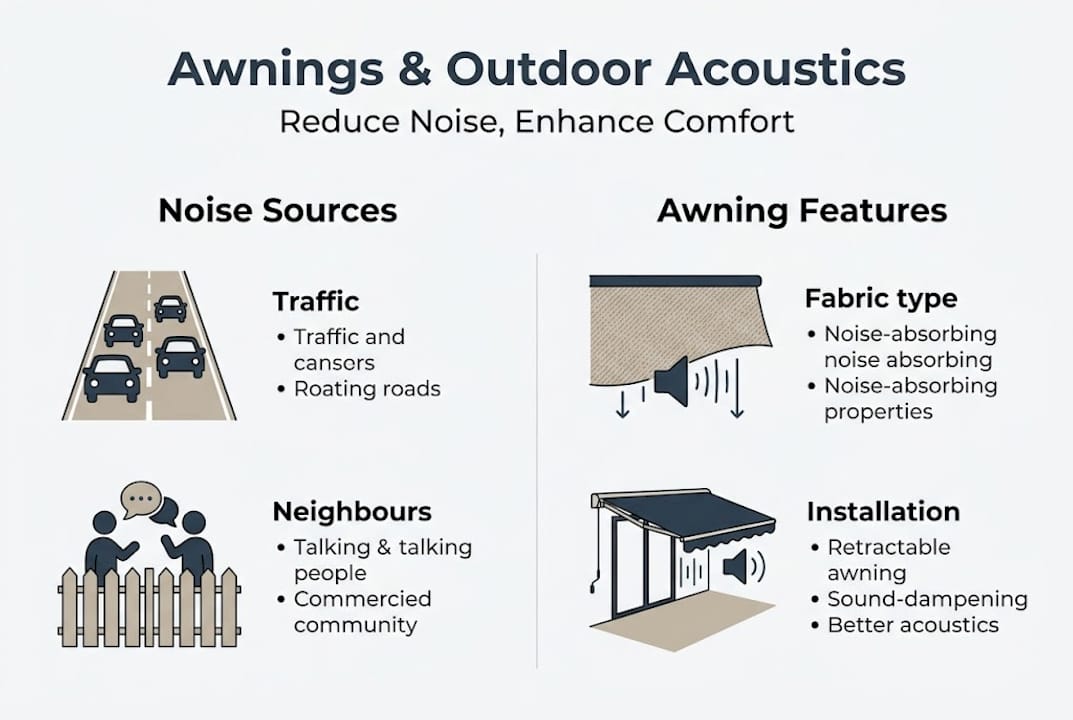
The most common sources of outdoor noise include:
Heavy road traffic and passing vehicles
Neighbours’ gardens, conversations, and music
Commercial activity such as deliveries, machinery, or outdoor speakers
Wildlife, especially in rural parts of Yorkshire and Lincolnshire
Ambient urban din from town and city centres
As garden and patio noise sources show, traffic, neighbours, and urban din consistently rank as the top complaints from homeowners trying to enjoy their outdoor space. The impact is real. Disrupted conversations, an inability to unwind, and reduced privacy all chip away at the usability of an area you have invested money in.
Urban and rural settings face different problems. In cities like Leeds or Derby, traffic and commercial noise dominate. In rural villages across the Wolds or the Peak District fringe, wind, agricultural machinery, and wildlife create their own acoustic challenges. Neither environment is naturally quiet without some intervention.
For businesses, the stakes are even higher. Cafés, restaurants, and pub gardens rely on atmosphere. Excessive noise or poor sound separation between tables drives customers away and reduces dwell time, which directly affects revenue. A 2021 survey found that over 60% of hospitality customers cited noise as a key factor influencing where they choose to sit.
“The outdoor dining experience lives or dies by its acoustic environment. Customers do not return to spaces where they cannot hear each other speak.”
Traditional fixes like garden fences, hedges, and brick walls help with privacy but fall short on sound control. They block line-of-sight noise but do little to manage diffuse sound that travels over and around barriers. That is where overhead solutions, specifically quality awnings with acoustic properties, offer something genuinely different. Explore the retractable awning benefits to see why more homeowners and businesses are reconsidering how they approach outdoor comfort.
How do awnings create acoustic comfort?
So how exactly does a piece of fabric stretched overhead make your patio quieter? The answer lies in three physical mechanisms that work together.
Sound absorption: The awning fabric absorbs acoustic energy rather than reflecting it back into the space. Dense, layered materials with acoustic backing trap sound waves and convert them into tiny amounts of heat energy, reducing the overall noise level beneath the canopy.
Sound diffusion: Rather than allowing sound to bounce cleanly between hard surfaces (paving, walls, glass), the angled and textured surface of an awning scatters sound waves irregularly. This breaks up echo and reduces the harsh, reverberant quality that makes outdoor spaces feel loud.
Sound redirection: A well-pitched awning deflects noise that travels from above or at an angle, steering it away from the seating area below. This is especially useful for properties near elevated roads or overlooked by taller commercial buildings.
Awnings improve outdoor comfort through these combined mechanisms, but the material matters enormously. Standard polyester awning fabrics offer minimal acoustic benefit. Types of acoustic awnings that use acrylic fabrics with acoustic backing significantly outperform basic options because acrylic fibres are denser and the backing layer adds a secondary absorption zone.
“Custom acoustic awning solutions outperform standard models for noise reduction, offering quantifiable benefits for both residential and commercial settings.”
To illustrate the difference, here is a comparison of common awning options:
Awning type | Acoustic performance | Best suited for |
Standard polyester | Low | Basic shade only |
Acrylic fabric (no backing) | Moderate | Residential patios |
Acrylic with acoustic backing | High | Gardens, café terraces |
Multi-layered acoustic canopy | Very high | Commercial venues, busy roads |
Pro Tip: When placing your order, specifically request acoustic add-ons such as a laminated backing or a secondary drop-screen panel. These small upgrades make a measurable difference and are often available at modest additional cost.
Comparing awning fabrics and designs for noise reduction
Not all awnings are equal when it comes to managing sound. Once you understand the mechanisms, comparing specific options becomes straightforward.
Popular fabric types and their acoustic properties:
Acrylic fabrics (such as Sunbrella or Dickson branded cloths): Dense weave, UV stable, and naturally better at sound absorption than synthetic alternatives
Polyester fabrics: Lighter and less expensive, but with lower density they offer limited acoustic benefit
Acoustic-laminated blends: A specialist fabric with a bonded acoustic layer, delivering the best noise reduction figures available in awning form
Beyond fabric, design elements play a significant role:
Overhang depth: A longer projection creates more coverage and redirects more sound away from the seating zone
Pitch angle: A steeper downward angle improves sound deflection from above
System size: Larger awnings covering more surface area naturally absorb more sound energy
Multi-layered systems: Combining a main canopy with vertical drop screens creates an enclosed acoustic environment
Factors that most influence acoustic performance include:
Fabric density and construction method
Presence or absence of acoustic backing
Installation angle and projection depth
Whether side screens are included
Proximity to reflective surfaces such as glass walls or concrete paving
Leading custom acoustic awnings suppliers provide measurable noise reduction data alongside their product specifications. Always ask for this when comparing quotations. A reputable installer will be transparent about what each product can realistically achieve.
When it comes to quality awning choices, investing in a better fabric and frame system pays dividends over years of use, not just in acoustics but in durability and appearance too.

Pro Tip: Match your awning choice to your dominant noise problem. A busy street in front of your property calls for a deep-projection system with a steep pitch. A lively neighbouring garden is better addressed with side drop screens combined with a main canopy.
Choosing and caring for awnings with acoustic benefits
Knowing what to look for is only half the task. Choosing and maintaining an acoustic awning correctly ensures it performs well for many years.
How to choose the right acoustic awning, step by step:
Identify your primary noise source before approaching any supplier. Is it road traffic, neighbours, or general urban din? The answer shapes every decision that follows.
Measure your space accurately and consider how much overhang projection is structurally possible on your building.
Request acoustic fabric options specifically. Ask suppliers whether they stock acrylic with acoustic backing or laminated acoustic blends.
Ask for verified noise reduction data on any model you are considering. Reputable companies such as Infinity Awnings supply custom acoustic awning solutions with clear performance specifications.
Factor in extras such as drop screens, integrated valances, and side cassette housings, all of which contribute to overall acoustic performance.
Use a professional installer familiar with the local conditions in your area, whether that is patio installations in Retford or city-centre commercial projects across the region.
Top care and maintenance tips for sustained acoustic performance:
Clean fabric regularly with a soft brush and mild soap to prevent dirt compacting fibres and reducing absorption
Retract the awning during high winds to avoid stress on the acoustic backing layer
Inspect fabric annually for small tears or delamination of backing material
Check fixings and frame joints each spring, as loose components can create rattling noise of their own
Consider outdoor shade energy savings as a secondary benefit worth tracking alongside acoustic performance
Maintenance task | Frequency | Impact on acoustic life |
Fabric cleaning | Monthly (spring to autumn) | Preserves fibre density |
Full inspection | Annually | Catches early backing wear |
Frame and fixing check | Every spring | Prevents noise from loose parts |
Professional service | Every 3 to 5 years | Restores full performance |
Pro Tip: Schedule an annual acoustic check alongside your general maintenance visit. Weather, UV exposure, and heavy use can all degrade sound control over time, and catching wear early prevents a costly full replacement.
Why acoustic performance deserves as much focus as shade
Here is an opinion shaped by fifteen years of installing outdoor structures across Northern England: people always ask about shade first, UV protection second, and noise control almost never. Yet when we ask customers what they actually disliked about their previous outdoor space, the answer is almost always noise.
Temperature is manageable. You put on a jumper, you move inside for a moment, or you adjust the awning angle. But persistent, intrusive noise is relentless. It makes outdoor dining feel stressful, garden relaxation feel impossible, and commercial terraces feel unpleasant even when the weather is ideal.
The businesses and homeowners who get the most from their outdoor investments are the ones who treat awnings and home comfort as a complete package, not a single-function purchase. The future of outdoor spaces is integrated. Sun control, rain protection, and acoustic management should be considered together from the very start of any project.
If you want to stay ahead of that thinking, our awnings news and insights covers the latest product developments and installation trends across the region.
Enhance your outdoor comfort with Infinity Awnings
If this article has shifted how you think about your outdoor space, you are already ahead of most people commissioning new awnings. Acoustic comfort is achievable, measurable, and well within reach for homes and businesses across Yorkshire, Derbyshire, Nottinghamshire, and Lincolnshire.
At Infinity Awnings, we supply and install acoustic-grade retractable awning solutions tailored to your specific noise environment. Whether you want a beautifully designed garden pergola that doubles as a sound buffer, or a sleek veranda installation for a commercial terrace, our team will guide you through every option. Book a free consultation today and discover what a quieter, more comfortable outdoor space feels like.
Frequently asked questions
How much noise reduction can an acoustic awning provide?
High-quality acoustic awnings can deliver quantifiable noise reduction of several decibels beneath the canopy, enough to make conversations noticeably clearer and the environment significantly more peaceful.
Are acoustic awnings worth it for small gardens or patios?
Absolutely. Compact spaces often benefit most because sound control in small areas efficiently targets close-range noise from neighbours and passing traffic, where the acoustic impact is most immediately felt.
Can I retrofit an existing awning for better acoustic performance?
In many cases, an acoustic backing can be added or fabric swapped, but a full upgrade will always outperform a partial retrofit. As a rule, acrylic with acoustic backing delivers far better results than retrofitted polyester.
Who supplies acoustic awnings in Yorkshire and the East Midlands?
Infinity Awnings supplies and installs custom acoustic solutions across Yorkshire, Derbyshire, Nottinghamshire, and Lincolnshire, covering both residential gardens and commercial outdoor spaces.
Recommended
Comments