
How long is the lead time for awnings in the UK?
- Andrew Crookes

- 33 minutes ago
- 8 min read
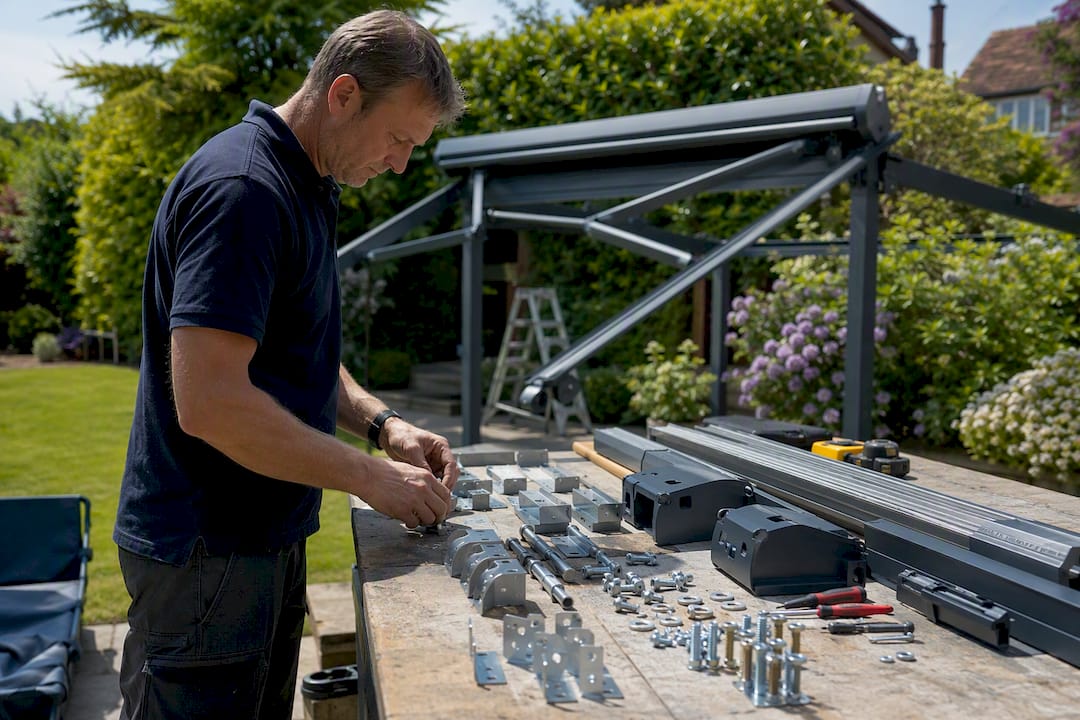
Most made-to-order awnings take 3 to 6 weeks from order to installation, though some retailers quote 3 to 4 weeks for routine, non-bespoke orders. Stocked models can go in far sooner. Fitting itself is quick: most retractable awnings take 2 to 4 hours on site, with complex jobs stretching to a full day or two.
Three things move that window:
Product type: stocked designs install faster than bespoke, motorised builds.
Season: order in April and you’re competing with everyone else who wants shade by June.
Site complexity: awkward brackets, no existing power supply, or scaffolding access all add days.
Key Takeaways
Awning lead time in the UK typically runs 3 to 6 weeks from order to installation, with on-site fitting itself taking only 2 to 4 hours in most cases.
Point | Details |
Total lead time | Expect 3 to 6 weeks from order confirmation to a fitted awning, longer for bespoke builds. |
Installation is quick | Standard fitting takes 2 to 4 hours; complex jobs with electrics or access issues can take 1 to 2 days. |
Season drives delay | Ordering in spring or early summer means competing for limited production and fitting slots. |
Power supply matters | Electric awnings need existing outdoor wiring; missing this adds an electrician booking to the schedule. |
Infinity Awnings’ process | Site survey, order confirmation, production booking, delivery, and installation run as one coordinated sequence across Yorkshire, Derbyshire, Nottinghamshire, and Lincolnshire. |
Table of Contents
What happens during manufacturing, and how long does each stage take?
Once you sign off a quote, the awning doesn’t go straight into production. There’s a confirmation stage first, where the installer double-checks your measurements against the technical specification and confirms bracket type for your wall or fascia. This usually takes a few days, sometimes a week if a second site visit is needed.
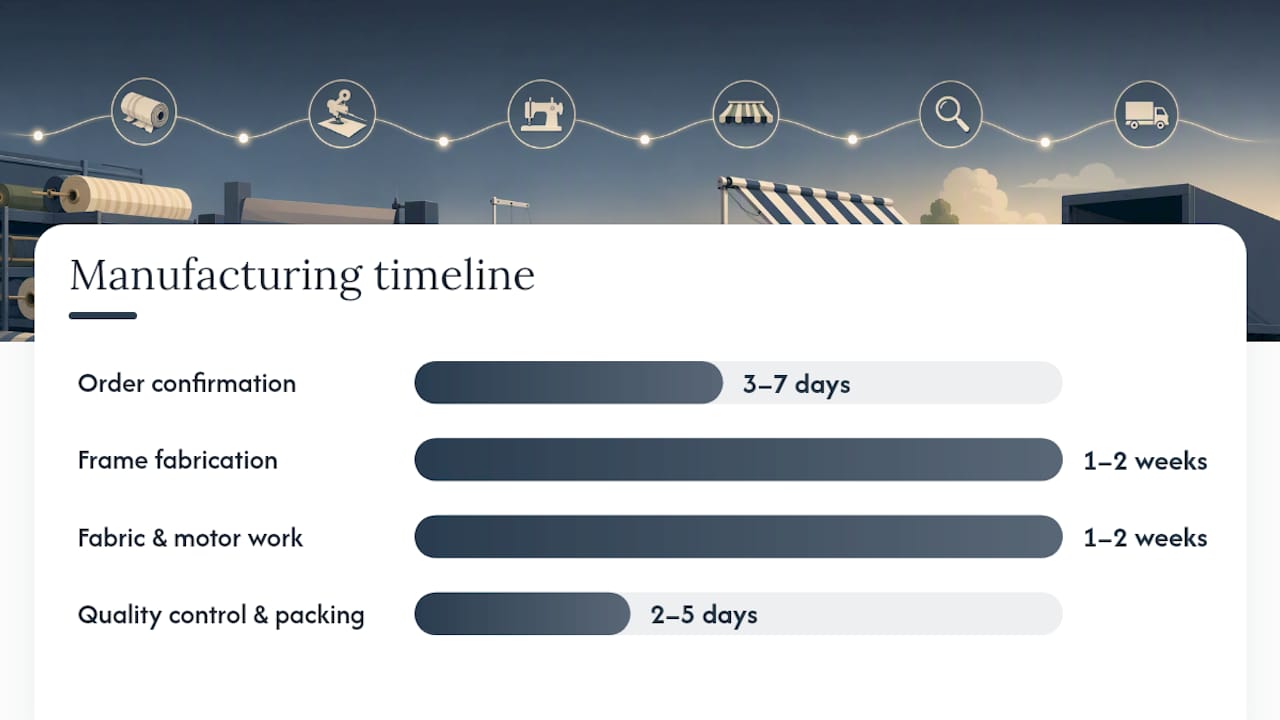
After that, the factory takes over. Fabric is cut to your specific dimensions, the frame is fabricated and powder coated in your chosen colour, and if you’ve gone electric, the motor gets assembled and wired into the arm mechanism. This core production stage typically runs 2 to 4 weeks, depending on order volume at the factory.
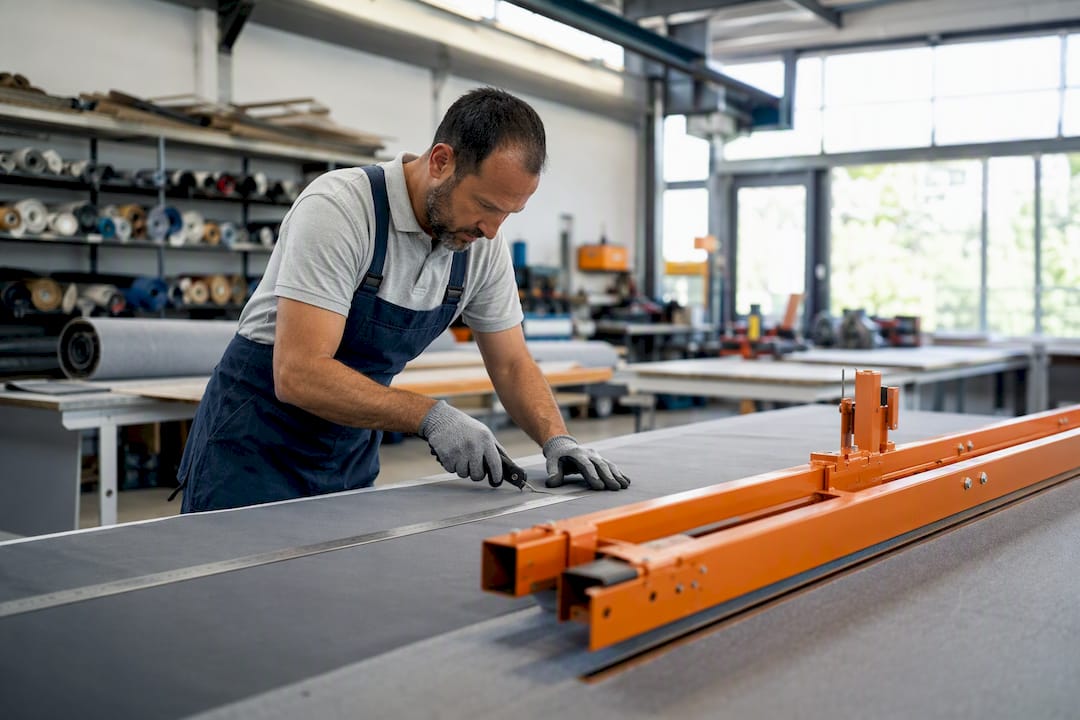
Before dispatch, the unit goes through quality control and packing, which adds a few more days on top.
Roughly, here’s where the time goes:
Order confirmation and technical check: 3 to 7 days
Frame fabrication and powder coating: 1 to 2 weeks
Fabric cutting and motor assembly: 1 to 2 weeks
Quality control and packing: 2 to 5 days
Bespoke sizes, unusual fabric patterns, or add-ons like LED lighting and integrated weather sensors all extend the fabrication window, because these components often come from separate suppliers who need to sync their own schedules.
Pro Tip: If your project isn’t time-critical, ask your installer whether a standard size within a few centimetres of your ideal fit is available. It can shave a week or more off production versus a fully bespoke cut.
How does delivery work once your awning is manufactured?
Delivery method depends on what you’ve ordered. A small manual awning might arrive by standard courier in a single parcel. Larger retractable cassettes, pergola components, or anything with a motor and wide box housing usually need a haulier with a tail lift, because these units are too long and heavy for a standard parcel van.
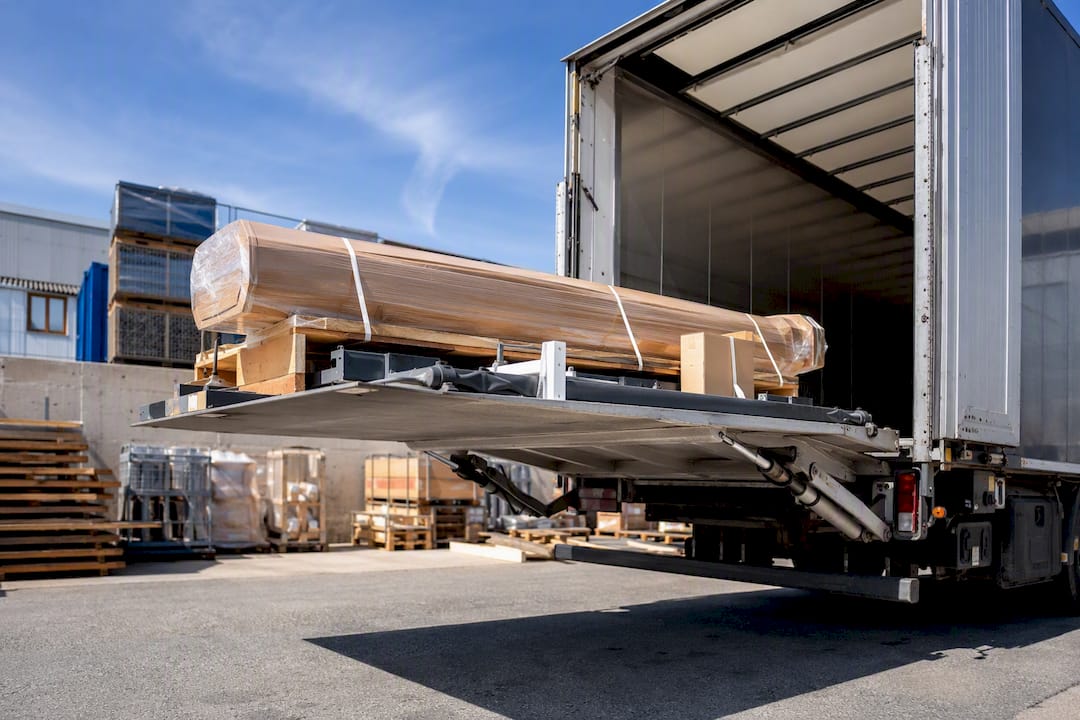
From European factories, where many premium brands including Weinor and Llaza manufacture, transit to a UK depot typically takes a matter of days once the order clears production. From there, final delivery to your installer or directly to site depends on regional scheduling.
What matters most at this stage is coordination:
Confirm someone will be available to receive a large item, since haulier deliveries often need a signature and can’t simply be left on a doorstep.
Give your installer accurate access details (narrow driveways, gated properties, flats above ground floor) before delivery is booked.
Ask whether delivery and installation are scheduled together or separately, since some installers hold stock briefly before fitting.
Getting these details right early avoids the frustrating scenario of a van turning up with nobody home to take a large box off it.
How long does professional installation actually take?
For a standard retractable awning, expect 2 to 4 hours on site, in line with industry cost guides. Patio awnings generally go up within a single day once delivered, though the exact time depends on your wall construction and any accessories fitted alongside.
A typical install follows this sequence:
Bracket positioning and marking on the wall or fascia.
Fixing brackets, checking for solid masonry or structural timber behind the surface.
Mounting and securing the frame onto the brackets.
Wiring and commissioning the motor if the awning is electric.
Checking pitch angle, tension, and weatherproofing before handover.
Electric awnings typically add commissioning time to that 2 to 4 hour window, though the bigger risk isn’t the wiring itself. It’s whether you have an outdoor power supply already in place. If not, you’ll need an electrician involved, and that’s a separate booking entirely.
Jobs stretch to 1 to 2 days when there’s render or rendered insulation to drill through safely, when scaffolding is needed for upper storeys, or when structural reinforcement is required behind a weak wall.
Pro Tip: Ask your installer to check wall construction during the site survey, not on installation day. Discovering cavity insulation or a hollow wall on the day of fitting is the single most common cause of an install running over.
What factors actually change your lead time?
Some of these are within your control. Others aren’t.
Stock availability: a stocked model can be fitted in days; a bespoke one always joins the production queue.
Size and customisation: oversized widths, unusual projections, or non-standard colours often mean waiting on specific components.
Motors and electronics: integrated motors, remote controls, and weather sensors are typically supplied by third parties, adding their own lead time.
Fabric and colour choice: popular patterns sometimes run low mid-season, forcing a wait for restock.
Installer workload: a small local team booked solid for six weeks can’t magically fit you in sooner, however fast the factory works.
Site conditions: difficult access, permissions for listed buildings, or bad weather on the scheduled day all push installation back.
Reviews of awning retailers consistently show that customers who order late in the season, expecting a quick turnaround, are the ones most frustrated by delays. Ordering with realistic expectations from the start avoids most of that disappointment entirely.
Why does the summer rush change everything?
Demand for awnings rises sharply before and during spring and summer, and it affects both ends of the process: factories fill their production runs, and local installers fill their fitting diaries. The result is the same lead time you’d get in January stretched considerably longer if you order in May.
If you want an awning up for a specific event, a garden party, a summer opening, or before school holidays, book several months ahead rather than a few weeks.
Book by late winter for a guaranteed spring fitting slot.
Expect longer waits, not shorter ones, the closer you get to peak summer.
Ask about stocked or ex-display models if your deadline is genuinely urgent.
Pro Tip: If you’re flexible on colour or fabric pattern, mention that upfront. Installers can sometimes offer a much earlier slot for whatever’s already in stock rather than what’s on the brochure page.
How can you speed up your own order?
Measure the space accurately and provide clear photos or a simple sketch when you enquire, following a proper measurement guide rather than guessing.
Check whether an outdoor power supply already exists if you want an electric awning, and book an electrician early if it doesn’t.
Choose a standard size or in-stock fabric where the calendar matters more than the exact pattern.
Clear access to the fitting area and agree a flexible date range with your installer rather than one fixed day.
How does Infinity Awnings handle timing for customers?
With over 15 years supplying brands including Weinor, Llaza, Selt, Tarasola, and Morvelle, Infinity Awnings runs a straightforward sequence: site survey, order confirmation, production booking, delivery, then installation.
Coverage spans Yorkshire, Derbyshire, Nottinghamshire, and Lincolnshire.
A site survey confirms wall type, access, and power before anything is ordered.
Aftercare and maintenance are offered once the awning is fitted.
Pro Tip: Book your discovery call as soon as you’re seriously considering an awning, even before you’ve picked a fabric. It locks in a site survey slot before the calendar fills.
What UK homeowners get wrong about awning timelines
Most people underestimate the manufacturing stage and overestimate the installation stage. The fitting itself, 2 to 4 hours in the majority of cases, is the smallest part of the wait. The real bottleneck sits in production, and production capacity is finite before summer even starts.
The advice to “order early” gets repeated so often it’s become background noise, which is exactly why people ignore it. But the maths is simple: if factories and installers are both booking up weeks ahead by April, ordering in March instead of May isn’t cautious, it’s the difference between having shade for your garden in June or waiting until August.
What I’d prioritise first isn’t the fabric or the colour. It’s confirming your power supply situation and getting a site survey booked, because those two things determine whether your installation runs to plan or turns into a two-day job with an electrician involved. Get the boring logistics sorted before you fall in love with a specific pattern.
Get your awning ordered before the rush
Reading this probably means you’re weighing up timing against a spring or summer deadline, and that’s exactly where planning ahead pays off. Infinity Awnings runs the entire process, survey, order, production booking, delivery, and fitting, as one coordinated schedule rather than separate handoffs between suppliers, which is where most delays creep in elsewhere.
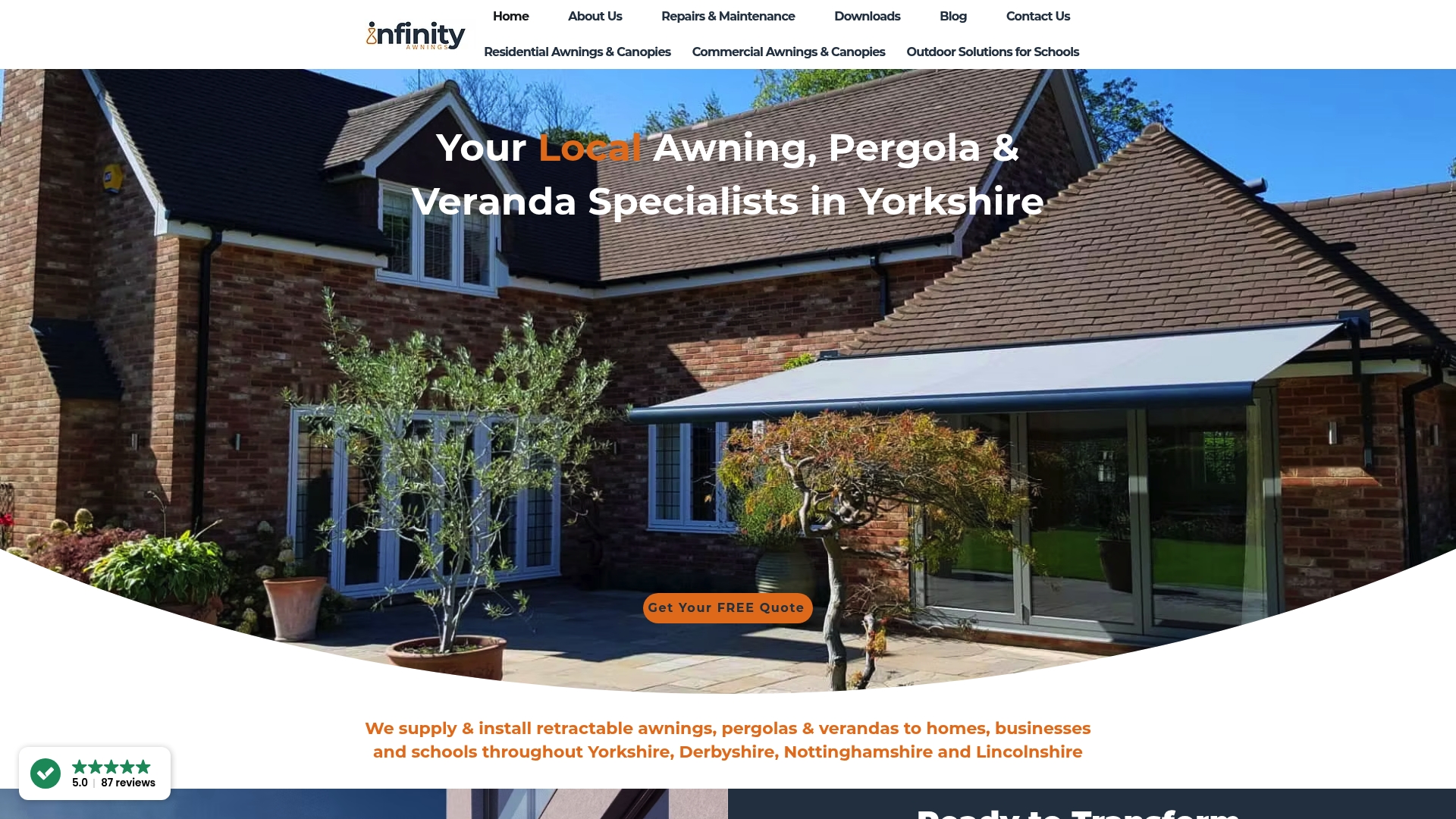
If your outdoor space needs more than an awning, the same booking logic applies to pergolas, which follow a similar site survey and production sequence. For installation-day preparation, the guide on installing retractable awnings walks through what to expect on the day itself. And if professional fitting versus a DIY attempt is still an open question, this homeowner’s guide to professional installation is worth a read before deciding.
Book a discovery call now and get a site survey scheduled while spring slots are still open.
Frequently asked questions
How far in advance should I order an awning before summer? Book by late winter or early spring if you want installation before peak summer, since demand rises sharply once the weather turns.
Does an electric awning take longer to install than a manual one? Only slightly on site, roughly the same 2 to 4 hour window, but if you don’t already have outdoor power, arranging an electrician can add days or weeks.
Can I get an awning installed faster if I choose a stocked model? Yes. Stocked or ex-display units skip the multi-week production queue entirely and can often be fitted within days of ordering.
Why do some installations take a full day or two instead of a few hours? Difficult wall construction, scaffolding for upper floors, or additional electrical work are the usual reasons a job runs beyond the typical 2 to 4 hour window.
Sources
Recommended
Comments