
Storm damage awning insurance UK: what's covered
- Andrew Crookes

- 5 minutes ago
- 8 min read
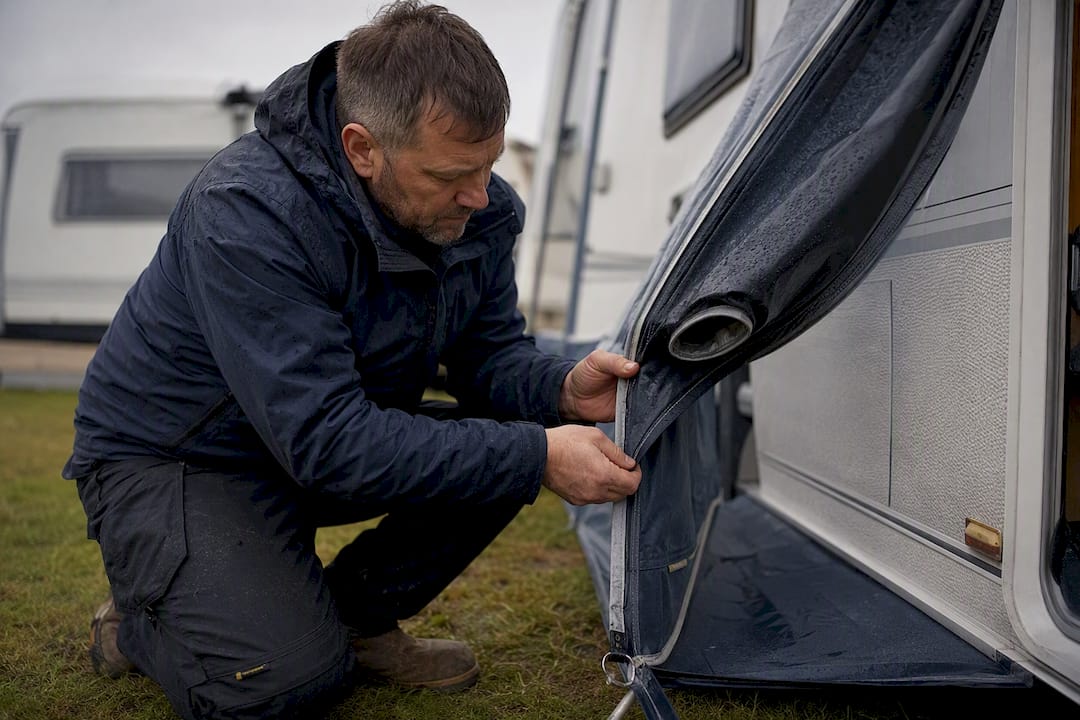
Yes, most UK caravan and motorhome policies cover storm damage to an awning, but only when specific conditions are met. Insurers pay out when the damage happens suddenly, through wind or debris, while the awning is properly attached and in use. They refuse claims when the awning was left up unattended, badly fitted, or simply worn out.
If a storm has just hit yours, do three things now:
Secure the site and stop further damage where it’s safe to do so.
Photograph everything before you move or clear anything away.
Notify your insurer within the time limit stated in your policy, usually 24 to 48 hours.
The detail on limits, exclusions, and how to build a claim insurers actually accept follows below.
Key Takeaways
Storm damage awning insurance UK cover exists on most caravan and motorhome policies, but it hinges on acting on weather warnings and keeping the awning attended and properly documented.
Point | Details |
Cover depends on behaviour | Insurers pay out for sudden storm damage but reject claims where the awning was left up unattended, often past 72 hours. |
Limits are often capped | NFU Mutual’s example limit sits at £1,000, well below the average £2,856 storm damage claim reported industry-wide. |
Documentation wins claims | Photos with context and scale, proof of ownership, and a factual timeline all strengthen a claim. |
Named items close the gap | High-value awnings often need declaring separately to avoid a shortfall against accessory caps. |
Professional inspection helps | Infinity Awnings provides written estimates and condition reports that support insurer evidence requirements after storm damage. |
Table of Contents
What insurers usually cover for storm damage awning insurance UK claims
Storm cover typically applies when wind gusts, flying debris, or a sudden structural failure caused by weather damages an awning that was attached and in use. The Caravan and Motorhome Club’s group policy insures awnings during use or storage, and insurers generally treat an “on pitch” awning attached to your outfit far more favourably than one left detached or stored separately, according to Cover4Caravans.
Two scenarios show how this plays out in practice:
Accepted: A gust flattens an attached awning overnight with no forecast warning issued beforehand. The owner reports it the next morning with photos and a repair estimate.
Accepted with conditions: The awning survives a forecast storm but is damaged the following week in a second, unexpected squall. Cover usually holds because the owner acted reasonably on the first warning.
The pattern insurers look for is straightforward: was the damage sudden and unforeseeable, or was it something a careful owner could have prevented? That question decides most outcomes long before an assessor even arrives.
Common exclusions and conditions that cause denials
Most rejected claims come down to timing and behaviour, not the weather itself. Standard exclusions across UK caravan policies include:
Wear and tear or gradual deterioration of the fabric or frame.
Poor maintenance, rust, or corrosion at fixing points.
Incorrect setup or a known fitting defect.
Leaving the awning up while the outfit is unattended, often for 72 hours or more.
That last point catches out more owners than anything else. Caravan and Motorhome Club policy wording explicitly excludes claims where the outfit was left unattended for 72 hours with the awning still erected, or where preventative action could reasonably have been taken. Insurance advisors report that claims are frequently refused when a policyholder ignored a Met Office severe weather warning and didn’t dismantle the awning in response.
Pro Tip: Treat an amber or red Met Office wind warning as an instruction, not a suggestion. Take the awning down, follow any site operator notice to do the same, and photograph the awning packed away with a timestamp. That single photo can be the difference between an accepted claim and a flat refusal.
A typical denial looks like this: an owner leaves for a weekend, a storm warning is issued on the Friday, and the awning collapses on the Saturday while nobody is on site. The insurer treats it as preventable and declines the claim.
Limits, excess, and when to declare a high-value awning
Awning cover almost always sits under a specific limit rather than being paid out at full replacement value. NFU Mutual, for example, gives an example limit of £1,000 for awning cover within its caravan insurance product. That figure matters because a published industry report put the average awning storm damage claim at around £2,856, well above many standard single-item caps.
Run the maths on your own policy before you assume you’re covered:
If your excess is £150 and repairs cost £900, you’d typically receive £750.
If the awning cost £3,000 to replace but your policy caps accessory cover at £1,000, the shortfall is yours to absorb.
Cover4Caravans warns that many policies require high-value awnings to be itemised as a named item on the schedule to get anything close to full value back. If your awning cost more than a few hundred pounds, check your schedule now rather than after a storm.
Step-by-step checklist for making a storm damage awning claim
Work through these steps in order, ideally within the first hour after discovering the damage:
Make the site safe, but don’t dismantle or discard anything until it’s photographed.
Take wide shots showing the pitch, the outfit, and the awning together, then close-up shots of each specific tear, snapped pole, or torn seam.
Screenshot the Met Office warning (or lack of one) that was in effect at the time.
Gather proof of ownership: the original receipt, warranty card, or fitting invoice.
Call your insurer within the notification window stated in your policy, usually 24 to 48 hours.
When you speak to the claims line, keep it factual. State what time the storm hit, what you found, and when you last checked the awning. Advisors specifically recommend avoiding speculation about the cause of failure, since guessing can hand the insurer grounds to dispute the claim.
Photography matters more than owners expect:
Context shots prove the awning was on pitch and attached, not stored separately.
Scale references (a coin or tape measure) help assessors judge the extent of damage.
Timestamped images counter any suggestion the damage happened over several days rather than in one event.
How to secure better cover for a high-value awning
If your awning is worth more than your policy’s standard accessory limit, you have a few practical routes to close that gap:
Ask your insurer for a named-item endorsement that lists the awning individually with its own agreed value.
Add accessory or add-on cover, which some providers, including Shield Total Insurance, offer as an optional extra alongside standard caravan cover.
Consider a standalone awning policy if your main insurer won’t budge on the cap.
Check whether cover is new-for-old or based on depreciated market value, since that changes what you’d actually receive.
Before renewing or switching, ask three direct questions: what’s the single-item limit, what’s the unattended-awning rule, and what’s the excess specifically for accessory claims? Get the answer in writing on your policy schedule, not just a verbal assurance from a call handler.
How a professional installer documents storm damage for a claim
An experienced installer inspecting storm damage checks fixing points, frame stress, fabric tear patterns, and anchorage into the ground or vehicle rail. That inspection produces the kind of evidence insurers specifically ask for.
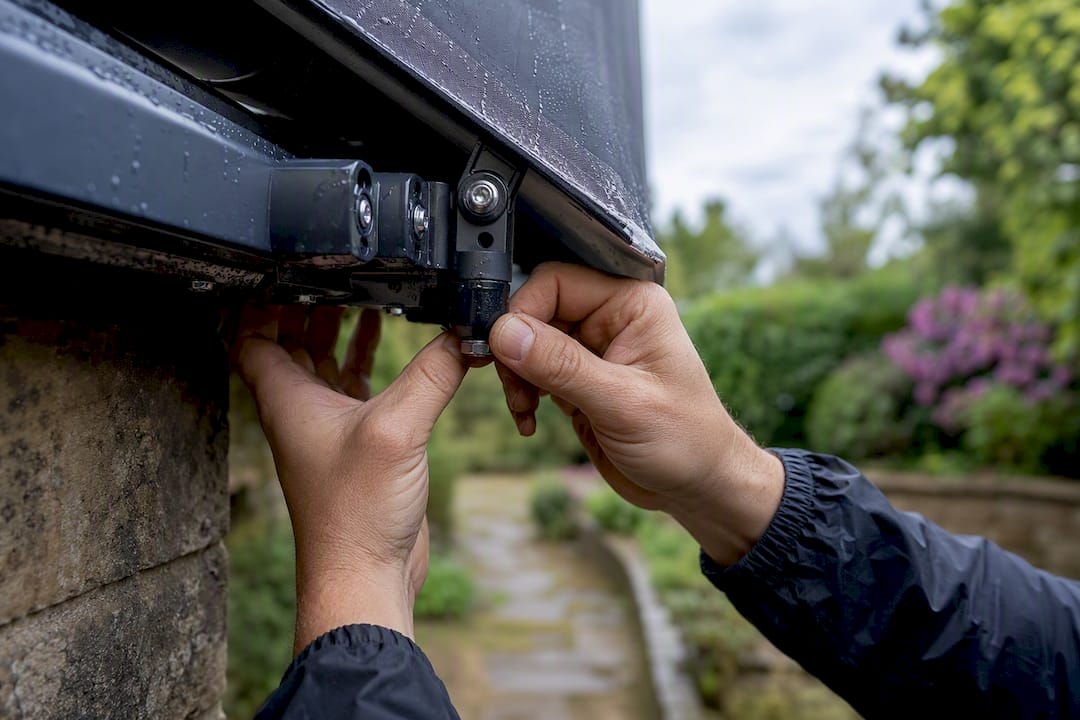
Request three things from whoever inspects the damage: a written repair or replacement estimate, annotated photographs marking each point of failure, and a short condition report describing what likely caused it. If the awning was serviced or fitted recently, ask for a dated timesheet too.
Pro Tip: Keep every invoice from installation and maintenance work in one folder, digital or paper. A dated service record showing the awning was correctly fitted and maintained directly counters any insurer suggestion that poor setup caused the failure. Owners can review a seasonal maintenance checklist to see what that record-keeping should look like before storm season arrives.
Where owners lose claims they should have won
The biggest mistake isn’t the storm. It’s what happens before and after it. Owners routinely under-declare a pricey awning on their schedule, assume a standard policy will pay full replacement, then discover a £1,000 cap on a £3,000 structure.
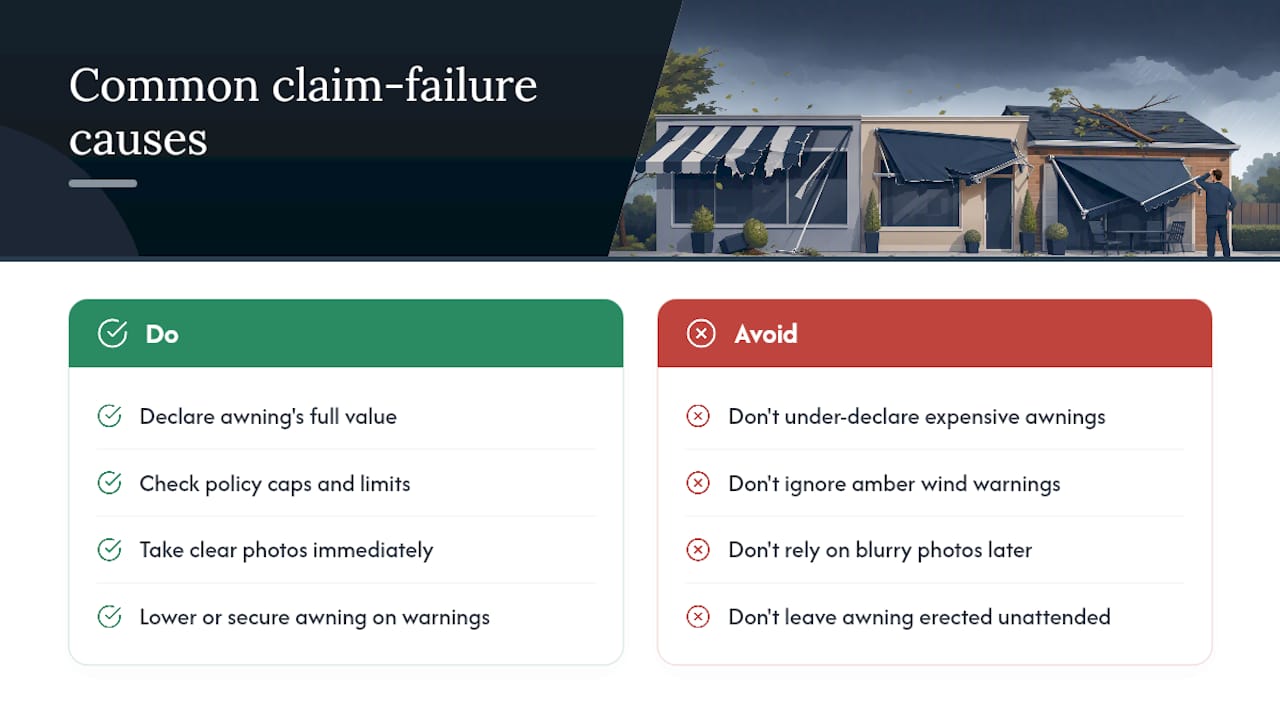
The second mistake is ignoring warnings. A forecast amber wind warning is effectively a checklist item, not background noise. The third is weak documentation: one blurry phone photo taken days later rarely satisfies an assessor.
If there’s one habit worth building this storm season, it’s this: never leave an awning erected and unattended once a severe weather warning has been issued for your area.
Get a professional inspection before you claim
If a storm has already left your awning torn, bent, or pulled from its fittings, a proper inspection gives you documentation your insurer will actually accept, not just a guess at what went wrong. Infinity Awnings isn’t an insurer, and this isn’t a substitute for contacting your insurance provider. It’s a repair and inspection service that produces the written estimate, annotated photos, and condition report your claim needs.
Our team inspects fixing points, frame stress, and fabric failure across Yorkshire, Derbyshire, Nottinghamshire, and Lincolnshire, and can also advise on replacing an awning with something better suited to exposed pitches, including our pergolas range for anyone considering a sturdier alternative. If your awning needs assessing after a storm, request a free quote and we’ll get an inspection booked in.
Frequently asked questions
Does UK caravan insurance always include awning cover as standard? Not always. Some policies include it automatically up to a set limit; others treat it as an optional extra you must add, so check your schedule rather than assume.
What happens if my awning is damaged while I’m away from the site? Cover usually depends on how long you’ve been away. Most policies exclude damage if the outfit was left unattended with the awning erected beyond a set window, often 72 hours.
Can I claim if I didn’t see a storm warning beforehand? Yes, generally. Insurers are far more sympathetic to sudden, unforecast weather than to damage following an ignored warning.
How long do storm damage awning claims usually take to process? Straightforward claims with full documentation, photos, receipts, and a prompt report often move faster; complex or disputed cases involving an assessor visit take longer.
Will making a storm damage claim increase my premium? It can, particularly for a second or third claim within a few years, though a single weather-related claim on an otherwise clean record has less impact than an at-fault claim.
This article is general information, not a substitute for advice from a qualified financial advisor. Consult a qualified financial professional about your own circumstances before acting on anything here.
Sources
Recommended
Comments