
Avoid Retrofits Under Awnings: UK Patio Heater Rules & Gas Safe Checks

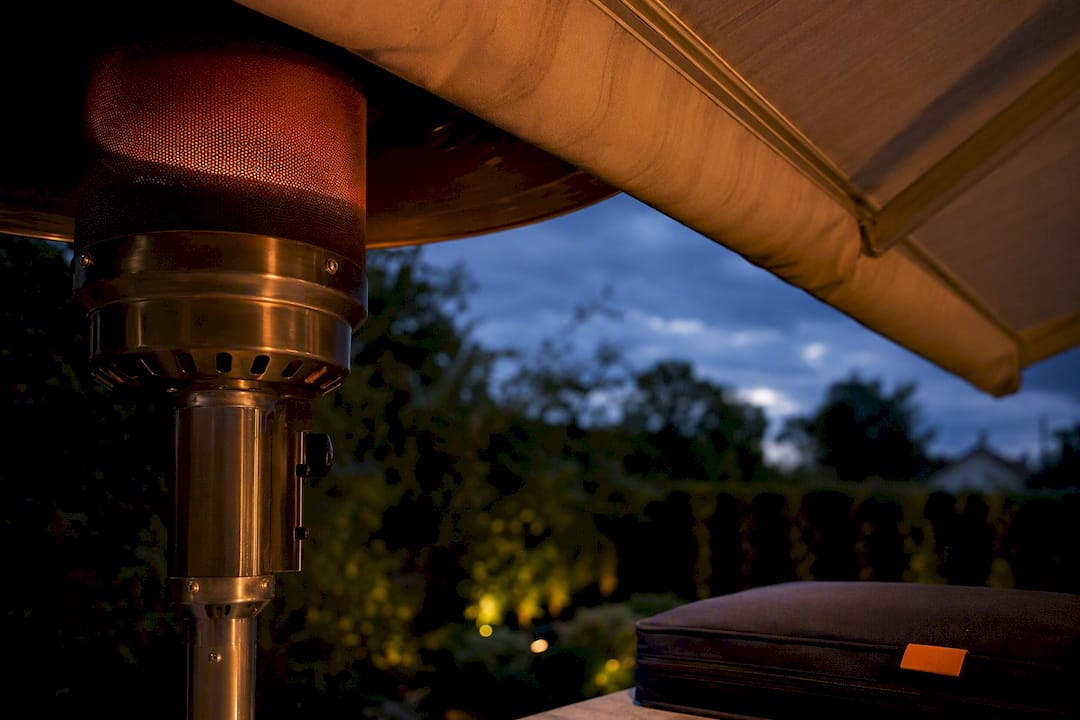
Patio heaters are legal to buy and use in the UK, but every unit must carry UKCA or CE conformity marking and be installed and operated exactly as its manufacturer specifies. Before you switch one on, check three things: the conformity marking is present, a Gas Safe registered engineer or qualified electrician has handled any gas or fixed wiring work, and the heater never runs in an enclosed, unventilated space.
TL;DR:
All gas patio heaters must display a UKCA or CE conformity mark and be installed by qualified professionals to ensure safety and compliance.
Never operate liquefied petroleum gas heaters in fully enclosed spaces or with inadequate ventilation, especially under canopies or awnings.
Electric patio heaters should only use UK-rated outdoor plugs and sockets protected by RCDs, with wiring installed by qualified electricians, not from indoor extension leads.
For structures like awnings or pergolas, confirm that manufacturer permits heater use and maintain proper clearances and airflow according to detailed site assessments.
Landlords and commercial operators must have annual Gas Safe inspections, keep proper documentation, and avoid using unverified second-hand equipment.
Table of Contents
What UK law says about patio heaters
Gas-burning patio heaters sold in Great Britain fall under Regulation 2016/426, which sets the essential safety requirements for appliances burning gaseous fuels. The Gas Appliances (Enforcement) and Miscellaneous Amendments Regulations 2018 give trading standards and market surveillance authorities the power to act against non-compliant products sold in GB. That is the legal backbone behind every gas patio heater on the market, whether it runs on LPG cylinders or mains gas.
In practice, this means every appliance must carry a visible conformity marking, either UKCA or CE depending on when and where it was placed on the market, along with a declaration of conformity from the manufacturer. Manufacturers and importers have to keep technical files and that declaration for ten years after the appliance goes on sale, covering design records, test data and risk assessments.
What should you actually do with this when buying a heater?
Ask the retailer or installer for the declaration of conformity if it is not supplied with the unit.
Check the marking is stamped or printed directly on the appliance, not just on the box.
Avoid grey-market imports with no UK-recognised marking, however cheap they look.
Keep the paperwork with your property records, particularly if you run a commercial premises.
If a supplier cannot produce this documentation, treat that as a compliance failure, not a minor omission.
Safety rules for gas and LPG patio heaters
Patio heaters are designed for outdoor use, full stop. Liquid Gas UK’s consumer guidance is unambiguous that LPG heaters should never be run in fully enclosed spaces. Manufacturer instructions for partial enclosures (a covered terrace with side screens, for example) usually demand at least 25% of the wall area left open so combustion products can escape freely.
Follow this sequence before every use:
Position the heater at least a metre from combustible materials, seating fabric, umbrellas and overhanging foliage.
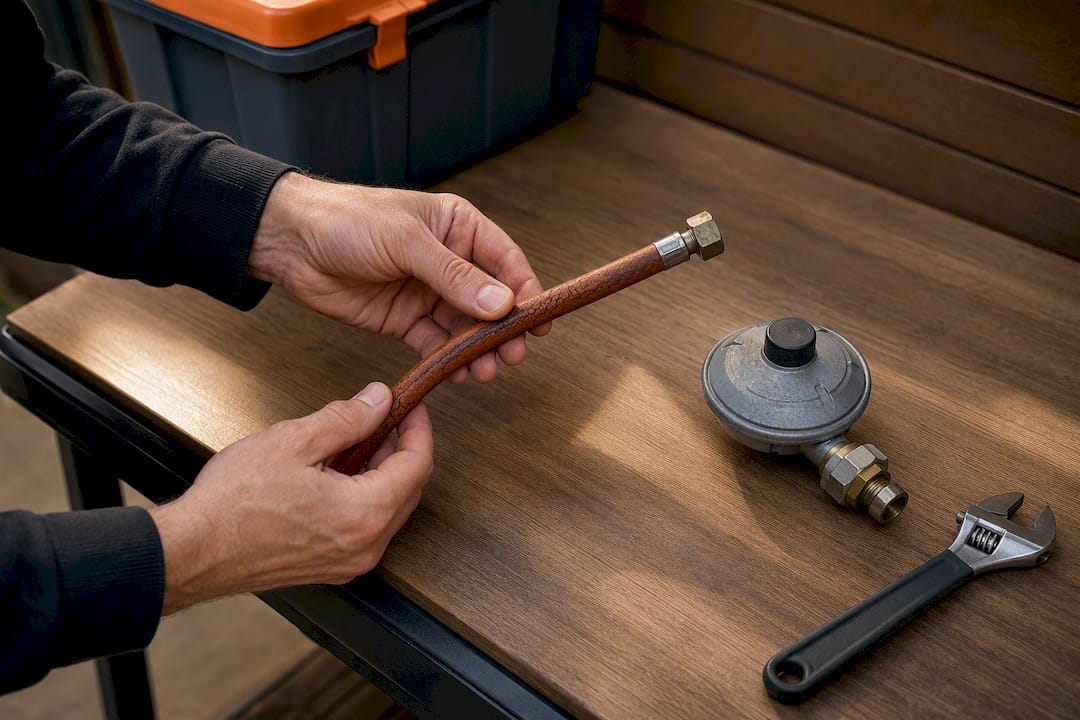
Check the cylinder connection, regulator and hose for wear, and confirm the hose meets current BS/EN standards.
Run a leak test using soapy water on every joint whenever you change a cylinder.
Change cylinders outdoors, upright, away from ignition sources and other people.
Never leave a lit heater unattended near children, pets or unstable ground.
Landlords supplying heaters for guests or tenants must have them checked annually by a Gas Safe registered installer, the same standard that applies to any other gas appliance on rented premises.
Pro Tip: Keep a spare regulator and hose in a dry store rather than waiting for a failure mid-season. Hoses perish faster than most owners expect, and a cracked one is the most common cause of a failed leak test.
Electrical safety for electric patio heaters
Electric heaters remove the fuel-handling risk but bring their own wiring rules. Electrical Safety First is clear that any electric patio heater should run from a UK three-pin plug with the correct fuse rating, never from a standard indoor extension lead trailed outside through a door or window.
Outdoor sockets need to be splashproof, rated IP44 or higher, and protected by an RCD. For a wall-mounted or ceiling-mounted heater under a fixed canopy, a permanent outdoor circuit installed by a qualified electrician is the safer long-term option rather than relying on a socket adaptor.
Beyond the wiring itself:
Register new heaters with the manufacturer so you receive recall notices.
Avoid second-hand units with no documentation or visible rating plate.
Route cables away from footfall areas and anchor them so nobody can catch a foot on a trailing lead.
Never run an electric heater rated for dry conditions in the rain unless the manufacturer explicitly states it is weatherproof to that IP rating.
Fitting heaters under awnings, pergolas and canopies
A heater that works fine standing alone in the open can become a hazard once you tuck it under a canopy. Manufacturer instructions almost always specify whether the model is rated for use under a roof structure at all, and that permission comes before anything else on your checklist.
Clearance and airflow decide whether the installation is safe. Fabric awnings, particularly those with lower fire ratings, sit too close to some heater types to allow safe combustion product escape, and that is precisely why installers assess canopy geometry and fabric fire retardancy as part of a proper site survey rather than guessing at clearances on the day.
Before fitting or running any heater under a structure:
Confirm the manufacturer permits use under a canopy or awning at all.
Maintain the clearance distances stated in the manual, not a rough estimate.
Fit freestanding units with an anti-tilt base and secure them against wind gusts.
Never move a heater while it is alight, even a short distance.
Pro Tip: If you are commissioning an awning or pergola alongside a heater, get the wiring and mounting points agreed before the fabric goes up. Retrofitting a cable run through finished waterproofing almost always costs more than planning it in from the start.
Landlord, business and homeowner duties compared
Your obligations shift sharply depending on who is using the heater and where. Commercial operators, whether a restaurant terrace or a hotel courtyard, carry statutory duties to maintain equipment safely for staff and customers, backed by workplace health and safety law. Homeowners have fewer formal inspection duties but are still bound by the manufacturer’s instructions the moment they plug in or light a heater.
Landlords sit in the middle: if you supply a heater for tenants or guests to use, you must arrange a Gas Safe registered check annually, exactly as you would for a boiler.
Practical records worth keeping:
Gas Safe or electrician certificates for every installation or check.
Service reports showing dates, findings and any parts replaced.
The manufacturer’s declaration of conformity for each appliance.
If a supplier or contractor refuses to produce this paperwork, escalate to the HSE or your local authority’s environmental health or licensing team rather than accepting a verbal assurance.
Keeping heaters safe through the seasons
A patio heater that sat idle over winter needs checking before it goes back into service, not just a quick wipe-down.
Inspect hoses, regulators and burner heads visually every month during the season for cracking, corrosion or blockage.
Leak-test every gas connection whenever you fit a new cylinder.
Book annual professional servicing for any heater used on commercial premises or supplied to tenants.
Register every appliance with its manufacturer so recall notices reach you directly.
If you smell gas or notice an irregular burner flame, shut off the supply immediately and do not relight until a Gas Safe engineer has checked it.
Replace hoses and regulators on the schedule the manufacturer states, checking they still meet current BS/EN standards.
How Infinity Awnings assesses heater siting and integration
A proper site assessment starts with measurement, not assumption: clearance distances from the heater to fabric, checking the awning material’s fire retardancy, and mapping airflow so combustion products have somewhere to go. Cable runs get planned before anything is fitted, not improvised afterwards.
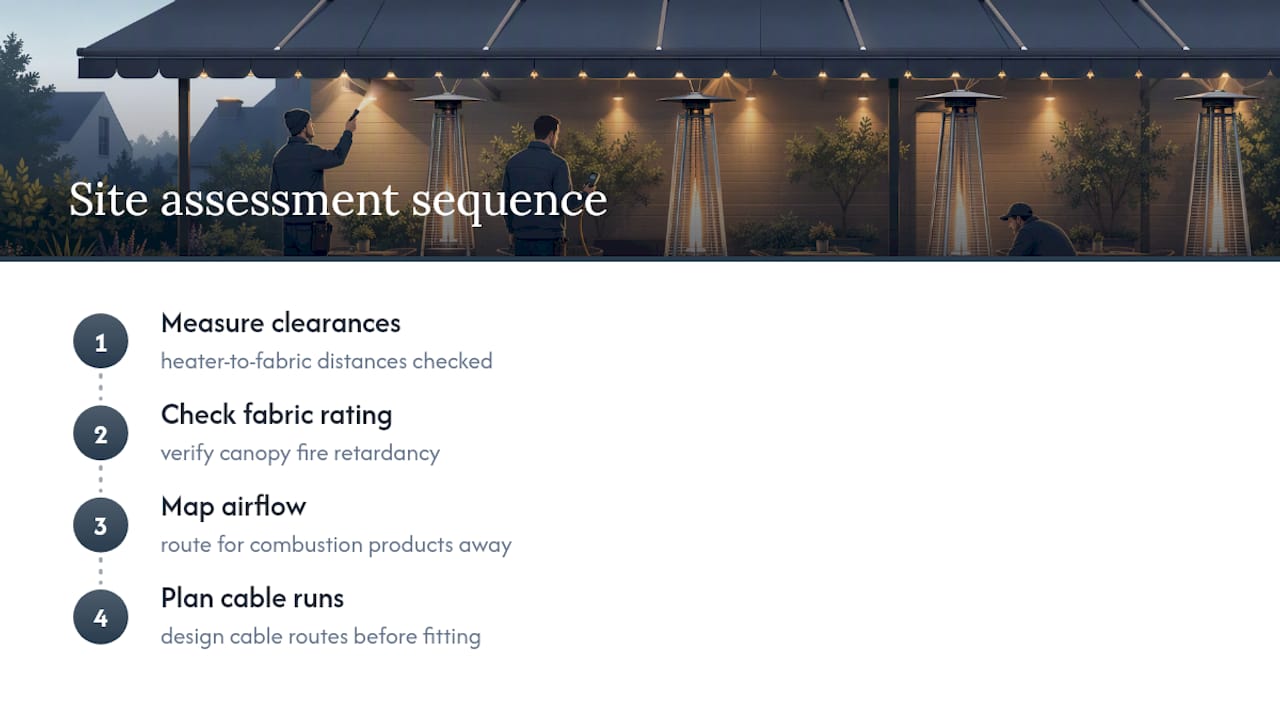
The most common issue found on-site is a heater specified without checking whether the chosen canopy fabric or geometry actually permits it, which is exactly why heaters and awning systems need to be planned together rather than bought separately and hoped into place. When you bring in a contractor, ask to see Gas Safe or electrician ID, proof of insurance, and a written guarantee before any work starts.
Noise regulations for outdoor heaters
Patio heaters themselves are not typically caught by dedicated national noise legislation, but that does not mean noise is a non-issue. Gas heaters with a fan-assisted burner or electric infrared units with a motorised tilt or oscillation function can generate a low hum that, combined with amplified outdoor music or a busy terrace, tips a commercial premises into a statutory nuisance complaint under the Environmental Protection Act.
Councils generally treat outdoor heating noise as part of the wider assessment of a venue’s overall outdoor operation rather than heater noise on its own. If you run a pub garden or restaurant terrace, it is worth checking your premises licence conditions for any specific noise limits or curfew times tied to outdoor equipment, since these vary by local authority and by licence rather than by any single national rule. Residential users rarely face a problem here: a single domestic heater running quietly in a garden is not going to draw the same scrutiny as commercial-scale kit running for service hours every evening.
The more common environmental question for outdoor heaters actually concerns emissions rather than noise. Gas patio heaters release carbon dioxide and, if poorly maintained, carbon monoxide, which is precisely why ventilation rules for partial enclosures matter as much for air quality as for fire safety. Keeping burners serviced and hoses in good condition reduces both risks at once.
What actually matters when the rules meet real installations
Most guidance on patio heaters treats the legal side and the practical side as separate problems: one for a compliance officer and one for whoever is standing next to the heater on a cold evening. That split misses the point.
The conventional advice, “check for CE or UKCA marking and follow the manual,” is correct but incomplete. It assumes the manual survives contact with the person actually operating the heater, which in a busy pub garden on a Friday night is optimistic at best. What matters more is building the check into a routine: who looks at the hoses each month, who signs off the annual Gas Safe visit, who has the declaration of conformity on file.
If you take one thing from this, prioritise the site assessment before the purchase, not after. Clearances, airflow and wiring decisions made on paper are far cheaper to fix than the same decisions made once fabric and fittings are already installed.
— Andrew
Get your heating integration assessed properly
Infinity Awnings gives you a proper site survey before anything goes near your terrace, checking clearances, canopy fabric and cable routes rather than fitting a heater and hoping it clears the manufacturer’s rules. That is the practical difference against buying a heater off the shelf and bolting it under an existing structure without checking whether the fabric or geometry actually permits it.

Serving homes and businesses across Yorkshire, Derbyshire, Nottinghamshire and Lincolnshire, the team designs and installs retractable awnings, pergolas and verandas with heating and wiring planned in from the start, not added as an afterthought. An installation visit covers a full safety assessment, a wiring plan agreed before any fabric goes up, and handover documentation you can keep alongside your Gas Safe or electrician certificates. Restaurants, bars and hotels weighing up a heated terrace can also look at commercial awning and canopy options built around the same integration principles.
If you are planning a heated outdoor space this year, request a free quote or pre-installation safety assessment and get the clearances and wiring right before the structure goes up.
Where this guidance comes from
Gov — the legal basis for gas appliance safety in GB.
Electrical Safety First — wiring, plug and RCD guidance for electric heaters.
Liquid Gas UK — LPG cylinder handling, hoses and landlord check requirements.
Lambeth Council — local-authority pavement heater rules.
Sources
FAQ
What is the best type of patio heater for UK gardens?
There is no single “best” heater in law, but the safer choice depends on your setup: electric heaters with a permanent, RCD-protected outdoor circuit suit fixed canopies well, while LPG heaters with correctly rated hoses suit open patios where mains power is not available.
Can patio heaters be left outside in the rain?
Only if the manufacturer explicitly rates the heater for wet conditions with an appropriate IP rating; most gas heaters and many electric models should be covered or stored when not in use to protect regulators, hoses and electrics from corrosion.
Can I use an electric patio heater indoors?
Standard electric patio heaters are built and certified for outdoor use, and running one indoors bypasses the ventilation and clearance assumptions built into its design, so it should stay outside as intended.
Can I put a gas patio heater inside my house?
No. Gas patio heaters are designed for outdoor combustion and ventilation, and using one inside a house or fully enclosed room removes the airflow the appliance depends on to disperse carbon monoxide safely.
Do I need a Gas Safe engineer for a patio heater?
You need one for any fixed gas installation or connection work, and landlords supplying gas heaters to tenants or guests must have them checked annually by a Gas Safe registered installer; a standalone cylinder-fed unit you connect yourself following the manual does not require one, but professional checks are still the safer habit.
Recommended
Comments