
Role of Awnings in Home Design Success

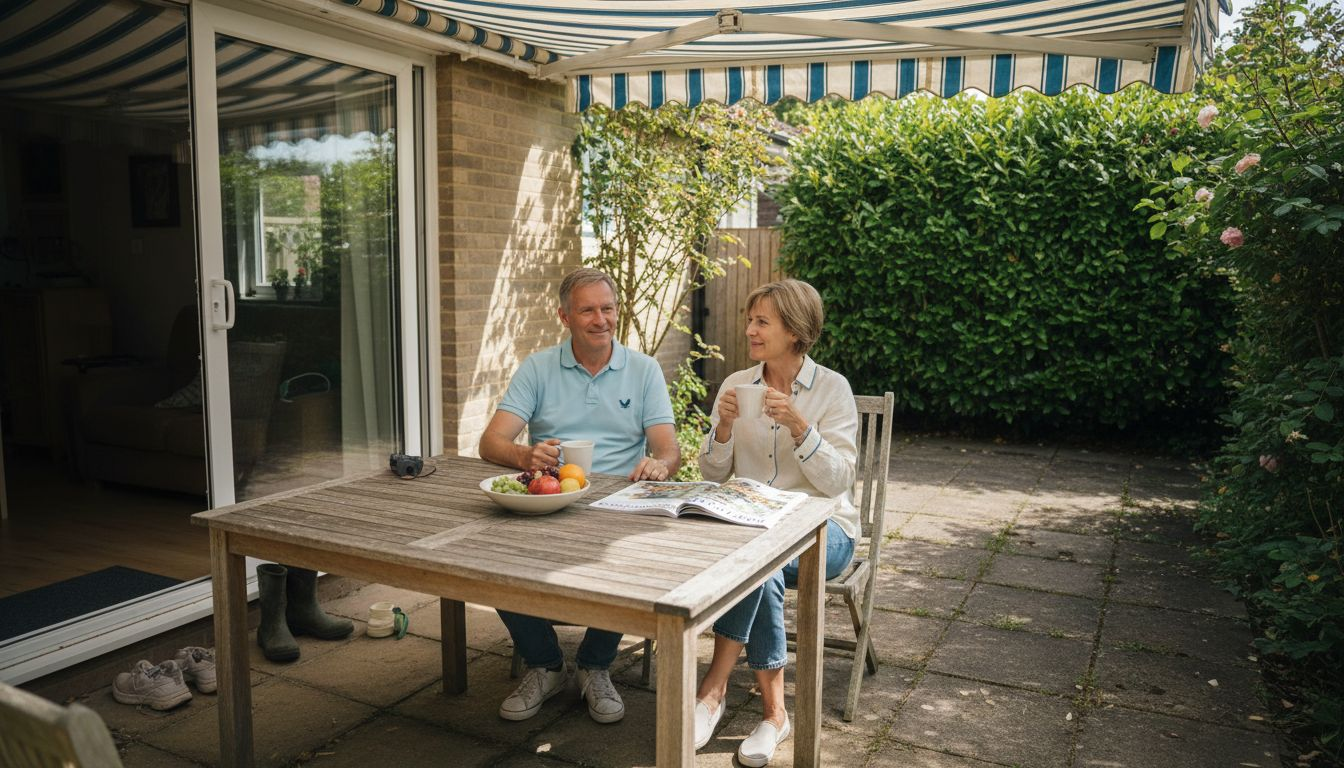
Every Yorkshire homeowner knows how quickly the weather can shift from blazing sun to sudden showers. Making the most of outdoor spaces means finding solutions that balance comfort with style, without sacrificing durability. High-quality retractable awnings transform patios and gardens by creating flexible, shaded retreats that withstand British conditions while blending seamlessly with your home’s character. With options for customisation in both materials and finishes, you gain a lasting upgrade that is both practical and uniquely personal.
Table of Contents
Key Takeaways
Point | Details |
Understanding Awnings | Awnings provide shade and shelter while enhancing the architectural character of outdoor spaces. Choosing the right type depends on lifestyle needs and aesthetic considerations. |
Awning Types and Their Functions | Retractable, fixed, and freestanding awnings each offer specific advantages, related to flexibility, maintenance, and integration with your home’s design. |
Importance of Professional Installation | Proper installation is crucial for longevity and safety, while regular maintenance ensures continued functionality and aesthetic appeal. |
Material Quality Matters | Selecting high-quality materials and construction is essential for durability; budget options may lead to frequent replacements and additional costs. |
Defining Awnings and Their Home Design Impact
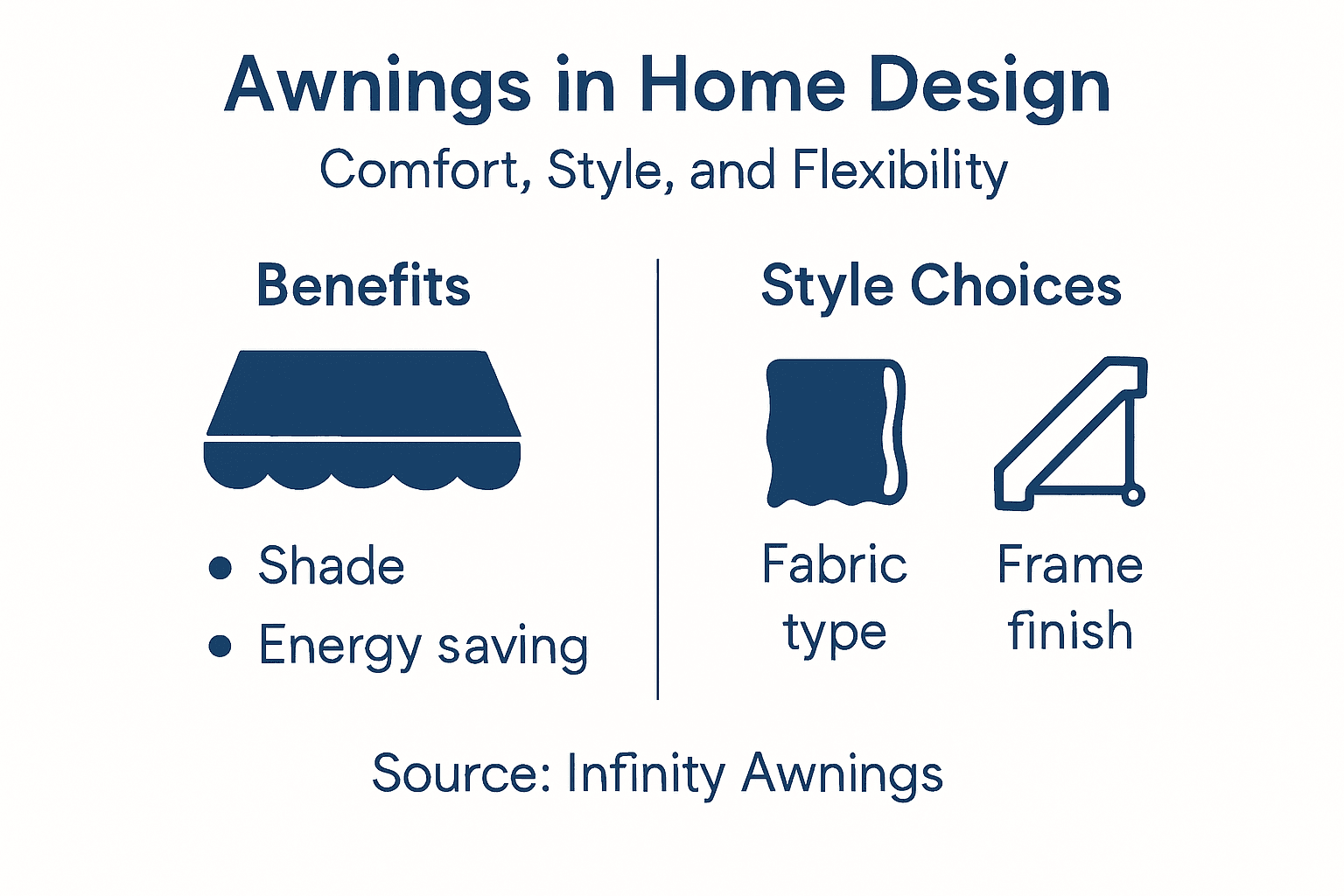
Awnings are roof-like fabric or aluminium structures attached to the exterior of your home, designed to provide shade, shelter, and architectural character to outdoor spaces. Unlike permanent structures, awnings come in both fixed and retractable varieties, giving Yorkshire homeowners flexibility in how they control sun exposure and weather protection. At their core, awnings serve a dual purpose: they’re simultaneously practical shading solutions and deliberate design choices that shape how your outdoor areas look and feel.
The functional benefits extend far beyond simple shade. Roof-like coverings made from fabric, aluminium, and acrylic help regulate temperature by blocking direct sunlight before it enters your windows, reducing heat gain during warmer months and cutting cooling costs. For Yorkshire residents, this means enjoying your patio or garden during unpredictable British weather without retreating indoors at the first sign of rain or glare. Awnings effectively expand your usable living space by creating sheltered outdoor zones where you can relax, entertain, or dine comfortably. They also reduce UV damage to interior furnishings and fade-prone textiles—a genuine concern in any home.
From a design perspective, awnings are transformative elements that directly influence your home’s visual appeal and street presence. The choice of fabric pattern, colour, and frame style sends a clear message about your home’s aesthetic direction. A modern retractable awning with clean lines and neutral tones conveys contemporary minimalism, whilst a bold patterned fixed awning communicates personality and warmth. When properly selected and installed, awnings don’t just function—they become architectural features that tie together your garden design, complement your home’s exterior materials, and create visual continuity between indoor and outdoor spaces. The right awning acts as an intentional design statement, not an afterthought.
Understanding how awnings function and the variety available is the first step towards making informed decisions about whether they suit your home and lifestyle. When choosing between options, the right awning selection depends on your specific space requirements and the visual outcome you’re aiming for, making this decision foundational to your broader home design strategy.
Pro tip: Before committing to any awning style, photograph your home’s exterior at different times of day to observe how sunlight interacts with your outdoor areas, ensuring your chosen design addresses genuine comfort problems whilst enhancing rather than overwhelming your property’s existing character.
Retractable, Fixed, and Freestanding Awning Types
When you’re considering awnings for your Yorkshire home, understanding the different types available is crucial because each offers distinct advantages depending on your needs, climate, and how you use your outdoor spaces. The three main categories—retractable, fixed, and freestanding—each serve different purposes and deliver different levels of control over your outdoor environment. Your choice directly affects how much flexibility you have, how much maintenance is required, and ultimately how well the awning integrates into your daily life.
Retractable awnings give you complete control over when shade is deployed and when it’s retracted. These are ideal for UK homes where weather changes constantly throughout the day and across seasons. You can extend them during sunny afternoons, then retract them to enjoy open sky during pleasant evenings or to allow winter sunlight through your windows. Many retractable models operate manually with a crank handle, whilst modern installations feature motorised systems controlled by remote or integrated smart home systems. Retractable awnings offer flexibility with motorised convenience, making them particularly popular among Yorkshire homeowners who want both practicality and modern comfort. The protective cassette casing shields the fabric and mechanisms when retracted, extending the awning’s lifespan by protecting them from harsh weather and debris.
Fixed awnings provide permanent, continuous shade without the ability to retract. These suit areas where you want reliable, unchanging protection—perhaps over a south-facing patio that receives relentless sun exposure, or above a kitchen window where you consistently need to control heat gain. Fixed awnings are simpler mechanically, require less maintenance than retractable options, and often cost less upfront. However, they offer no flexibility if you change your mind about shade levels or want to adjust for seasonal variations. They work best in locations where year-round protection aligns with your needs.
Freestanding awnings stand independently without requiring attachment to your building. These work brilliantly for garden spaces, poolside areas, or anywhere you want temporary shade without permanently modifying your home’s structure. They’re portable, can be repositioned as needed, and offer design freedom since they’re not constrained by your home’s architecture. The trade-off is that they’re less stable than attached options and require more floor space to accommodate their support legs.
Consider this comparison when evaluating your options: retractable awnings suit variable weather and flexible needs, fixed awnings work for permanent shade requirements, and freestanding awnings provide maximum placement freedom. Different awning types suit different outdoor spaces and requirements, so matching the type to your actual usage patterns ensures you’re not paying for capabilities you won’t use or missing features you genuinely need.
Pro tip: If you’re uncertain between retractable and fixed, start by observing your outdoor space for one full season—note which areas receive uncomfortable sun exposure, when you’d want shade available, and whether you’d genuinely use the ability to retract; this real-world data beats assumptions and leads to smarter purchasing decisions.
The following table summarises how each main awning type aligns with common homeowner priorities:
Awning Type | Flexibility | Visual Integration | Best For |
Retractable | Maximal; shade on demand | Modern or traditional homes; discreet when retracted | Variable weather, changing needs |
Fixed | Permanent coverage | Bold exterior statement; suits period properties | Constant sun/rain exposure |
Freestanding | Moveable and adaptable | Independent garden zones; less architectural coherence | Temporary or unconventional layouts |
Customisation Options for Aesthetic Integration
Your awning doesn’t have to look like everyone else’s on the street. Modern customisation options mean you can design something that feels uniquely yours whilst complementing your home’s existing architecture and colour palette. From fabric selections to frame finishes, the choices available today go far beyond basic beige or white, allowing Yorkshire homeowners to express personal style whilst maintaining practical functionality. The key is understanding what customisation options exist and how they translate your design vision into reality.
Fabric selection forms the foundation of your awning’s aesthetic impact. You’re no longer limited to plain solid colours. Contemporary awning fabrics come in hundreds of patterns, from subtle stripes and geometric designs to bold florals and abstract prints that make genuine design statements. More importantly, modern fabric technology provides options that withstand UK weather whilst offering UV and rain protection, meaning you don’t sacrifice durability for visual appeal. Some fabrics feature Sunbrella technology or similar solutions that resist fading even under prolonged British sunshine, whilst others incorporate water repellent treatments for reliable rain protection. When you’re selecting fabric, think about whether you want your awning to blend subtly into the background or serve as a striking focal point. A neutral charcoal or cream works beautifully if you prefer understated elegance, whilst a patterned fabric in jewel tones or warm terracottas can transform a plain garden into something visually memorable.
Frame and mechanism finishes complete the customisation picture. Aluminium frames can be powder coated in virtually any colour to match your home’s trim, fascia, or door frames. If your property features traditional stone or period architecture, you might choose heritage colours that respect the original aesthetic. For contemporary homes, sleek black, anthracite, or brushed metal finishes create clean visual lines that enhance minimalist design. Beyond colour, the style of the frame itself matters. Slim, modern profiles suit contemporary homes, whilst more substantial frames with decorative details work better with traditional properties. The mechanism housing—whether it’s a cassette design that fully encloses everything or an open frame approach—also influences the final appearance and how the awning integrates with your building’s facade.
Installation positioning and add-on features offer final customisation layers. Where you position your awning (low over a patio or higher on a wall) changes how it affects sightlines and the sense of enclosure. Optional extras like LED lighting strips transform your awning into an evening focal point, whilst integrated heater elements extend usability into cooler months. Some homeowners incorporate automation so their awnings extend and retract based on light sensors or weather conditions, adding both convenience and sophistication.
Pro tip: Gather fabric samples and hold them against your home’s exterior in different lighting conditions throughout the day before making your final choice; what looks perfect in a showroom might feel wrong against your actual brickwork or under your specific local light.
Here is a comparison of bespoke awning customisation options and their design impact:
Customisation Feature | Example Options | Design Benefit |
Fabric Pattern | Stripes, florals, neutrals | Enhances or blends with home style |
Frame Finish | Anthracite, heritage green, brushed metal | Matches trim or adds contrast |
Lighting/Heating Add-ons | LED strips, infrared heaters | Enables use after dusk or in cool months |
Automated Controls | Sun, wind, rain sensors | Convenience and improved awning protection |
Practical Benefits: Comfort, Efficiency, and Usability
An awning isn’t purely decorative. It’s an investment that fundamentally changes how you experience your outdoor spaces and, by extension, how your home performs. The practical benefits extend beyond the obvious shade—they touch on energy efficiency, year-round usability, and genuine improvements to your quality of life. For Yorkshire homeowners, where weather can shift from brilliant sunshine to sudden rain within hours, these benefits become tangible rather than theoretical.
Temperature control stands as one of the most significant practical advantages. When direct sunlight streams through your windows unobstructed, it heats interior spaces dramatically, forcing your cooling system to work harder during warmer months. Awnings reduce solar heat gain and lower energy consumption, meaning your air conditioning doesn’t need to labour as intensely to maintain comfortable indoor temperatures. This translates to measurable reductions in your energy bills—particularly noticeable during late spring and early autumn when temperatures fluctuate most. The shading effect acts like a thermal buffer, keeping interiors naturally cooler without requiring constant mechanical intervention. In winter, you can retract the awning to allow beneficial solar warming through south-facing windows, giving you seasonal flexibility that permanent structures cannot provide.
Comfort improvements happen immediately upon installation. Glare reduction removes that uncomfortable squinting sensation when you’re trying to read, work, or simply relax outdoors. UV protection safeguards both your skin during outdoor activities and your furnishings from fading—furniture, fabrics, and even hardwood decking degrade significantly faster under unfiltered ultraviolet exposure. The shade creates a genuinely usable outdoor room during peak sun hours when otherwise you’d retreat indoors. Add weather protection into the equation, and your awning extends usability throughout the year. Light rain becomes manageable. Occasional wind gusts become less problematic. Your patio, garden, or deck transforms from a space you visit during ideal conditions into a space you actually live in.
Space expansion represents an often-overlooked benefit. Your garden suddenly feels larger because you’ve created a properly usable outdoor room rather than just a sunny yard. This isn’t purely psychological—it’s functional. You host gatherings under protective cover. Children play outside longer because they’re not overheating. You dine al fresco even when the forecast included scattered showers. Property valuations often reflect this expanded living space, particularly in competitive housing markets where outdoor amenities increasingly influence buyer decisions. The awning essentially adds square footage to your usable home without any complicated structural renovation.
Pro tip: Calculate your potential energy savings by tracking your summer cooling costs for one month, then use that baseline to estimate annual savings; many Yorkshire homeowners discover their awning pays for itself within five to seven years through reduced energy consumption alone.
Installation Process and Maintenance Essentials
Proper installation and ongoing maintenance are what separate an awning that serves you brilliantly for 15 years from one that deteriorates within five. Installation isn’t something to rush or cut corners on, and maintenance isn’t a chore you can ignore once the awning is in place. Both require attention and planning, but the payoff is longevity, safety, and continued performance that justifies your initial investment.
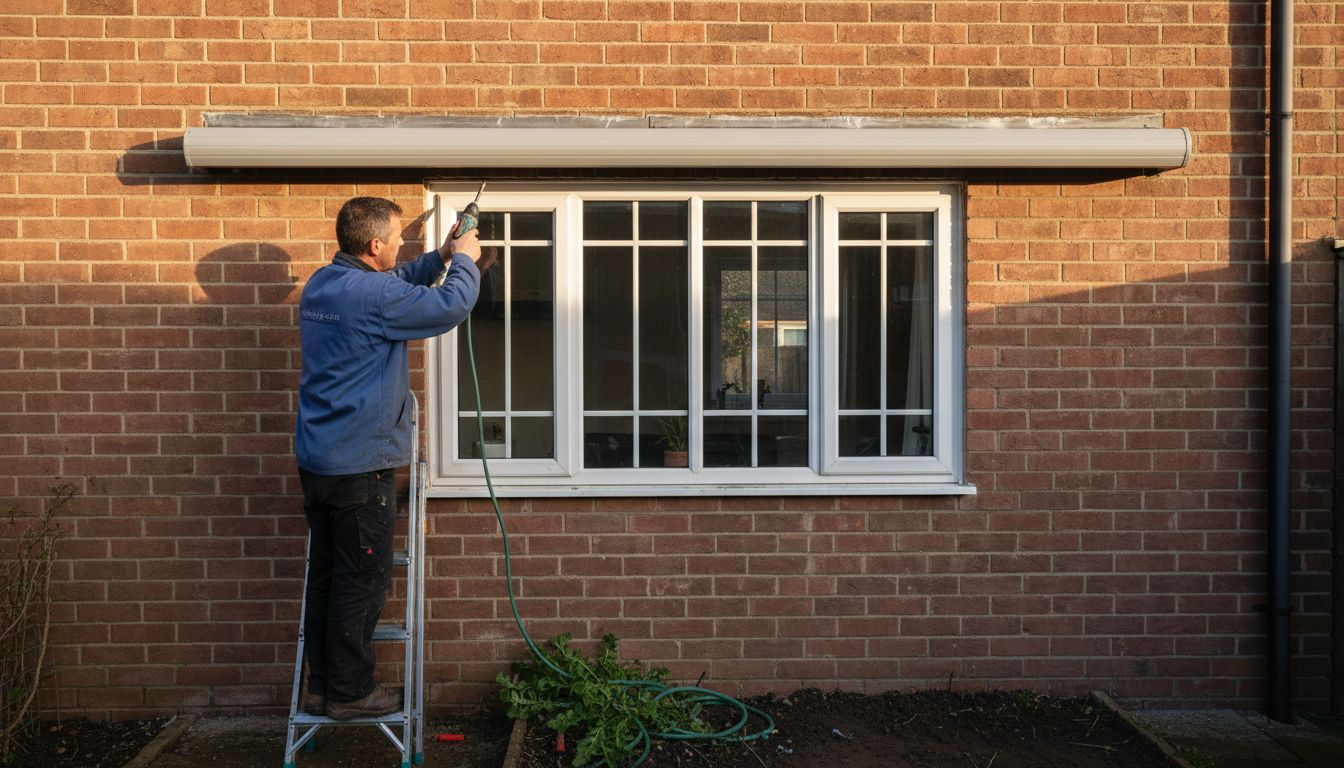
Professional installation is non-negotiable. Awnings involve structural attachments to your home, electrical connections if motorised, and precise measurements that determine whether the finished product looks aligned and functions smoothly. Poor installation compromises both aesthetics and functionality. Structural attachments must be secure and properly distributed across solid building elements like brick, timber, or reinforced concrete. If installers anchor an awning to weak areas like cavity wall insulation or thin fascia boards, you risk failure during high winds or heavy rain. Electrical work on motorised systems must comply with current wiring regulations and safety standards. This is genuinely specialist work that requires experience, proper tools, and understanding of local building codes. Attempting DIY installation typically creates problems that cost far more to fix than professional installation would have cost initially.
Maintenance prevents small problems from becoming expensive failures. Regular inspection schedules help identify weather damage and structural issues early. At minimum, you should inspect your awning quarterly, checking for fabric damage, mechanism lubrication, and structural integrity. Spring inspection before peak use season is critical. Look for tears or worn areas in fabric, verify that mounting brackets remain tight and show no rust or corrosion, and ensure retractable mechanisms move smoothly without grinding sounds. Autumn inspection prepares your awning for winter weather. Clean the fabric thoroughly to prevent mould growth during damp months, check that drainage paths are clear if your awning collects rainwater, and verify that all moving parts remain properly lubricated.
Documentation matters more than most homeowners realise. A planned maintenance programme with logged records ensures safety compliance and long-term reliability. Keep records of installation dates, any repairs performed, professional servicing dates, and notable issues you’ve noticed. This documentation supports insurance claims if damage occurs, provides evidence of proper maintenance if selling your home, and helps you identify patterns like recurring problems that might indicate deeper issues. If you hire professionals for servicing, request written records of what was inspected, cleaned, lubricated, or repaired. This creates an audit trail that protects you.
Basic seasonal maintenance tasks include gentle fabric cleaning with appropriate products, visual inspections of all visible components, and prompt attention to any unusual sounds or movement restrictions. Motorised systems occasionally need professional servicing to maintain electrical safety and mechanical precision.
Pro tip: Set calendar reminders for quarterly inspections and photograph your awning during each check, storing images chronologically; this visual record helps you spot gradual degradation you might otherwise miss and provides compelling evidence for warranty or insurance claims.
Risks, Limitations, and Purchasing Pitfalls
Awnings are genuinely valuable additions to Yorkshire homes, but they’re not risk-free investments and they have real limitations you need to understand before committing financially. Being aware of these challenges helps you make informed decisions, choose quality products, and avoid expensive mistakes that compromise your investment’s longevity. Ignorance here leads directly to disappointment and wasted money.
Weather vulnerability requires honest assessment. Awnings extend and retract, but extended awnings are vulnerable to damage from prolonged heavy rain or strong winds. If you leave your awning extended during a storm, you risk fabric tearing, frame bending, or motor failure if it’s motorised. Vulnerability to damage from heavy rain and wind exposure requires proper weather management, meaning you cannot simply deploy your awning and ignore weather forecasts. Yorkshire’s unpredictable weather actually demands more active management than areas with more stable conditions. You cannot treat a retractable awning as a set-and-forget solution. Moisture retention presents another genuine concern. If you leave fabric wet after rain without drying it thoroughly, dampness promotes mould growth, staining, and gradual fabric degradation. This requires you to actively manage your awning rather than passively own it.
Material and workmanship quality vary dramatically across suppliers. Budget awnings use thinner fabrics, weaker frame materials, and less robust mechanisms than premium options. Poor quality construction reduces longevity significantly. Cheap awnings might fail within five years, whilst well-constructed ones last 15 or more. The most damaging purchasing pitfall is selecting based purely on price. You’re not just buying shade; you’re buying durability, and that durability correlates directly with material and construction standards. Some older awning designs are inherently less durable, creating persistent maintenance headaches and frequent replacement needs. When evaluating products, examine frame thickness, fabric weight specifications, mechanism brand reputation, and warranty terms. These factors reveal actual quality far better than price alone.
Safety and compliance risks demand attention. Structural stability, weather resistance, and risk assessments are essential to avoid safety hazards during installation and use. Poorly installed awnings present genuine safety risks to people below them and to your building structure. Installation must follow UK building regulations, and installers must complete proper risk assessments. Warranties matter significantly. Reputable manufacturers stand behind their products with comprehensive warranties, whilst budget suppliers offer minimal protection. Service support after purchase is another critical factor. If your motorised awning fails, can you actually get it repaired? Does the supplier provide ongoing support? These questions become urgent when problems arise.
The purchasing pitfall that catches most homeowners is underestimating the importance of professional installation and ongoing management. Attempting to save money through DIY installation or selecting the cheapest available option typically creates costly problems that dwarf the initial savings.
Pro tip: Request detailed written specifications including fabric weight in grams per square metre, frame material grades, motor specifications if motorised, and warranty terms covering both parts and labour; comparing these details across suppliers reveals actual quality differences that justifications justify price variations.
Enhance Your Home Design with Expert Awning Solutions
The article highlights the importance of choosing the right awning type and customisation to balance flexibility, aesthetic integration, and practical benefits like comfort and energy efficiency. If you are facing challenges with managing changing weather or want to add elegant shading that complements your property’s unique character, it is essential to select durable, adaptable products designed for real UK conditions. Yorkshire homeowners especially need shading solutions that provide effortless control over sunlight and shelter without compromising on style or longevity.
Infinity Awnings specialises in premium retractable awnings and bespoke outdoor shading solutions tailored to your needs, including a wide range of fabrics, frame finishes, and smart controls that match your home’s design while enhancing outdoor usability all year round. Discover how our expert team can help you achieve the ideal blend of comfort, energy savings, and architectural appeal with reliable installation and ongoing support for your investment. Explore our extensive product range and customised options at Infinity Awnings.
Refresh your outdoor living spaces today and experience the true potential of your home design. Visit Infinity Awnings now to request a free quote and begin your journey towards stylish, practical, and durable shading solutions that transform your outdoor experience. Find out why discerning homeowners across Yorkshire, Derbyshire, Nottinghamshire, and Lincolnshire trust us for lasting quality and expert service by viewing our Retractable Awnings or learning how to Choose the Right Awning for Your Space. Take the next step to improve your comfort and home aesthetics today.
Frequently Asked Questions
What are the main benefits of installing awnings in home design?
Awnings provide shade, reduce heat gain, and protect from UV damage, enhancing comfort and energy efficiency. They also expand usable outdoor space and contribute to your home’s architectural appeal.
How do retractable awnings differ from fixed awnings?
Retractable awnings offer flexibility as they can be extended or retracted based on the weather, while fixed awnings provide permanent shade and protection without the ability to adjust.
What customisation options are available for awnings?
Awnings can be customised in terms of fabric patterns and colours, frame finishes, and even additional features like LED lighting or heating elements to suit your personal style and enhance outdoor usability.
How does proper installation impact the performance of an awning?
Professional installation ensures structural stability and functionality, reducing the risk of weather-related damage and ensuring that the awning operates smoothly for its intended lifespan.
Recommended
Comments