
School outdoor space ideas for 2026

TL;DR:
Thoughtful outdoor space design emphasizes planning and facilitation over equipment. Nature gardens and shaded structures enhance curriculum delivery and year-round usability effectively. Schools should start small, involving staff and pupils, focusing on flexibility and maintenance for sustained success.
Designing an outdoor space that genuinely serves your school community is harder than it looks. The gap between a concrete yard with a few fixed climbing frames and a truly purposeful outdoor learning environment is significant, and most schools fall somewhere frustratingly in between. Well-designed playgrounds attract 2.5 times more users and generate nearly three times as much physical activity as traditional layouts, yet the path from intention to installation is rarely straightforward. This guide cuts through the confusion with practical school outdoor space ideas you can actually use, along with the criteria to help you choose wisely.
Table of Contents
Key takeaways
Point | Details |
Design beats equipment | Thoughtful spatial planning and adult facilitation matter more than the cost of what you install. |
Nature classrooms deliver results | Over 1,000 schools now use outdoor learning models, proving the approach is mainstream and effective. |
Shading extends usability | Covered areas allow outdoor classrooms to function year-round, regardless of British weather. |
Loose parts trump fixed play | Movable, flexible elements support more inclusive and imaginative play than static structures. |
Plan surfacing costs early | Surfacing can represent up to 20% of your total project budget, so include it from the start. |
1. Key criteria for developing successful school outdoor spaces
Before you spend a single pound on equipment or landscaping, you need a clear framework. Schools that skip this step end up with outdoor areas that look appealing in a brochure but fail in practice within two terms.
Here are the core criteria worth examining before committing to any school outdoor space ideas:
User mix and age range. A space that works beautifully for Year 1 pupils may frustrate Year 6 students. Consider zoning for different age groups rather than designing one area that tries to do everything.
Safety and accessibility compliance. Technical design details such as accessibility ramps with a 1:14 gradient, proper drainage, and compliant surfacing are non-negotiables, not afterthoughts.
Curriculum alignment. The most effective outdoor spaces double as teaching tools. Ask whether your proposed design supports subjects like science, geography, and physical education.
Supervision and sightlines. Staff need to see children clearly. Poor visibility creates both safeguarding concerns and practical headaches during busy breaks.
Maintenance load and sustainability. A wildflower meadow requires different upkeep than a tarmac yard. Be honest about your site team’s capacity before committing to anything high-maintenance.
Surfacing costs alone can represent up to 20% of total outdoor project budgets, which surprises many schools that focus their planning almost entirely on structures and equipment. Getting surfacing into your budget calculations early avoids painful compromises later.
Pro Tip: Involve teaching staff, lunchtime supervisors, and pupils in your early planning meetings. The people who use the space daily will surface practical concerns that no designer working from a site plan ever would.
2. Nature-based learning gardens
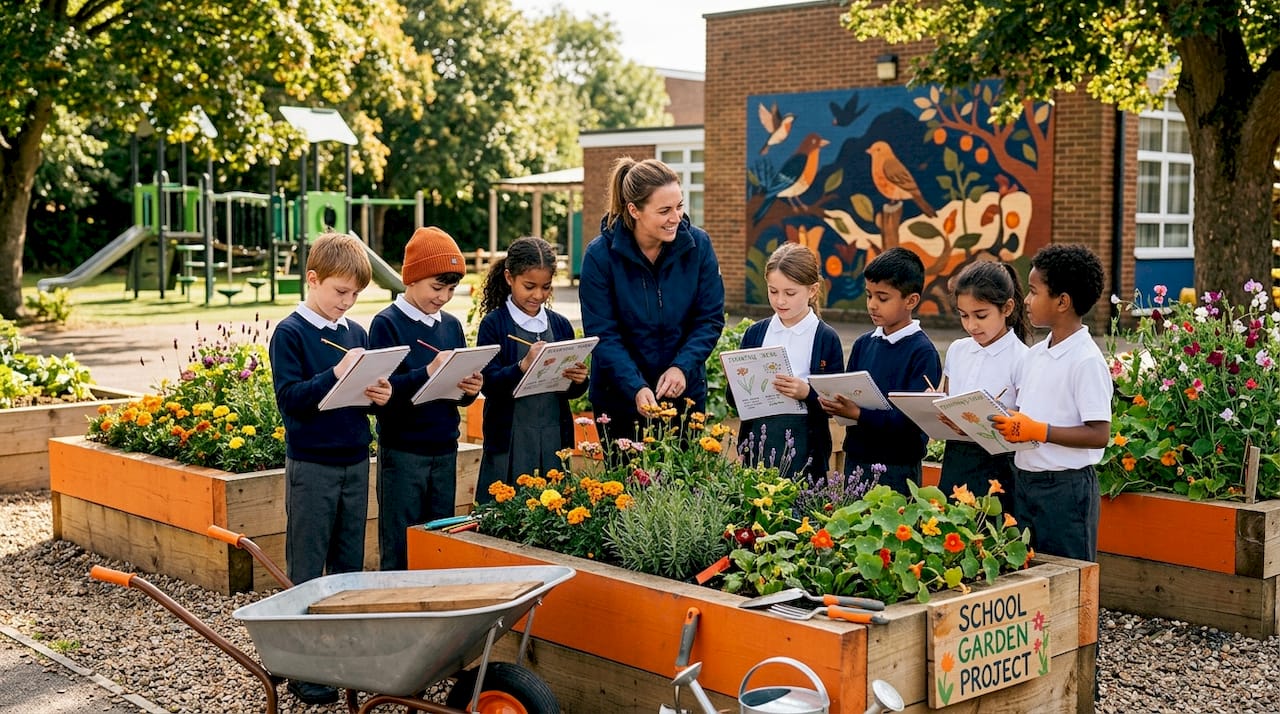
If you want one idea that transforms both your curriculum delivery and your pupils’ wellbeing simultaneously, nature-based outdoor classrooms are the strongest single investment you can make. Nature is inherently dynamic, which means the environment itself does much of the teaching. A garden that changes with the seasons gives children something no worksheet can replicate.
School garden ideas in this category typically include:
Raised planting beds with native wildflowers, vegetables, and herbs that tie directly into science and food education
Log circles and natural seating that create a dedicated outdoor classroom setup without requiring permanent structures
Sensory paths using bark, gravel, and grass that support children with additional sensory needs
Weather stations and bug hotels that make environmental science tangible and observable
Over 1,000 schools have now implemented outdoor learning models, a number that has grown substantially over the past decade. The evidence is clear that these spaces improve engagement and attendance, particularly for pupils who struggle in traditional classroom settings. A well-planned nature classroom does not need to be large. Even a 20-square-metre garden plot can deliver meaningful learning outcomes when it is used intentionally.
3. Modular shaded pavilions and pergolas
British weather is the single biggest obstacle to consistent outdoor learning. A school can have a beautifully designed outdoor space and still find it sitting empty for weeks at a time because there is no shelter from rain or direct sun. Modular shaded pavilions and pergolas solve this problem without requiring the planning complexity of a permanent building.
Key benefits for schools considering this approach:
Year-round usability. A quality pergola or covered pavilion extends the outdoor classroom season into autumn and winter, which dramatically increases return on your wider outdoor investment.
Weather protection without enclosure. Unlike temporary gazebos, a properly installed pergola provides reliable shade and rain cover while keeping the space open, well-ventilated, and safe.
Flexible seating configurations. Covered areas can host whole-class teaching sessions, small group work, or quiet reading, depending on how furniture is arranged beneath them.
Proven funding precedent. One school pavilion project in 2026 was funded through grants and donations totalling over £23,000, demonstrating that community fundraising and grant applications are viable routes for schools working within tight budgets.
Pro Tip: When specifying a pergola for school use, prioritise powder-coated aluminium frames over timber. Aluminium requires virtually no maintenance, resists the British climate reliably, and carries a longer lifespan. You can find out more about durable shading materials before making any final decisions.
4. Creative play zones with loose parts and natural elements
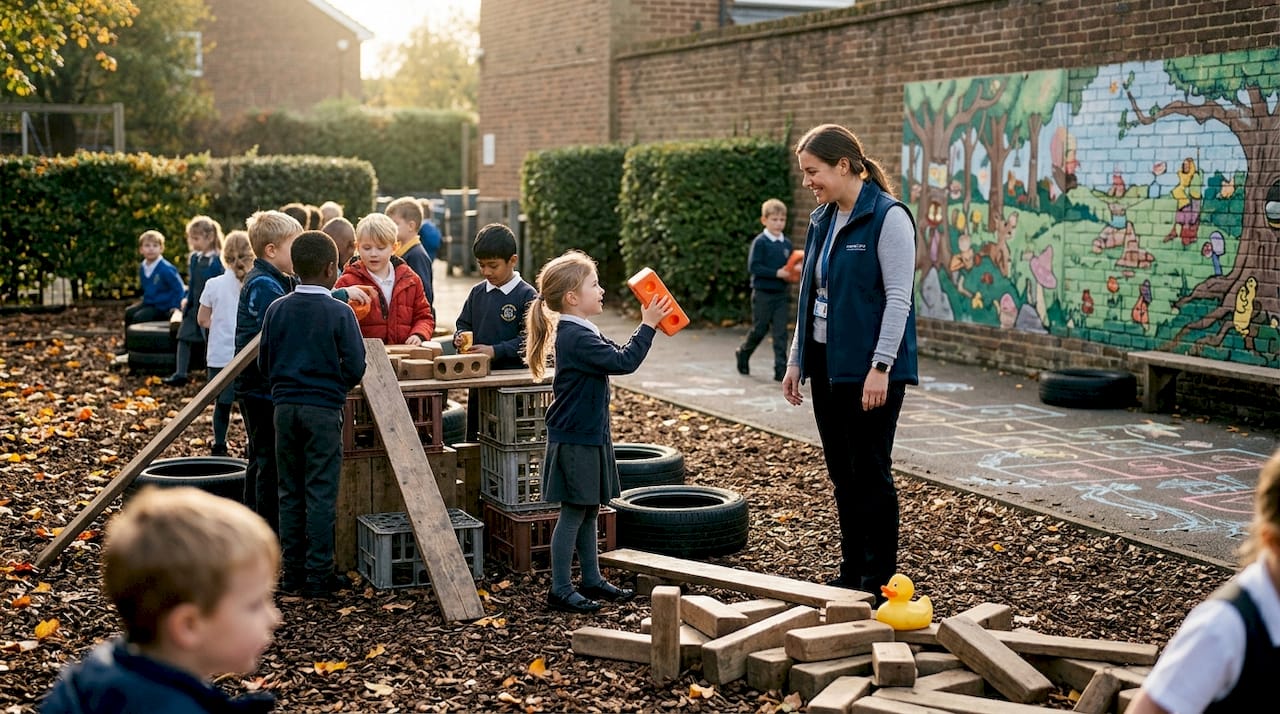
Loose parts play is one of the most research-backed and cost-effective approaches in school playground design, yet it remains underused. The principle is straightforward: give children access to movable, open-ended materials and let them decide how to use them. What emerges is richer, more collaborative, and more physically varied than anything a fixed climbing frame produces.
Practical loose parts for school play spaces include:
Large wooden crates, planks, and cable reels that children can stack, balance on, and build with
Old tyres in different sizes, which support gross motor development and imaginative construction play
Gravel trays, water channels, and sand areas that engage children who prefer quieter, exploratory activity
Natural materials like logs, stones, and sticks that change in character across the seasons
The real advantage of these creative outdoor spaces is their adaptability. A child with limited mobility can engage with a water channel or a building tray in ways that a traditional climbing frame never allows. The inclusion argument for loose parts play is genuinely strong. Schools that have introduced flexible play areas consistently report improvements in cooperative behaviour and reduced conflict during unstructured time, which is a meaningful benefit for lunchtime supervisors.
5. Comparison of top school outdoor space ideas
Choosing between different school outdoor space ideas comes down to your context: your budget, your site constraints, your pupil demographic, and your teaching priorities. This comparison gives you a practical starting point.
Idea | Approximate cost | Maintenance level | Inclusivity | Best suited for |
Nature-based learning garden | Low to medium | Medium | High | Primary schools with curriculum focus |
Shaded pavilion or pergola | Medium to high | Low | High | All school types; year-round use |
Loose parts play zone | Low | Low to medium | Very high | Primary; SEND-inclusive settings |
Fixed play equipment | High | Medium to high | Variable | Schools with capital budgets |
Outdoor seating and amphitheatre | Medium | Low | High | Secondary; performance and assembly use |
A few observations worth making. Fixed equipment carries the highest upfront and ongoing maintenance costs, yet many schools still treat it as the default first purchase. Nature-based gardens and loose parts zones frequently deliver stronger educational outcomes at a fraction of the price. Shaded structures sit in the middle: the upfront cost is real, but the long-term gain in usability makes them one of the highest-value investments a school can make in its outdoor provision.
Schools with limited budgets should consider starting with a loose parts zone and a modest planting area, then phasing in a shaded structure once the outdoor programme has built momentum and community buy-in.
My honest take on school outdoor space design
In my experience, the most common mistake schools make is treating outdoor space design as a shopping exercise. I have seen schools spend substantial sums on impressive-looking equipment that sits largely unused within a year, because nobody thought seriously about how adults would facilitate play or how the space would be managed across the school day.
Successful outdoor transformation almost always comes down to changing adult routines and spatial management, not just what you install. The schools I have seen get this right tend to start small, observe carefully, and build iteratively. They listen to their pupils. They change one thing, watch what happens, and adjust.
What I find most encouraging about where school outdoor space design is heading in 2026 is the shift away from purely aesthetic decisions toward genuinely flexible outdoor learning. Schools are finally asking “how will this be used on a wet Tuesday in November?” rather than “does this look good in our prospectus?” That is exactly the right question. Start with that question, and the ideas in this article will serve you well.
— Andrew
How Infinityawnings supports school outdoor spaces
When a school commits to outdoor learning, weather becomes the main barrier to consistent use. A well-specified pergola or shading structure removes that barrier entirely, turning a seasonal outdoor area into a genuinely functional space across all twelve months of the year.

At Infinityawnings, we work with educational settings across Yorkshire, Derbyshire, Nottinghamshire, and Lincolnshire to design and install shading solutions built for real-world school conditions. Our school pergola solutions are specified for durability, low maintenance, and compliance with school safety requirements. You can also explore our full range of outdoor solutions for schools to see what works across different site types and budgets. Whether you need a covered outdoor classroom, a shaded play area, or a combination of both, we offer free consultations and bespoke quotes. Get in touch and we will help you build an outdoor space your school actually uses.
FAQ
What are the best school outdoor space ideas on a limited budget?
Nature-based planting areas and loose parts play zones offer the strongest educational return at the lowest cost. Both can be introduced incrementally without a large capital spend.
How do you create an outdoor classroom setup for all weathers?
Install a permanent or semi-permanent shaded structure such as a pergola, which provides rain cover and sun protection without enclosing the space. This allows outdoor teaching to continue regardless of conditions.
Why does playground design matter more than playground equipment?
Space, materials, and adult routines shape play outcomes far more than the specific equipment installed. Schools that invest in thoughtful layout and facilitation consistently see better engagement and behaviour.
How much should a school budget for outdoor space improvements?
Costs vary significantly by scope, but remember that surfacing alone can represent up to 20% of total project costs. Build a phased plan that includes groundworks, surfacing, structures, and ongoing maintenance from the outset.
Are school pergolas eligible for grant funding?
Yes. Community grants, parent-teacher association fundraising, and local business sponsorship are all viable routes. One 2026 school pavilion project raised over £23,000 through grants and donations to fund its installation.
Recommended
Comments