
Understand awning load ratings for safer outdoor spaces
- Andrew Crookes

- May 12
- 10 min read
TL;DR:
Choosing an awning without considering load ratings risks failure during storms or snowfall, especially in exposed areas. Proper assessment of wind class, substrate, and fixing systems is essential to ensure safety, durability, and compliance with UK regulations. Expert installation and maintenance are vital for optimal protection and long-lasting outdoor shading solutions.
Choosing an awning for your home or business feels straightforward until the first serious storm rolls across Yorkshire or a heavy snowfall settles across Lincolnshire. Many property owners assume that any decent-looking awning will cope with whatever the British weather throws at it. That assumption is wrong, and it can be costly. Load ratings exist precisely because awnings vary enormously in what they can safely handle, and understanding what those ratings mean for your specific site is the difference between a long-lasting installation and an expensive failure.
Table of Contents
Key Takeaways
Point | Details |
Understand load ratings | Load ratings tell you how much wind, snow, and pressure your awning can safely endure. |
Check both product and installation | A high-rated awning is only as strong as its mounting, anchors, and local site preparation. |
Use the correct standard | UK awning wind ratings follow EN 13561 classes; higher class means greater resistance. |
Match rating to property needs | Always review your local wind and snow exposure before deciding the rating you require. |
Professional advice pays off | Expert guidance ensures you avoid common pitfalls and install for real-world safety. |
Why load rating matters for UK awnings
A load rating is, in simple terms, the measure of how much force an awning can safely withstand. That force comes primarily from wind pressure and, where relevant, snow accumulation. Both of these apply across much of Yorkshire, Derbyshire, Nottinghamshire, and Lincolnshire, not just in upland or coastal areas. Even a property in a suburban street can face wind gusts that exceed what a poorly chosen awning can handle.
The risks of ignoring load ratings are real and immediate. An awning that exceeds its wind rating can buckle, tear away from its fixings, or collapse onto people below. Beyond the physical danger, there is the financial cost of replacement and potential liability if someone is injured. It is worth noting that UK awning regulations do set expectations around safe installation, and those expectations reference the structural adequacy of the product and its fixing system together.
Here are the core risks that come with underrated awnings:
Wind damage: Gusts can arrive suddenly and exceed the average wind speed for an area significantly.
Snow loading: Wet, heavy snow common in the Pennines or the higher ground of Derbyshire adds considerable weight to any fixed-frame structure.
Anchor failure: Even a well-rated awning can fail if it is mounted on a weak or unsuitable substrate.
Fabric tearing: When wind loads exceed design limits, fabric is often the first component to fail, but the hardware and fixings can follow rapidly.
Corrosion over time: Coastal or urban pollution can weaken fixings progressively, reducing the effective load capacity of the installation.
“Manufacturer wind ratings assume correct installation, and dangerous gusts can exceed ratings even if averages are lower.” Awning wind and rain guide
A common scenario we see is a property owner who selects an attractive retractable awning based purely on appearance and price. The first autumn storm arrives, the awning is extended, and the fixings pull out of a poorly assessed masonry wall. The awning itself may have carried an appropriate wind class, but the installation undid all that protection. This is why treating load rating as a whole-system question, not just a product specification, is essential.
How awning load ratings are determined: Standards and classes
Wind resistance for awnings in the UK and across Europe is formalised through EN 13561, the standard that classifies awning performance into numbered wind-resistance classes. A higher class number means the awning has been tested to withstand higher wind pressures. This classification gives buyers and specifiers a consistent language for comparing products.
The classes broadly correspond to the Beaufort wind scale, which most people are familiar with through weather forecasts:
EN 13561 class | Approximate wind speed | Beaufort description |
Class 1 | Up to 17 m/s | Strong breeze to near gale |
Class 2 | Up to 20 m/s | Gale conditions |
Class 3 | Up to 24 m/s | Strong gale |
Class 4 | Up to 28 m/s | Storm force |
Class 5 | Up to 32 m/s | Violent storm |
Most domestic awnings sold in the UK fall into classes 1 to 3. For exposed sites or commercial installations, class 3 or above is strongly advisable.
Snow load is a separate consideration and is not always explicitly rated on awning products. However, for static or fixed installations, snow load calculations involve measuring ground snow levels, exposure factors, and thermal effects on the structure. In practical terms, if your property sits above 200 metres in Derbyshire or in the northern parts of Yorkshire, you should actively ask your installer about snow load capacity, particularly for pergolas, fixed canopies, and verandas.
When it comes to building regulations, smaller retractable domestic awnings often fall outside formal planning requirements, but larger fixed structures must comply with structural design codes. Always check before you commit to a permanent installation. Similarly, when measuring for awnings, the projection and width of the structure directly influence the wind load it will experience, so accurate measurement feeds directly into your load rating selection.
The table below gives a quick reference for matching common installation types to appropriate wind classes:
Installation type | Recommended minimum class | Notes |
Domestic garden awning | Class 2 | Higher for exposed gardens |
Commercial terrace or restaurant | Class 3 | May need engineering sign-off |
Fixed pergola or veranda | Class 3 to 4 | Snow load also relevant |
Coastal or hillside property | Class 4 or higher | Always seek specialist advice |
Real-world factors: Installation, anchoring, and failure modes
Knowing your awning’s EN 13561 class is necessary but not sufficient. The anchor system is frequently the weakest component in the whole installation. A class 3 awning bolted into ageing, soft brick with undersized fixings offers nowhere near the protection its product rating implies.
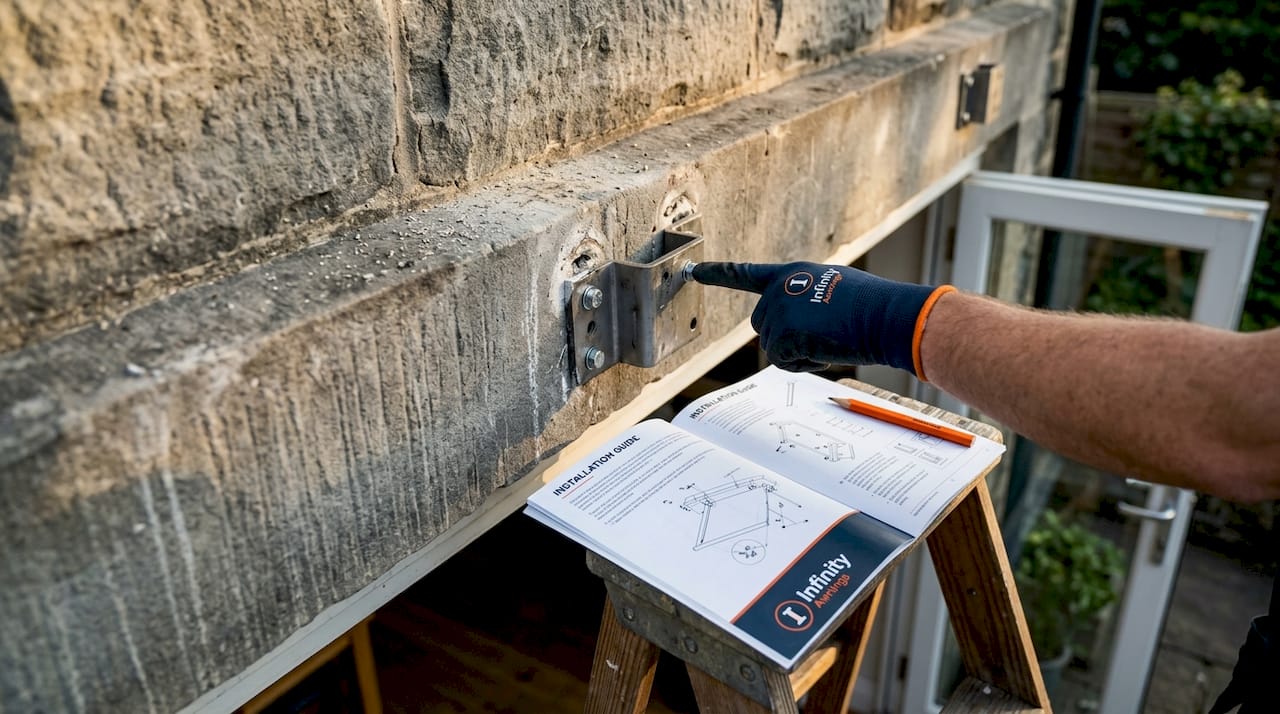
The substrate matters enormously. Solid concrete and engineering brick provide strong anchoring bases. Lightweight aerated blockwork, soft sandstone, and older lime-mortared walls require careful assessment and often specialist fixings. Timber framing can be suitable but must be structurally sound, not rotted or undersized.
Consider these common failure modes when reviewing your site:
Anchor pullout: The fixing pulls clean from the wall under wind load, usually the most catastrophic failure mode.
Concrete breakout: Expansion anchors can cause the surrounding masonry to fracture rather than the anchor itself yielding.
Corrosion of fixings: Inadequate stainless steel specification or poor galvanising leads to progressive weakening, especially in coastal Lincolnshire or urban environments.
Bracket fatigue: Repeated loading and unloading over many seasons causes metal fatigue at bracket connection points.
Sensor failure on retractable models: Automatic wind sensors are valuable, but a sensor that fails in the closed position may leave the awning extended during a sudden squall.
Pro Tip: When commissioning a new awning, ask your installer for written confirmation of the substrate assessment, the fixing specification, and the calculated load capacity of the anchoring system. A reputable installer will provide this without hesitation.
Automatic retraction systems do reduce risk for retractable awnings, provided the sensors are correctly set and regularly maintained. For weatherproofing awnings in Yorkshire’s variable climate, pairing a wind sensor with a correctly sized awning and properly anchored brackets gives the best overall protection. Follow a consistent awning maintenance schedule to inspect fixings, brackets, and sensor function at least once a year, ideally before the autumn and spring seasons when weather extremes are most likely.
Choosing the right awning load rating for your property
Selecting the correct load rating requires a clear, step-by-step approach rather than simply buying the highest-rated product available. Here is how to work through the process:
Assess your local wind and snow exposure. Check the local postcode against wind speed maps and consider your specific site features. Is the property on a hillside? Is it in an exposed garden with no windbreak? Does the region experience significant snowfall? All of these raise your required load class.
Review product documentation thoroughly. The wind resistance class should be clearly stated in the product data sheet, along with any snow or live load capacity. If this information is absent, ask the supplier directly or look at a different product.
Assess your substrate and fixing compatibility. Before any order is placed, the proposed mounting wall or structure should be assessed. Match the fixing specification to the substrate type and to the calculated loads for the installation.
Confirm regulatory compliance. For fixed structures, check whether building regulations or planning permission apply. This is especially relevant for commercial premises in Nottinghamshire and Lincolnshire, where council requirements can differ.
Consider up-rating for exposed sites. If your property sits in an exposed position, it is always worth specifying one wind class above the calculated minimum. The marginal cost difference is small compared with the cost of a failure.
Seek expert installation advice. Particularly for commercial sites, consult a specialist. An experienced installer will know the local conditions, the best product lines for your use case, and the correct fixing systems for your wall type.
Pro Tip: When comparing awning products, look for guidance on selecting awnings for UK weather that matches fabric performance to your exposure level, not just aesthetics. The right fabric choice also affects how the awning behaves under wind loading.
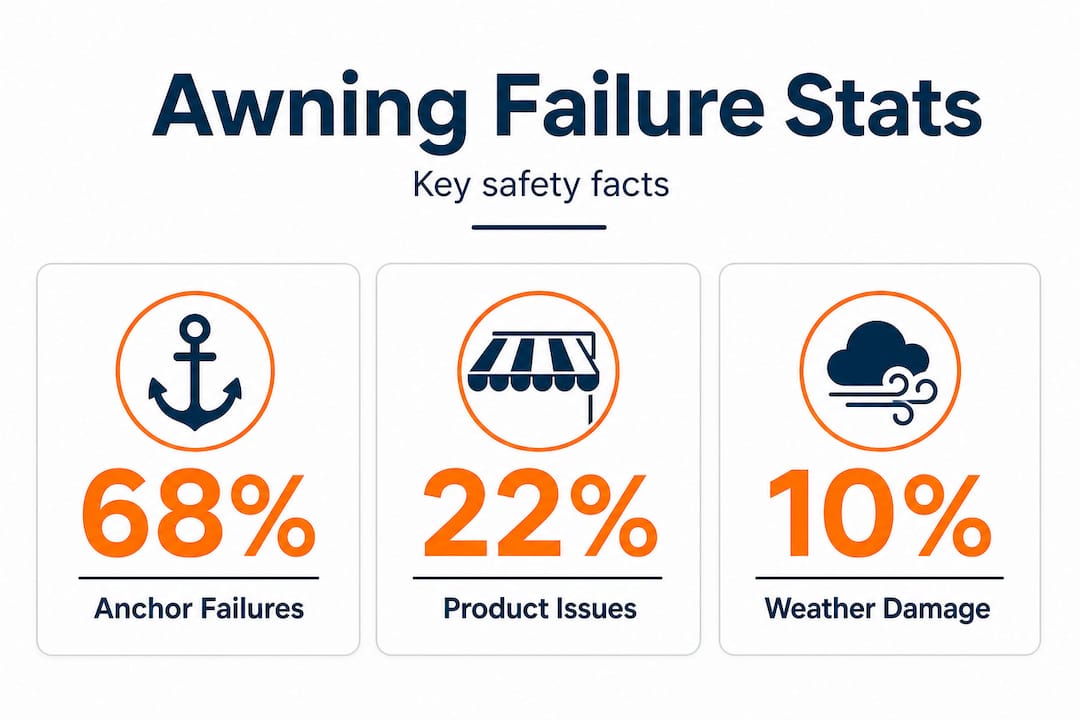
A useful statistic to keep in mind: studies of awning failures consistently show that the majority of structural incidents occur not because the awning product was underrated, but because the installation did not match the product’s rated capacity. Choosing the right product is step one. Installing it correctly is equally important. Use a comprehensive awning selection guide to make sure both bases are covered before you commit.
What most people overlook: Common pitfalls and expert tips
Even well-informed buyers fall into predictable traps when purchasing and installing awnings. Understanding these pitfalls helps you ask better questions and make smarter decisions.
Trusting the product rating without checking the installation details. The product certificate tells you the awning’s capability under ideal conditions. Your installation conditions may not be ideal. Ask your installer to bridge that gap explicitly.
Ignoring local weather extremes. Average wind speeds for your area are far less relevant than the peak gusts that occur during storms. Yorkshire and Lincolnshire both experience powerful gusts during winter low-pressure systems that can far exceed seasonal averages.
Assuming sensors replace correct sizing. Wind and snow sensors add a valuable layer of protection for retractable awning installations, but they are not a substitute for correct anchoring and appropriate load rating. If the sensor fails, only the correct structural specification protects you.
Skipping the maintenance review. Fixings corrode. Brackets fatigue. Sensors drift out of calibration. An annual inspection keeps your load capacity at the level it was on installation day.
Overlooking insurance requirements. Some commercial property insurers specifically require evidence of compliant installation and adequate load rating for external structures. Failing to document this could affect your cover.
Pro Tip: For commercial awning selection, always request a written installation assessment that covers the substrate type, fixing specification, and the EN 13561 class of the product. This gives you a document trail that is valuable for both insurance purposes and future maintenance planning.
Our expert perspective on awning load ratings
After more than 15 years of specifying and installing awnings across Yorkshire, Derbyshire, Nottinghamshire, and Lincolnshire, we have a clear view on where the real risk lies. It is not in choosing a product with too low a wind class, though that happens. The deeper, more common problem is assuming that a high product rating automatically guarantees a safe installation.
The awning industry is good at publishing impressive specifications. Class 4 wind resistance sounds reassuring. But we have seen class 4 awnings fail because the installer used inadequate anchors in soft brick, or because the bracket spacing was wider than the design specification allows. The rating on the box describes what the product can do under controlled test conditions. What it actually delivers on your property depends entirely on the installation.
There is also a tendency among property owners to lean on sensors as a security blanket. A wind sensor that triggers automatic retraction is a genuinely useful feature. However, sensors can fail, power can cut out, and sudden gusts can arrive before the retraction sequence completes. The only reliable protection is a correctly rated awning, properly installed into a substrate that can carry the load. Everything else is an additional layer of protection, not a substitute for the fundamentals.
Our honest advice: prioritise the fixing system and the substrate assessment at least as much as the product wind class. Review your outdoor shading options with a professional who understands local conditions, not just a catalogue. And up-rate your specification for exposed sites. The extra investment is modest. The consequence of underspecifying is not.
How Infinity Awnings can help you choose with confidence
Understanding load ratings is one thing. Translating that understanding into the right product, correctly installed for your specific property, is where expertise makes the real difference.

At Infinity Awnings, we bring over 15 years of experience working with homeowners and businesses across Yorkshire, Derbyshire, Nottinghamshire, and Lincolnshire. We assess your site conditions, recommend the appropriate EN 13561 wind class, and specify fixings that match your substrate, before a single bracket goes up. Whether you are looking at pergolas for outdoor spaces for a commercial terrace, verandas for a residential garden, or a retractable awning for a restaurant, our team will ensure your installation is rated correctly for your real-world exposure. Get in touch for a free, no-obligation consultation and let us help you make the right choice.
Frequently asked questions
How do I find the wind class for my awning in the UK?
Check your manufacturer’s product documentation for the EN 13561 wind-resistance class, which shows what wind speeds your awning is tested for. If the documentation does not include this, ask your supplier directly before purchasing.
Do all awnings need a snow load rating in the UK?
No, but it is strongly recommended for fixed-frame awnings in areas that experience snow; always check with your installer against local design conditions. Retractable awnings that are withdrawn in bad weather carry less snow risk, but static pergolas and canopies must be assessed carefully.
Will automatic wind or snow sensors protect my awning completely?
Sensors can help, but proper installation and correct load rating for your site are essential for safety and longevity. As noted in structural risk assessments, sensors are not a substitute for correct fixings and an appropriately rated product.
Where can awning installations fail even if I buy a high-rated product?
Failings most often occur at the anchor system or substrate, not the product itself. Check fixings, bracket specifications, and mounting wall condition carefully, and always have an experienced installer assess the substrate before installation.
What is the difference between wind load and snow load for awnings?
Wind load is the force of wind pressure the awning must resist horizontally and dynamically, while snow load refers to the static weight of accumulated snow the structure must support. Cold-weather design codes treat both as part of load combinations that fixed structures must be designed to handle together.
Recommended
Comments