
UV protection awnings: block harmful rays, stay comfortable

TL;DR:
UV rays penetrate clouds, causing skin damage even on grey days.
Quality UV protection awnings use certified fabrics with UPF 50+ to block 98-99% of UV rays.
Proper installation, maintenance, and choosing durable materials ensure long-lasting outdoor shading solutions.
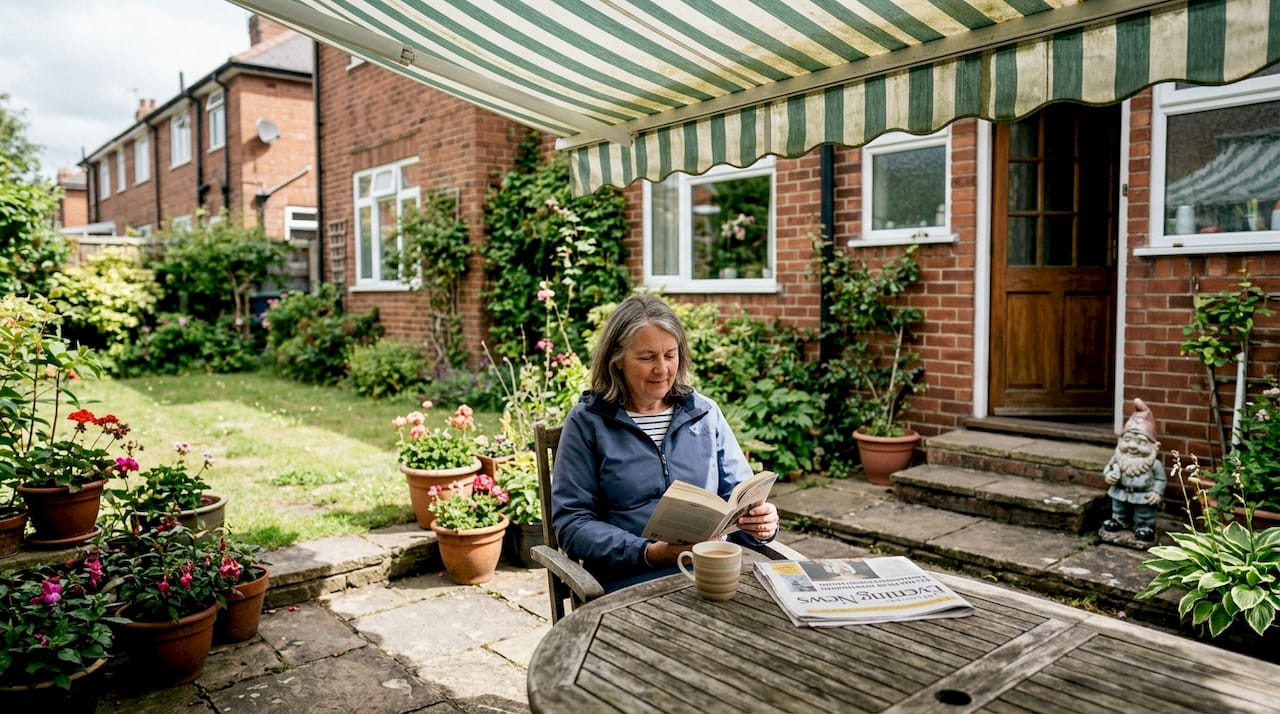
Stepping outside on a grey Yorkshire afternoon, you might assume you’re safe from UV damage. You’re not. UV rays penetrate cloud cover and cause cumulative skin damage regardless of how bright the sky looks. Many people also assume that any garden awning provides meaningful UV protection, but that’s a costly misconception. The fabric type, weave density, and frame construction all determine whether an awning genuinely shields you or simply provides shade. This guide explains exactly what separates a UV protection awning from an ordinary canopy, how the technology works, and how to choose the right solution for your home or business in Northern England.
Table of Contents
Key Takeaways
Point | Details |
Technologies matter | True UV protection comes from certified fabrics like solution-dyed acrylic, not just any canopy. |
Proper fittings last | Powder-coated aluminium frames and sensor automation offer the durability needed for the UK climate. |
Care extends lifespan | Regular maintenance means high-quality awnings can protect for well over a decade. |
Certification is key | Look for products meeting DIN EN 13561 and UPF 50+ standards, especially in Northern England. |
What is a UV protection awning?
A UV protection awning is a purpose-built shading structure designed to block a significant portion of ultraviolet radiation, not just visible sunlight. Unlike a basic garden parasol or a cheap polyester canopy, these awnings use technically rated fabrics that have been tested and certified to stop UV rays from reaching the people and surfaces beneath them.
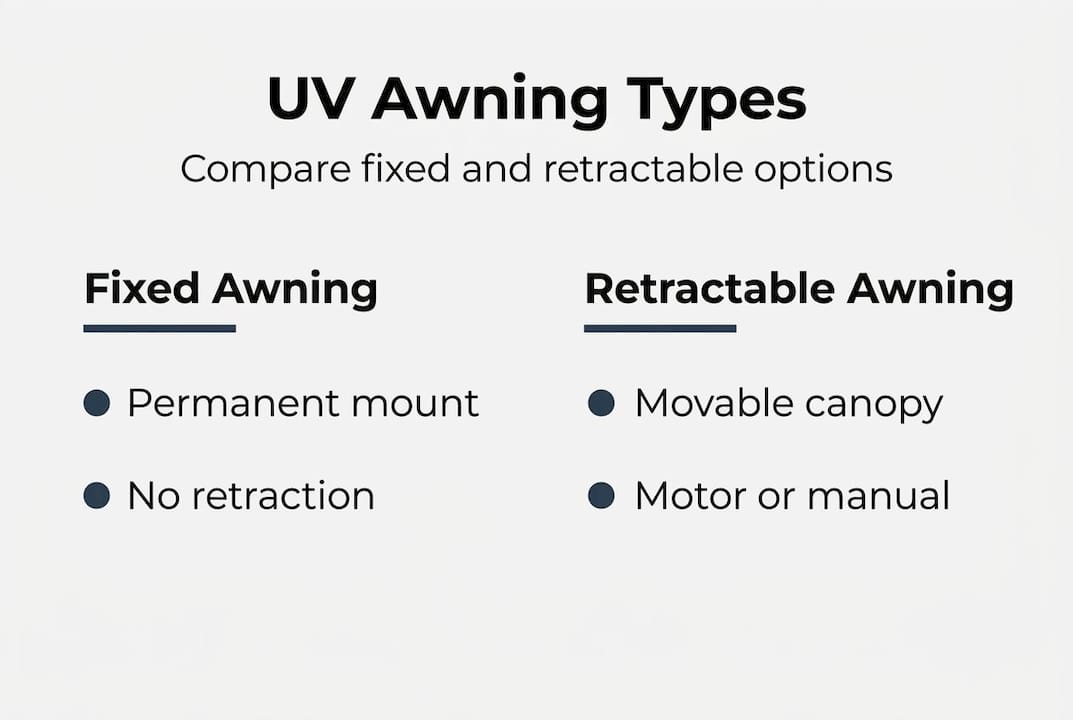
There are two main structural types: fixed awnings, which are permanently attached and cannot be retracted, and retractable awnings, which extend and fold back as needed. Retractable models are the most popular choice for UK homes and businesses because they adapt to the unpredictable British weather. When the sun appears, you extend the awning. When rain arrives, you retract it to protect the fabric and frame.
The materials make all the difference. Premium UV protection awnings use solution-dyed acrylic or PVC-coated polyester fabrics, both of which carry a UPF 50+ rating. UPF stands for Ultraviolet Protection Factor, and a rating of 50+ means the fabric allows only 2% or less of UV radiation to pass through. A UV protection awning blocks 98-99% of harmful ultraviolet rays using specialised fabrics, which is a meaningful difference compared to an untreated canopy.
Here is a quick summary of what a quality UV protection awning delivers:
Reduces sunburn risk for people sitting beneath it
Protects outdoor furniture, cushions, and flooring from UV fading
Lowers surface temperatures on patios and decking
Extends the usable hours of outdoor spaces across more months of the year
Adds a layer of privacy and visual comfort to gardens and terraces
For homeowners and businesses across Yorkshire, Derbyshire, Nottinghamshire, and Lincolnshire, investing in awnings that meet high quality awning standards is the difference between a product that performs and one that simply looks the part.
How do UV protection awnings work?
Understanding the mechanics helps you ask the right questions when buying. UV protection awnings work through a combination of fabric technology, frame construction, and operational design.
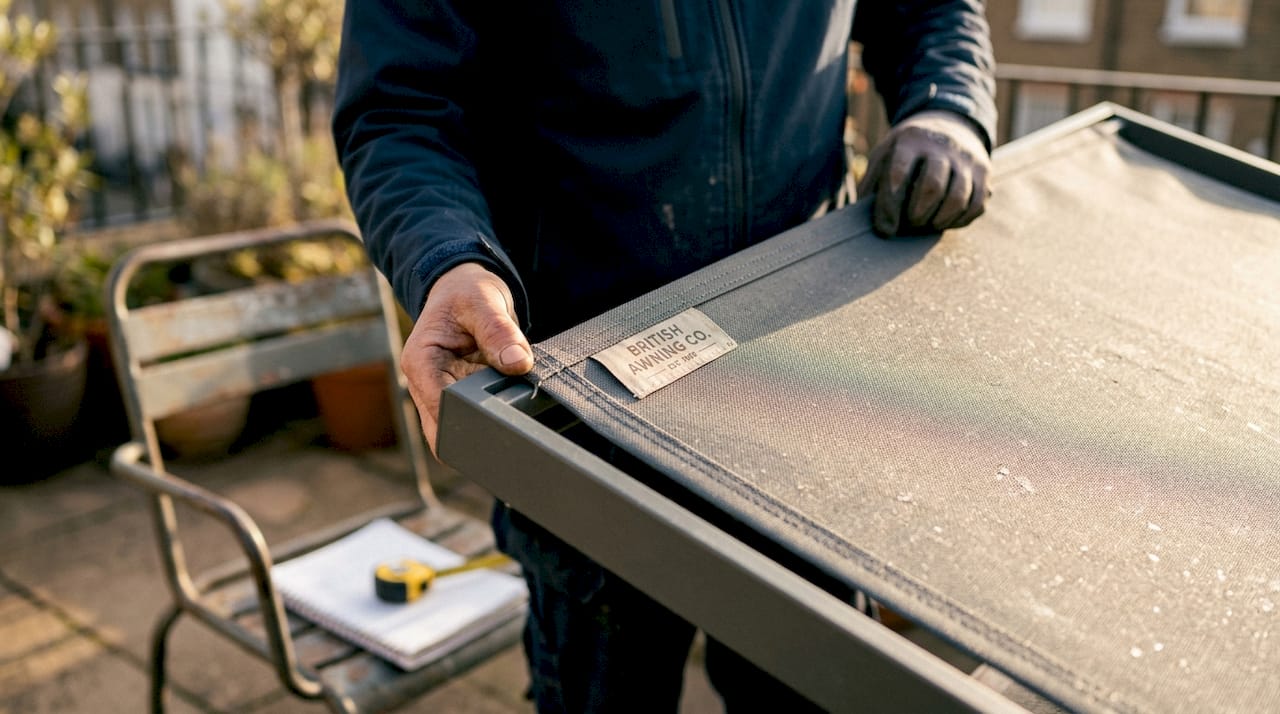
Fabric technology is the foundation. Solution-dyed acrylic fabric is the gold standard. In this process, colour pigments are added to the fibre before it is spun, meaning the dye is locked into the core of each thread rather than sitting on the surface. This makes the fabric far more resistant to UV degradation, fading, and moisture. Standard untreated polyester, by contrast, sits at the other end of the scale. Its fibres degrade faster under UV exposure, and the weave can loosen over time, allowing more radiation through. Solution-dyed acrylic fabrics achieve up to 99% UV block, and powder-coated aluminium frames resist corrosion, making them well suited to the UK’s damp climate.
Feature | Solution-dyed acrylic | Untreated polyester |
UV block | Up to 99% | Variable, often lower |
Colour stability | Excellent | Fades within 2-3 years |
Moisture resistance | High | Moderate |
Lifespan | 10-15+ years | 3-7 years |
Frame construction matters just as much. Powder-coated aluminium is the preferred material for UK installations because it resists rust and corrosion without requiring frequent treatment. Steel frames can work but demand more maintenance in wet climates.
Operational features add another layer of practicality. Motorised awnings allow you to extend or retract the canopy at the touch of a button. Wind and rain sensors can trigger automatic retraction when conditions deteriorate, protecting both the fabric and the frame. Cassette-style awnings, where the fabric rolls into a protective housing when retracted, offer the best long-term fabric preservation.
For a deeper look at how fabric choices affect performance, our guides on best awning fabric for gardens, types of awning fabrics, and selecting outdoor awning fabric cover the topic in practical detail.
Pro Tip: Always ask for the UPF rating before purchasing. If a supplier cannot provide it, treat that as a warning sign. UPF 50+ is the minimum you should accept for genuine UV protection in UK conditions.
Comparing UV protection awning materials and designs
Knowing the science is useful, but comparing real options side by side makes the decision practical.
Material | UV block | Breathability | Maintenance | Cost |
Solution-dyed acrylic | Up to 99% | Good | Low | Higher upfront |
PVC-coated polyester | Up to 98% | Low | Low | Moderate |
Untreated polyester | Variable | Moderate | Moderate | Lower |
Metal/aluminium louvres | High (solid) | Adjustable | Low | High |
Solution-dyed acrylic outperforms polyester for long-term UV resistance, and a full cassette design protects retracted fabric from dirt, bird droppings, and moisture. This is not a minor detail. A cassette that seals properly can add years to the life of the fabric.
Here is how to approach the comparison logically:
Start with the UPF rating. This is the only reliable measure of UV protection. Appearance and colour are not substitutes.
Consider breathability. PVC-coated fabrics block UV effectively but trap heat beneath them. Acrylic weaves allow some airflow, making the space below more comfortable on warm days.
Assess the frame and cassette. A full cassette with a sealed housing protects the fabric when retracted. Open cassette or no cassette designs leave fabric exposed.
Think about adjustable pitch. An awning that can be angled at different degrees lets you control both shade and airflow depending on the sun’s position.
A common mistake is choosing an awning based on colour or pattern alone. Lower-quality untreated fabrics can appear opaque yet still allow UV penetration. Always prioritise technical specification over aesthetics.
For UK properties, you should also check local planning considerations. Our guide on awnings regulations in Yorkshire explains what permissions may apply, and understanding high quality awning standards helps you avoid underperforming products.
Selecting and maintaining UV protection awnings for UK homes and businesses
Once you understand the options, the practical question is how to buy well and keep your investment performing for years.
For UK buyers, the key priorities are certified materials, professional installation, and compliance with recognised standards such as DIN EN 13561, the European standard for external blinds and awnings. This standard covers wind resistance, UV performance, and durability, giving you an independent benchmark to reference when comparing suppliers.
Here is a buyer checklist to use before committing:
Confirm the fabric carries a UPF 50+ rating from a recognised testing body
Check that the frame is powder-coated aluminium or equivalent corrosion-resistant material
Ask whether the awning includes a full cassette or at minimum a semi-cassette housing
Verify that motorised options include wind and rain sensors
Ensure the supplier offers professional installation and an aftercare service
Request references or examples of completed installations in your region
Maintenance is where many owners fall short. Motorised awnings with wind and rain sensors are ideal for the UK’s changeable weather, and regular cleaning can extend awning life to 10 to 15 years. In practice, this means brushing off debris monthly, cleaning the fabric with a mild soap solution twice a year, and having a professional check the frame, fixings, and motor annually.
Our detailed resources on awnings maintenance tips, the awnings maintenance checklist, and our awning repair guide walk you through every stage of long-term care.
Pro Tip: Pair motorisation with a wind sensor from day one. In Yorkshire and Lincolnshire especially, sudden gusts can damage an extended awning within minutes. Automation removes the human error from the equation.
Awnings and UV protection: What most guides get wrong
Most articles on this subject stop at listing fabric types and UPF ratings. That is useful, but it misses the practical reality of owning an awning in the UK.
The first thing we see regularly is buyers choosing shade over certification. A dark-coloured awning looks protective. It feels reassuring. But colour is not a proxy for UV block. An opaque navy canopy made from untreated polyester can still allow harmful radiation through its weave. The only reliable indicator is a tested UPF rating from a credible source.
The second oversight is underestimating how much UK weather punishes awnings. Rain, wind, and temperature swings are not occasional inconveniences here. They are the norm. Frames that seem sturdy in a showroom can flex and corrode within two or three seasons if they are not built for damp conditions. This is why powder-coated aluminium and full cassette designs are not luxury upgrades. They are practical necessities.
We have also found, after years of working with clients across the region, that simpler systems often outlast complicated ones. A manually operated awning with a premium solution-dyed acrylic fabric and a robust aluminium frame can outperform a motorised system built on cheaper components. Automation adds genuine value, but only when the underlying product quality is already high. Investing in real UK awning quality first, then adding features, is the smarter sequence.
Enhance your outdoor comfort with certified UV protection solutions
If this guide has helped you understand what to look for, the next step is finding solutions that actually deliver on those standards.
At Infinity Awnings, we supply and install UV protection awnings, pergolas for gardens, and verandas with UPF-certified fabrics and corrosion-resistant frames across Yorkshire, Derbyshire, Nottinghamshire, and Lincolnshire. Our team has over 15 years of experience helping homeowners and businesses choose the right shading solution for their specific space and climate. Whether you need a retractable awning for a residential patio or a full veranda for a commercial terrace, we offer a free site assessment and personalised quote. Request your free veranda quote today and let us help you make the most of your outdoor space with confidence.
Frequently asked questions
How much UV light does a UV protection awning block?
A high-quality UV protection awning blocks at least 98% of harmful UV rays. Advanced solution-dyed acrylic and PVC-coated fabrics with a UPF 50+ rating can reach up to 99% blockage.
Does the colour of the awning fabric impact UV protection?
Colour affects heat absorption but not UV protection. Untreated fabrics may appear opaque yet still allow UV rays through. Only fabrics with a tested UPF rating provide reliable protection.
What is UPF and why is UPF 50+ important?
UPF, or Ultraviolet Protection Factor, measures how much UV radiation a fabric blocks. A UPF 50+ rating means only 2% or less of UV passes through, which is the standard recommended for genuine outdoor protection.
How long do UV protection awnings last with regular maintenance?
With proper care, a quality UV protection awning can last 10 to 15 years or more. Regular cleaning and maintenance are the most important factors in achieving that lifespan in UK conditions.
Recommended
Comments