
Veranda maintenance tips for a lasting outdoor space
- Andrew Crookes

- May 20
- 8 min read
TL;DR:
Proper veranda maintenance involves routine cleaning, seasonal inspections, and tailored care based on material type to prevent costly damage. Regular upkeep, including deep cleaning every three months and early problem detection, extends the structure’s lifespan and keeps outdoor spaces inviting. Consistent preventive routines are more cost-effective than reactive repairs and help preserve your veranda’s beauty and function.
A veranda that’s genuinely well looked after does not just look better. It lasts longer, costs less to fix over time, and makes your outdoor space one you actually want to spend time in. Yet most homeowners underestimate how quickly small oversights compound. A loose bolt ignored for a season becomes a structural wobble. A patch of mildew left on furniture spreads across cushions and frames. These veranda maintenance tips exist to stop those problems before they start, with practical routines anyone can follow regardless of what their veranda is made from or how old it is.
Table of Contents
Key takeaways
Point | Details |
Clean on a strict schedule | Deep clean your veranda every three months to prevent dirt and moisture from causing lasting damage. |
Inspect before issues worsen | Check seals, fittings, and bolts seasonally so minor wear is caught before it turns into a costly repair. |
Match your care to the material | Wood, aluminium, and glass each require different cleaning products and repair approaches to stay in good condition. |
Protect furniture actively | Treat, paint, or store veranda furniture correctly to prevent mildew, rust, and weather cracking. |
Use seasonal checklists | Set reminders for winter sealing and summer ventilation tasks to make upkeep consistent and predictable. |
1. Veranda maintenance tips: build a cleaning routine that actually sticks
The biggest mistake homeowners make with their veranda is cleaning it reactively, only when it looks visibly dirty. By that point, grime has had weeks to work into timber grain, mould spores have taken hold on glass edges, and aluminium joints have accumulated enough debris to affect drainage. Cleaning routinely, even lightly, prevents all of that.
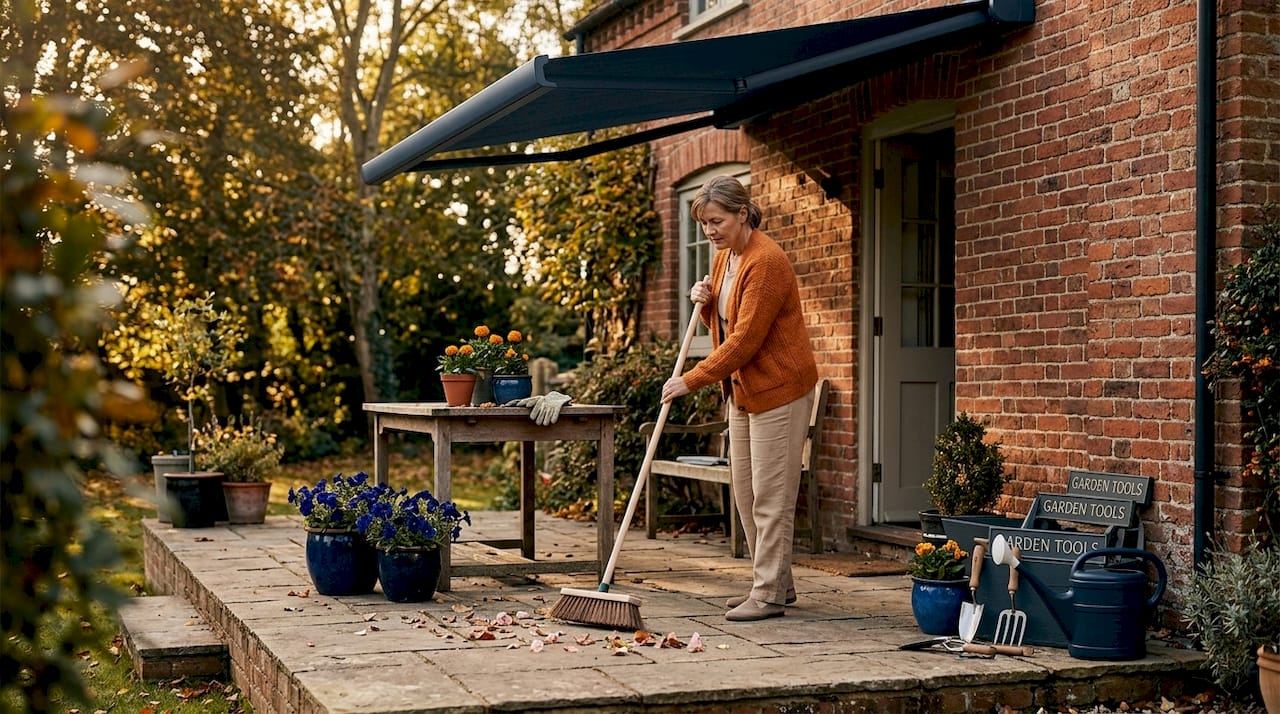
Weekly dry cleaning is the first layer of any solid veranda cleaning guide. A dry mop, soft-bristle broom, or handheld vacuum removes surface dust, pollen, and leaf debris before they break down into harder-to-shift residue. This takes five minutes and protects your surface finish considerably.
Beyond weekly sweeping, a thorough deep clean every three months is the standard professionals recommend. For wooden surfaces, be cautious with your cleaning solution. Excess vinegar can discolour and dry out the wood over time, so always follow proper dilution ratios when mixing your own cleaners.
One technique most homeowners skip: letting your cleaning solution actually sit. Professional cleaners consistently highlight that 10 to 15 minutes of dwell time allows the solution to break down grime and bacteria properly before you wipe. Applying and immediately scrubbing reduces the effectiveness considerably.
Use a soft-bristle brush or microfibre cloth on glass panels to avoid scratching
For aluminium frames, a pH-neutral cleaner avoids oxidisation and surface dulling
On timber decking or beams, always scrub along the grain rather than across it
Dry dust screens with a vacuum before any wet cleaning to avoid muddy streaks that are difficult to remove
Pro Tip: Keep a small cleaning kit in a weatherproof box near your veranda. Having the tools immediately to hand means you are far more likely to do the quick weekly clean instead of putting it off.
2. How to inspect your veranda and catch problems early
Cleaning is visible maintenance. Inspection is invisible maintenance, and it matters just as much. Most veranda damage that becomes expensive starts as something minor that a ten-minute check would have caught.
Walk your veranda at the start of each season and look at these four areas in order:
Seals and weather strips: Check along any glazed panels and roofing edges. Cracked or shrunken sealant lets water in and causes timber to swell or aluminium to corrode at the joint.
Bolts and fixings: Tighten any loose bolts on the frame, posts, and brackets. Vibration from wind causes gradual loosening over months.
Drainage channels: Clear any debris from guttering and downpipes. Blocked drainage is one of the most common causes of moisture damage to veranda structures.
Surface finish: Look for peeling paint, flaking lacquer, or bare wood appearing on timber components. Any exposed wood should be treated promptly before water penetrates.
When you do need to make repairs, the hardware you use matters. Stainless steel screws resist rust and avoid the black staining that standard steel hardware causes on timber over time. Pre-drilling pilot holes before screwing into wood also prevents splitting, which is especially relevant in older veranda frames.
Minor veranda repairs, including patching, re-sealing, and fixing structural components, typically cost between £200 and £480. Acting when a problem is small keeps you firmly in that range rather than facing a full structural overhaul.
Understanding veranda construction basics helps you spot what to look for during these checks, even if you had your veranda professionally installed.
3. Seasonal veranda upkeep that protects all year round
Your veranda faces genuinely different threats depending on the time of year. Treating it the same way in January as you do in July means you will always be slightly behind on what it actually needs. Seasonal veranda upkeep is about being one step ahead of the weather.
Autumn and winter preparation:
Re-seal any joints, window edges, and base connections before the first hard frost
Check that bolts on roof panels are tightened; wind loading in winter puts real stress on fixings
Remove any standing water or pooling from flat roof sections after heavy rain
If your veranda has a retractable canopy or fabric element, clean and store it correctly before extended cold periods
Spring and summer tasks:
Deep clean the entire structure after winter to remove salt deposits, algae, and weather residue
Check ventilation gaps and louvres on pergola-style verandas; summer heat builds up quickly in enclosed spaces
Inspect any timber that has been through a freeze-thaw cycle for new cracking
Pro Tip: Set four recurring calendar reminders, one per season, labelled “veranda check.” Each reminder should prompt a 20-minute inspection and the seasonal task list. This keeps upkeep consistent without relying on memory.
A seasonal maintenance checklist for awning and veranda structures is a practical way to make sure nothing slips through between seasons.
4. Caring for veranda furniture and accessories
Your veranda structure can be in perfect condition while the furniture on it deteriorates rapidly. Outdoor furniture maintenance is part of any complete veranda care checklist, and the good news is that most furniture issues are highly preventable.
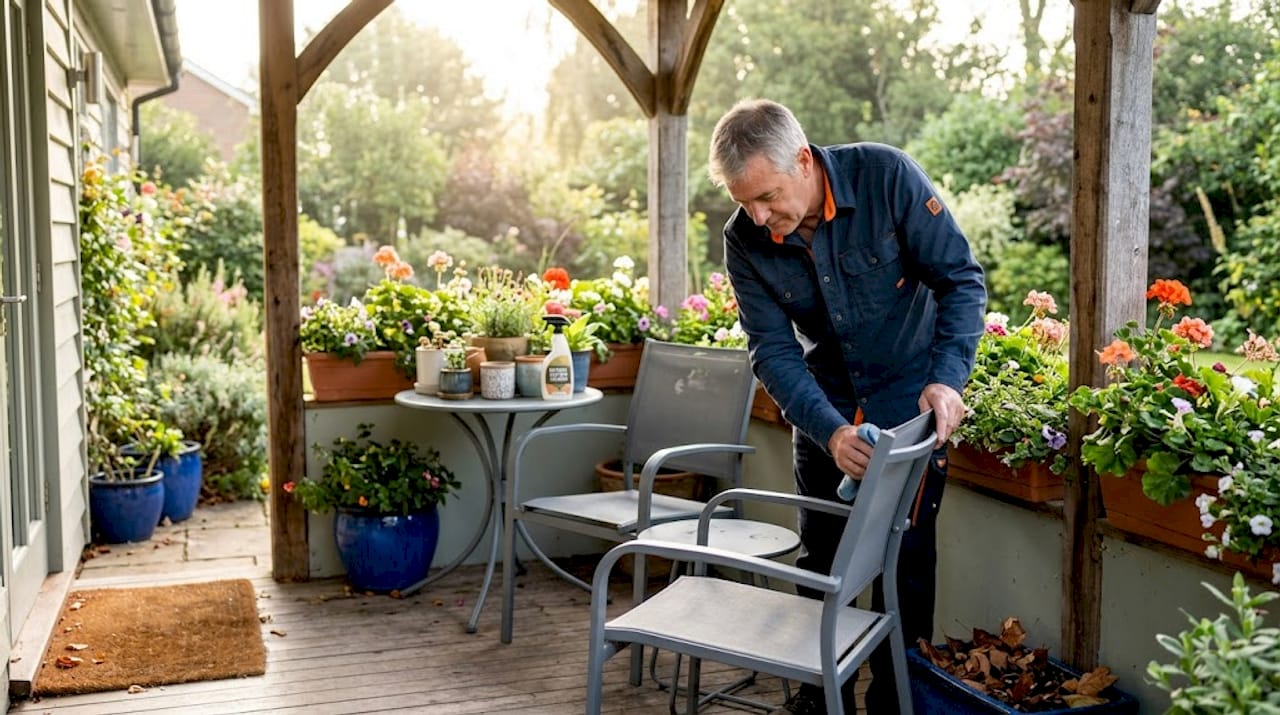
For mildew, which thrives in the damp British climate, a practical solution is to mix one cup of chlorine bleach with a quarter cup of dishwashing liquid in a gallon of warm water. Apply to affected areas, let it dwell, then rinse thoroughly. This works on most hard outdoor furniture surfaces including resin, wood, and metal frames.
Wicker furniture deserves specific attention. Many homeowners oil wicker and consider the job done, but painting wicker creates a genuine protective barrier against temperature and humidity changes. Paint seals the fibres so they resist the brittleness and cracking that comes from years of weather exposure. It is a more durable solution than oil alone for furniture left outdoors year-round.
For metal furniture, check screws and fittings seasonally. Standard steel fixings rust and stain surrounding surfaces. Replace any corroded hardware with stainless steel or exterior-rated equivalents. Understanding what defines outdoor furniture materials helps you match your cleaning and protection approach to what each piece actually needs.
“The furniture on your veranda takes as much weather abuse as the structure itself. Treating it as an afterthought means replacing it far sooner than you should.”
During harsh weather or when the veranda will be unused for several weeks, store cushions and fabric pieces indoors or in a weatherproof box. Even furniture rated for outdoor use lasts significantly longer with basic protection during the periods you are not using it.
5. How veranda material affects your maintenance routine
Not all verandas need the same care. The material your veranda is built from determines how often you need to maintain it, what products you can safely use, and what to watch for when things go wrong.
Material | Cleaning frequency | Key maintenance tasks | Common issues |
Timber | Every 3 months plus as needed | Sand, re-oil or re-stain annually; check for rot | Splitting, warping, discolouration |
Aluminium | Every 3 months | pH-neutral clean; re-seal joints annually | Oxidisation, loose fixings |
Glass | Monthly or as needed | Specialist glass cleaner; re-seal glazing annually | Streaking, sealant cracking |
Composite | Every 3 months | Gentle soap and water; no harsh solvents | Fading, surface staining |
Timber is the most demanding material to maintain. It requires annual oiling or staining to stay protected, and any bare patches should be treated as soon as they appear. Left untreated, timber absorbs moisture rapidly.
Aluminium is low maintenance by comparison but not maintenance-free. Oxidisation creates a dull, chalky surface if the frame goes without cleaning for extended periods. Joints should also be re-sealed annually to prevent water ingress at connection points.
For glass verandas, the frame and glazing sealant demand as much attention as the glass itself. A streak-free glass surface paired with degraded sealant around the edges is still a water damage risk. Check both together during each inspection.
My perspective on veranda upkeep after years in the trade
I have spoken with a lot of homeowners who were frustrated about their veranda looking tired or developing problems after just a few years. In nearly every case, the issue was not the product. It was the absence of any real maintenance routine.
What I have noticed is that people tend to overestimate how much work good upkeep takes. In reality, a veranda that gets a weekly sweep, a quarterly clean, and a seasonal inspection is a veranda that performs well for decades. The homes where I have seen the most expensive repairs were always the ones where someone waited until a problem was obvious before doing anything.
The other pattern I have observed is that people spend money on furniture or lighting upgrades without first addressing basic structural maintenance. Putting new cushions on a veranda with cracked sealant and loose bolts is working in the wrong order.
My honest advice: start with a veranda care checklist you can commit to. Write it down, set reminders, and do the small tasks before they become large ones. Your veranda is part of your home. It deserves the same consistent attention you would give to any other part of the building. Preventive care is always cheaper, and the outdoor space maintenance tips in this article give you everything you need to get that routine in place.
— Andrew
Thinking about upgrading your veranda too?
Maintenance keeps what you have in great shape. But if your current veranda is limiting what your garden or outdoor space could be, it might be worth exploring what is available.

At Infinityawnings, we design, supply, and install verandas, pergolas, and shading solutions across Yorkshire, Derbyshire, Nottinghamshire, and Lincolnshire. Our garden pergola range includes structures built from premium materials by brands like Weinor and Tarasola, designed to be as low-maintenance as they are good-looking. If you want to combine a new outdoor structure with expert advice on long-term care, get in touch with us for a free quote. We are happy to talk through what works best for your space and budget.
FAQ
How often should I deep clean my veranda?
Deep cleaning every three months is the recommended standard, alongside a light weekly sweep to remove surface debris and prevent buildup.
What is the best way to remove mildew from veranda furniture?
Mix one cup of chlorine bleach with a quarter cup of dishwashing liquid in a gallon of warm water, apply to the affected area, leave it to dwell, then rinse thoroughly.
Which screws should I use for veranda repairs?
Always use stainless steel screws for any outdoor repairs. Standard steel hardware rusts quickly and causes black staining on surrounding timber.
How do seasonal conditions affect veranda maintenance?
Winter demands re-sealing joints and tightening fixings before frost sets in, whilst spring requires a thorough deep clean to remove winter residue and check for any freeze-thaw damage to timber or sealant.
Is timber harder to maintain than aluminium for verandas?
Yes. Timber requires annual oiling or staining and more frequent monitoring for rot and bare patches, whilst aluminium mainly needs regular cleaning and annual re-sealing of its joints.
Recommended
Comments