
What is a louvered roof? A homeowner's guide

TL;DR:
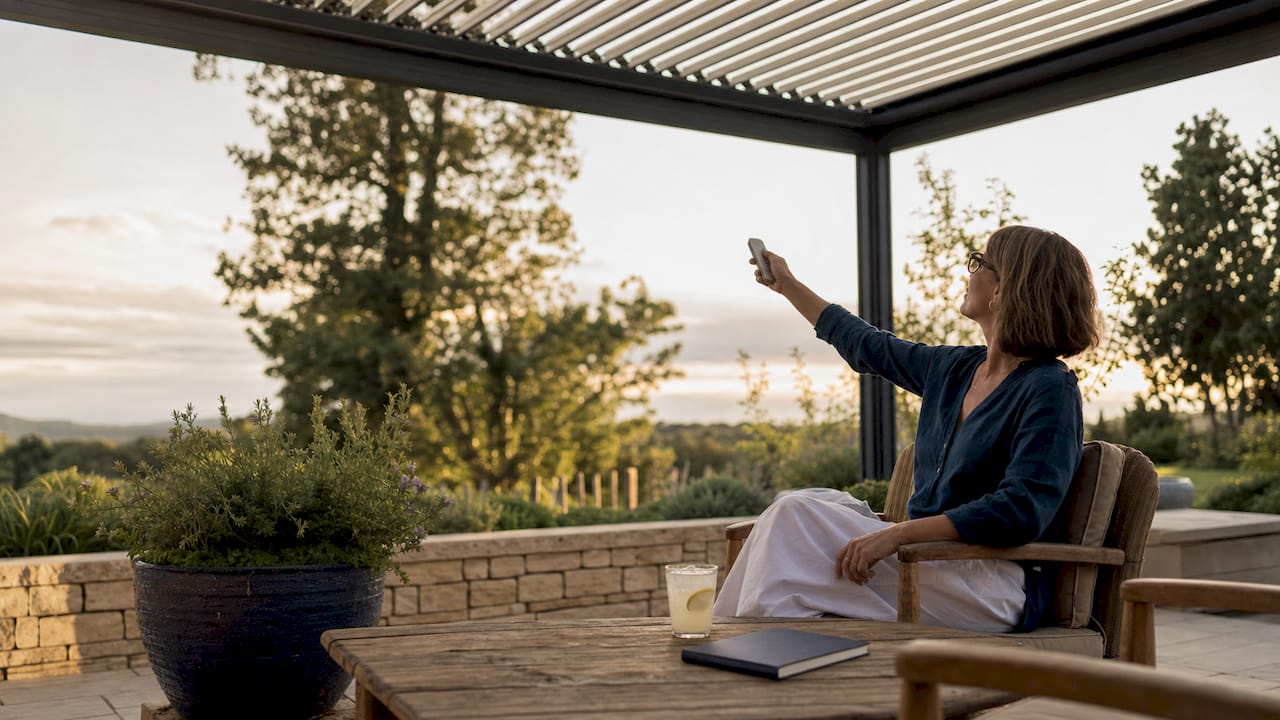
A louvered roof features adjustable horizontal slats that control sunlight, ventilation, and rain protection. It is ideal for transforming outdoor spaces into functional areas across various weather conditions, especially in the UK. Proper engineering, quality materials, and automation options ensure reliable performance and long-term durability.
A louvered roof is a roof system made of adjustable horizontal slats that open, close, or tilt to control sunlight, ventilation, and rain protection over an outdoor space. In the industry, the correct spelling is “louvre roof,” though “louvered roof” is widely used and both terms refer to the same product. These systems are installed over patios, decks, and courtyards, and they are built from aluminium frames with motorised or manual controls. For homeowners and property developers across Yorkshire, Derbyshire, and beyond, a louvre roof turns an underused outdoor area into a genuinely functional space for most of the year.
What is a louvered roof and how does it work?
A louvre roof works by rotating its horizontal slats to different angles, giving you direct control over how much light, air, and weather protection you receive at any moment. The slats, known as louvers or louvres, sit within a rigid aluminium frame. Each slat can rotate from fully open to fully closed, with every position in between offering a different balance of shade and airflow.
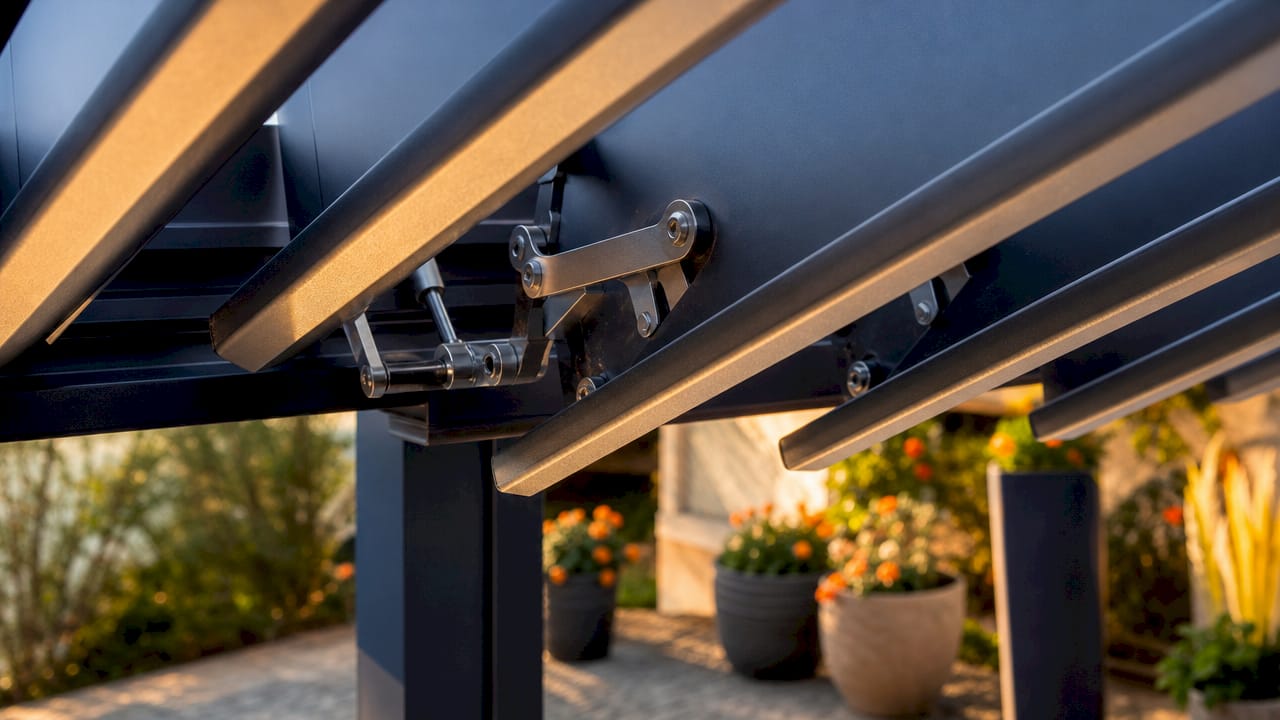
When the louvres are fully closed, they form a protective roof that blocks rain. Most well-engineered systems integrate drainage channels into the frame, so water collected on closed slats runs away without pooling. When the slats are partially tilted, you get filtered light and natural ventilation at the same time. This “mix-and-match” capability is the defining advantage over any fixed roofing option.
The louver is a broader architectural device adapted here for roofing to manage daylighting, airflow, and weather protection at scale. That heritage matters because it means the engineering principles behind louvre roofs are well established, not experimental.
Manual versus motorised operation
Feature | Manual | Motorised |
Control method | Hand crank or rod | Remote control or smartphone app |
Ease of use | Requires physical effort | Adjustable from indoors or at a distance |
Cost | Lower upfront cost | Higher upfront cost |
Automation | Not available | Rain and sun sensors available |
Maintenance | Minimal | Requires periodic electrical checks |
Modern louvered roof systems use motorised controls operable via remote or smartphone apps, making adjustment effortless. Manual systems remain a practical choice for smaller structures or tighter budgets. Motorised systems add genuine convenience, particularly when weather changes quickly, as they do across the UK. However, automation introduces complexity that requires proper power supply planning, sensor integration, and periodic maintenance to stay reliable long term.
Pro Tip: If you opt for a motorised system, ask your installer about rain sensors that automatically close the louvres when rainfall is detected. This removes the need to monitor forecasts and protects your outdoor furniture without any manual intervention.
What are the benefits of a louvered roof for homeowners?
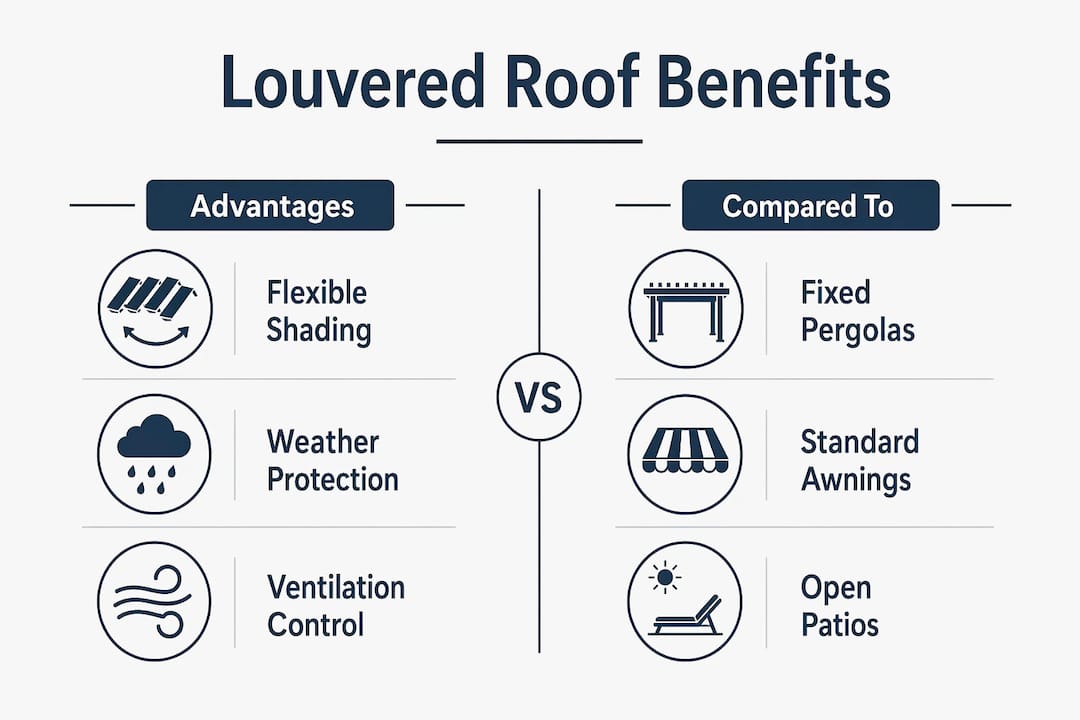
Louvre roofs deliver four core benefits that fixed pergolas and standard awnings cannot match: flexible shading, active weather protection, improved ventilation, and extended outdoor usability across all seasons.
Flexible shading is the most immediate advantage. You can tilt the slats to block harsh afternoon sun while still admitting diffused light, which makes a patio comfortable without making it feel enclosed. Fixed shade structures offer no such control. A louvre roof adapts to the sun’s position throughout the day, which a static canopy simply cannot do.
Weather protection goes beyond shade. Louvered roofs enhance outdoor living by creating spaces that feel open or sheltered, adapted throughout the day and as weather changes. In the UK, where a sunny morning can turn to drizzle by lunchtime, this adaptability is not a luxury. It is what makes the difference between a patio you use regularly and one you abandon at the first grey cloud.
The benefits extend to specific property types and outdoor zones:
Patios and decks: The most common installation. A louvre roof extends the usable season from spring through to late autumn.
Alfresco dining areas: Restaurants, hotels, and residential properties use louvre roofs to create covered dining zones that feel open-air.
Courtyards: Enclosed courtyards benefit from the ventilation control, preventing the trapped heat that solid roofs create.
Pool zones: Louvre roofs over pool areas manage glare and provide shelter without blocking the light that makes a pool area attractive.
Commercial terraces: Bars and hospitality venues use louvre systems to keep outdoor seating operational in variable weather.
Aesthetically, aluminium louvre roofs have a clean, architectural look that complements modern and traditional properties alike. They are available in powder-coated finishes to match or contrast with existing structures. For property developers, a well-specified louvre roof adds measurable appeal to a build without the permanence of a solid extension.
How to choose the right louvre roof system for your property
Choosing a louvre roof system requires more than picking a colour and a size. The engineering behind the product determines whether it performs reliably in British weather conditions.
Frame design and material quality. Aluminium is the standard material for good reason. It resists corrosion, handles thermal expansion without warping, and requires minimal maintenance. Assess the wall thickness of the frame profiles, not just the visual finish.
Blade sealing and drainage. Rainproofing depends on product design, including the quality of blade seals and the water management system built into the frame. A system with poor seals will leak at the slat edges even when fully closed. Ask suppliers to demonstrate how water drains under full rainfall conditions.
Weatherproofing certification. Reputable systems carry wind and rain resistance ratings. Check these against the typical conditions at your property, particularly if the installation is exposed or elevated.
Automation and sensor options. Motorised systems should offer compatibility with rain sensors, wind sensors, and sun trackers. Specification and maintenance are critical for long-term success with automated systems, so choose a supplier who provides ongoing support, not just installation.
Architectural compatibility. The louvre roof frame attaches to your property or stands independently on posts. Consider how the design integrates with your roofline, wall materials, and garden layout. A system that looks out of place undermines the investment.
Pro Tip: Request a physical sample of the blade profile and seal material before committing. Seeing and handling the components tells you far more about build quality than a brochure photograph.
For a deeper look at the different control options and system variations available, the pergola louvre systems guide from Infinityawnings covers the technical detail clearly.
Louvered roof versus other outdoor roofing options
Understanding where a louvre roof sits relative to other outdoor structures helps you make the right decision for your property and budget.
Option | Adjustability | Weather protection | Aesthetics | Typical cost |
Louvre roof | Full (open, tilt, close) | High when closed | Architectural, modern | Higher |
Fixed pergola | None | Low (open structure) | Traditional, natural | Moderate |
Solid patio roof | None | High (permanent) | Varies | Moderate to high |
Retractable awning | Partial (extend/retract) | Moderate | Varied | Lower to moderate |
Unlike fixed pergolas, louvered roofs provide dynamic shading and ventilation, enhancing outdoor space usability year-round. A fixed pergola looks attractive but offers no protection from rain and limited shade control. A solid patio roof provides permanent shelter but eliminates natural light and ventilation entirely. A retractable awning is the most affordable option but cannot match the weather resistance or architectural presence of a louvre system.
The right choice depends on your priorities. If you want maximum flexibility and year-round usability, a louvre roof is the strongest option. If budget is the primary constraint and you need basic shade, a retractable awning from a supplier like Infinityawnings delivers good value. For a practical comparison of how patio awnings improve comfort, the differences become clear quickly.
For outdoor entertaining spaces that combine a louvre roof with additional features, pairing the structure with patio fire pit ideas extends usability into the cooler months further still.
Key takeaways
A louvre roof is the most adaptable outdoor roofing option available, combining weather protection, ventilation control, and year-round usability in a single aluminium structure.
Point | Details |
Core definition | A louvre roof uses adjustable horizontal slats to control light, airflow, and rain protection. |
Rain protection | Full weather protection only applies when the louvres are completely closed. |
Motorised systems | Automation adds convenience but requires proper power, sensor, and maintenance planning. |
Choosing a system | Prioritise frame quality, blade sealing, and drainage over aesthetics alone. |
Best use cases | Patios, courtyards, pool zones, and commercial terraces benefit most from louvre roof installation. |
Andrew’s view on louvre roofs in UK homes
Most homeowners I speak to assume a louvre roof is primarily a sun shade. That framing undersells the product considerably. The real value in the UK climate is rain management combined with ventilation control. A well-specified louvre system means you are not retreating indoors every time the sky turns grey. You are adjusting two or three degrees of slat angle and staying put.
The detail that catches people out most often is airflow and enclosure design. Opening the louvres does not guarantee a comfortable breeze. The surrounding walls, fencing, and garden layout all affect how air moves through the space. I always advise homeowners to think about the full enclosure, not just the roof, before specifying a system.
The other common misconception is that waterproofing works in all slat positions. It does not. Rain protection is effective only when the louvres are fully closed. Partially open slats in heavy rain will let water through. Understanding this prevents disappointment and helps you use the system correctly from day one.
My honest recommendation is to spend more time evaluating drainage quality than any other single feature. A louvre roof that drains poorly will frustrate you every time it rains. A system with well-engineered drainage channels and tight blade seals will perform reliably for well over a decade with minimal attention.
— Andrew
Louvre roof solutions from Infinityawnings
Infinityawnings supplies and installs louvre roof systems and pergolas across Yorkshire, Derbyshire, Nottinghamshire, and Lincolnshire, working with homeowners and property developers who want outdoor spaces that perform in real British weather.
Every installation is designed around your property, with options for motorised operation, integrated drainage, and powder-coated finishes to suit your architecture. The team at Infinityawnings brings over 15 years of experience to each project, specifying systems that balance aesthetics with genuine weather performance. Browse the full range of pergolas and louvre systems or contact Infinityawnings directly for a free consultation and quote tailored to your outdoor space.
FAQ
What is the difference between a louvered roof and a louvred roof?
There is no functional difference. “Louvered” is the common spelling used in search, while “louvred” is the standard British English form. Both terms describe the same adjustable slat roofing system.
Does a louvered roof keep rain out completely?
A louvre roof keeps rain out only when the slats are fully closed. Partially open louvres will allow water through in heavy rainfall, so full closure is required for complete weather protection.
How long does a louvered roof last?
A well-specified aluminium louvre roof lasts well over a decade with minimal maintenance. Longevity depends on the quality of the frame, blade seals, and drainage system, as well as periodic checks on motorised components where fitted.
Can a louvered roof be installed on an existing patio?
Yes. Louvre roofs can be wall-mounted to an existing structure or installed on freestanding posts, making them suitable for most patio configurations without major building work.
Is planning permission required for a louvered roof in the UK?
Planning permission requirements depend on the size, location, and attachment method of the structure. Many domestic installations fall within permitted development rights, but you should confirm with your local planning authority before proceeding.
Recommended
Comments