
Why choose a pergola? Enhance value and outdoor living
- Andrew Crookes

- Apr 30
- 10 min read
TL;DR:
Pergolas can increase home value by 5% to 20% and enhance outdoor usability.
Aluminium pergolas are more durable and suitable for UK climates than wooden ones.
Proper site assessment and customized design ensure long-term performance and satisfaction.
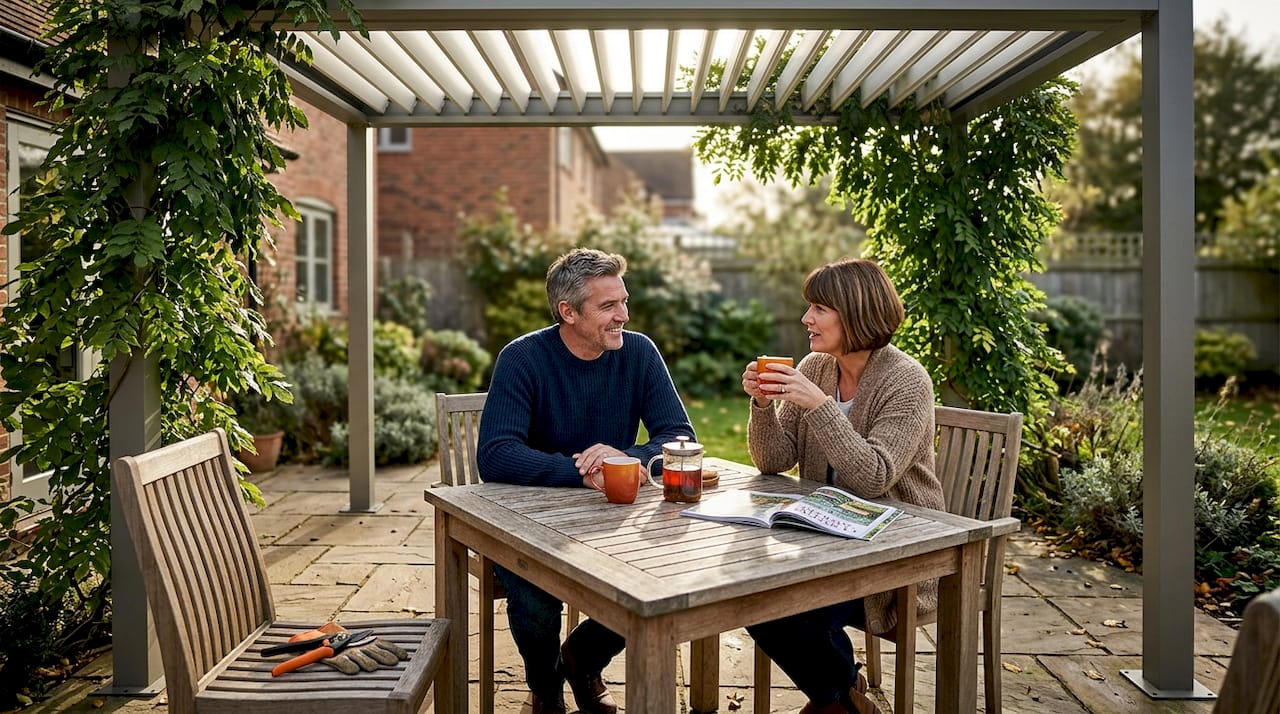
A pergola can add up to £60,000 to the value of a £300,000 home, yet most people still think of them as little more than a decorative garden feature. That misconception costs homeowners and business owners real money. The truth is that a well-chosen pergola transforms how you use your outdoor space every single day, not just on sunny afternoons. If you live in Yorkshire, Derbyshire, Nottinghamshire, or Lincolnshire, where the weather can be unpredictable at best, choosing the right pergola for your climate is what separates a genuinely useful structure from one that rots quietly in the corner of your garden.
Table of Contents
Key Takeaways
Point | Details |
Boosts property value | A pergola can increase property value by up to 20 percent and attract more buyers. |
Optimal for regional climates | Aluminium pergolas with smart features outperform wood in wet and windy northern England. |
Customisable for any space | Pergolas are highly customisable with roofing, lighting, and plant options to match your style. |
Low maintenance options | Bespoke aluminium designs offer decades of use with minimal upkeep, ideal for busy homeowners. |
Requires expert planning | Proper site assessment and installation prevent common weather-related issues and maximise benefits. |
The value-boosting benefits of a pergola
Most homeowners think about a pergola in terms of how it looks. That’s understandable, but it misses the bigger picture entirely. A pergola is one of the few garden investments that pays you back in multiple ways at once: through daily enjoyment, increased usability of your outdoor space, and a measurable uplift in property value.
The numbers are striking. According to research into UK property value boosts, pergolas can increase a home’s value by between 5% and 20%. On a £300,000 property, that’s anywhere from £15,000 to £60,000 added to your asking price. Estate agents consistently report that homes with well-designed outdoor living areas sell faster and attract more competitive offers, particularly as buyers increasingly prioritise outdoor space following shifts in how people work and spend time at home.
“Outdoor living features like pergolas are no longer seen as luxuries by buyers. They’re expected. A well-installed pergola signals quality, care, and lifestyle potential to anyone viewing a property.” This shift in buyer expectations has made pergolas one of the most financially sound garden investments available.
The return on investment typically sits between 50% and 80%, factoring in installation costs against the uplift in sale price and the speed advantage when selling. For commercial settings, the calculation is even more compelling. A pub garden or restaurant terrace with a covered, weather-protected pergola can serve customers year-round rather than only during dry spells, directly increasing revenue. Cafés across Nottinghamshire and Lincolnshire have seen significant footfall improvements simply by extending their usable outdoor seating season.
Benefit | Residential | Commercial |
Property value uplift | 5-20% | Increased asset value |
Usability improvement | Year-round outdoor living | Extended trading season |
ROI estimate | 50-80% | Revenue-dependent |
Kerb appeal | High | Brand and atmosphere |
Understanding pergolas for outdoor spaces in full helps you appreciate why they outperform most other garden investments. They create defined zones, provide shelter, and give a garden a sense of purpose that buyers and visitors immediately respond to.
Choosing the right pergola for Yorkshire and the East Midlands
Here’s where many people go wrong. They choose a pergola based on how it looks in a showroom or a lifestyle magazine, without considering what the local climate will do to it over five or ten years. Yorkshire, Derbyshire, Nottinghamshire, and Lincolnshire all experience significant rainfall, frequent wind, and temperature swings that punish the wrong materials quickly.
For these regions, powder-coated aluminium louvred pergolas are the clear frontrunner. The louvred roof design allows you to adjust the angle of the slats to control light and ventilation, while integrated drainage channels handle rainfall without pooling or leaking onto seating below. Many modern aluminium pergolas also include weather sensors that automatically close the louvres when rain is detected, which is genuinely useful in a region where showers arrive without much warning.
Wooden pergolas are appealing for their natural look, and there’s no denying they can look beautiful when freshly installed. But in the wet and windy conditions common across this part of England, untreated or poorly maintained timber is vulnerable to rot, warping, and splitting. A wooden pergola that looks charming in its first year can become a maintenance burden by year three if it hasn’t been properly treated and sealed.
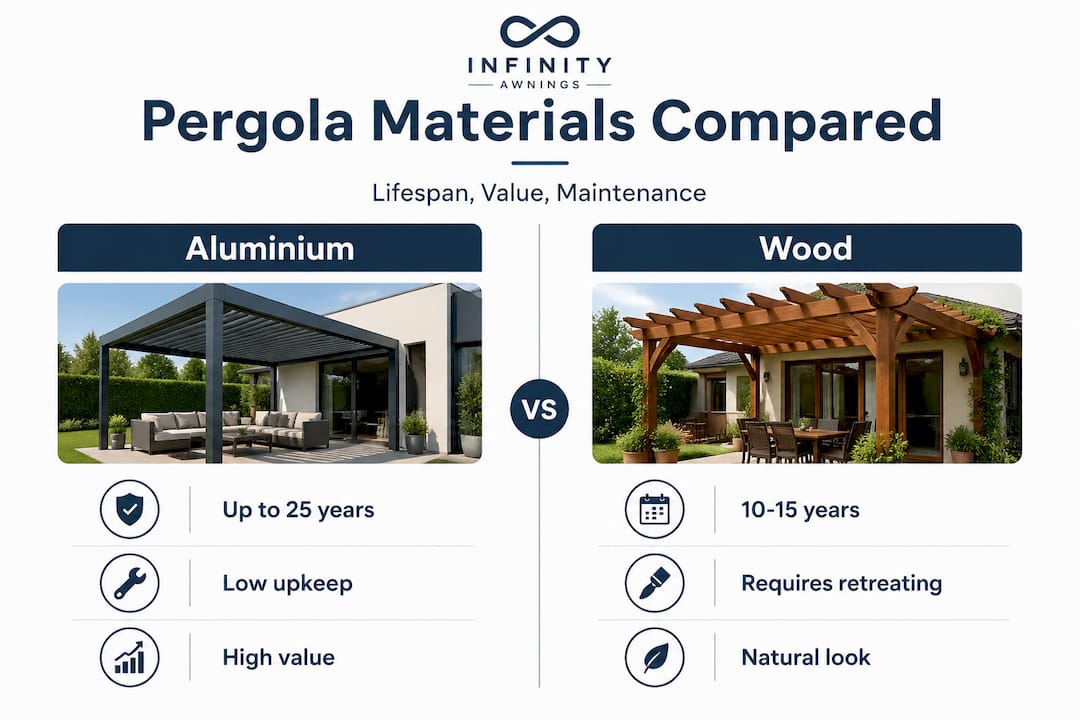
Feature | Powder-coated aluminium | Traditional wood |
Typical lifespan | Up to 25 years | 10-15 years |
Maintenance required | Near zero | Treatment every 2-3 years |
Weather resistance | Excellent | Moderate (treatment-dependent) |
Upfront cost | £7,000-£8,000+ | From £500 (kit) |
Rot/warp risk | None | High in wet climates |
Customisation | High | Moderate |
Pro Tip: If your garden is in an exposed location, such as on a hillside in Derbyshire or close to open farmland in Lincolnshire, specify reinforced anchoring as part of your installation. Standard fixings are designed for sheltered suburban gardens, not for sites that experience sustained wind loading.
Exploring all-weather pergolas gives you a clearer sense of what’s possible in terms of year-round performance. It’s also worth reviewing the key pergola features that make the most difference to long-term satisfaction, from drainage integration to motorised operation. If you’re weighing up different roofing options for pergolas, louvred aluminium systems consistently outperform polycarbonate and timber alternatives in northern UK climates.
Cost, maintenance, and lifecycle: what to expect
Understanding what you’re committing to financially and practically over the long term is essential before you make any decisions. The range of options is wide, and the right choice depends on your budget, your plans for the property, and how much time you’re willing to invest in upkeep.
At the entry level, timber pergola kits start from around £500 and are available from most garden centres and DIY retailers. These are a reasonable starting point for a temporary or low-commitment installation, but they come with ongoing costs. Wood requires retreating every two to three years to maintain its weather resistance and appearance. Over a 15-year lifespan, those retreatment costs add up considerably, and there’s always the risk that a particularly harsh winter accelerates deterioration.
Bespoke aluminium pergolas typically start at £7,000 to £8,000 for a quality installation, which feels like a significant upfront commitment. But when you factor in the 25-year lifespan and near-zero maintenance requirements, the long-term cost per year is often lower than a timber alternative that needs regular attention. You’re also getting a structure that performs reliably in all weathers, which is the whole point.
One often-overlooked addition that works beautifully with both timber and aluminium pergolas is climbing plants. Wisteria, jasmine, and climbing roses can establish meaningful coverage within two to three growing seasons, adding natural shade and seasonal colour that no manufactured roofing system can replicate. They also soften the look of an aluminium structure considerably, which is worth considering if you prefer a more organic aesthetic.
Here’s a straightforward approach to keeping costs under control:
Define your usage first. A pergola for occasional summer entertaining has different requirements from one you intend to use throughout the year. Clarity on this point shapes every other decision.
Choose materials for your climate, not your mood board. Aluminium may not be your first instinct, but in Yorkshire or Nottinghamshire, it’s almost always the smarter choice for longevity.
Budget for the full installation, not just the structure. Groundwork, drainage, lighting, and any electrical connections for motorised systems add to the total cost and should be factored in from the start.
Plan maintenance into your calendar. If you choose timber, set a reminder to inspect and retreat the structure every two years. Catching early signs of rot or splitting saves significant money compared to leaving problems to worsen.
Pro Tip: Ask your installer about pergola maintenance factors specific to your site before committing to a material. A north-facing garden or one with heavy tree cover will have different maintenance demands from a south-facing, open plot. Reviewing all-weather veranda options alongside pergolas can also help you identify which structure type best suits your specific situation.
Design, comfort, and customisation: creating your ideal space
One of the most satisfying things about a pergola is how adaptable it is. Unlike a conservatory or an extension, a pergola doesn’t lock you into a fixed design. You can layer features over time, starting with the structure itself and adding lighting, heating, glass panels, or planting as your budget and preferences develop.
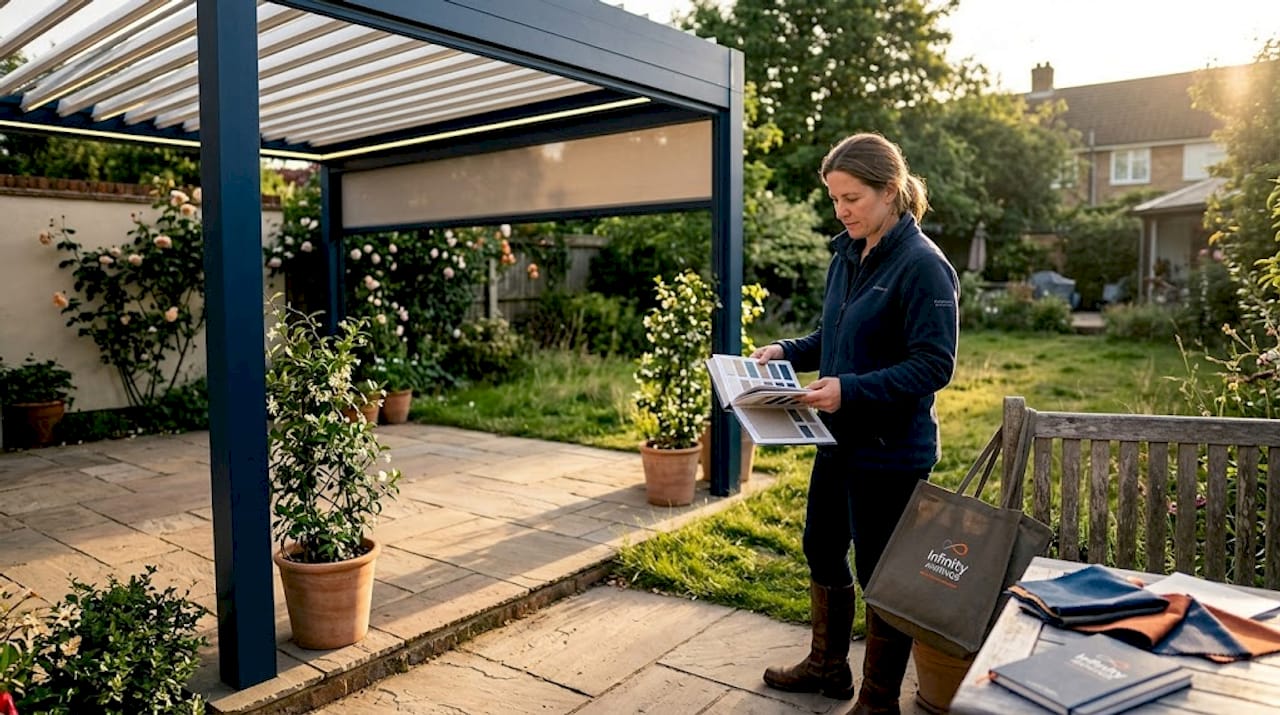
The design flexibility of pergolas makes them genuinely suitable for a wide range of settings. A family garden in Sheffield benefits from a pergola that creates a shaded dining zone separate from the lawn. A boutique hotel in the Derbyshire Dales can use a pergola to create an outdoor bar area that feels intentional and premium rather than improvised. A restaurant in Nottingham can extend its seating season by months with a properly sheltered terrace.
Key customisation options worth considering include:
Retractable or louvred roofing for adjustable shade and weather protection
Integrated LED lighting for evening use and atmosphere
Infrared heating panels to extend comfortable use into autumn and winter
Glass or polycarbonate side panels to block wind without sacrificing light
Climbing plant frameworks for natural shade and seasonal interest
Smart controls for motorised roofing, lighting, and heating from a single app
The value of retractable pergolas in particular is often underestimated. Being able to open the structure fully on a warm day and close it against a sudden shower gives you genuine flexibility that a fixed roof simply cannot match. Research confirms that outdoor living features with this level of versatility are increasingly sought after by buyers, which reinforces the investment case.
Pro Tip: Combine climbing plants on a timber or steel framework with smart LED lighting for a pergola that looks spectacular in every season. The plants provide summer shade and autumn colour; the lighting ensures the space is inviting on winter evenings.
Avoiding common pitfalls: installation and site considerations
Even the best pergola will underperform if the installation isn’t right for the site. This is particularly relevant in Yorkshire and the East Midlands, where ground conditions, wind exposure, and drainage requirements vary considerably from one location to the next.
The most common mistakes come down to underestimating what the local environment will demand of the structure. A pergola installed without adequate drainage on a sloped site will pool water at its base, accelerating corrosion or rot depending on the material. A structure anchored with standard fixings on an exposed hilltop site in the Peak District will flex and loosen over time, creating both a safety risk and a maintenance headache.
Here’s a practical checklist for planning your installation:
Assess your site’s wind exposure. If you’re on an elevated or open site, discuss wind-load specifications with your installer before choosing a structure. Reinforced anchoring for exposed sites is not optional in these conditions.
Check drainage. Ensure the ground around the pergola’s footings drains freely. Standing water is the enemy of both timber and metal fixings.
Confirm planning requirements. Most domestic pergolas fall within permitted development rights, but larger structures or those in conservation areas may require planning permission. Check with your local authority before committing.
Prepare the ground properly. Concrete footings should be appropriate for the size and weight of the structure. Cutting corners here creates problems years down the line.
Think about utilities. If you want lighting or heating, plan the cable routing before the structure goes up, not after.
Pro Tip: For commercial settings or open gardens, always specify reinforced fixings as a baseline rather than an upgrade. The additional cost is modest; the peace of mind is significant. Reviewing the full pergola installation guide before your project begins will help you ask the right questions and avoid surprises.
Why most guides underestimate the real impact of pergolas
Most articles about pergolas focus on two things: how they look and what they cost. Both matter, but they miss what our clients in Yorkshire, Derbyshire, Nottinghamshire, and Lincolnshire consistently tell us matters most. It’s not the resale value uplift, impressive as that is. It’s the fact that they actually use their garden now.
That shift in daily behaviour is the real impact. A covered, comfortable outdoor space changes how a family lives at home. It becomes the place where breakfast happens on a Saturday, where teenagers gather in the evening, where adults sit with a glass of wine after work without checking the forecast. That’s not something you can put a number on easily, but it’s what our clients describe again and again.
The guides that focus purely on cost also tend to underestimate the long-term financial penalty of choosing the wrong material. A timber pergola that needs retreating every two years and replacement after a decade looks cheap at the point of purchase. A bespoke aluminium model that lasts 25 years with near-zero maintenance looks expensive until you run the numbers properly. When you do, aluminium wins convincingly for most sites in this region.
We also see clients who’ve ignored climate realities and paid for it. A beautiful cedar pergola installed without adequate treatment in a Lincolnshire garden exposed to coastal winds can deteriorate visibly within three years. Practical design, suited to where you actually live, always trumps fashionable choices made in isolation from your environment. The year-round transformation that a properly specified pergola delivers is what makes it a lifestyle upgrade rather than a garden accessory.
Bring your vision to life with regional pergola specialists
If this article has helped you think more clearly about what a pergola could do for your home or business, the natural next step is a conversation with someone who knows the local conditions as well as the products.
At Infinity Awnings, we’ve spent over 15 years designing, supplying, and installing pergolas across Yorkshire, Derbyshire, Nottinghamshire, and Lincolnshire. We understand the wind exposure on a Derbyshire hillside, the drainage challenges of a Yorkshire garden, and the commercial demands of a Nottinghamshire restaurant terrace. Our local pergola specialists work with you from initial design through to installation, recommending structures and materials that will genuinely perform in your specific location. Get in touch for a free, no-obligation quote and let’s create an outdoor space you’ll actually use, whatever the weather.
Frequently asked questions
How much does a pergola increase home value?
A pergola can raise your home’s value by 5-20% in the UK, which equates to as much as £60,000 on a £300,000 property, depending on the quality and design of the installation.
What is the typical maintenance for a pergola in the UK?
Wood pergolas need retreating every 2-3 years to stay weatherproof, while quality aluminium models require virtually no maintenance and can last up to 25 years.
Are pergolas suitable for windy or rainy sites?
Yes, provided you choose powder-coated aluminium with louvred roofing, integrated drainage, and reinforced anchoring, which are all particularly important for exposed sites in Yorkshire and the East Midlands.
How long does it take for climbers to create natural shade on a pergola?
Climbing plants such as wisteria or jasmine typically provide meaningful natural shade within two to three growing seasons, making them a practical and attractive addition to any pergola.
Can a pergola be customised to match my garden’s design?
Absolutely. Options include retractable or louvred roofs, integrated LED lighting, infrared heating, glass side panels, and climbing plant frameworks, giving you a structure that fits both your aesthetic preferences and practical requirements.
Recommended
Comments