
Wind sensors for awnings: protect your outdoor space

TL;DR:
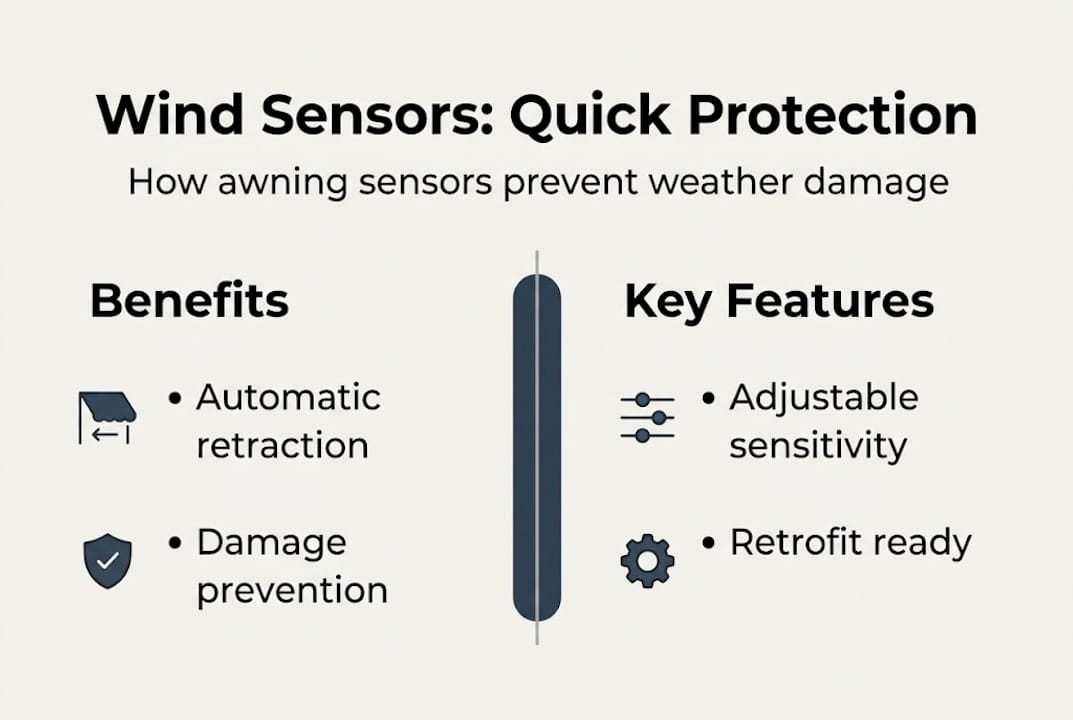
Wind sensors automatically retract awnings to prevent damage from gusts up to 45 mph.
They provide reliable, hands-free protection, especially important in exposed regions like Yorkshire and Lincolnshire.
Installing a wind sensor is a cost-effective way to extend awning lifespan and reduce repair costs.
Most awning owners assume their investment is at risk from years of gradual wear and tear. The truth is rather different. A single unexpected gust can tear fabric, buckle frames, and leave you facing a repair bill running into hundreds or even thousands of pounds. Across Yorkshire, Derbyshire, Nottinghamshire, and Lincolnshire, unpredictable wind events are a fact of life, not an occasional inconvenience. A wind sensor is the one add-on that works silently in the background, detecting dangerous conditions before any damage occurs and automatically retracting your awning to safety. This guide explains everything you need to know.
Table of Contents
Key Takeaways
Point | Details |
Automatic protection | Wind sensors safeguard awnings from gusts and storms with hands-free retraction. |
Local relevance | Unpredictable Yorkshire weather means wind sensors make practical and financial sense. |
Long-term value | The cost of a sensor is small compared to replacing a damaged awning. |
Easy integration | Modern wind sensors can be added to most existing and new awnings. |
What is a wind sensor for awnings?
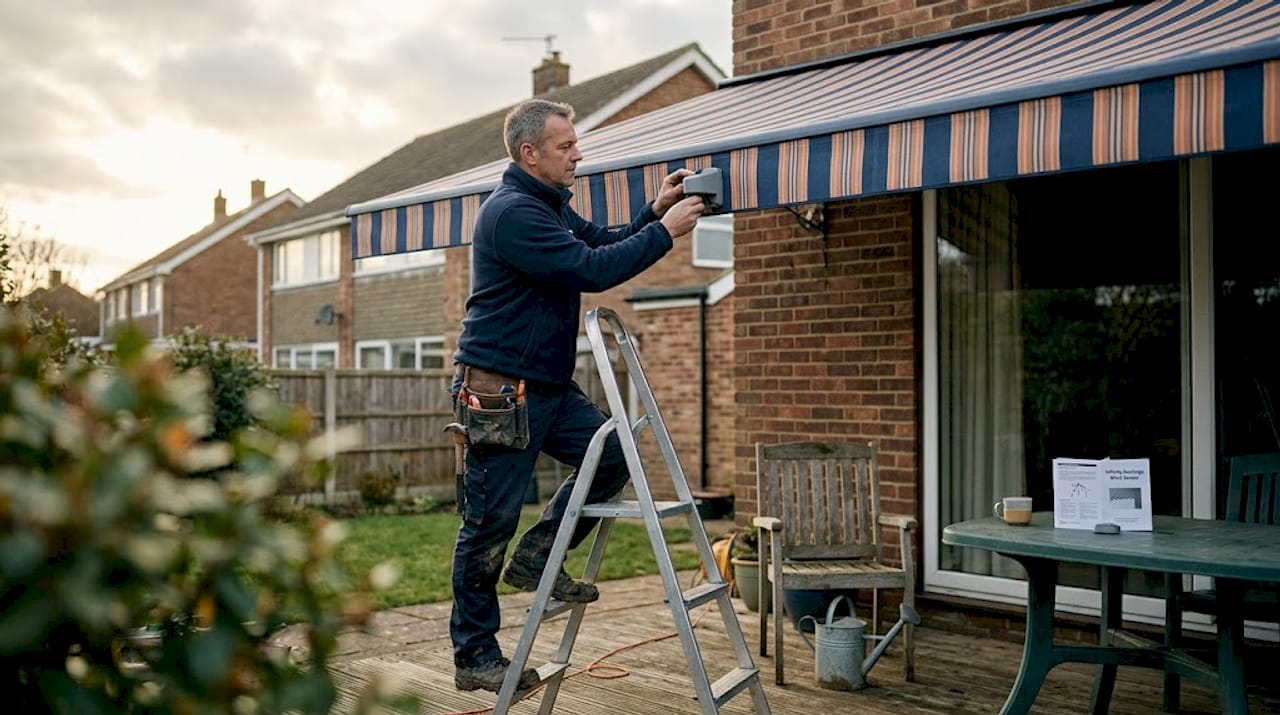
A wind sensor is a compact electronic device fitted to your awning or the structure it is mounted on. Its sole purpose is to monitor wind speed and, when that speed crosses a set threshold, trigger the awning motor to retract automatically. You do not need to be at home, watching the forecast, or even aware that conditions have changed. The sensor does the thinking for you.
Most sensors use one of two detection methods. The first and most common is an anemometer, a spinning cup or propeller that measures how fast the air is moving. The second is a vibration sensor, which detects the mechanical movement caused by strong gusts acting on the awning frame. Both types are weatherproof, designed to operate in rain, cold, and the kind of blustery conditions that are common across our region.
Once installed, the sensor communicates with the awning’s electric motor via a wired or wireless connection. Many modern systems integrate seamlessly with existing home automation or smart home platforms, meaning you can also monitor conditions and override the sensor remotely from your phone. For businesses such as restaurants, bars, and hotels that cannot have staff monitoring the terrace every minute, this level of automation is genuinely valuable.
Which awnings benefit most from wind sensors?
Retractable cassette awnings, where the fabric and arms extend outward and are vulnerable to lateral and upward gusts
Open-arm patio awnings commonly used over garden terraces and decking areas
Large commercial awnings over outdoor seating, where the sail area is significant and damage would be costly
Pergola-mounted awnings and canopy systems where retraction may not be as instinctive as with smaller models
Main functions of a wind sensor:
Continuously monitors local wind speed throughout the day and night
Triggers automatic retraction when a pre-set speed threshold is reached
Can be adjusted to suit your specific location and awning type
Sends alerts to linked smart home apps when conditions become dangerous
Resets and allows re-extension once wind drops back to safe levels
Feature | Manual retraction | Wind sensor-controlled |
Safety in sudden gusts | Relies on owner being present | Automatic, instant response |
Effort required | Must be monitored and operated | Zero effort once installed |
Maintenance after storm damage | Frequent repairs likely | Significantly reduced |
Typical repair costs | Several hundred to thousands of pounds | Largely avoided |
Peace of mind when away | None | Full |
The evidence strongly supports adding a sensor from the outset. Awnings cost thousands to replace, and sensors have been shown to protect installations through gusts of up to 45 mph. The upfront cost of a quality sensor is modest against the cost of a single replacement.
Why wind sensors matter in Yorkshire and neighbouring counties
Yorkshire, Derbyshire, Nottinghamshire, and Lincolnshire are not sheltered corners of England. The landscape across the region, from the exposed moorland of the North York Moors and the Peak District to the flat plains of Lincolnshire, creates conditions where wind direction and intensity can shift dramatically within minutes. A sunny afternoon on your patio in Sheffield or a clear lunchtime service at a Harrogate restaurant can turn into a blustery episode with very little warning.
This regional reality is not simply anecdotal. Weather data consistently shows that the northern Midlands and Yorkshire regularly experience gusts that exceed what most homeowners would consider genuinely dangerous. The Pennines in particular act as a funnel for westerly airflows, directing wind down into towns and suburbs at speeds that can surprise even seasoned residents. Lincolnshire’s flat topography offers minimal natural shelter, leaving gardens and commercial terraces particularly exposed.
The financial consequences of ignoring this risk are substantial. A homeowner in Leeds who invests in a quality retractable awning from a premium brand is making a significant purchase, typically in the range of £1,500 to £5,000 or more depending on size and specification. A single storm event capable of damaging that awning could cost several hundred pounds in repairs, or require complete replacement if the frame is bent or the fabric torn beyond repair. Sensors protect through 45 mph storms, making them one of the most practical additions available.
“Installing a wind sensor is not an optional extra in our region. It is the difference between an awning that lasts a decade and one that needs replacing after its first winter.”
County-specific reasons to install a wind sensor:
Yorkshire: Exposed moorland, Pennine downdraughts, and coastal exposure in East Yorkshire create highly variable conditions throughout the year
Derbyshire: The Peak District generates unpredictable gusts that reach suburban gardens and commercial outdoor areas with very little advance notice
Nottinghamshire: Open farmland and river valleys channel wind, meaning garden awnings in towns like Newark or Mansfield can experience stronger gusts than local forecasts suggest
Lincolnshire: As one of England’s flattest counties, shelter from natural features is minimal, and properties in towns like Lincoln or Grimsby face consistent wind exposure
For businesses operating patio awnings in Yorkshire, the stakes are even higher. A damaged commercial awning during peak season can mean lost covers, unhappy guests, and emergency contractor fees. A wind sensor removes that risk entirely by acting before damage can occur.

How wind sensors for awnings work: step-by-step
Understanding the mechanics of a wind sensor helps you appreciate why it is so much more effective than manual retraction. The process from sensing to protection is faster than any human response, and it works regardless of whether you are at home, at work, or on holiday.
Step-by-step: how a wind sensor protects your awning
Continuous monitoring: The sensor measures wind speed at all times, typically recording readings several times per second to catch sudden gusts rather than just sustained wind.
Threshold detection: When the recorded speed reaches or exceeds your pre-set trigger point, the sensor generates an electronic signal.
Signal transmission: The signal is sent to the awning’s motor controller, either via a wired connection or a wireless radio frequency system.
Motor activation: The motor engages immediately, beginning the retraction process without any manual input.
Full retraction: The awning retracts fully into its cassette or housing, removing any exposed fabric or arm from the risk of damage.
Condition reset: Once wind speed drops below the threshold for a set period, the sensor allows the awning to be re-extended either automatically or manually, depending on your preference.
The whole sequence from step one to step five typically takes only a few seconds. Compare that to the time it would take you to notice the wind picking up, decide it is serious, locate the remote or switch, and operate the motor. In a real gust event, the difference is the difference between a fully protected awning and a damaged one.
One of the most useful features of modern sensors is adjustable sensitivity. Installers can calibrate the threshold to suit your specific property and awning type. A large commercial canopy over an exposed rooftop terrace needs a lower trigger point than a compact residential awning sheltered by a garden wall. Getting this calibration right is something our team at Infinity Awnings prioritises during every installation involving retractable awning installation.
Pro Tip: Set your sensor threshold to account for gust peaks rather than average wind speed. Average speeds can read quite low even when occasional gusts are strong enough to cause damage, so calibrate to protect against the worst, not the typical.
Wind condition | Approximate speed | Risk level | Sensor response |
Light breeze | Under 12 mph | Negligible | No action |
Moderate breeze | 12 to 24 mph | Low | Monitor only |
Fresh to strong wind | 25 to 38 mph | Moderate to high | Retraction triggered |
Near gale or gale | 39 to 54 mph | Severe | Full retraction essential |
Storm force | Over 55 mph | Extreme | Retraction critical |
Gusts are the leading cause of awning wear and structural damage, making early detection and retraction the single most effective form of protection available.
Benefits and practical advantages for homeowners and businesses
The case for wind sensors becomes compelling once you move beyond the theoretical and look at what they mean in day-to-day life. Whether you are a homeowner in Nottingham who enjoys the garden on summer evenings or a restaurant owner in York managing outdoor dining through the extended terrace season, a wind sensor changes your relationship with your awning entirely.
The most obvious benefit is automatic protection when you are not present. Many awning incidents happen overnight, during a workday, or when the property is unoccupied. Without a sensor, you return to find the damage already done. With one, the awning has already taken care of itself.
Key advantages at a glance:
Full automation removes the need to monitor weather conditions manually, saving time and reducing anxiety
Long-term savings on repairs and replacements that can amount to several thousand pounds over the awning’s lifetime
Seamless integration with smart home systems, including platforms like Google Home, Amazon Alexa, and proprietary systems from brands like Weinor
Improved property value because a well-maintained awning installation is an appealing feature for buyers or commercial tenants
Reduced insurance claims, as damage from preventable wind incidents may affect future premium negotiations
The financial logic is straightforward. Quality awnings cost thousands to supply and install, and damage from gusts is the primary cause of premature failure. A wind sensor priced at a fraction of the awning itself delivers a return on investment every time it prevents even minor damage. Across a ten-year lifespan, the cumulative savings easily outpace the sensor cost.
For homeowners, understanding the full range of retractable awning benefits makes it clear that sensors are not an add-on but an integral part of the system. For commercial clients, the calculation includes not just repair costs but lost trading time and the reputational impact of a visibly damaged outdoor space.
Pro Tip: Schedule a test of your wind sensor every spring and autumn by mimicking trigger conditions using your control system’s manual override, then confirming the sensor resets correctly. Regular testing, alongside basic awning maintenance, keeps your entire system performing reliably year-round.
Commercial outdoor areas, particularly pub gardens, hotel terraces, and restaurant patios, often carry awnings with large sail areas. The greater the exposed surface, the greater the wind load in a gust. For these settings, a wind sensor is arguably more critical than any other awning accessory.
The crucial role of automation in safeguarding your space
After more than 15 years of installing awnings across Yorkshire and the surrounding counties, we have observed a pattern that repeats itself every season. Homeowners and business owners invest carefully in a quality awning, choose the right fabric and motor, and then decide to skip the wind sensor to reduce the upfront cost. It seems like a reasonable saving at the time. Then a storm arrives.
The reality of manual retraction during an actual wind event is very different from the calm decision-making process of a showroom consultation. Storms arrive quickly in our region. By the time you notice the conditions deteriorating, locate your remote, and operate the motor, the gust has already placed significant stress on the fabric and frame. Sometimes the damage is immediate and visible. More often, it is cumulative, weakening joints and seams that then fail during a future event.
We consistently hear from customers who regret deferring the sensor installation. The repair or replacement cost always exceeds what the sensor would have cost, sometimes by a factor of ten or more. Weather forecasts are useful, but they do not predict the localised gusts that come off the Pennines into a Huddersfield garden or sweep across a Lincolnshire coastal property at two in the morning.
Automation is not a luxury feature for those who want a smarter home. It is the only genuinely reliable form of protection. Relying on memory, habit, or weather apps leaves a gap that costs money eventually. The benefits of outdoor awnings are only fully realised when the installation is protected. A sensor is what makes that protection permanent. And as we are seeing with awning damage prevention, the evidence for automation as the gold standard is clear and consistent.
Explore smart awning solutions
At Infinity Awnings, we supply and install awning, pergola, and veranda systems designed to work with modern wind sensor technology from the very first day of operation. Our installations across Yorkshire, Derbyshire, Nottinghamshire, and Lincolnshire integrate sensors that are calibrated to your specific site, giving you genuinely reliable, hands-free protection.

Whether you are looking at a new retractable awning for your home or a fully specified outdoor seating solution for your business, we offer a free consultation and site survey to help you choose the right combination of product and protection. From our range of pergola solutions to bespoke veranda installations, every option can be paired with wind sensor technology for complete peace of mind. Get in touch today to discuss your project.
Frequently asked questions
Do wind sensors need regular maintenance?
Most wind sensors for awnings require only an occasional clean and a quick functional check each season to remain fully reliable throughout the year.
Can wind sensors be retrofitted to existing awnings?
Yes, most wind sensors are designed to be compatible with existing retractable and fixed awning systems, and a professional installer can assess your current setup and recommend the right sensor for your model.
What wind speed will trigger sensor retraction?
Typical sensors retract awnings automatically when wind speeds reach approximately 25 to 45 mph, with the exact trigger point adjustable to suit your location and awning specification.
Are wind sensors suitable for commercial outdoor areas?
Wind sensors work just as effectively on large commercial awnings as on residential models, making them an excellent investment for restaurants, hotels, bars, and any business running an outdoor terrace.
Recommended
Comments