
How to save energy with awnings: a step-by-step guide

TL;DR:
External awnings can block up to 77% of solar heat, reducing cooling costs significantly.
Proper installation and seasonal management are essential for maximizing annual energy savings.
Combining external shading with internal blinds can cut overall energy use by up to 55%.
If your energy bills spike every summer, your windows are likely the culprit. Glass allows solar radiation to pour straight into your rooms, forcing air conditioning or fans to work harder. Up to 77% of solar heat gain can be blocked simply by fitting an awning over west-facing windows before that heat ever crosses the glass. This guide walks you, as a homeowner or business owner across Yorkshire, Derbyshire, Nottinghamshire, or Lincolnshire, through every practical step: assessing your property, choosing the right awning, installing it correctly, and measuring the real savings on your bills.
Table of Contents
Key Takeaways
Point | Details |
Prioritise key windows | Focus awning installation on south- and west-facing windows for the greatest reduction in heat gain. |
Select the right awning | Retractable or motorised designs maximise savings and flexibility in the UK climate. |
Install strategically | Fit awnings at the proper angle and projection, and combine with internal shades for best results. |
Track your savings | Measure energy use before and after installation to confirm the impact and identify improvement areas. |
Understanding the energy-saving potential of awnings
Most people think of awnings as a style feature. The evidence tells a different story. Shade fitted externally intercepts sunlight before it touches your glazing, which means rooms stay cooler without any mechanical cooling at all. This is the core principle, and the numbers behind it are striking.
Cooling cost savings range from 10 to 25% for UK households with proper awning use on the right windows, rising to 33% in warmer climates. Retract those same awnings in winter and allow passive solar warmth in, and you can achieve annual net energy savings of around 15% across the full year.
Key statistics at a glance:
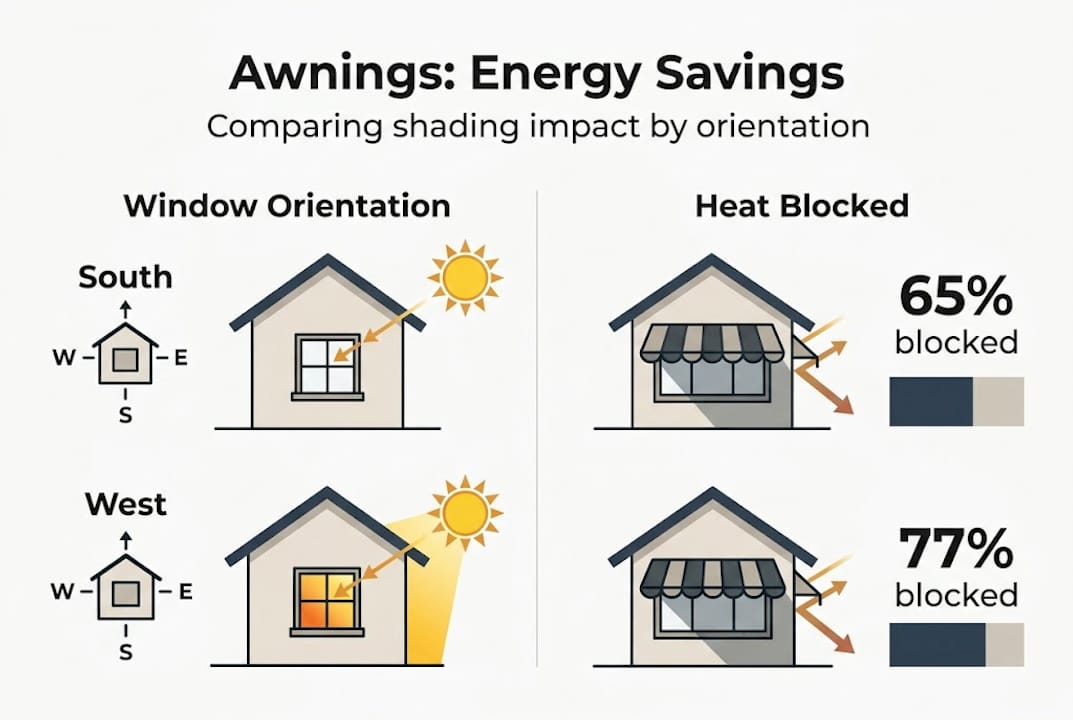
West-facing windows: up to 77% solar heat blocked
South-facing windows: up to 65% solar heat blocked
Cooling bill reduction: 10 to 25% for UK homes
Annual net saving with seasonal retraction: approximately 15%
Combined with internal blinds: up to 55% total energy reduction
Factor | Impact on savings |
Window orientation (west) | Up to 77% heat gain blocked |
Window orientation (south) | Up to 65% heat gain blocked |
Fabric colour (light tones) | Higher UV reflectance, greater cooling |
Seasonal retraction in winter | Adds passive solar gain, boosts net saving |
Combination with internal blinds | Up to 55% total reduction |
The benefits of outdoor shading extend beyond pure bill savings too. Reduced glare, lower indoor temperatures, and greater comfort in living and working spaces all follow from a well-chosen awning.
Pro Tip: Pair your external awning with internal roller blinds on the same window. Research shows this layered approach can push total energy reduction up to 55%, which is significantly more than either solution achieves on its own.
Step 1: Assessing your property and requirements
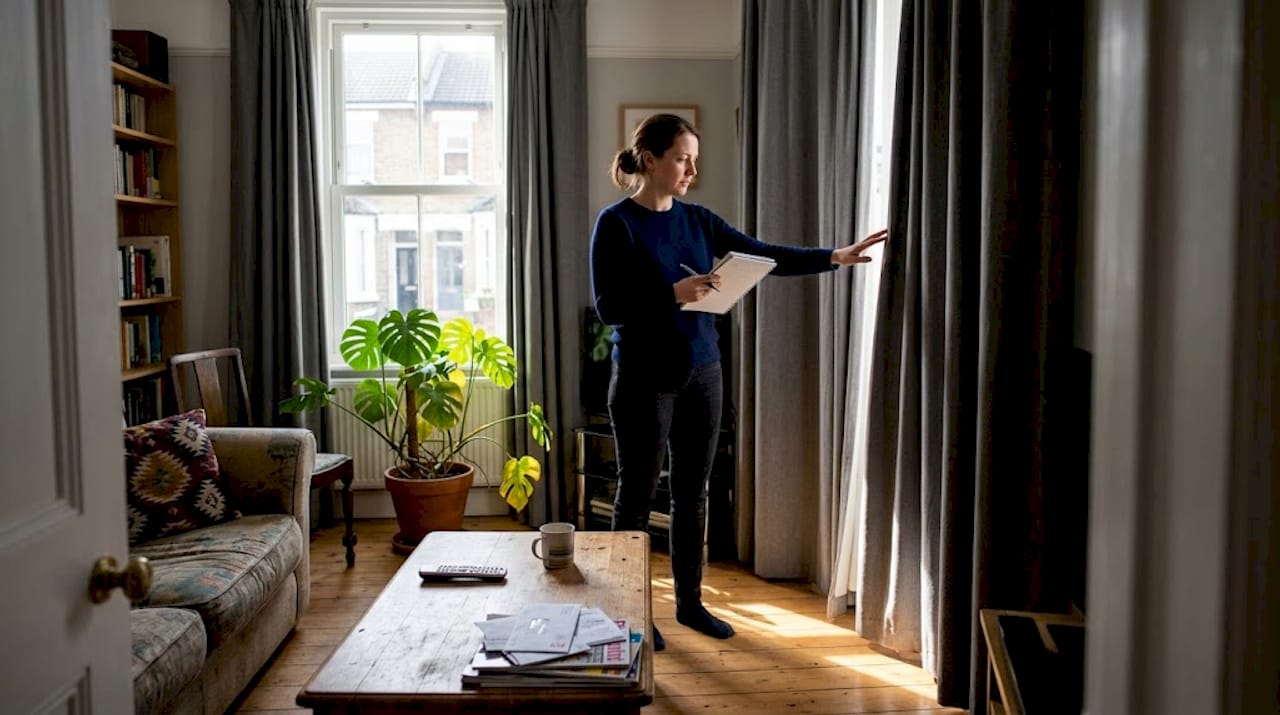
Before you buy anything, walk around your property on a sunny afternoon and note which rooms feel uncomfortably warm. Those are your priority zones. Prioritise south and west-facing windows because they receive the most intense direct sunlight during the hours when temperatures peak.
Window orientation | Solar exposure | Shading priority | Expected heat block |
South-facing | High (midday sun) | High | Up to 65% |
West-facing | Very high (afternoon sun) | Highest | Up to 77% |
East-facing | Moderate (morning sun) | Medium | 40 to 55% |
North-facing | Low | Low | Minimal gain |
For properties across Yorkshire and the wider region, energy saving for Yorkshire homes requires thinking about both solar exposure and prevailing wind direction. A room that faces south-west often gets a double hit of afternoon glare and heat.
Assessment checklist:
Identify rooms with single glazing or large patio doors
Note which windows face south or west
Check whether any external structure (garage wall, fence) already provides partial shade
Confirm whether your property is listed or in a conservation area, as permitted development rules may apply
Check with your local council if planning permission is needed for fixed awnings on commercial premises
Once you know which windows need attention, research the types of awnings available so you can match product type to the specific exposure and building style.
Pro Tip: Start with ground-floor rooms and high-use spaces such as kitchens and lounges. These areas tend to generate the greatest discomfort, so they deliver the fastest return on your investment.
Step 2: Choosing the right type of awning
Not every awning suits every property or climate. In Yorkshire and Lincolnshire particularly, wind loading matters as much as solar performance. Getting the product choice wrong can mean a retracted awning that never actually provides shade, or a damaged one after the first gust.
Retractable and motorised awnings are well suited to the variable conditions across this region. Wind sensors can trigger automatic retraction, protecting the fabric and frame. Light-coloured fabrics reflect more than 95% of UV radiation, which is the key to keeping rooms cool. Dark fabrics absorb heat and can actually radiate warmth back into the room.
External shading outperforms internal solutions by 19 to 25% in cooling energy savings because heat is intercepted before it enters the building envelope at all.
Key features to look for:
Wind sensors for automatic retraction in gusts
Motorised or solar-powered operation for ease of use
Light or mid-tone fabric colours for maximum UV reflectance
Adjustable pitch to follow the sun angle across seasons
Weather-resistant frame materials suited to northern UK conditions
Exploring your awning fabric options in detail will help you balance aesthetics with thermal performance. Acrylic fabrics, for example, resist fading and moisture while maintaining high UV reflectance over many years.
The electric awning benefits are particularly relevant for busy households or commercial sites where manual operation would mean the awning simply gets left in the wrong position.
Pro Tip: A retractable design always beats a fixed canopy for year-round energy efficiency. Fixed canopies block winter sun, reducing your passive solar gain and negating some of the annual net savings that make awnings genuinely cost-effective.
Step 3: Installation and usage for maximum savings
Correct installation is where many homeowners lose a significant portion of their potential savings. An awning fitted too high or at the wrong angle simply doesn’t intercept the sun at the critical times of day.
Measure and mark the mounting position. The awning should extend far enough from the wall to shade the full height of the window during peak afternoon sun. Use a sun path tool for your specific postcode to confirm the optimal projection length.
Check fixings and wall construction. In older Yorkshire stone properties, specialist fixings into solid masonry are essential. Hollow fixings into render will fail under wind load.
Set the pitch angle. Most retractable awnings allow you to adjust the extension angle. A steeper pitch suits summer midday sun; a shallower pitch works better for low afternoon sun in spring and autumn.
Layer with internal shading. Combining awnings with internal blinds or advanced glazing pushes total energy reduction up to 55%, so plan your interior window treatments at the same time.
Programme seasonal schedules. Use a timer or smart home integration to extend the awning automatically during peak sun hours and retract it in the evening.
For guidance on matching the right product to your specific situation, the awning selection for UK shade resource covers projection ratios and sun angle calculations in practical terms. If you need year-round cover regardless of weather, all-weather awnings with reinforced frames and drainage channels are worth considering.
Safety note: Always use a qualified installer for wall-mounted fixings in exposed or elevated locations. Poorly secured awnings in windy conditions pose a genuine risk to people and property below.
Pro Tip: Data from hot summers in climates comparable to the UK’s shows that well-installed awnings can cut cooling energy by 46 to 50% in peak years. That figure only holds when the awning is correctly sized, angled, and actively managed throughout the season.
Step 4: Measuring your awning’s energy saving impact
Fitting an awning and hoping for the best is not a strategy. Actively tracking your results lets you fine-tune usage and confirm the return on your investment.
Log your bills before installation. Record your electricity and gas usage for the three months before fitting.
Compare the same period the following year. Weather varies, so note any unusually cool or hot spells that might skew your comparison.
Monitor individual rooms. A plug-in thermometer or smart sensor in your highest-exposure room will show temperature changes directly.
Check awning position regularly. If savings seem lower than expected, verify the awning is fully extended during peak sun hours and that the pitch angle hasn’t shifted.
Scenario | Typical cooling bill change |
West-facing room, awning only | 10 to 25% reduction |
South-facing room, awning only | 8 to 20% reduction |
Awning plus internal blinds | Up to 55% reduction |
Retractable awning, seasonal use | 15% annual net saving |
Hot summer year, correct installation | 46 to 50% cooling energy reduction |
Pittsburgh research conducted in a climate with strong parallels to the UK’s found that awnings reduced cooling energy by 46 to 50% in particularly warm years, underscoring how impactful correct usage can be.
Revisiting the outdoor shading benefits periodically also helps you identify whether additional shading on adjacent windows would push savings further.
Pro Tip: Switch to a smart metre if you haven’t already. Smart metres provide half-hourly consumption data, which makes it straightforward to link specific hot afternoons to either a spike or a flat line in your usage, giving you clear evidence of whether your awning is working as intended.
Our take: The real reason most homeowners miss out on peak energy savings with awnings
After working with hundreds of properties across Yorkshire, Derbyshire, Nottinghamshire, and Lincolnshire, we’ve noticed a consistent pattern. Homeowners install an awning, enjoy a cooler summer, and then leave it extended all winter. That single habit wipes out a sizeable portion of the annual net saving that makes awnings financially compelling.
The uncomfortable truth is that an awning is only as effective as the person managing it. Seasonal retraction in winter allows passive solar warmth to reduce your heating load. Combining external shading with internal blinds multiplies the effect. Neither of these requires expensive technology. They just require awareness and a small change in daily habit.
We’ve seen homeowners who actively manage layering shading solutions achieve bill reductions that genuinely surprise them. Those who fit and forget rarely reach the same results. The gap between theory and practice isn’t about the product. It’s about engagement.
Ready to upgrade? Explore top awning solutions
If you’re ready to start cutting your energy bills with a properly specified awning, we can help you get it right from the outset.
At Infinity Awnings, we’ve spent over 15 years helping homeowners and businesses across Yorkshire, Derbyshire, Nottinghamshire, and Lincolnshire choose shading solutions that genuinely perform. Whether you’re interested in a retractable awning for a south-facing lounge, a garden pergola to shade a larger outdoor area, or a veranda installation that provides year-round protection, our team will walk you through the options with no pressure and no guesswork. Request a free quote today and find out exactly what’s achievable for your property.
Frequently asked questions
How much can I reduce my cooling bills with awnings?
UK households typically save 10 to 25% on cooling bills with properly fitted awnings on sun-exposed windows, with higher savings possible in warmer summers.
Do retractable awnings perform better than fixed?
Retractable awnings are more effective over a full year because retracting them in winter allows passive solar warmth in, contributing to annual net savings of around 15% that fixed canopies cannot match.
Is external shading really more effective than internal blinds?
Yes. External awnings outperform internal blinds by 19 to 25% in cooling energy savings because they stop heat before it crosses the glass rather than after.
Can I combine awnings with other efficiency measures?
Absolutely. Pairing awnings with internal blinds or upgraded glazing can achieve up to 55% reduction in total energy use, making the combination far more powerful than any single measure alone.
Recommended
Comments