
Best outdoor shading solutions for schools in 2026

Updated: Sep 12
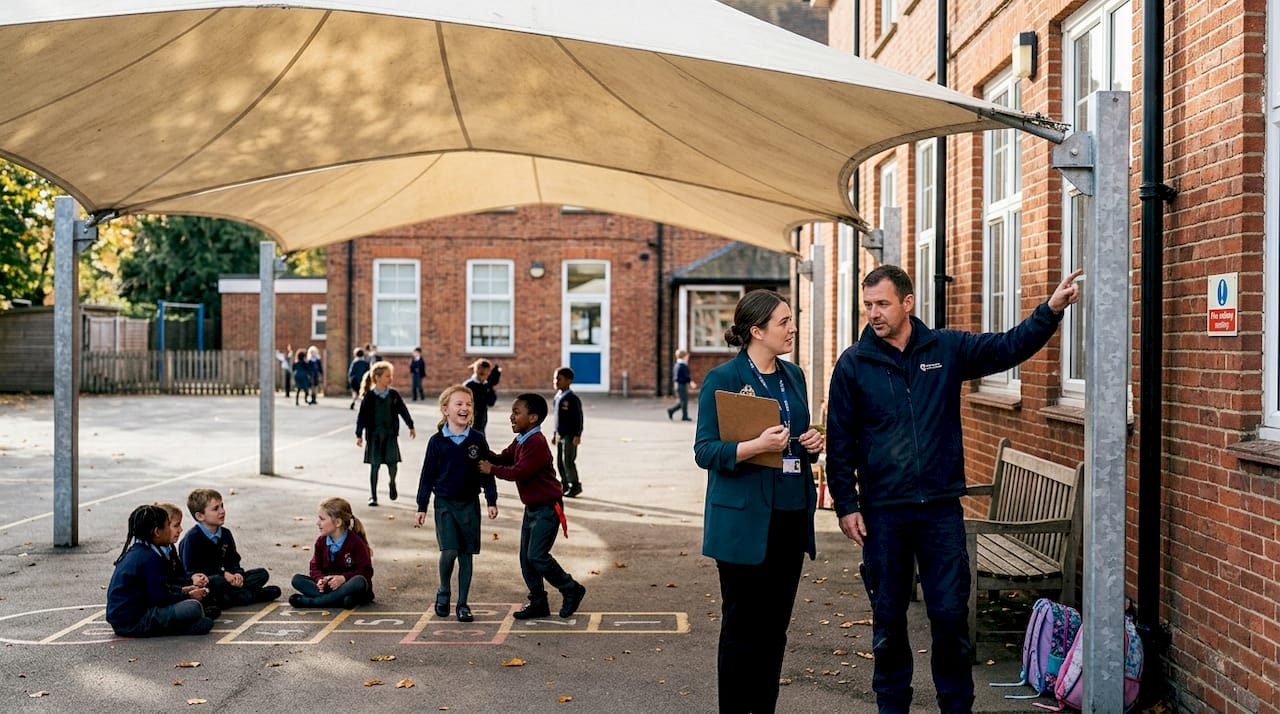
TL;DR:
Schools must consider safety, durability, UV protection, and flexibility when choosing outdoor shading.
Different structures, like sail shades, canopies, and retractable awnings, suit varied needs and budgets.
Involving staff and pupils in planning ensures the shading meets long-term outdoor learning and activity requirements.
Choosing the right outdoor shading for a school sounds straightforward until you’re faced with a dozen competing structures, a tight budget, and a playground full of pupils who need protection whatever the weather. UK schools are under increasing pressure to create safe, usable outdoor spaces, particularly as DfE guidance recommends shading for educational settings to support sun safety and outdoor learning. Get the decision wrong and you end up with a structure that’s either too rigid, too exposed, or simply unsuitable for the site. This guide walks you through every key consideration, from compliance and cost to the best structure types for schools across Yorkshire, Derbyshire, Nottinghamshire, and Lincolnshire.
Table of Contents
Key Takeaways
Point | Details |
Match shading type to need | Consider school size, activities and site layout to select the best shading solution. |
Check compliance and safety | Ensure structures meet UK standards and require minimal planning permission for hassle-free installation. |
Weigh flexibility vs. permanence | Flexible retractable and modular systems future-proof your investment better than rigid structures. |
Leverage regional expertise | Local case studies and suppliers provide the most relevant options and install support. |
Utilise available funding | Explore Sports Premium and grant funding to support shading installations in schools. |
Key factors when choosing outdoor shading for schools
Before you start requesting quotes, it pays to get clear on what actually matters for a school environment. A residential awning and a school canopy might look similar in a brochure, but the performance demands are completely different.
Here are the core criteria to assess before committing:
Sun protection rating: Look for fabrics that block a high percentage of UV radiation, particularly for areas where younger children spend extended time outdoors.
Durability and maintenance: School structures face constant use, accidental impacts, and British weather. Powder-coated steel frames and UV-stabilised fabrics reduce long-term maintenance costs significantly.
Safety compliance: BS EN 1176 applies to playground safety, and most standard shading options don’t require planning permission under typical size thresholds. Always verify with your local authority.
Planning permission: Structures above certain dimensions or on listed buildings may still require approval. When in doubt, check before you order.
Budget and funding: Sports Premium funding, Blue Spark grants, and local authority grants are all viable routes. Many Yorkshire and Derbyshire schools have used these successfully.
Aesthetic fit: Shading should complement existing buildings rather than clash with them. Colour, frame finish, and profile all matter.
Understanding the benefits of outdoor shading early in the process helps you make a stronger case internally for investment. It’s also worth reviewing the durability and safety of awning materials before finalising your specification.
Pro Tip: Involve your site manager from day one. They’ll flag practical issues like drainage, surface fixing points, and access for maintenance that can easily derail a project if missed early.
Types of outdoor shading structures explained
Now that you know what to look for, let’s break down the main types of outdoor shading you’ll find in today’s schools. Each has a distinct purpose, and picking the wrong category is one of the most common and costly mistakes schools make.
The main shading types used in schools are sail shades, canopies and pergolas, retractable awnings, cantilever and hip roof structures, and freestanding shelters. Here’s what sets them apart:
Sail shades: Tensioned fabric panels fixed between posts or anchor points. Lightweight, cost-effective, and available in permeable or waterproof variants.
Canopies and pergolas: Fixed overhead structures, often with polycarbonate or solid roofing. Excellent year-round weather cover.
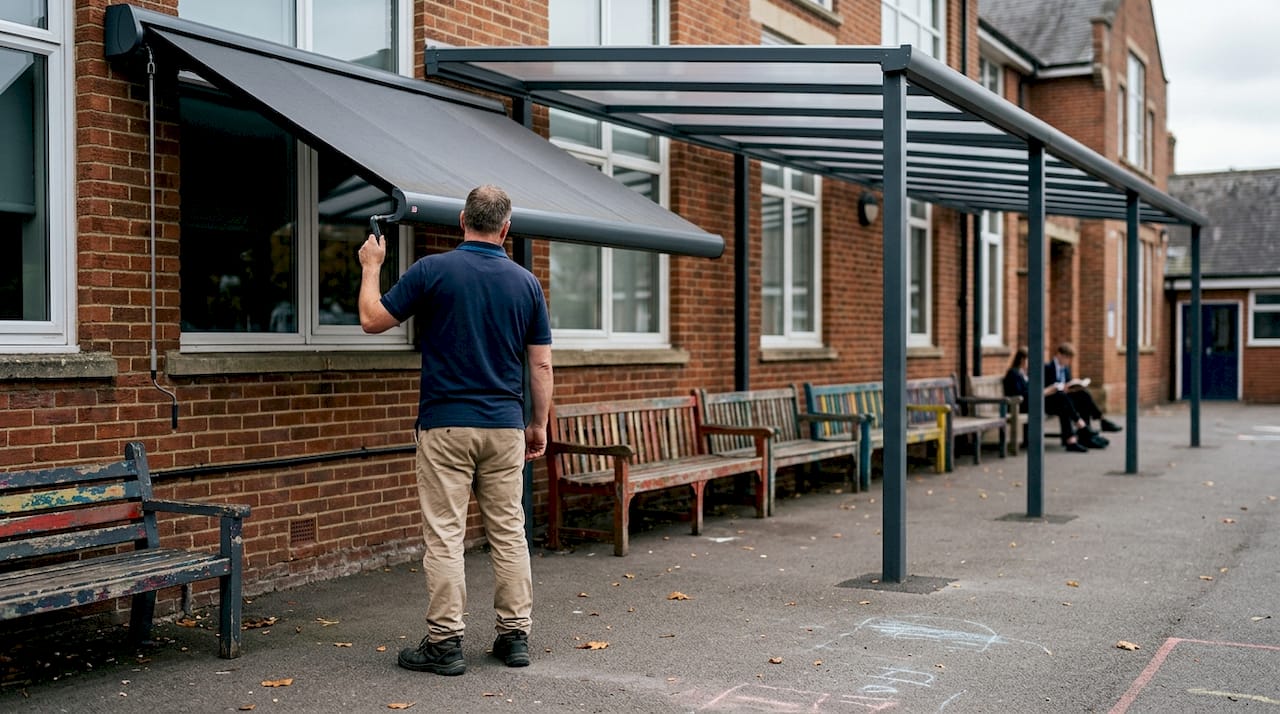
Retractable awnings: Wall or post-mounted units that extend on demand. Offer flexibility for buildings where permanent structures aren’t ideal.
Cantilever and hip roof structures: Column-supported with a clear span underneath. Popular for play areas because there are no central posts to create hazards.
Freestanding shelters: Fully independent units that can be positioned anywhere on site.
Here’s how they compare on the metrics that matter most:
Structure type | UV block | Waterproof | Wind tolerance | Typical coverage |
Sail shade | Up to 95% | Optional | Moderate | 10m² to 50m² |
Canopy/pergola | 80 to 95% | Yes | High | 15m² to 100m²+ |
Retractable awning | 70 to 95% | Yes (closed) | Moderate | 10m² to 60m² |
Cantilever/hip roof | 85 to 95% | Yes | High | 20m² to 80m² |
Freestanding shelter | 80 to 95% | Yes | High | Variable |
For a broader overview of how these fit into different settings, the types of outdoor shading page offers a useful starting point.
Pros, cons and best uses for each shading option
With the main types clear, let’s see how they measure up head-to-head so you can pick the right one for your school’s specific needs.
Permanent structures suit high-traffic, multi-year use, while retractable and temporary options are better suited to flexible or seasonal requirements. Neither approach is universally superior. It depends entirely on your site.
Here’s a direct comparison:
Structure | Flexibility | Weatherproofing | Cost range | Best use case |
Sail shade | High | Low to moderate | Low | Open play areas, warm climates |
Canopy/pergola | Low | High | Medium to high | Entrances, dining, outdoor classrooms |
Retractable awning | Very high | High when closed | Medium | Teaching walls, assembly areas |
Cantilever/hip roof | Low | High | High | Large play zones, sports areas |
Freestanding shelter | Medium | High | Medium | Flexible placement, events |
Considerations for Yorkshire and Derbyshire schools in particular:
Wind loading matters. Both counties experience significant gusts, especially on elevated school sites. Large sail shades require detailed wind engineering assessments.
Rain is guaranteed. Waterproof canopies and retractable awnings that seal properly are worth the extra investment.
Usage patterns vary. A primary school with busy break times needs a different solution to a secondary school with a sixth-form terrace.
Think about the off-season. A structure that gets barely used from October to March may not justify a high capital spend.
Pro Tip: If you’re unsure between a permanent canopy and a retractable model, read about the benefits of retractable awnings and the top retractable awnings for schools before deciding. The flexibility argument is often more compelling than schools initially expect.
Practical guidance and real examples from Yorkshire, Derbyshire and the region
Armed with the pros and cons, it’s essential to see how these options play out in real local school settings. Theory only gets you so far.
A well-documented example is the Broom Valley project in Rotherham, where a school installed a 10m polycarbonate canopy that transformed a previously unusable external area into a year-round outdoor learning space. A Derbyshire primary school installed a freestanding shelter on its playground, and staff reported measurable improvements in outdoor lesson frequency within the first term.
Key insights from regional installations across Yorkshire, Derbyshire, Nottinghamshire, and Lincolnshire:
Installation timelines typically run between two and six weeks from order confirmation, depending on groundworks and structure complexity.
Local suppliers with regional experience understand planning nuances, typical ground conditions, and weather-specific engineering requirements.
Curriculum integration works best when shading is designed as a space, not just a roof. Adding seating, whiteboards, and defined zones dramatically increases usage.
Behaviour benefits are frequently reported by schools. Shaded, organised outdoor areas correlate with calmer, more structured pupil activity.
“Once the canopy was in place, we used the outdoor area every single week, even in October. It completely changed how we planned lessons.” This kind of feedback is common from schools that commit to well-specified, properly installed shading.
For practical installation tips for school awnings, as well as a region-specific outdoor shading guide for Yorkshire schools, both resources are worth reviewing before you finalise your brief.
Why flexibility and future-proofing matter most for school shading
Here is the thing most shading suppliers won’t tell you. Schools almost always overestimate how permanent their needs are. A facility manager in 2026 cannot fully predict how a playground will be used in 2030. Curriculum changes, new leadership, growing pupil numbers, and shifting timetables all alter how outdoor spaces function.
Conventional wisdom pushes schools towards fully fixed, permanent structures because they look substantial and feel like a proper investment. But retractable and modular systems offer significantly better long-term flexibility compared to fixed structures, which can unintentionally limit how a site evolves.
We’ve seen schools invest heavily in large fixed canopies, only to find the structure blocks a new access route or prevents a building extension five years later. That’s an expensive lesson. Elegant retractable awnings and modular shelters avoid this trap entirely because they adapt as the site does.
Our strongest recommendation is to involve both staff and students in the planning conversation before finalising any design. Teachers know which areas get used. Pupils know where they actually want to go. That combination of insight produces far better outcomes than a specification written entirely from a site plan.
Find the perfect outdoor shading solution for your school
Selecting the right shading structure is only half the challenge. Getting it designed, specified, and installed correctly is where a regional specialist genuinely earns their value. At Infinity Awnings, we’ve spent over 15 years working with schools and educational facilities across Yorkshire, Derbyshire, Nottinghamshire, and Lincolnshire, and we understand the compliance, budget, and design pressures you’re navigating.
Whether you need a single retractable awning above a teaching wall or a large-scale canopy across a play zone, we offer the full range. Explore school pergolas as a starting point, or visit our school shading specialists page to request a free consultation. We’ll assess your site, discuss funding options, and match you with the right solution for your space and budget.
Frequently asked questions
Do schools need planning permission for outdoor shading?
Most standard shading structures for schools don’t require planning permission under typical size limits, but it’s always worth checking with your local planning authority before ordering.
Which shading types protect best against UV rays?
Sail shades can block up to 95% of UV radiation, making them one of the most effective options for direct sun protection in open playground areas.
What funding options are available for school shading?
Many schools use Sports Premium and Blue Spark grants to cover outdoor shading costs, and some local authorities also offer capital funding for school grounds improvement projects.
Can outdoor shading be integrated into outdoor learning areas?
Absolutely. Schools across the region report increased outdoor use and improved pupil behaviour when shading is designed around defined outdoor classroom and activity zones rather than installed as a standalone structure.
Recommended
Rain or Shine: How to Plan for Weather at Your Outdoor Event - Adelaide Wedding Venues
Comments