
Outdoor dining covers: enhance comfort and style
- Andrew Crookes

- Apr 25
- 8 min read
TL;DR:
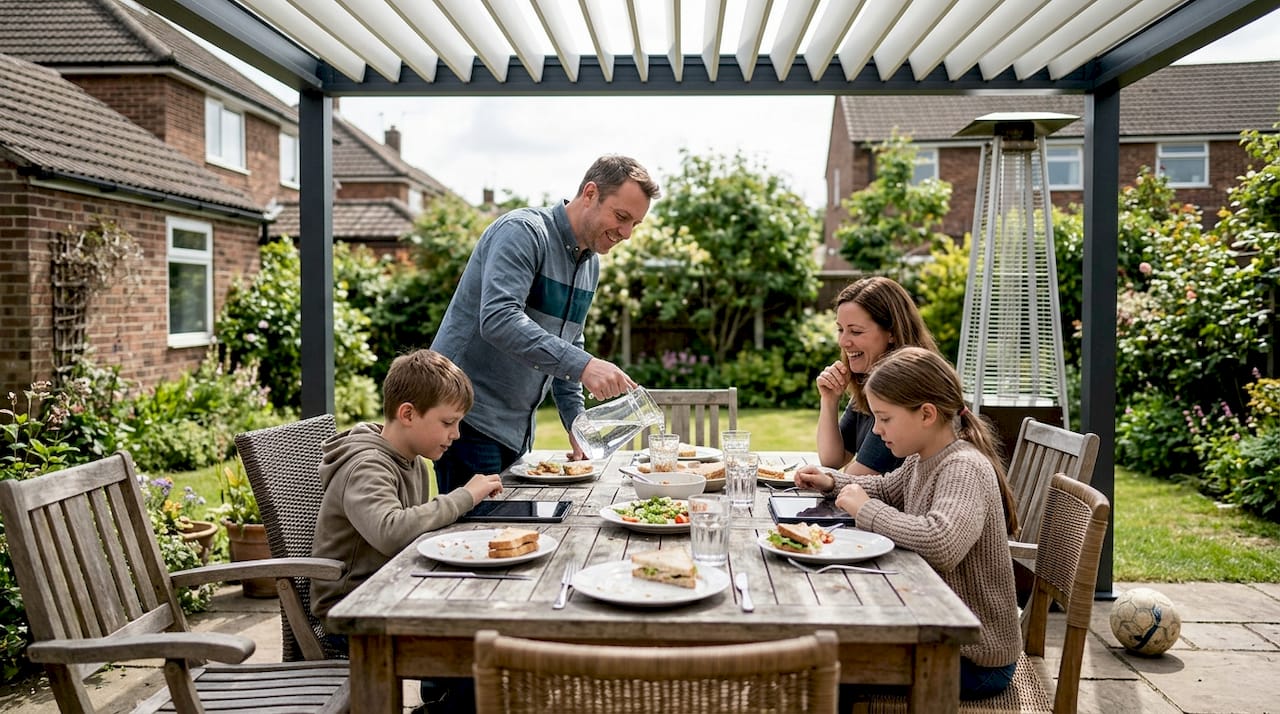
Proper outdoor dining covers are adjustable structures designed to shelter people, not just property.
Retractable awnings and louvred roofs offer flexibility and durability suitable for Yorkshire’s unpredictable weather.
Investing in quality outdoor covers enhances comfort, energy savings, and property value over time.
Pulling a tarpaulin over your garden furniture before a Yorkshire downpour feels like a solution, but it really isn’t. A tarp keeps your chairs dry when no one is sitting in them. What it doesn’t do is let you actually dine outdoors in comfort while the weather does its worst. True outdoor dining covers, such as retractable awnings, louvred pergolas, and purpose-built canopies, are shading structures for al fresco dining that protect people, not just property. This guide unpacks what these covers are, how they work, the main types available, and why they matter so much for Yorkshire’s unpredictable four-season climate.
Table of Contents
Key Takeaways
Point | Details |
Outdoor dining cover defined | It means an adjustable structure like an awning, pergola, or canopy designed for year-round outdoor comfort. |
Types to choose from | Options include retractable awnings, louvered pergolas, fixed canopies, and pop-up gazebos. |
Yorkshire weather resilience | Motorised systems with wind sensors and durable materials are best for local weather. |
Value and savings | The right cover boosts property value, creates more space, and can reduce cooling bills. |
What defines an outdoor dining cover?
Let’s be precise about language, because it matters here. An outdoor dining cover is a purpose-built structure designed to shelter people who are actively using an outdoor space for dining or leisure. It is not a sheet of waterproof material you drape over a table and chairs when you head indoors.
Outdoor dining covers include retractable awnings, louvred pergolas, and canopies that offer adjustable protection from sun, rain, and wind. The operative word is adjustable. These structures respond to conditions rather than simply sealing a space off. That distinction is critical for Yorkshire, where a summer afternoon can shift from blazing sunshine to a blustery shower inside twenty minutes.
Furniture covers, meanwhile, are designed for item storage and protection when the space is not in use. They serve a purpose, but that purpose is not sheltering people. Confusing the two is one of the most common and costly mistakes property owners make when planning an outdoor area.
Here is what separates a genuine outdoor dining cover from a basic protective sheet:
Structural integrity: Built to handle wind, UV exposure, and sustained rainfall without collapsing or pooling water
Aesthetic integration: Designed to complement architecture rather than hide it
Active use: Keeps the space functional and comfortable while people are present
Adjustability: Extends or retracts, opens or closes, depending on conditions
Longevity: Rated for years of regular use, not just occasional deployment
“A proper outdoor dining cover transforms a space from somewhere you use when conditions allow into somewhere you use because conditions are managed.”
For Yorkshire homeowners and business owners running commercial dining operations, the difference between a tarp and a proper cover is the difference between an occasional amenity and a genuinely usable space. When you also factor in the aesthetic expectations of guests, clients, and neighbours, the case for proper investment becomes obvious.
Core types of outdoor dining cover explained
Now that you understand what a cover actually is, let’s walk through the key options. Not every solution suits every situation, and Yorkshire’s weather profile demands that you think carefully about which type fits your space, budget, and long-term ambitions.
Retractable awnings: These use a roller tube and articulated arms with springs or gas pistons to extend a fabric canopy up to four metres from a wall. Motorised versions with wind sensors are especially useful in Yorkshire. When a gust hits, the system retracts automatically, protecting both the fabric and your guests.
Fixed pergolas and verandas: Where you want permanence and architectural presence, a fixed structure is often the right call. These offer year-round durability without the maintenance demands of moving parts.
Louvred roof systems: Rotating slats give you genuine ventilation control. Open them for sun, close them for rain. It’s a highly flexible system that suits the unpredictable nature of British weather.
Pop-up gazebos: Quick, affordable, and temporary. They’re fine for occasional use but offer limited outdoor protection options compared to permanent installations.
Type | Approx. cost | Longevity | Flexibility | Rain protection | Wind protection |
Retractable awning | £1,500 to £5,000 | 10 to 15 years | High | Moderate | Moderate (with sensor) |
Fixed pergola | £3,000 to £15,000 | 20 to 30 years | Low | High | High |
Louvred roof | £5,000 to £20,000 | 20 to 25 years | High | Very high | High |
Pop-up gazebo | £100 to £600 | 1 to 3 years | Very high | Low | Low |
For all-weather use in Yorkshire, retractable awnings and louvred roofs tend to offer the best balance. If you’re planning a new installation across Yorkshire, consider how often you’ll want to reconfigure the cover versus how much shelter you need on a fixed basis. Fixed structures are superior when permanence is the goal. Retractable options win when flexibility is a priority.
How outdoor dining covers work: Features and mechanics
Understanding the mechanics helps you make a better purchasing decision, especially when specifications start to matter for planning permissions or structural assessments.
At the core of a retractable awning is a roller tube system: the fabric winds around a horizontal tube mounted to a wall or ceiling. Articulated arms, tensioned by springs or gas pistons, push the fabric outward when the system extends. Electric motors power the movement in motorised models, while manual versions use a crank or pull rod.
Key features to consider for Yorkshire conditions:
Wind sensors: Automatically retract the awning when wind exceeds a safe threshold. This is not optional in Yorkshire. It is essential.
Cassette housings: Fully enclose the fabric and mechanism when retracted, protecting against weather and UV degradation. Open-style awnings leave the fabric exposed.
Motorisation: A motorised awning system is considerably more convenient and often safer for large spans.
Louvred slat rotation: In louvred pergola systems, motorised slats rotate from fully open to fully closed, giving you precise control over ventilation and rain exclusion simultaneously.
Glass and side screens: Vertical glass screens or fabric side panels combined with a cover create an enclosed microclimate. For Yorkshire, this addition dramatically extends usable seasons.
Pro Tip: For Yorkshire’s windy, rainy climate, always specify a cassette awning with an integrated wind sensor rather than an open-arm model. The additional investment pays back quickly in avoided repair bills and longer fabric life.
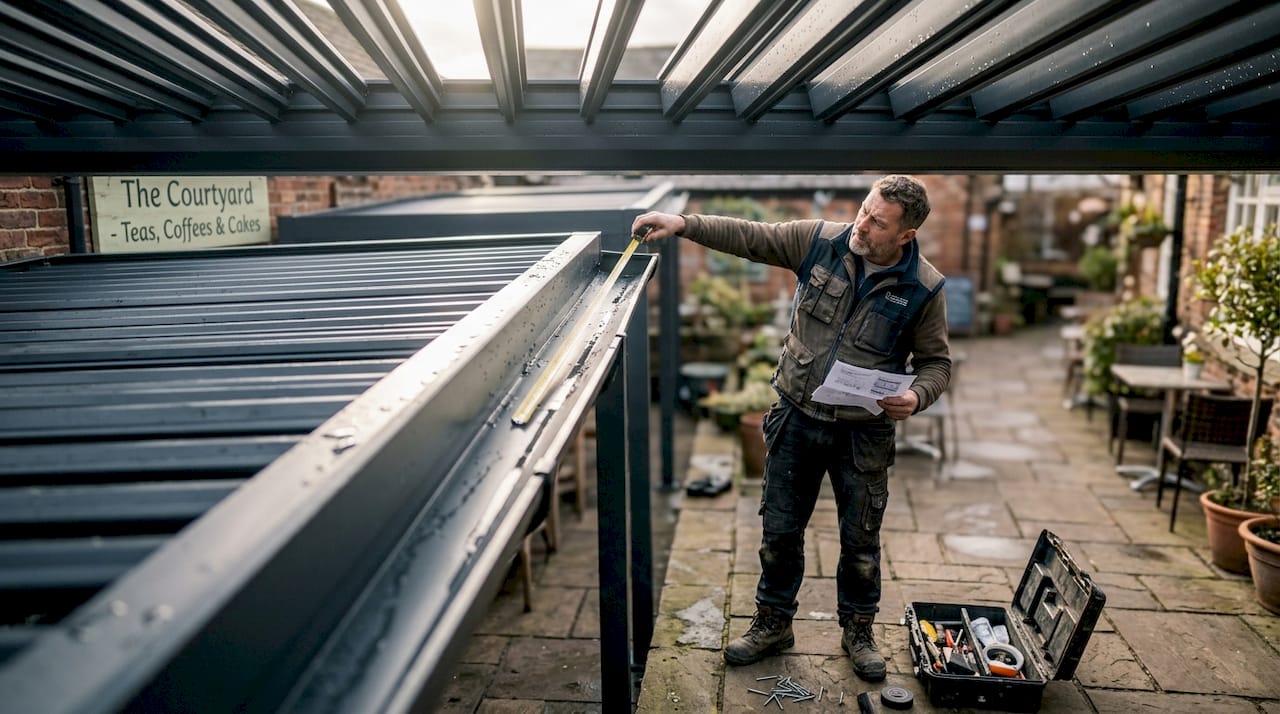
Louvred systems work differently from fabric awnings. Their rotating aluminium slats channel rainwater to guttering integrated within the frame, meaning water never pools on the structure. This makes them particularly effective for restaurants and hospitality venues where a dry dining environment is non-negotiable. Understanding the value of premium systems becomes clear when you consider long-term performance rather than upfront cost alone.
Key benefits: Comfort, energy savings, and value
Once you know how covers work, the question becomes: what does a proper installation actually deliver? The answer goes well beyond keeping the rain off your head.
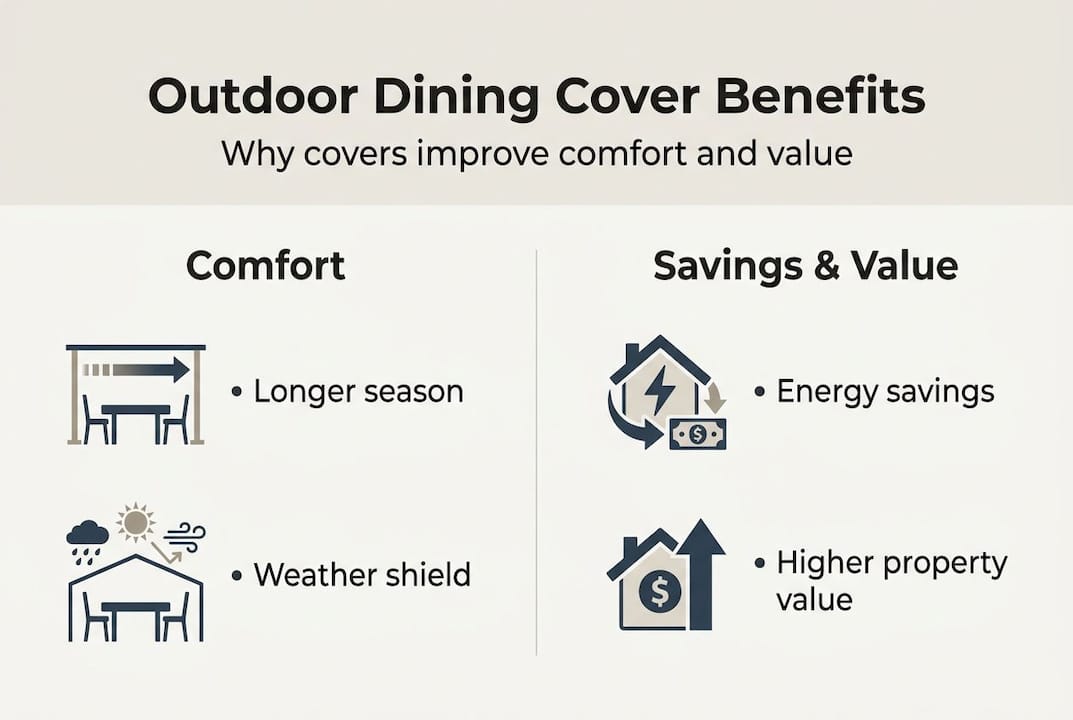
Comfort and usability: A covered outdoor dining area extends your usable season dramatically. Instead of abandoning the patio every time clouds appear, you remain comfortable outdoors for far more of the year. For Yorkshire restaurants and bars, that translates directly to more covers served and higher revenue per square metre.
Energy savings: Quality covers reduce solar heat gain by 70 to 75%, cutting cooling costs by 10 to 25%. For a business with large glazed areas or a south-facing conservatory, that reduction in solar load can represent meaningful annual savings.
Benefit | Estimated impact |
Solar heat reduction | 70 to 75% |
Cooling cost saving | 10 to 25% |
Property value increase | Up to 10% |
Extended usable space | Up to 30% |
Payback period | 5 to 8 years |
Property value: Correctly installed outdoor covers increase property value by up to 10% by adding functional square footage. Buyers and tenants respond to well-designed outdoor spaces because they understand the lifestyle benefit immediately.
For those exploring the full range of awning benefits, the energy savings alone often justify the investment over a five to eight year period. When you factor in improved comfort and property value uplift, the return becomes even more compelling.
Pro Tip: Combine your dining cover with integrated patio heaters and side screens to push your outdoor season well into autumn and winter. Yorkshire evenings get cold quickly. Heat and shelter together solve that problem far more effectively than either element alone.
For a deeper look at how to maximise energy savings with your shading solution, thinking about orientation, fabric specification, and automation all plays a part in getting the best return from your investment.
Our take: What most miss about outdoor dining covers in Yorkshire
After more than 15 years of installing outdoor covers across Yorkshire and the wider region, we’ve noticed a persistent pattern. Most property owners approach the decision as a question of appearance and cost. They pick something that looks attractive and fits within a budget. That’s understandable. But it’s often the wrong framework for Yorkshire.
Yorkshire’s climate is genuinely unpredictable. The structures that perform best here are those designed with flexibility and resilience as primary criteria, not aesthetics or price. A pergola case study from East Yorkshire illustrates this well: a well-specified louvred system with integrated heating and glass sides transformed a south-facing terrace into a year-round dining space, delivering return on investment within a few seasons.
The mistake we see repeatedly is treating covers as single-function solutions. An awning alone is good. An awning combined with vertical screens, heating, and smart automation is transformative. Pairing covers with all-weather integrated systems is what separates a seasonal amenity from a genuine year-round outdoor room. Conventional wisdom says pick a cover you like the look of. Our experience says pick a system that solves Yorkshire’s weather first, then make it look extraordinary.
Transform your outdoor dining area today
If this guide has made one thing clear, it’s that the right outdoor dining cover is a system, not just a product. Getting that system right from the start is where professional guidance makes the biggest difference.
At Infinity Awnings, we’ve spent over 15 years helping Yorkshire homeowners and businesses create outdoor spaces that genuinely perform in British weather. Whether you’re drawn to the clean lines of our pergola range or the architectural elegance of our veranda designs, we offer free assessments and tailored recommendations based on your specific site, orientation, and usage goals. Reach out today to start the conversation and discover how the right cover transforms your outdoor dining area into something you use every month of the year.
Frequently asked questions
What is the difference between an awning, a pergola, and a canopy?
An awning is an extendable fabric cover mounted to a wall, a pergola is a permanent frame structure using beams or louvred slats, and a canopy is typically a freestanding or attached fabric structure for shade. Retractable awnings, louvred pergolas, and canopies are the three main categories of outdoor dining cover.
Do outdoor dining covers add value to my property?
Yes. A properly installed cover can increase property value by up to 10% and extend your usable outdoor space by up to 30%, making it an investment that benefits both lifestyle and resale appeal.
Which outdoor dining cover is best for Yorkshire weather?
Motorised retractable awnings or louvred pergolas fitted with wind sensors offer the best balance of flexibility, weather resilience, and year-round performance for Yorkshire’s variable climate.
Can outdoor dining covers reduce energy bills?
Yes. A quality outdoor cover reduces solar heat gain by 70 to 75%, cutting cooling costs by 10 to 25% annually, with a typical payback period of five to eight years.
Recommended
Comments