
Why invest in electric awnings for Yorkshire homes in 2026
- Andrew Crookes

- Mar 6
- 10 min read
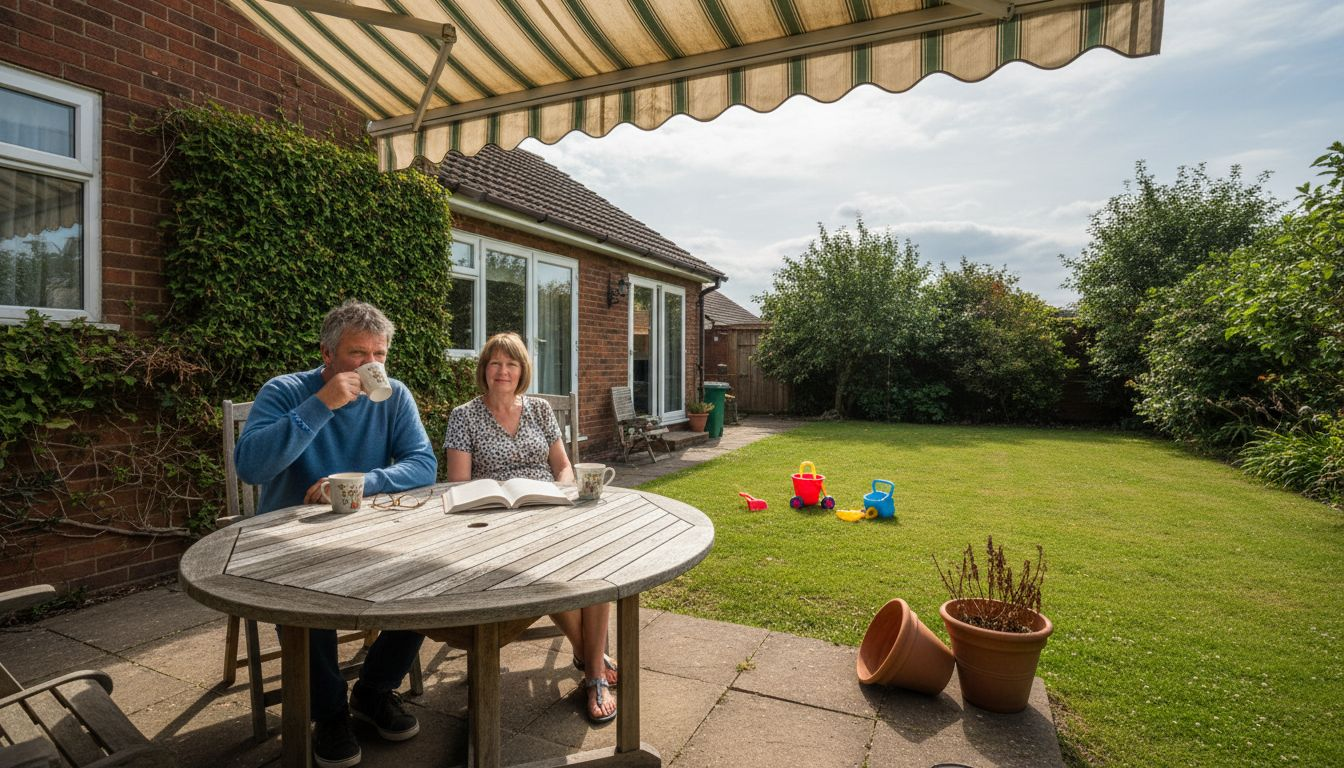
Electric awnings transform outdoor living in Yorkshire, Derbyshire, Nottinghamshire, and Lincolnshire by delivering automated comfort, significant energy savings, and enhanced property values. These motorised shading systems reduce solar heat gain by up to 77%, cutting cooling costs whilst protecting your home from harsh weather. With smart sensors and customisable designs built for northern England’s climate, electric awnings offer homeowners a practical investment that pays dividends in comfort, usability, and resale value.
Table of Contents
Key takeaways
Point | Details |
Automated convenience | Electric awnings provide motorised control via remote or smartphone, eliminating manual effort and enabling precise shading adjustments. |
Energy savings | Solar heat gain reduces by up to 77%, lowering air conditioning costs significantly during warmer months. |
Weather protection | Automatic sensors retract awnings during wind or rain, preserving fabric and structure in UK conditions. |
Increased usability | Outdoor living space becomes 40% more functional, extending enjoyment of patios and gardens throughout the year. |
Property value boost | Installation can increase home value by approximately 8%, offering strong return on investment. |
Introduction to electric awnings
Electric awnings are motorised retractable shading systems designed to automate outdoor comfort with minimal effort. Unlike manual awnings that require physical cranking, electric models use integrated motors controlled by remote, wall switches, or smartphone apps. This convenience allows you to extend or retract shading instantly, responding to changing weather or sun angles without leaving your seat.
The mechanical advantage goes beyond convenience. Electric motors enable precise positioning, letting you adjust shade coverage by centimetres rather than fixed positions. This precision maximises comfort whilst protecting furniture and outdoor spaces from UV damage. Many systems integrate with smart home platforms, enabling voice control through devices like Alexa or Google Home.
Key advantages over manual awnings include:
Effortless operation suitable for elderly users or those with mobility challenges
Remote access allows adjustments from inside the home
Integration with weather sensors for automatic protection
Consistent tension control prevents fabric sagging and wear
Smart home compatibility transforms electric awnings into responsive climate control systems. Sun sensors automatically extend shading during peak heat, whilst wind sensors retract the awning before damage occurs. This automation protects your investment whilst optimising energy efficiency, making electric awning features particularly valuable in northern England’s unpredictable climate.
Technology and automation features
Modern electric awnings incorporate sophisticated sensor technology that removes guesswork from outdoor shading management. Remote controls offer basic extend and retract functions, but smartphone apps provide advanced scheduling, allowing you to programme shading patterns that match your daily routine. You can extend your awning automatically each morning or retract it at sunset, creating consistent outdoor comfort without manual intervention.
Weather sensors protect awnings by monitoring environmental conditions continuously. Wind sensors detect gusts that could damage fabric or frames, automatically retracting the awning when speeds exceed safe thresholds. Rain sensors respond to moisture, protecting the awning and your outdoor furniture from unexpected downpours. These features prove essential in Yorkshire’s variable weather, where conditions change rapidly.
Sun sensors measure light intensity and automatically adjust shading to maintain comfortable temperatures. When morning sun becomes intense, the sensor extends the awning to block heat before your living spaces warm excessively. This automation reduces energy consumption by preventing solar gain, cutting air conditioning costs significantly during summer months.
Canopy tension sensors monitor fabric tightness, preventing sagging that leads to water pooling and premature wear. Proper tension extends fabric lifespan whilst maintaining aesthetic appeal. These sensors adjust motor operation to maintain optimal tightness regardless of temperature changes or fabric settling.
Pro Tip: Schedule quarterly sensor calibration checks to ensure accurate responses, and always maintain manual override access in case of sensor malfunction or power failure. This backup protects your investment and guarantees control under all circumstances.
Energy efficiency and environmental benefits
Electric awnings deliver substantial energy savings by controlling solar heat gain, the primary driver of summer cooling costs. Reducing solar heat gain by up to 77% means less heat enters your home through windows and walls, dramatically cutting the workload on air conditioning systems. A typical Yorkshire home can save hundreds of pounds annually by blocking afternoon sun during peak summer months.
Energy efficiency translates directly to lower household bills. When awnings shade south and west facing windows during the hottest parts of the day, indoor temperatures remain comfortable without mechanical cooling. This passive climate control reduces electricity consumption, with savings accumulating month after month. Over a typical awning lifespan of 15 to 20 years, these savings often exceed the initial installation cost.
Energy Impact at a Glance: Homes with electric awnings use 25% less cooling energy during summer compared to unshaded properties, according to independent energy assessments. This reduction supports both financial savings and environmental responsibility.
Environmental benefits extend beyond personal savings. Lower energy consumption reduces carbon emissions associated with electricity generation, supporting sustainable living goals increasingly valued in northern England. As homeowners prioritise green upgrades, retractable awning benefits include measurable contributions to household carbon footprint reduction.
Key environmental advantages include:
Reduced reliance on air conditioning lowers greenhouse gas emissions
Passive shading requires no energy consumption beyond minimal motor operation
Extended fabric lifespans minimise waste through durable construction
Smart sensors optimise shading efficiency without user intervention
The combination of immediate bill reductions and long term environmental benefits positions electric awnings as both financially prudent and ecologically responsible home improvements for 2026.
Durability and weather protection
Northern England’s climate demands robust construction, and quality electric awnings deliver precisely that through advanced materials and protective features. Fabrics undergo treatment for waterproofing and UV resistance, ensuring they withstand frequent rain whilst blocking harmful sun rays that cause fading and deterioration. These treatments prevent water absorption that leads to mould growth, a common problem in damp UK conditions.
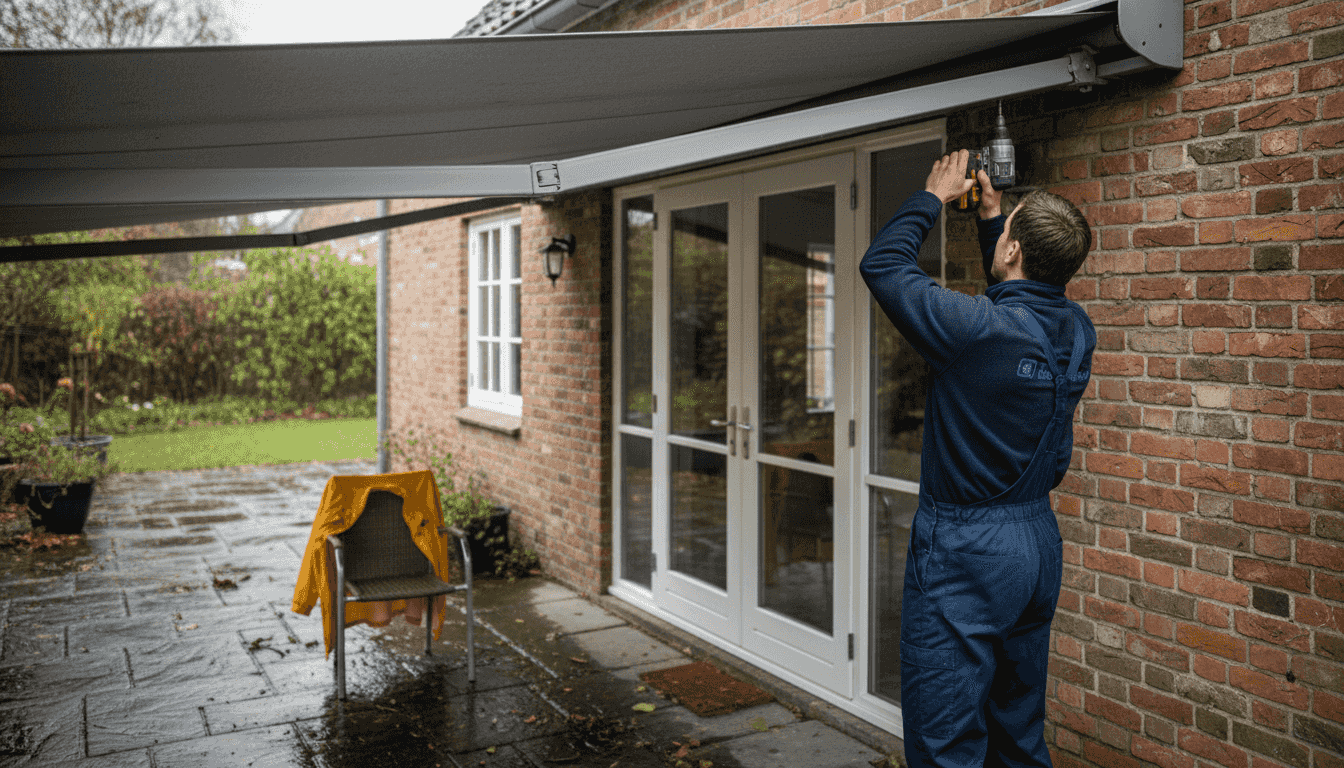
Frames and motor housings use corrosion resistant materials like powder coated aluminium or stainless steel components. These materials tolerate moisture and temperature fluctuations without rusting or weakening, maintaining structural integrity through years of exposure. Motor assemblies receive weatherproof sealing that protects electrical components from rain and humidity.
Mould and mildew resistance comes from fabric treatments that inhibit fungal growth even when fabrics remain damp. This protection proves essential during Yorkshire’s wet seasons, when fabrics might not dry completely between rain showers. Quality awnings shed water quickly, preventing the standing moisture that encourages biological growth.
Sensor technology automates awning retraction during storms, eliminating the risk of wind damage or fabric tearing. When sensors detect dangerous wind speeds, the awning retracts fully within seconds, protecting both fabric and frame from destructive forces. This automation proves invaluable when storms arrive unexpectedly or when you’re away from home.
Key durability features include:
Solution dyed acrylic fabrics resist fading for 10 years or longer
Reinforced stitching at stress points prevents tearing
Aluminium frames withstand UK weather without warping
Sealed motor compartments exclude moisture and debris
Pro Tip: Specify fabrics with independent certification for UK weather conditions, ensuring they meet rigorous standards for water resistance, UV protection, and mould prevention. These certifications provide confidence in long term performance.
Impact on home usability and property value
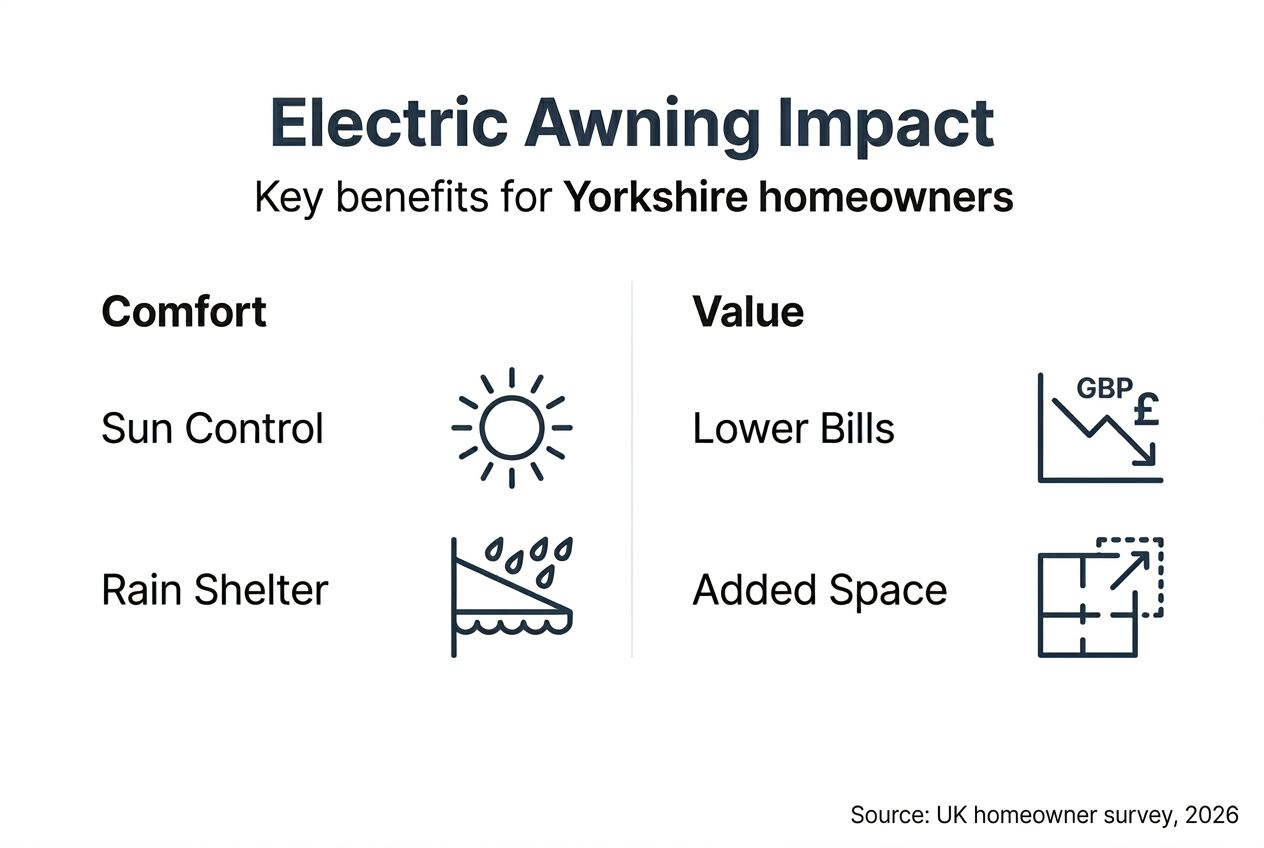
Electric awnings increase outdoor space usability by approximately 40%, transforming patios and gardens into comfortable living areas for more months each year. This expansion occurs because automated shading makes outdoor spaces pleasant during hot summer days when unshaded areas become unusably warm. You gain functional square metres without construction costs or planning permissions.
Temperature regulation works both ways. Summer shading blocks intense heat, whilst winter retraction permits valuable solar gain that warms your home naturally. This seasonal flexibility maximises comfort and energy efficiency, adapting your outdoor spaces to match changing weather patterns. Year round usability benefits extend enjoyment far beyond traditional summer use.
Property value increases follow logically from enhanced usability. Estate agents report that well designed outdoor living features attract buyers and command premium prices. Installing quality electric awnings can boost property value by approximately 8%, delivering strong returns when you sell. This appreciation reflects buyer recognition that functional outdoor spaces add genuine lifestyle value.
Metric | Before Installation | After Installation |
Usable outdoor hours yearly | 800 hours | 1,120 hours |
Comfortable temperature days | 90 days | 150 days |
Property value increase | Baseline | +8% typical |
Outdoor entertainment frequency | 12 times/year | 28 times/year |
Homeowners consistently report increased satisfaction with their outdoor spaces following installation. The convenience of push button shading encourages more frequent use of gardens and patios, whether for dining, entertaining, or relaxation. This enhanced enjoyment represents tangible lifestyle improvement beyond financial metrics.
“Electric awnings transform outdoor areas from occasional use spaces into everyday living environments, adding functional square footage that families actually use throughout extended seasons.” — UK Property Enhancement Study, 2026
The combined impact on usability and value positions electric awnings as strategic home improvements that deliver both immediate enjoyment and long term financial benefits.
Common misconceptions and mythbusting
Homeowners often hesitate due to misconceptions about electric awnings, but examining facts reveals these concerns are largely unfounded. Addressing common myths helps you make informed decisions based on reality rather than assumptions.
Myth: Electric awnings cost too much to justify the investment. Fact: Whilst initial costs exceed manual alternatives, long term savings and property value increases balance expenditure. Energy bill reductions accumulate for decades, and the 8% property value boost typically exceeds installation costs when you sell.
Myth: Electric awnings require constant maintenance and fail frequently in UK weather. Fact: Quality systems need minimal maintenance beyond occasional cleaning and annual inspections. Durable fabrics and weather sealed motors withstand northern England conditions reliably. Automatic sensors actually reduce wear by preventing exposure to damaging conditions.
Myth: Rainy and windy UK climate makes electric awnings impractical. Fact: Modern sensors protect awnings by retracting during bad weather, preventing damage that would occur with manual systems. Waterproof fabrics and corrosion resistant frames specifically address UK conditions, making them more practical than in drier climates.
Myth: Manual awnings offer the same benefits at lower cost. Fact: Manual operation lacks sensor protection, requiring you to monitor weather constantly and manually retract before storms. This inconvenience often results in damage when you’re away or asleep, ultimately costing more than automated protection.
Myth: Electric motors are unreliable and expensive to repair. Fact: Modern motors last 15 to 20 years with proper installation and minimal maintenance. Manufacturers provide extensive warranties covering motor failures, and replacement costs have decreased as technology matures.
Pro Tip: Budget for professional installation and quality sensors during initial purchase rather than adding them later. This upfront investment maximises reliability and ensures warranty coverage, protecting your investment from day one.
Understanding these realities removes obstacles to making decisions based on genuine benefits rather than unfounded concerns about costs or practicality.
Choosing and installing electric awnings in northern England
Selecting the right electric awning requires evaluating several critical factors that determine long term satisfaction and performance. Start by assessing your home’s architecture and exposure to weather patterns specific to Yorkshire, Derbyshire, Nottinghamshire, and Lincolnshire.
Factor | Considerations | Impact on Performance |
Fabric quality | Solution dyed acrylic, waterproofing certification, UV rating | Longevity, colour retention, weather resistance |
Motor reliability | Brand reputation, warranty length, noise level | Operational lifespan, maintenance costs |
Sensor types | Wind, rain, sun sensors, sensitivity settings | Automatic protection, energy optimisation |
Customisation | Colour options, size flexibility, valance styles | Aesthetic integration, coverage area |
Installation expertise | Local experience, electrical certification, building compliance | Safety, warranty validity, performance |
Follow this selection process to match products with your specific needs:
Measure your outdoor space precisely, accounting for door clearances and window positions
Evaluate sun exposure patterns throughout the day to determine optimal coverage
Assess local wind exposure, particularly on elevated or exposed properties
Set a realistic budget including installation, sensors, and optional accessories
Request fabric samples to verify colour matching with your home’s exterior
Professional installers familiar with UK electrical standards and building regulations ensure safe, compliant installations that maintain warranty coverage. They properly size motors for your awning dimensions, position sensors for optimal accuracy, and integrate systems with existing electrical infrastructure. Attempting DIY installation risks safety hazards and warranty voidance.
Custom awning options extend functionality through accessories like LED lighting for evening use and infrared heaters that enable comfortable outdoor dining during cooler months. These additions maximise year round usability, transforming covered spaces into true outdoor rooms.
Pro Tip: Prioritise sensor reliability and comprehensive warranties when comparing products. A system with robust sensors and 10 year motor warranties provides peace of mind and lower lifetime costs compared to cheaper alternatives that require frequent repairs.
Energy saving electric awnings deliver optimal performance when properly specified for your home’s unique conditions. Consulting with experienced suppliers ensures you select features that address your priorities, whether emphasising energy efficiency, weather protection, or aesthetic integration.
Refer to detailed awning installation guides for technical specifications and preparation requirements before scheduling professional installation. Proper planning ensures smooth installation and immediate enjoyment of your new outdoor living space.
Enhance your outdoor living with our expert electric awning solutions
Transform your Yorkshire home with Infinity Awnings’ premium electric awning solutions, expertly designed for northern England’s unique climate. Our 15 years of experience across Yorkshire, Derbyshire, Nottinghamshire, and Lincolnshire ensures installations that deliver lasting comfort, energy savings, and enhanced property value.
We offer comprehensive consultations to match awning specifications with your home’s architecture and your lifestyle needs. Our range includes leading brands like Weinor and Llaza, featuring advanced sensor technology and customisable options from fabric patterns to smart home integration. Whether you’re seeking energy efficiency, weather protection, or expanded outdoor entertaining space, our specialists guide you through selecting ideal solutions.
Explore our installation guide to understand the professional process, or discover comprehensive benefits of retractable awnings tailored for UK homes. For ultimate versatility, consider retractable roofs benefits that extend protection beyond traditional awnings. Contact us today for a free quote and transform your outdoor spaces into year round living areas that increase both enjoyment and home value.
Frequently asked questions
Are electric awnings suitable for UK weather?
Yes, high quality electric awnings feature waterproof and UV resistant fabrics specifically designed to withstand northern England’s frequent rain and variable conditions. Automatic sensors retract the awning during strong winds or storms, preventing damage that might occur with manual systems. Corrosion resistant frames and sealed motor compartments ensure reliable operation through years of exposure to moisture and temperature fluctuations.
How much can I save on energy bills with an electric awning?
Savings vary based on home size, window exposure, and usage patterns, but many Yorkshire homeowners report reductions of 20% to 30% in summer cooling costs. Electric awnings reduce solar heat gain by up to 77%, substantially lowering air conditioning demand during warmer months. Over a typical 15 year lifespan, accumulated savings often exceed initial installation costs, delivering strong financial returns alongside comfort improvements.
What maintenance do electric awnings require?
Regular cleaning with mild soap and water maintains fabric appearance and prevents debris accumulation that could interfere with smooth operation. Annual professional inspections verify sensor calibration, motor function, and fabric tension, addressing minor issues before they become costly repairs. Most quality systems require minimal intervention beyond these basic tasks, with durable construction reducing maintenance demands compared to manual alternatives.
Can I install an electric awning myself?
Professional installation is strongly recommended to ensure compliance with UK electrical safety standards and maintain manufacturer warranty coverage. Qualified installers possess the expertise to properly size and position motors, integrate sensor systems, and secure mounting brackets to structural elements capable of supporting wind loads. DIY installation risks safety hazards, inadequate weatherproofing, and warranty voidance, ultimately costing more than professional service.
Recommended
Comments