
Why outdoor heaters matter for your space in 2026

TL;DR:
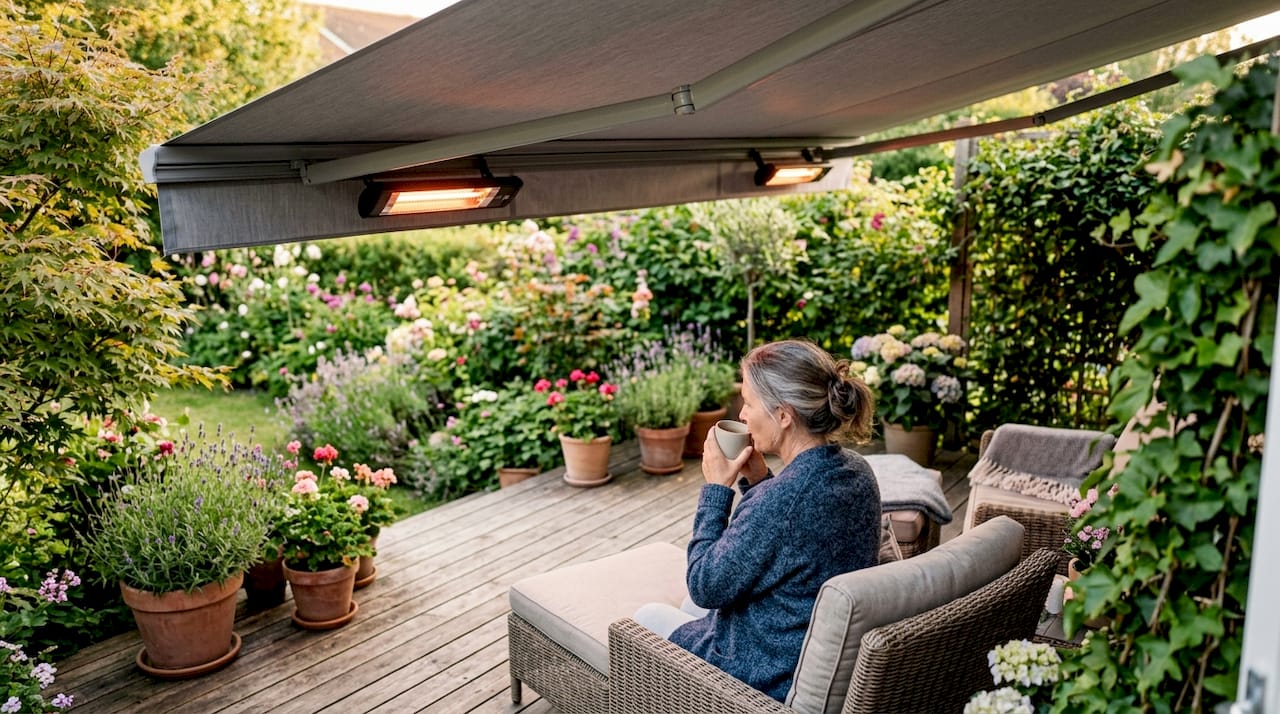
Outdoor heaters extend outdoor usability beyond summer by providing targeted warmth to patios and gardens. Infrared models outperform convection heaters outdoors because they heat objects and people directly, resisting wind and dispersal. Proper zoning, sheltering, and correctly mounted electric infrared heaters maximize efficiency, saving costs and increasing space utilization year-round.
Outdoor heaters are defined as appliances that deliver targeted warmth to people and surfaces in open-air environments, making patios, terraces, and beer gardens usable well beyond the summer months. Why outdoor heaters matter becomes clear the moment you consider that hospitality venues with significant outdoor space recorded sales uplifts of 3.39% to 8.95% during challenging trading periods, while indoor-only venues saw a decline of 0.92%. For homeowners and business owners alike, the right outdoor heating solution is not a luxury. It is a practical investment that extends your usable space, increases comfort, and in commercial settings, directly protects revenue.
Why outdoor heaters matter: the technology behind the warmth
The two main categories of outdoor heating are radiant infrared heating and convection heating. Understanding the difference explains why one consistently outperforms the other in open-air conditions.
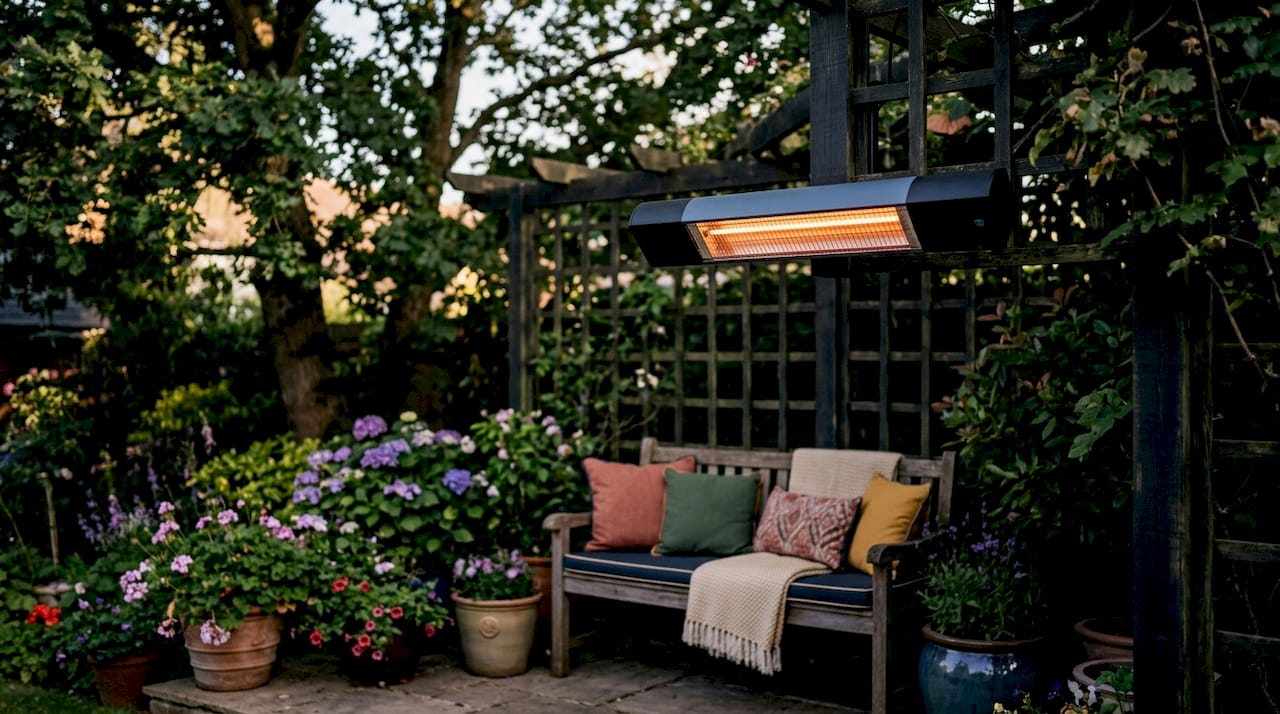
Convection heaters warm the surrounding air. Outdoors, that warm air disperses almost immediately on a breeze, making convection heating largely ineffective for patios or terraces. Radiant infrared heaters work differently. Infrared heaters deliver heat directly to people and objects rather than heating the ambient air, which means wind cannot carry the warmth away. You feel the effect instantly, much like standing in direct sunlight on a cool day.
This distinction matters enormously in the UK, where outdoor temperatures are unpredictable and wind is a constant factor. Electric infrared heaters are now the preferred choice for most domestic gardens and many commercial terraces. Gas heaters remain common in hospitality settings, though their running costs are significantly higher.
Key advantages of radiant infrared heating outdoors:
Instant warmth with no warm-up period required
Heat targets people and surfaces, not the surrounding air
Wind resistance: efficiency is not compromised by a breeze
No naked flame, making them safer around children and wooden structures
Available in wall-mounted, ceiling-mounted, and freestanding formats
Pro Tip: Mount infrared heaters at a downward angle of roughly 30–45 degrees above head height. This angle maximises the coverage area and ensures heat reaches seated guests rather than dissipating above them.
What are the financial benefits of outdoor heating?
The financial case for outdoor heating is well established, particularly in the hospitality sector. Patio heating systems can pay for themselves within a single season through increased table turnover and extended shoulder-season trading. Two or three additional table turns per evening across a heated terrace add up quickly, especially when the alternative is closing the outdoor area entirely from october through march.
For homeowners, the return is measured differently but is equally real. A heated garden room or terrace adds usable square footage to your home without the cost of a physical extension. Families who invest in outdoor heating consistently report using their gardens and patios through autumn and into early spring, months that would otherwise be written off.
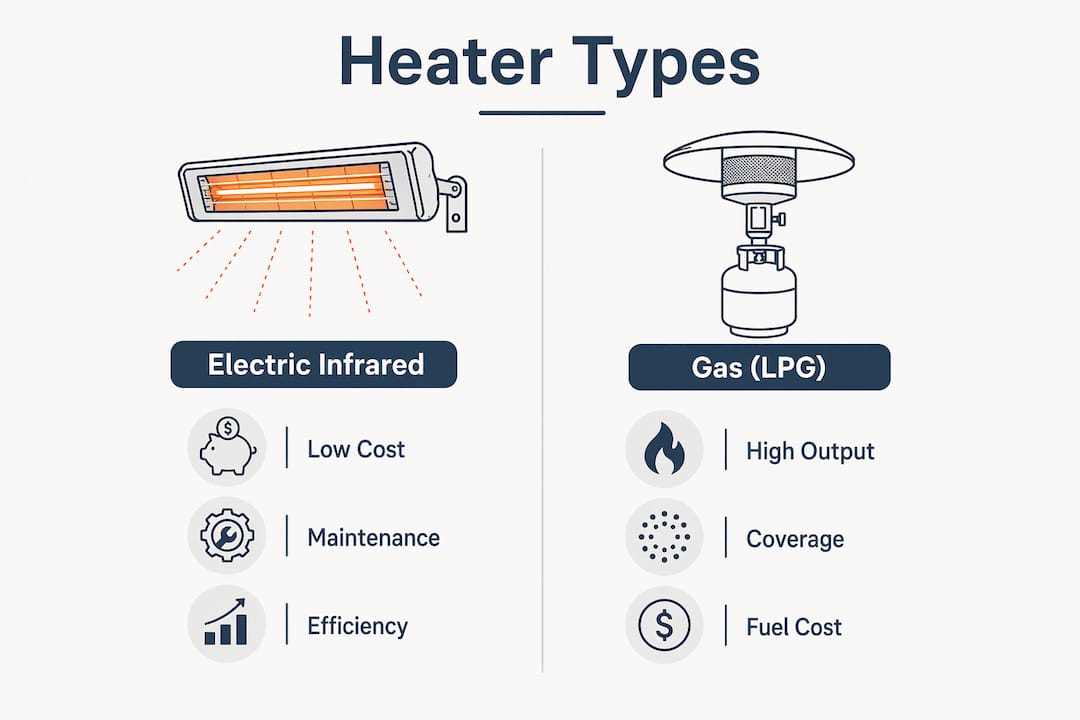
Running costs vary significantly by heater type. Gas heaters cost approximately £3 per hour per unit to run, while electric infrared heaters cost around 34p per hour. That gap is substantial over a full season of evening trading or regular home use.
Comparing heater types by cost and coverage
Heater type | Approx. running cost | Best suited for |
Electric infrared | ~34p per hour | Domestic gardens, covered terraces |
Gas (LPG) | ~£3 per hour | Large open commercial spaces |
Bioethanol | Variable | Decorative or supplementary use |
The operational case for electric infrared is strong on cost alone. Add the lower maintenance burden and the absence of gas cylinder logistics, and the preference becomes clear for most homeowners and smaller commercial operators.
Pro Tip: For restaurants and pubs, zone your heating to cover only occupied tables. Heating an empty section of terrace wastes money and adds nothing to guest comfort. Simple timer controls or smart switches make zoning straightforward.
Businesses that invest in outdoor climate control convert their outdoor spaces into dependable revenue-generating areas. This matters in British hospitality, where unpredictable weather has historically made outdoor seating unreliable. Heating removes that uncertainty.
How do you choose the right outdoor heater?
Selecting the right heater comes down to four factors: the type of space, the level of exposure to weather, your budget for running costs, and the safety requirements of your setting.
Electric infrared heaters
Electric infrared heaters are the most practical choice for most domestic gardens and covered commercial terraces. They switch on instantly, require no fuel storage, and carry no risk of carbon monoxide in enclosed or semi-enclosed spaces. Look for models with an IP54 rating or above for year-round outdoor use in the UK. IP54 means the unit resists dust and water splashes from any direction, which is the minimum you need for reliable performance through a British winter.
Gas (LPG) heaters
Gas heaters produce a high heat output and suit large, fully open commercial spaces such as pub gardens where there is no overhead coverage. Their running costs are high, and they require regular cylinder replacement. For domestic use, the cost and the open flame make them a less attractive option compared to electric alternatives.
Bioethanol heaters
Bioethanol heaters are primarily decorative. They produce a real flame and create atmosphere, but their heat output is modest. Use them to supplement a primary heating source rather than as a standalone solution.
Key features to check before buying any outdoor heater:
IP rating of IP54 or higher for weather resistance
Tip-over switch and cool-touch housing for domestic safety
Wattage matched to the size of your space (typically 1,500W–3,000W for a standard patio)
Mounting options: wall-fixed, ceiling-fixed, or freestanding with a weighted base
Timer or remote control for convenient operation
For homeowners thinking about cost-effective outdoor investments, electric infrared heaters represent one of the better value-for-money upgrades available. The upfront cost is manageable, the running costs are low, and the benefit is immediate and tangible.
How do you get the most from outdoor heating?
Installing a heater is only part of the solution. Getting the most from outdoor heating requires thinking about the space as a whole.
The single biggest efficiency gain comes from reducing heat loss to wind. Creating heated zones using side screens, louvred roofs, or retractable awnings dramatically reduces the volume of air the heater needs to warm. A pergola with a solid or louvred roof acts as a heat trap, keeping radiant warmth close to the people sitting beneath it. Without overhead coverage, even the best infrared heater loses efficiency on a windy evening.
Mounting height and angle are equally important. Infrared heaters mounted too high lose effectiveness because the heat cone widens and weakens before reaching seated guests. The recommended mounting height for most wall or ceiling-fixed units is 2.1–2.4 metres above floor level, angled downward toward the seating area.
Practical steps for maximising efficiency:
Use side screens or garden walls to block prevailing wind
Combine heaters with a pergola, veranda, or retractable awning for overhead coverage
Set timers to run heaters only when the space is occupied
Position heaters above and in front of seating, not behind or to the side
Service gas heaters annually and check electrical connections on infrared units each season
Safety deserves specific attention. Keep electric heaters clear of wooden beams and fabric awnings by at least the manufacturer’s recommended clearance distance. Gas heaters must never be used in fully enclosed spaces. For domestic settings, automatic tip-over switches are a non-negotiable feature if children or pets use the garden.
Pro Tip: Pair your outdoor heater with a retractable awning or pergola roof. The overhead structure traps radiant heat and can reduce the wattage you need by a meaningful margin, cutting running costs without sacrificing comfort. Infinityawnings installs pergolas and verandas across Yorkshire, Derbyshire, Nottinghamshire, and Lincolnshire that are designed with exactly this combination in mind.
Key takeaways
Outdoor heaters deliver the most value when radiant infrared technology, proper zoning, and overhead shelter work together to create a genuinely usable outdoor space year-round.
Point | Details |
Radiant heat beats convection outdoors | Infrared heaters warm people directly, so wind cannot carry the warmth away. |
Electric infrared costs far less to run | At roughly 34p per hour versus £3 for gas, electric infrared saves significantly over a season. |
IP54 is the minimum for UK outdoor use | Choose heaters rated IP54 or above to withstand rain and year-round exposure. |
Zoning cuts waste in commercial settings | Heat only occupied areas to reduce running costs without affecting guest comfort. |
Overhead shelter multiplies heater efficiency | A pergola or veranda traps radiant warmth and reduces the wattage needed to heat a space. |
Infrared over gas: what I have learned from UK outdoor spaces
Having spent years advising on outdoor structures across the north of England, I have watched the same mistake repeated in pub gardens and domestic patios alike. Owners install large gas heaters because they look impressive and feel powerful. Within a season, the running costs become a problem, the cylinders run out at inconvenient moments, and the heat still disappears the moment a breeze picks up.
The shift to electric infrared is not just about cost. It is about reliability. An infrared panel mounted correctly above a seated area delivers consistent, directional warmth that guests actually feel. Gas heaters heat a column of air that rises and disperses. On a still evening in july, that is fine. On a cool october night with any wind at all, it is largely wasted energy.
The other thing I have observed is that heating alone is not enough. The spaces that genuinely extend the season, whether a restaurant terrace or a domestic garden, are the ones where heating is combined with overhead shelter. A pergola with a louvred roof changes the physics of the space. It traps the radiant warmth, blocks the rain, and creates an environment where people genuinely want to sit for two hours rather than fifteen minutes.
The ‘outdoor room’ concept is not new, but the technology to make it work reliably year-round in the UK is now genuinely accessible. The combination of a quality infrared heater, a well-placed overhead structure, and some basic wind screening is all most spaces need. The investment pays back faster than most people expect, both in commercial revenue and in the simple pleasure of using your garden in november.
— Andrew
Complete your outdoor space with Infinityawnings
A well-chosen heater transforms a cold terrace into a comfortable space. A pergola makes that transformation last all year.

Infinityawnings designs and installs pergolas and verandas across Yorkshire, Derbyshire, Nottinghamshire, and Lincolnshire, built to work alongside heating solutions and extend the usable season of any outdoor space. Whether you are a homeowner wanting to reclaim your garden through autumn or a business owner protecting outdoor revenue, combining overhead shelter with quality heating is the most effective approach available. Explore the Infinityawnings pergola range and request a free quote to see what is possible for your space. You can also read more about extending your outdoor season with the right combination of structures and heating.
FAQ
Why do outdoor heaters matter more than indoor ones?
Outdoor heaters are designed to deliver heat directly to people rather than warming the surrounding air, which disperses quickly outside. This targeted radiant approach makes them effective where conventional heating would fail entirely.
What is the most energy-efficient outdoor heater for a UK garden?
Electric infrared heaters are the most energy-efficient option for UK gardens, costing around 34p per hour to run compared to approximately £3 per hour for gas heaters. They also require no fuel storage and carry no open-flame risk.
What IP rating do I need for an outdoor heater in the UK?
An IP54 rating is the recommended minimum for year-round outdoor use in the UK. IP54 means the heater resists dust and water splashes from any direction, which covers typical British weather conditions.
How do I make my outdoor heater more effective?
Combine your heater with overhead shelter such as a pergola or retractable awning, and use side screens to block wind. Heating only occupied zones and mounting infrared units at the correct height and angle also improve efficiency significantly.
Can outdoor heaters extend a restaurant’s trading season?
Professional patio heating systems can pay for themselves within a single season through increased table turnover and extended shoulder-season trading, with hospitality venues using outdoor space recording meaningful sales uplifts compared to indoor-only venues.
Recommended
Comments